Why a British Shorthair Is Built to Look Heavy
Many British Shorthair owners look at their beloved feline and wonder, "Are they chunky-cute, or just plain chunky?" It's a perfectly natural question, given their undeniably robust appearance. These cats are genuinely built to look substantial, and distinguishing their natural 'heavy look' from actual unhealthy weight gain can be a real puzzle. This guide will help you understand why your British Shorthair is built to appear heavy and how to tell the difference.
The British Shorthair's "Cobby" Build – More Than Just Weight
When you first meet a British Shorthair, their sheer presence is often the first thing you notice. They aren't dainty, slender creatures; they exude a solid, grounded aura. This isn't just an illusion; it's a fundamental characteristic of their breed standard, often described as "cobby." Understanding this foundational body type is crucial to appreciating why they appear so much heavier than many other cat breeds. Their entire physique is designed for substance, not sleekness.
Understanding the Breed Standard
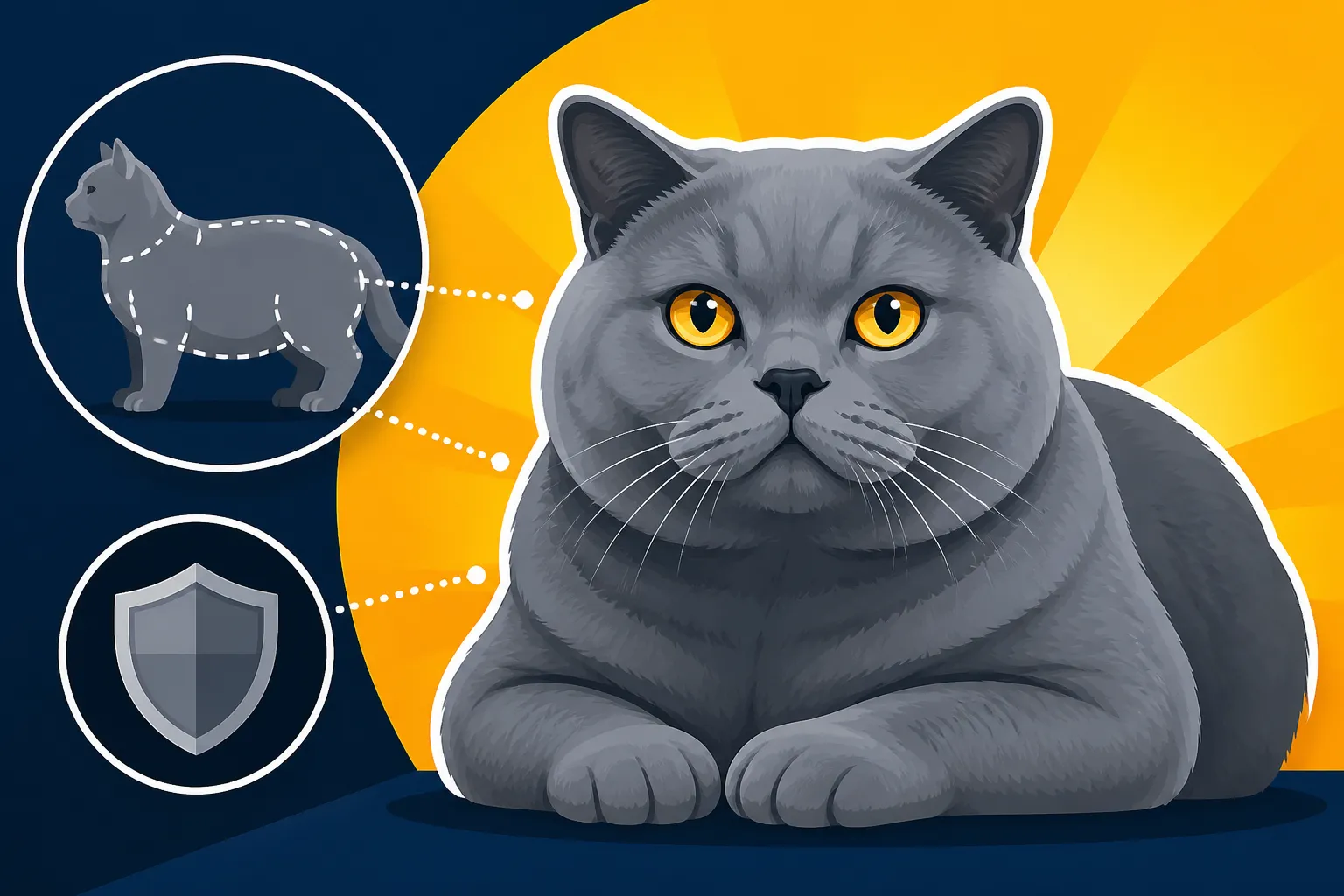
The term "cobby" might not be familiar to everyone outside of the cat fancy, but it perfectly encapsulates the British Shorthair's build. To be "cobby" means to have a compact, muscular, and well-rounded body. Think of a strong, broad-shouldered individual with a sturdy frame rather than a lean, athletic runner. This means they have a broad chest, short to medium-length strong legs, and a generally powerful, stocky appearance. Their musculature is dense, giving them significant heft for their size, even when they are at a healthy weight. This isn't excess fat; it's pure, solid cat.
This inherent structure makes them feel surprisingly heavy when you pick them up, even if they aren't carrying an ounce of extra fat. It's the difference between picking up a featherweight Siamese and a sturdy British Shorthair; the latter will always feel more substantial due to its bone structure and muscle density. This contributes significantly to the visual impression of weight. Their broadness and rounded contours prevent them from having the lithe, elegant lines seen in breeds like the Abyssinian or the Sphynx, which might visually trick you into thinking they are lighter. If you've ever wondered What Cobby Means in a British Shorthair, it's this very combination of compactness and muscle that defines them.
The Illusion of Heaviness from Head to Tail
Every feature of the British Shorthair contributes to their overall robust appearance, creating a harmonious picture of substantiality. It starts right at the top with their magnificent, round head. This isn't just any round head; it's remarkably broad, often described as having "full cheeks." In males, these cheeks develop into prominent jowls, especially as they mature, giving them that endearing, perpetually slightly grumpy or thoughtful expression. These substantial facial features make their head appear disproportionately large compared to more delicate breeds, further contributing to the illusion of overall mass. What Jowls Are on a Male British Shorthair is a distinctive, breed-specific characteristic that adds to their weighty look.
Moving down, their body is compact and powerful, with a broad chest that gives them a barrel-like quality. Their legs are short to medium in length, sturdy, and well-muscled, ensuring they can support their solid frame. This combination of a deep chest and strong, relatively short legs reinforces the cobby impression, making them look low to the ground and dense. They don't have the long, graceful legs of some pedigrees, which would visually stretch out their frame. Even their tail is thick at the base, tapering to a rounded tip, perfectly complementing their rounded body and adding to their overall impression of bulk. It's a short, powerful rudder, not a delicate whip, and it finishes the picture of a perfectly proportioned, heavy-looking cat.
The Dense, Plush Coat Adds to the Perception of Bulk
Beyond their solid bone structure and muscular build, the British Shorthair's coat plays a huge role in why they appear so robust. This isn't just any fur; it's a defining characteristic of the breed, known for its unique texture and incredible density. It essentially creates a voluminous, fluffy envelope around their already substantial bodies, further amplifying the illusion of weight. You might think it's just extra fluff, but it's a carefully cultivated trait that makes them look even more like the adorable, plush teddy bears we adore.
The Unique Texture and Thickness of a British Shorthair's Fur
A British Shorthair's coat is truly a marvel. It's often described as being "crisp" to the touch, feeling like a thick, plush carpet rather than soft, silky fur. This distinct texture comes from its incredibly dense double coat. They have a thick undercoat that provides insulation and volume, and shorter, coarser guard hairs that give it that characteristic crisp feel. The magic happens because this dense fur actually "stands away" from their body. Instead of lying flat against their skin, like a sleek short-haired cat, the British Shorthair's coat lifts, creating an air pocket and adding significant visual bulk.
This standing-away quality is what makes them appear so much larger and rounder than they might actually be. Imagine wrapping your cat in a thick, fluffy blanket that constantly keeps its shape; that's essentially what their coat does. It creates a soft, rounded silhouette that exaggerates their dimensions. Without this unique coat, their underlying body shape would be more apparent, but the fur creates a seamless, teddy-bear-like outline. It's a masterclass in feline optical illusion, and it's a key part of their charm. Many owners find themselves marveling at Why a British Shorthair's Coat Stands Up and how it contributes to their unmistakable look.
How the Coat Can Mask True Body Condition
One of the biggest challenges for British Shorthair owners is trying to figure out if their cat's apparent heaviness is due to their natural build and lush coat, or if they are genuinely carrying too much weight. The very qualities that make their coat so appealing—its density and volume—also make it incredibly difficult to accurately assess their body condition score (BCS) by sight alone. You can look at them from above and see a perfectly rounded shape, but that shape might be 80% fur and 20% underlying body.
This dense plush acts like a clever disguise, obscuring the subtle contours that would typically indicate a cat's true physical state. You can't easily see their waist or the gentle curve of their ribs when they're enveloped in such a thick layer of fur. This is a common frustration, leading many owners to worry unnecessarily or, conversely, to overlook actual weight gain until it becomes more pronounced. It really does require a hands-on approach to get a proper assessment. Knowing How to Feel a British Shorthair's Ribs Through the Plush is an invaluable skill for any owner to develop, as visual cues alone are often misleading with this breed. It’s all too easy to mistake a naturally well-padded cat for an overweight one, or to miss early signs of obesity because the coat hides the truth.
Distinguishing a "Heavy Look" from Actual Obesity
While a British Shorthair is undoubtedly built to look heavy, there's a crucial difference between a naturally substantial feline and one that is genuinely overweight. Many owners, captivated by their cat's round face and plush fur, can easily mistake breed-appropriate robustness for unhealthy chub. However, ignoring actual obesity can have serious health consequences. Learning to differentiate between these two states is paramount for your British Shorthair's long-term health and well-being. It requires a bit of detective work, often going beyond what your eyes tell you.
Key Indicators of a Healthy British Shorthair's Weight
A healthy British Shorthair will feel solid and dense, but you should still be able to detect certain physical markers beneath all that glorious fur. Generally, adult males typically weigh between 9 and 17 pounds (4-8 kg), while females are usually a bit smaller, ranging from 7 to 12 pounds (3-5.5 kg). However, these are just guidelines, and individual variations exist. What's more important than the number on the scale is their body condition score (BCS). A healthy cat should have ribs that are easily palpable, meaning you can feel them without having to press too hard, but they shouldn't be visibly prominent.
When you look down at your British Shorthair from above, they should have a discernible waist, even if it's subtle due to their broad build and plush coat. From the side, you should see an abdominal tuck, where the belly gently rises towards the hind legs, rather than hanging low. Feeling their spine and hip bones should also give you a sense of underlying structure; again, they shouldn't be sharp and bony, nor should they be buried under a thick layer of fat. Regular vet check-ups are invaluable here, as your veterinarian can provide an objective assessment and guide you on what a healthy body condition truly means for your individual cat. For a more detailed guide on ideal sizes, you can refer to information on What a Healthy British Shorthair Weighs on the Scale.
The Dangers of Actual Obesity and How to Spot It
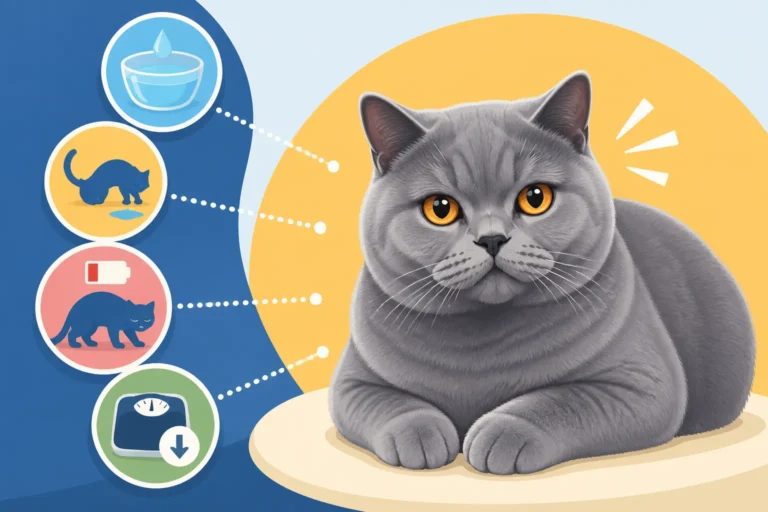
Actual obesity in a British Shorthair goes beyond their naturally heavy appearance and presents with clear, concerning indicators. If you can't easily feel your cat's ribs without significant pressure, or if their spine and hip bones are completely obscured by fat, they are likely overweight. A pronounced, sagging belly (sometimes called a primordial pouch, but in excess it's fat) that swings when they walk, or a lack of any discernible waist or abdominal tuck, are also red flags. Furthermore, physical signs like difficulty grooming their back or hindquarters, moving more slowly, increased lethargy (even for a famously calm breed), or struggling to jump onto furniture are strong indicators that your British Shorthair is carrying too much weight.
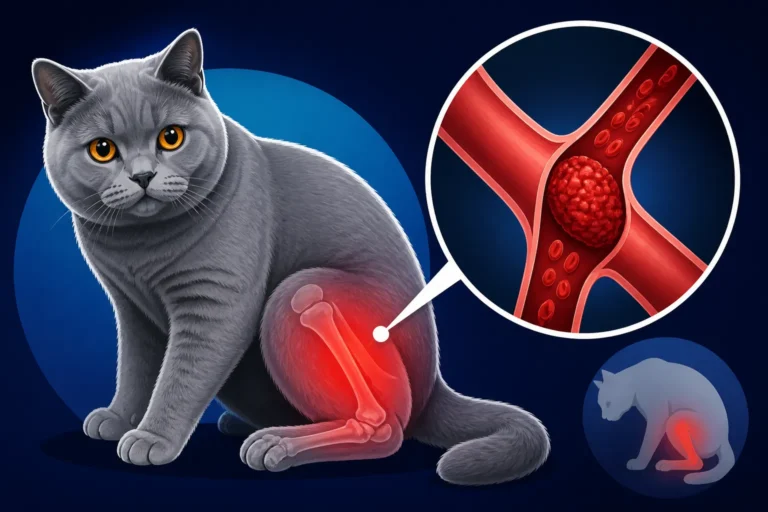
The consequences of true obesity are severe and can significantly impact your cat's quality of life and lifespan. Overweight British Shorthairs are at a much higher risk for serious health problems, including type 2 diabetes, which requires daily insulin injections and careful management. They are also prone to developing painful arthritis in their joints, especially their hips and knees, due to the constant strain of extra weight. Other potential issues include heart disease, liver lipidosis (fatty liver disease), urinary tract issues, and even certain cancers. Understanding that Obesity Is the British Shorthair's Real Disease is crucial, and knowing What Obesity Does to a British Shorthair's Joints underscores the importance of weight management. Treating these conditions can become incredibly costly, potentially leading to significant veterinary bills. While pet insurance providers like Healthy Paws can offer a financial safety net for unexpected health challenges, preventing obesity in the first place is always the best approach.
Managing Your British Shorthair's Weight and Activity
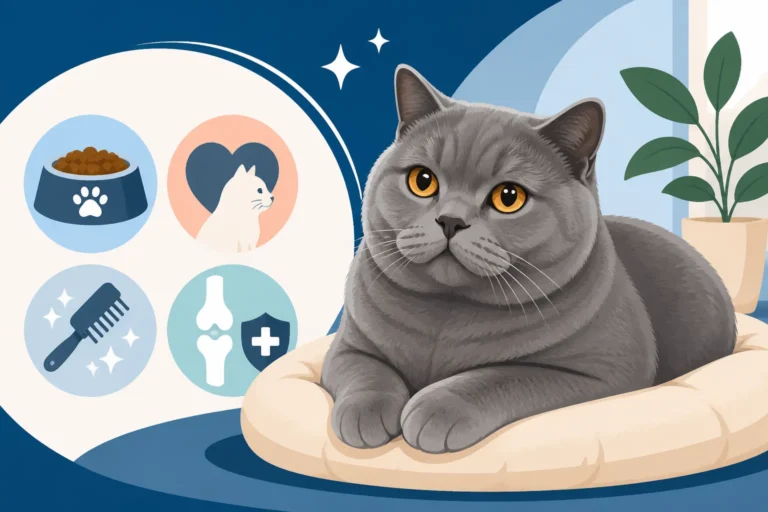
Once you've distinguished between your British Shorthair's natural 'heavy look' and actual excess weight, the next step is proactive management. These cats, despite their robust appearance, are not naturally high-energy athletes. Their calm, unhurried nature, combined with their strong appetite, makes them particularly susceptible to weight gain. Therefore, managing their diet and encouraging adequate activity becomes a primary responsibility for any British Shorthair owner. It's an ongoing commitment, but one that yields immense health benefits.
Appropriate Diet and Portion Control
The cornerstone of a healthy weight for a British Shorthair is strict portion control. These cats are often highly food-motivated and will happily eat whatever you put down, making it incredibly easy for them to overconsume calories. Free-feeding, where food is left out all day, is almost guaranteed to lead to weight gain for this breed. Instead, meals should be measured precisely and given at set times. Work with your vet to determine the ideal daily caloric intake for your specific cat, considering their age, activity level, and current weight. You might be surprised how little food they actually need to maintain a healthy weight.
Choosing a high-quality cat food, ideally one that is higher in protein and moderate in fat, can also be beneficial. Many British Shorthair owners find that incorporating wet food into their diet is helpful. Wet food has a higher moisture content, which can help your cat feel fuller with fewer calories, and it also contributes to better hydration, which is vital for urinary tract health. Avoid using treats excessively; if you do offer them, ensure they are low-calorie options and factored into their daily caloric intake. Remember, Portion Control Is the Whole Job With a British Shorthair, and understanding Why Free Feeding Ruins a British Shorthair is the first step towards a healthier feeding routine. Don't forget that treats and human food add up quickly, so be mindful of every morsel.
Encouraging Movement in a Naturally Sedentary Breed
Let's be honest: British Shorthairs are not known for their boundless energy. They are generally calm, laid-back creatures who prefer lounging in a sunbeam to leaping through the air. This natural inclination towards a sedentary lifestyle means that owners must actively encourage them to move. Waiting for your British Shorthair to "exercise itself" simply won't work, as Why a British Shorthair Will Not Exercise Itself is part of their breed nature. But don't despair – with a little creativity and consistency, you can get them engaged.
The key is short, consistent play sessions that cater to their preferences. Many British Shorthairs aren't interested in chasing a laser pointer for ten minutes straight but might enjoy a wand toy for a few minutes before tiring out. Try to schedule two or three short playtimes a day, perhaps 5-10 minutes each. Focus on toys that appeal to their hunting instincts, like those that mimic birds or mice, or even puzzle feeders that make them "work" for their kibble. Cat trees, window perches, and safe outdoor enclosures can also provide mental and physical enrichment, even if they're not constantly scaling heights. Persistence and finding what sparks their interest are crucial; you might have to experiment with different types of toys. Remember, even a little bit of movement each day makes a big difference in maintaining a healthy weight and promoting overall well-being. For more ideas, explore tips on Getting a Low Energy British Shorthair to Move.
Is Your British Shorthair "Looks Heavy" or "Actually Overweight"?
| Feature / Indicator | "Looks Heavy" (Healthy British Shorthair) | "Actually Overweight" (Unhealthy British Shorthair) |
|---|---|---|
| Body Shape (Visual) | Rounded, substantial, "cobby" build, broad chest. | Rounded, but visibly saggy, no discernible waist, bulging flanks. |
| Ribs (Palpation) | Easily felt with light pressure, like knuckles on your hand. | Difficult to feel, require firm pressure, or completely obscured by fat. |
| Waistline (From Above) | Subtle but present tuck behind ribs. | No waist, body forms a continuous, unbroken curve. |
| Abdominal Tuck (From Side) | Gentle upward curve from ribs to hind legs. | Belly hangs low, flat, or even protrudes downward. |
| Musculature | Firm, dense, solid feel. | Soft, flabby, rolls of fat noticeable. |
| Activity Level | Calm, relaxed, enjoys short play sessions. | Reluctant to play, moves slowly, struggles with jumps. |
| Grooming Ability | Can easily reach and groom all parts of their body. | Difficulty grooming hindquarters, often matted fur on back. |
| Weight on Scale | Within breed-appropriate range (e.g., 9-17 lbs male, 7-12 lbs female, but varies). | Significantly above ideal range for their frame. |
Disclaimer
This article is intended for informational purposes only and does not constitute veterinary advice. Always consult with a qualified veterinarian for any health concerns or before making any decisions about your pet's health, diet, or exercise regimen.