What Cobby Means in a British Shorthair
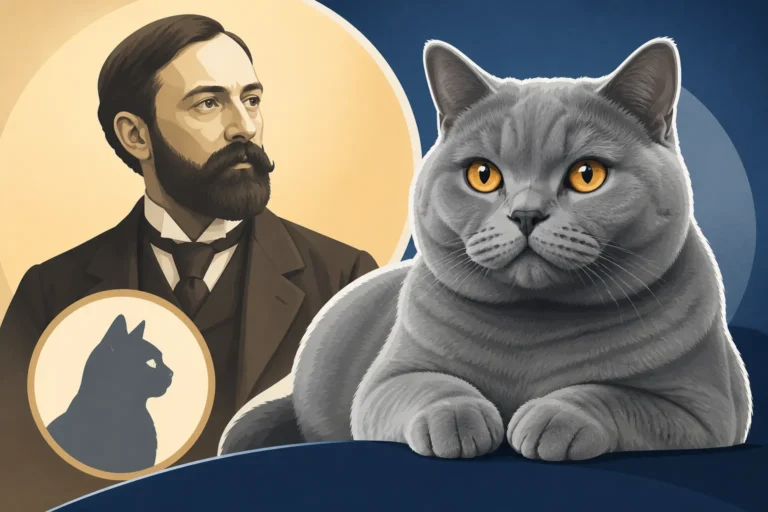
A British Shorthair can look like a plush little barrel, so it is easy to wonder whether “cobby” describes the breed’s build or simply means a cat is overweight. It describes a compact, sturdy body type: broad, muscular and substantial without being lanky. This guide explains what the term means, what it does not mean, and how to tell healthy structure from excess weight.
What cobby means in a British Shorthair
A compact, sturdy body rather than a long, fine frame
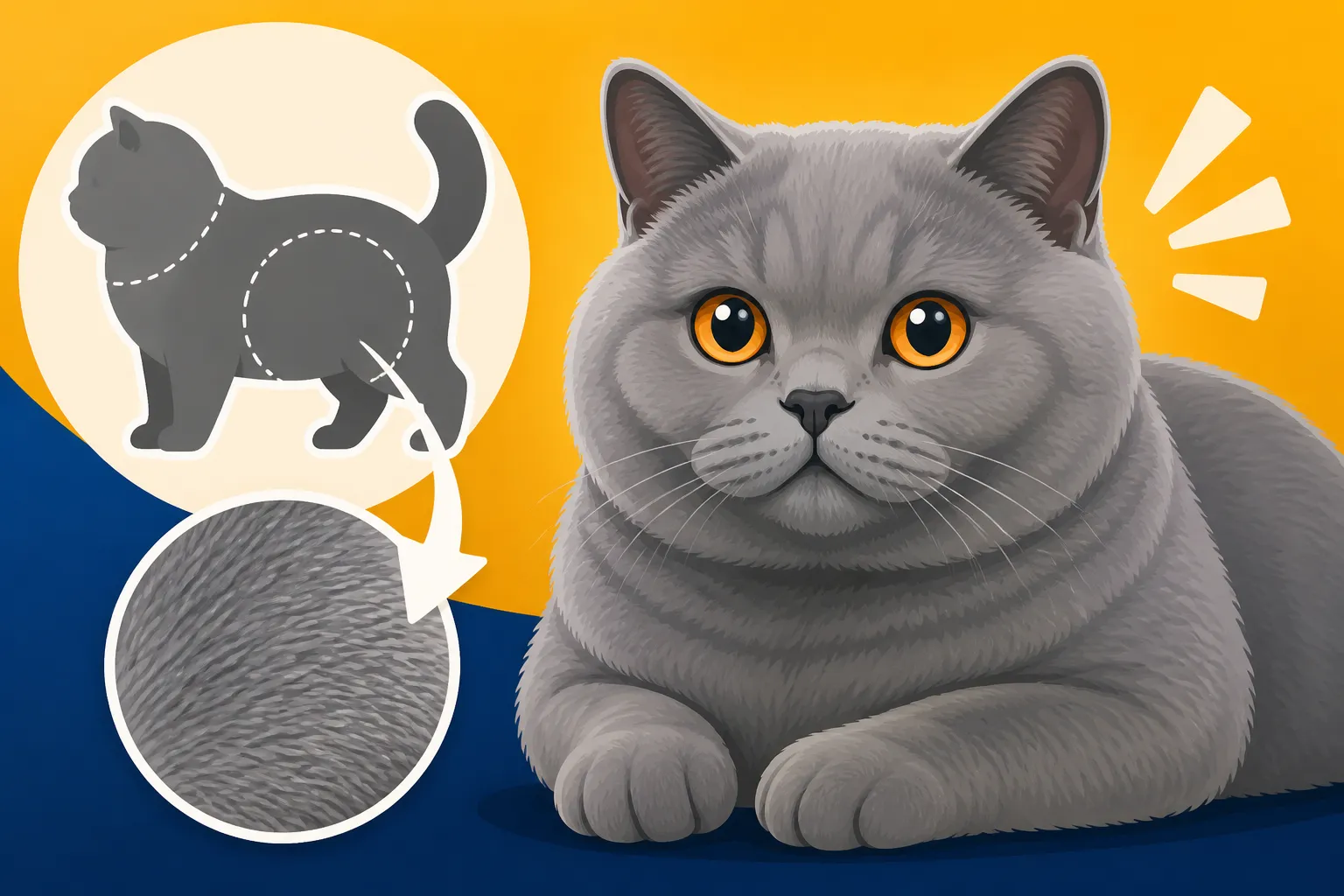
“Cobby” is a word used to describe a cat’s overall build. A cobby cat is compact and solid-looking, with a broad body and a strong, substantial feel. In a British Shorthair, that impression comes from several features working together: a deep chest, broad shoulders, a sturdy back, muscular limbs and a thick tail. The result is a cat that looks more like a little tank than a long, slender sprinter.
The word does not refer to one isolated feature, such as a round face or short legs. A cat might have a round head but a relatively narrow body, or a broad chest with longer proportions. “Cobby” describes the overall impression of the body, not a measurement you can take with a tape measure or a diagnosis a veterinarian would use.
That distinction can help when you are comparing cats. A British Shorthair may appear heavier than a more lightly built breed even when both are in healthy condition. The British Shorthair’s bone structure, muscles and dense coat all contribute to its substantial look. For more on why that silhouette can be misleading, see Why a British Shorthair Looks Heavier Than It Is.
How the build fits the breed’s appearance
A British Shorthair’s classic outline is broad and balanced. The body is generally compact rather than elongated, and the legs are sturdy enough to support its frame. Its round head, full cheeks and dense coat add to the impression of a solid, plush cat. The breed’s well-known teddy-bear look is not just about the face; it is also about the body’s proportions and the way the coat stands away from the skin.
“Cobby” does not mean that every British Shorthair should look identical. Individual cats vary in size, muscle, proportions and maturity. Sex can affect a cat’s overall size and appearance, and a mature male may develop prominent cheeks that make his head look especially broad. A young cat may still be growing into its adult shape, so it is not sensible to judge its eventual build from a single early snapshot.
Breed standards describe the desired appearance in more detail, and wording can differ between registries. If you are looking at a show cat, “cobby” is a useful shorthand for the compact, substantial outline, but it is not a substitute for the relevant standard. For a broader look at the breed’s proportions, see What a British Shorthair Weighs and How Big It Gets and What Cobby Means in a British Shorthair is best understood alongside the breed’s whole outline rather than as a single body feature.
Cobby does not mean overweight
Why a round silhouette can be confusing
The British Shorthair’s coat is dense and plush. It can soften the outline of the waist and make the body look wider than it is, especially when the cat is sitting or curled up. Full cheeks and a rounded body shape can also make an overweight cat look, at first glance, like it simply has the expected breed type.
That is why appearance alone can be a poor guide. A healthy cobby cat should still have a body condition appropriate for its frame. You should be able to feel the ribs under a light covering of tissue, though the coat may make them harder to see. Viewed from above, a waist may be subtle, but the body should not simply widen from the chest to the hips without any definition. From the side, the abdomen may have a natural loose skin fold, but a pronounced, heavy belly can warrant a closer look.
The aim is not to make a British Shorthair look slender or angular. It is to distinguish a naturally broad, muscular cat from one carrying extra fat. A cat can be both cobby and overweight; one does not rule out the other. If you are unsure, ask your veterinarian to assess body condition by touch and examination rather than relying on a photo or a target number alone. How to Score a British Shorthair's Body Condition offers more detail on what to check.
A practical comparison
| Feature | Typical cobby structure | Possible sign of excess weight |
|---|---|---|
| Overall outline | Compact and broad, with a sturdy frame | Body looks increasingly wide or rounded beyond its usual proportions |
| Ribs | Can be felt with gentle pressure | Difficult to feel beneath a thick layer of tissue |
| Waist | May be subtle beneath the coat | Little or no waist when viewed from above |
| Movement | Moves comfortably for that individual | Hesitates, tires quickly, or struggles with ordinary movement |
| Grooming | Reaches most areas to groom | Has difficulty reaching the back or hindquarters |
| Belly | May have a loose lower-abdominal skin fold | A heavier abdomen or increasing body fat |
These are clues, not a home diagnosis. A thick coat can hide changes, and some cats naturally carry a visible pouch of loose skin. If your cat’s shape is changing, compare how it feels over time and talk with your vet. Regular weigh-ins can make gradual gain easier to notice than relying on memory. A household scale may be enough for some cats, while a veterinary clinic can help if your cat is difficult to weigh safely. When browsing for pet-care supplies, Chewy may be one place to compare suitable home scales, but the important part is using a consistent method and recording the results.
How to assess your British Shorthair’s build
Look and feel, not just the number on the scale
A scale reading is useful, but it cannot tell you by itself whether a cat is at a healthy weight. Two British Shorthairs can have different healthy weights because they differ in frame, sex, muscle and age. A number that is appropriate for one cat may be too high or too low for another. Ask your veterinarian to help establish an individual baseline, then track changes rather than treating a general breed figure as a target.
At home, use a calm, gentle check. Run your hands along the sides of your cat’s chest and feel for the ribs. You should be able to find them without pressing hard. Then look down at your cat while it is standing, if it will tolerate it. The waist may be modest rather than sharply tucked, but the body should not appear uniformly barrel-shaped from shoulders to hips. A side view can provide another clue, though a loose belly fold is common and should not be mistaken automatically for fat.
Repeat the same checks periodically, ideally in similar circumstances. A quick note of the date, weight and observations can be more useful than trying to remember whether your cat looked rounder last month. If your British Shorthair is resisting handling, do not force a body check; a vet or veterinary nurse can show you a safe technique. More guidance is available in How to Feel a British Shorthair's Ribs and What a Healthy British Shorthair Weighs on the Scale.
Notice changes in movement and grooming
A cat’s everyday habits can reveal changes that are easy to miss in a still photograph. Notice whether your British Shorthair is jumping onto a familiar chair, stepping into the litter box, grooming its back and hindquarters, and moving around the home as comfortably as usual. A broad, sturdy build should not prevent ordinary movement. A new reluctance to jump or difficulty grooming may have several causes, including pain or mobility problems, so it is worth discussing with a vet rather than assuming it is laziness.
The dense coat can make self-grooming harder to evaluate. Part the fur gently and look for areas that seem neglected, greasy or matted. If your cat has gained weight, reaching the back may become more difficult; however, dental discomfort, arthritis and other health problems can also affect grooming. A change in coat care deserves attention in context, not blame.
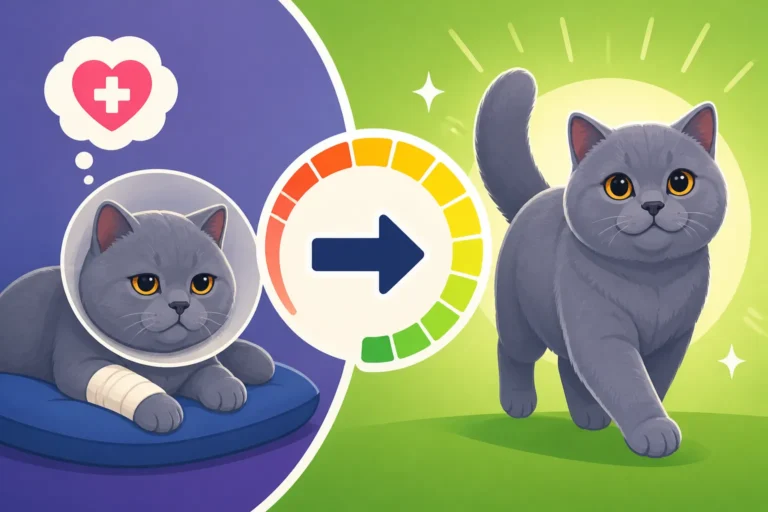
If your cat needs a weight-management plan, make changes with veterinary guidance. Avoid sharply cutting food or trying a crash diet. Cats need a safe, gradual approach, and the right plan depends on their current body condition, health and diet. You can discuss meal portions, treats and activity with your clinic. Chewy may be useful for comparing food-storage or portioning supplies, but a product choice does not replace an individualized feeding plan. For more on feeding routines, see Portion Control Is the Whole Job With a British Shorthair and How to Put a British Shorthair on a Diet.
What cobby means at different ages
Kittens and young adults are still developing
A British Shorthair kitten does not arrive looking like a finished, miniature adult. Its proportions change as it grows, and the broad, substantial adult outline takes time to develop. A kitten may appear leggier or less rounded than an adult, while a young cat can look awkward between growth stages. That does not necessarily mean it will lack the breed’s characteristic build.
Avoid trying to assess a kitten’s future body condition by comparing it with a fully mature cat. Growth, frame and muscle develop at different rates, and the coat can also change as the kitten matures. A breeder can explain the parents’ general build, but no one can promise a specific adult size or exact outline. Healthy growth and veterinary checks matter more than trying to make a young cat look extra heavy.
As your cat matures, pay attention to gradual changes rather than expecting a sudden transformation. A cobby appearance should come from the cat’s natural frame and muscle, not from overfeeding. If you are curious about when the adult look tends to emerge, How Long a British Shorthair Takes to Reach Full Weight and When a British Shorthair Reaches Its Adult Head explore those changes.
Older cats may change shape for reasons beyond body type
An older British Shorthair may lose muscle, become less active or gain fat, and these changes can alter the familiar compact outline. A cat might still look broad because of its coat and frame while its muscle tone changes underneath. Conversely, weight loss in an older cat can be easy to overlook if the coat remains thick and the face still looks full.
Check in with your veterinarian if your cat’s weight or shape changes without an obvious reason, especially if the change happens quickly or comes with shifts in appetite, thirst, litter-box habits, grooming or activity. A senior cat’s body condition should be considered alongside its overall health. For age-related care, see Caring for an Old British Shorthair.
The simplest way to remember the term is this: cobby describes a naturally compact, broad and sturdy structure. It does not mean fat, and it does not guarantee that a cat is at a healthy weight. Look at the whole cat, feel for body condition, watch how comfortably it moves, and ask your veterinarian when the picture is unclear. That approach respects the British Shorthair’s distinctive build without overlooking changes that deserve attention.
Disclaimer
This article is for general informational purposes only and does not constitute professional advice. Laws, prices and regulations vary by location and change over time. Consult a qualified professional for guidance on your specific situation.