Whether a British Blue Registers as a British Shorthair
A blue-grey coat can make a cat look unmistakably like a British Blue, but color alone does not establish breed or pedigree. The key question is whether the cat’s ancestry and paperwork meet a recognized registry’s requirements. This guide explains what “British Blue” means, when the cat registers as a British Shorthair, and what to check before buying or entering one in a show.
What “British Blue” means
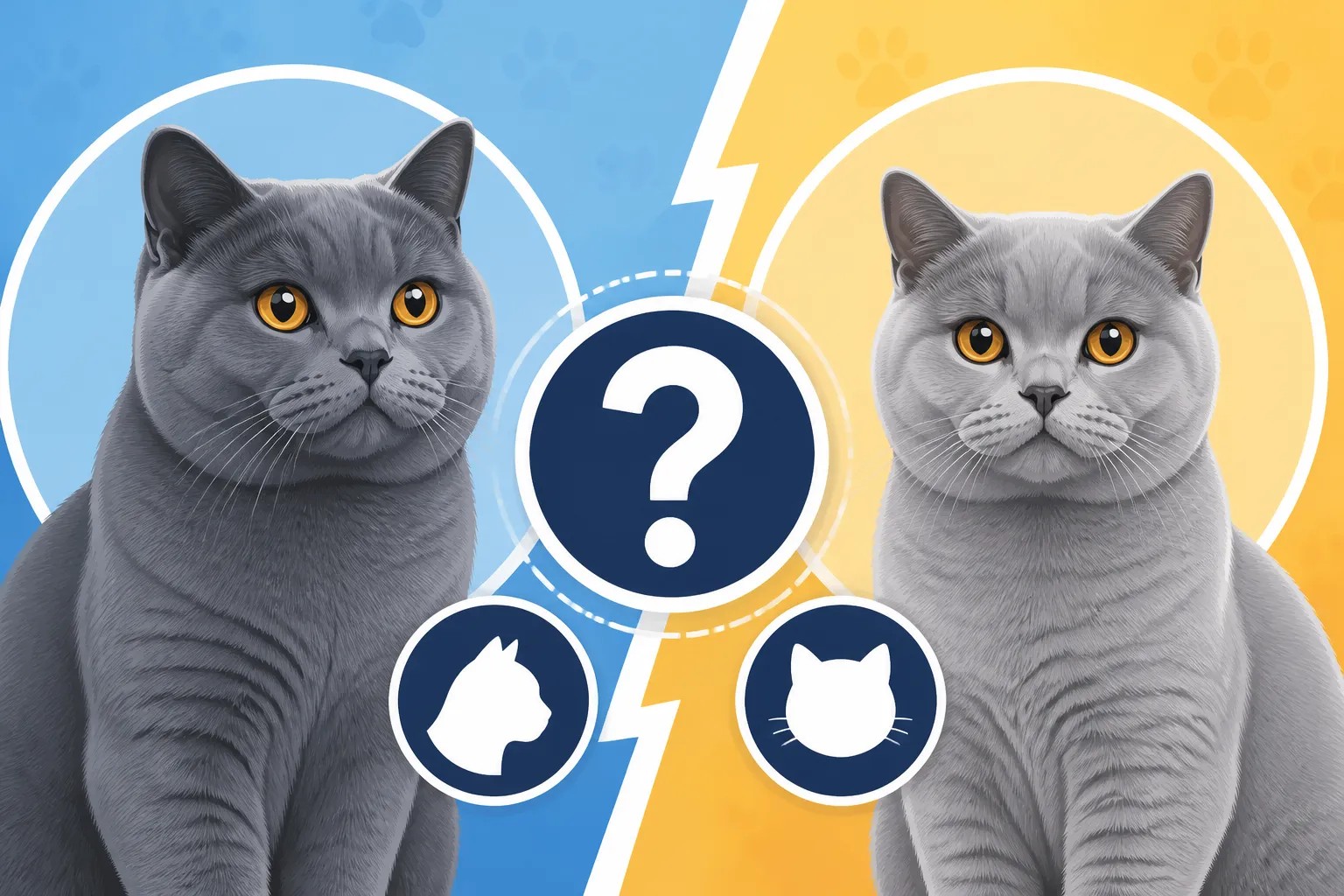
British Blue is a color, not a separate breed
“British Blue” is the familiar name for a blue-coated British Shorthair. In cat-breed terminology, blue generally describes a solid grey coat with a bluish cast. It is one of the best-known British Shorthair colors, which is why people sometimes use “British Blue” as if it were the breed’s full name.
For registration purposes, though, the breed and the color are separate details. A cat may be identified as a British Shorthair with a blue coat, just as another British Shorthair might be identified as silver tabby, black, or golden shaded. The color does not create a separate breed category.
That distinction matters when you are looking at a kitten advert. A seller might describe a kitten as a “British Blue,” but that phrase by itself does not tell you whether the kitten has a documented British Shorthair pedigree. It describes how the cat looks, not what its ancestry records prove.
A blue coat does not prove British Shorthair ancestry
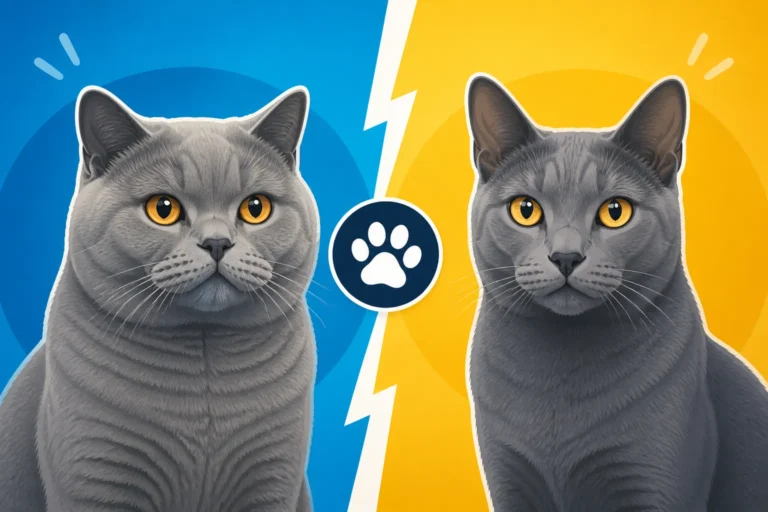
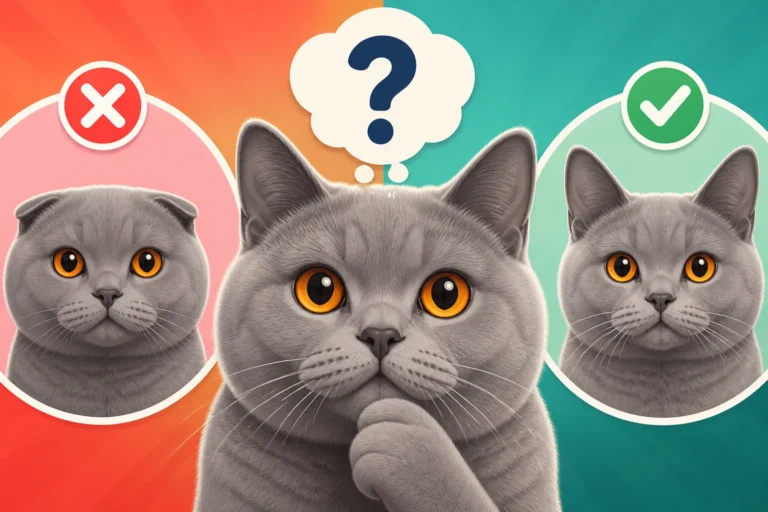
Blue-grey cats appear in more than one breed and among non-pedigree cats. A cat can resemble a British Shorthair, with a round face and plush coat, without having the documented ancestry required for registration as one. Likewise, a genuine British Shorthair may not be blue at all.
The breed’s familiar round head, dense coat, and solid build can make visual identification feel straightforward. In practice, appearance is not a reliable substitute for pedigree records. Young kittens also change as they grow, and a plush coat or rounded face alone cannot confirm their breed.
This is why it helps to separate three questions: Does the cat look like a British Shorthair? Is its ancestry documented as British Shorthair? And is it eligible for registration under the rules of a particular registry? Those questions can have different answers. For more on the difference between a registered cat and one that simply resembles the breed, see Whether a DNA Test Confirms a British Shorthair.
When a British Blue can register as a British Shorthair
The pedigree and breeder records matter
A blue cat can register as a British Shorthair when its ancestry and breeder documentation satisfy the rules of the registry handling the application. The paperwork usually connects the kitten to its parents and litter, rather than relying on the kitten’s coat color or appearance as proof.
If you are buying from a breeder, ask which registry the cattery uses and what registration documents will be provided. Ask whether the kitten has been registered as part of a litter, whether an individual registration or transfer will be completed, and what information will appear on the paperwork. A responsible breeder should be able to explain the process clearly and show relevant records.
It is also worth checking that the names on the documents, the kitten’s identifying details, and the breeder’s account of its parentage are consistent. A registration certificate is useful, but it is not a substitute for asking questions. If anything is unclear, contact the registry named on the paperwork and ask what the document establishes and whether any steps remain for you as the new owner.
Registry rules are not identical
Different cat registries maintain their own registration and show rules. They may differ in how they record colors, handle imported pedigrees, recognize particular ancestry, or classify cats that do not meet all requirements for full registration. A cat’s status with one organization does not automatically tell you how another organization will record it.
The blue color itself is generally an established British Shorthair color, but the registry’s rulebook is the authority for a particular application. If you intend to show the cat, check both its registration status and the show standard that applies. Registration and show eligibility are related, but they are not always identical questions.
| What you want to know | What to check |
|---|---|
| Whether the cat is a British Shorthair by documented ancestry | Pedigree and breeder records |
| Whether the cat is recorded as blue | The color entry on its registration documents |
| Whether you can transfer or complete the registration | The registry’s application requirements |
| Whether the cat can enter a show | The registry’s current show rules and breed standard |
| Whether a blue-looking cat has a pedigree | Documentation, not coat color alone |
If the cat was imported, or its paperwork comes from a registry you do not know, ask the receiving registry whether it accepts those documents and whether extra records are required. Do not assume that a blue coat or a certificate from another organization automatically settles every registration question. The practical details behind Which Registry Standard a British Shorthair Is Judged Against can also help explain why breed recognition and show evaluation need to be considered separately.
How to check a British Blue’s registration
Ask for specific documents before you commit
Before paying a deposit, ask the breeder which organization registers the litter and what paperwork you will receive. The answer should be specific. “The kitten is registered” is less useful than an explanation of the registry, the kitten’s recorded breed and color, and whether you will receive documents showing its parentage.
Ask to see the relevant records, not just a photo of a certificate with details obscured. You do not need to demand private information that has no bearing on your kitten, but you should be able to confirm that the documents relate to the litter and that the breeder’s claims match the records. If the kitten is not yet old enough for its individual paperwork, ask what has been completed and when the remaining documents will be provided.
Pay attention to how the breeder handles reasonable questions. A breeder who explains registration patiently is making it easier for you to understand what you are buying. Evasive answers, pressure to pay immediately, or a promise that “the color proves it” are reasons to slow down and verify the claim independently.
Check registration status separately from show quality
A registered British Shorthair is not automatically a show-quality cat. Registration records ancestry and classification under a registry’s rules; show evaluation considers how closely an individual cat fits the relevant breed standard. A pet kitten may be correctly registered while having features that make it less suitable for competition.
Color description is only one part of the picture. Breed standards can assess features such as body shape, head, coat, and eye color, with details depending on the registry and color variety. A buyer who wants a companion usually needs clear registration and health information more than a promise of show success. A buyer considering competition should ask the breeder how the kitten is assessed against the applicable standard.
It is also reasonable to ask whether “show quality” is a formal opinion or simply the breeder’s description. No prediction about a growing kitten can guarantee its adult appearance or show results. For context on how the breed’s look is assessed, read The Round Head and Copper Eye a British Shorthair Is Judged On and How a Show British Shorthair Is Presented.
Common registration misunderstandings
“It looks like one, so it must be one”
This is perhaps the most common mix-up. A blue coat, round face, and thick build can suggest British Shorthair type, but looks cannot establish a documented pedigree. If there is no reliable ancestry record, the safest description is based on what is known rather than assuming the cat is a registered British Shorthair.
A shelter or rescue may describe a cat as a British Shorthair based on appearance or information provided by a previous owner. That can be helpful background, but it is different from verified registration. If a formal pedigree matters to you, ask what documents exist and whether the relevant registry can confirm them. A visual assessment can never replace missing ancestry records.
You may also encounter DNA tests marketed as breed identification. These can offer genetic information, but they do not turn an undocumented cat into a registered pedigree cat. Registration is an administrative decision made under a registry’s rules, using the evidence that registry accepts. For a wider look at breed appearance and identification, see How to Tell a British Shorthair From a Moggy.
“British Blue” means the kitten is registered
A sales description is not registration paperwork. Sellers may use “British Blue” to describe a blue-coated kitten, but the phrase alone does not confirm the kitten’s pedigree, registration status, or eligibility for a particular show. Ask what the documents actually say, including the breed and color recorded.
Also be cautious about assuming that every blue-grey kitten is a British Blue. The label can be used loosely in everyday conversation, especially in online listings. If the seller cannot show how the kitten’s ancestry is documented, treat the wording as a description of appearance rather than proof of registration.
Finally, keep a copy of the paperwork you receive and make sure you understand whether any transfer or owner-registration step is yours to complete. If you are uncertain about an application, ask the registry directly rather than relying on an informal interpretation from a seller or online discussion. You can also learn more about the color’s popularity and history in Why the Blue Is the Best Known British Shorthair and Whether a British Blue Registers as a British Shorthair.
What to remember when choosing a British Blue
A British Blue can register as a British Shorthair when its documented ancestry and paperwork meet the relevant registry’s requirements. “British Blue” describes a coat color; it does not independently prove a cat’s breed or pedigree. Before buying, confirm which registry is involved, what the papers establish, and whether any registration steps remain. If show eligibility matters, check those rules separately from the cat’s basic registration.
Disclaimer
This article is for general informational purposes only and does not constitute professional advice. Laws, prices and regulations vary by location and change over time. Consult a qualified professional for guidance on your specific situation.