Whether a British Shorthair’s Ears Should Be Small
A British Shorthair’s ears should look modest beside its broad, rounded head, but “small” does not mean tiny, pinched, or folded. Breed standards can use slightly different wording, and a cat’s age and proportions affect how its ears appear. This guide explains the usual ear shape and placement, what changes as kittens grow, and when an ear concern is worth a veterinary check.
What British Shorthair ears are supposed to look like
Small in proportion, not miniature
British Shorthair ears are generally described as small to medium in size, with a broad base and rounded tips. They should sit in a way that suits the cat’s substantial, rounded head rather than drawing attention away from it. Because the head is broad, ears that might look ordinary on another cat can seem smaller by comparison.
That proportion is the part that often causes confusion. Someone looking at a photograph may expect very tiny ears because the breed is famous for its round face and plush, teddy-bear look. But ears that are unusually small, narrow at the base, or crowded together are not automatically a better example of the breed. The overall balance matters more than a single measurement.
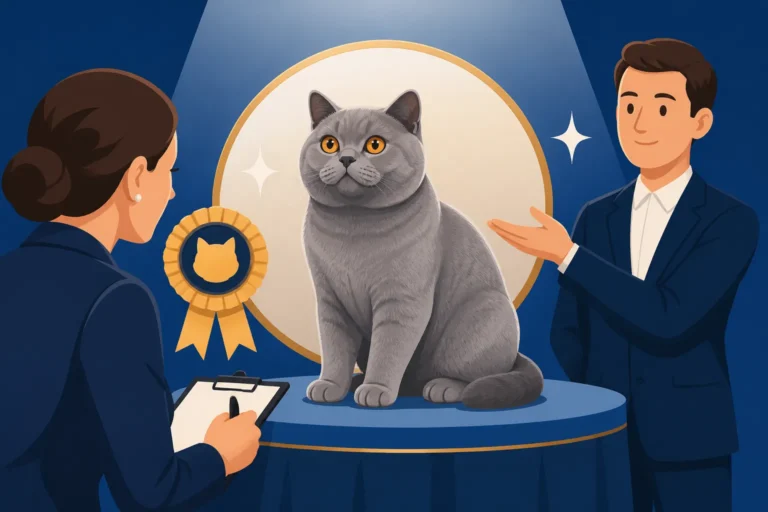
A British Shorthair’s ears should also stand upright. They are not supposed to fold forward or lie flat against the head. If you are trying to understand how the ears fit into the whole expression, it helps to look at The Round Head and Copper Eye a British Shorthair Is Judged On and What Shape a British Shorthair's Head Should Be. The ears are one detail within a broader picture that includes the skull, cheeks, eyes, and muzzle.
Placement matters as much as size
The ears are typically set fairly far apart, following the broad outline of the head. In a well-balanced cat, they do not appear to meet at the top, and they should not look so close together that the head seems narrow. Their rounded tips and open spacing help maintain the breed’s characteristic soft expression.
Placement can be hard to judge from a close-up. A camera held close to a kitten’s face may make the ears look larger or more prominent than they do in person. Likewise, a photograph taken from above can make the ear spacing look different. When assessing a cat, look at a relaxed, front-facing view as well as a side view, rather than deciding from one tightly cropped picture.
The following comparison can help keep the main points straight:
| Feature | Typical British Shorthair appearance | What may look out of proportion |
|---|---|---|
| Size | Small to medium relative to the head | Extremely tiny or unusually large ears |
| Base | Broad enough to suit the head | Narrow, pinched-looking base |
| Tip | Rounded rather than sharply pointed | Very pointed or sharply angled tips |
| Placement | Set apart and balanced on the head | Crowded together or sitting unusually high |
| Position | Upright | Folded forward or persistently flattened |
Breed standards and judging language are not always identical between registries, so a cat may be described with slightly different terms depending on the standard being discussed. The practical takeaway is consistent: ears should be upright, rounded, and in proportion to the head.
Why the ears can look different as a British Shorthair grows
Kitten ears can seem oversized
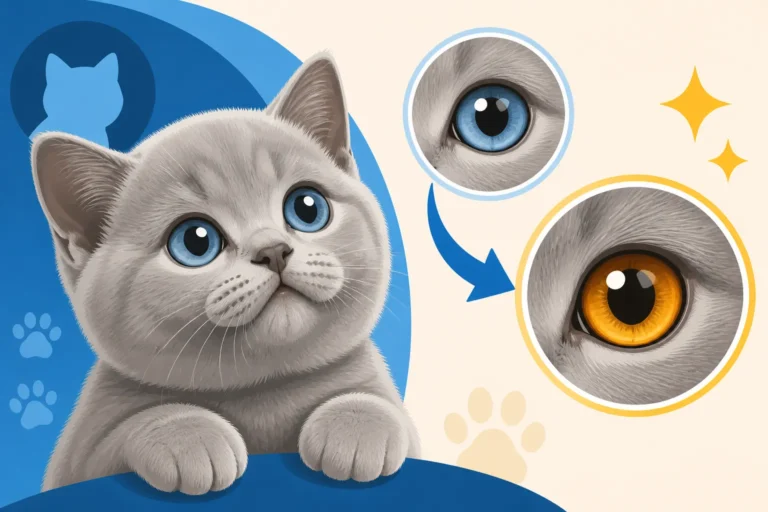
A young kitten’s ears often look large compared with its head. That is not unique to British Shorthairs; kittens’ bodies and facial proportions change as they mature. A kitten with noticeable ears today may look more balanced later as the head broadens and the cheeks develop.
British Shorthairs are slow to mature compared with many cats. Their bodies can continue filling out over several years, so judging adult proportions too early can be misleading. A photo of a young kitten is a snapshot, not a reliable prediction of its final head shape or ear-to-head ratio. If you are comparing kittens, ask how old they are and view current photographs of both parents when possible.
A breeder may be able to explain how a kitten’s features are developing, but no one should promise that a particular kitten will have a precise adult appearance. Genetics, growth, and individual variation all play a part. If you want the wider context of the breed’s growth and build, When a British Shorthair Reaches Full Size and How Big a British Shorthair Gets offer useful companion reading.
Coat and expression can affect what you notice
A dense coat and full cheeks can make the head look broader, which can make the ears seem smaller. Conversely, a very short coat, a narrow face, or an unusual camera angle can make the same-sized ears stand out more. The ears themselves may not have changed at all; the surrounding features are changing how you perceive them.
Expression matters, too. British Shorthairs often have a round face and a relaxed, slightly smiling look. The ears contribute to that impression when they sit neatly in the head’s outline, but the expression does not depend on having the smallest possible ears. Why a British Shorthair Looks Like It Is Smiling explores the facial features behind that familiar look.
When comparing cats, avoid relying only on online listings that use flattering close-ups. Ask for unedited, current images taken from a normal viewing distance, and consider the cat’s age. If you are choosing a kitten, a proportionate, healthy-looking head is more meaningful than a single feature enlarged by the camera.
Small ears versus folded ears
A British Shorthair should not have folded ears
Small ears and folded ears are different traits. A British Shorthair’s ears should stand upright; ears that bend forward or remain folded are not simply an extra-small version of the usual shape. Folded ears are associated with Scottish Fold cats and their distinctive cartilage trait.
This distinction matters if you see a cat advertised as a “fold-eared British Shorthair.” A folded ear should prompt questions about the cat’s identity, breeding, and health—not just whether it matches a particular look. The appearance of folded ears is connected to cartilage development, and it is not a harmless styling variation. For more background, read How a British Shorthair Differs From a Scottish Fold and Whether a Scottish Fold Is a British Shorthair With Folded Ears.
A British Shorthair may have ears that look lower, wider apart, or less prominent than those of another breed, but they should still be upright. If the ears suddenly change position, one ear droops, or the cat seems uncomfortable, that is a health question rather than a breed-standard question.
Do not judge a cat’s breed by ear size alone
Ear shape can be one clue when considering a cat’s overall appearance, but it cannot establish breed by itself. Many domestic cats have rounded heads, plush coats, or modestly sized ears. A cat’s ancestry cannot be confirmed reliably just by looking at one feature.
British Shorthairs also differ from other round-faced cats in more than ear shape. Their body, coat, head, and overall proportions all contribute to the look. If you are comparing breeds, How a British Shorthair Differs From an American Shorthair gives a broader view than focusing on ears alone. For a general reminder about common assumptions, see What People Get Wrong About the British Shorthair.
If you are considering a kitten from a breeder, ask what registration or pedigree documentation is available and what health screening has been done. Be cautious of sellers who make strong claims about breed or show quality based only on a close-up photo, or who treat folded ears as a desirable British Shorthair feature.
When ear size is not the real concern
Appearance is different from ear health
Naturally small, upright ears are usually just a feature of the cat’s appearance. They do not need to be enlarged, reshaped, or routinely treated. A cat’s ear size alone is not a reason to use drops, wipes, or cleaning products.
Pay more attention to changes and symptoms: persistent scratching, frequent head shaking, redness, swelling, a strong odor, discharge, or obvious sensitivity when the ear is touched. Those signs can have several causes, and a veterinarian is the right person to examine the ear. Avoid putting cotton swabs or unprescribed products into the ear canal.
It is easy to assume that visible wax means an ear needs a deep clean, but over-cleaning can irritate sensitive skin. If you are shopping for ear-care items on Chewy, check the product instructions and ask your veterinarian whether a cleaner is appropriate for your cat. A product listing is not a diagnosis, and a cat with pain or discharge should be examined rather than treated at home.
A practical way to assess your cat’s ears
If you are simply wondering whether your British Shorthair’s ears look small enough, assess the whole cat in good light and from a normal distance. Look for upright ears with rounded tips, a broad base, and spacing that suits the head. Don’t compare a kitten directly with a fully mature adult, and don’t let a close-up photograph determine your conclusion.
If you have a show or pedigree question, ask the breeder which registry’s standard applies and how the cat’s overall type is assessed. A reputable breeder should be able to discuss the cat’s features without claiming that one tiny detail proves quality. If your concern is medical—especially a sudden change, irritation, or discharge—book a veterinary check instead of trying to correct the appearance.
For routine supplies, Chewy may be one place owners browse, but choosing a cleaner should come after deciding whether cleaning is actually needed. If a veterinarian recommends a specific product, confirm that the product is suitable for your cat and follow the veterinarian’s directions. Avoid using products intended for people or dogs unless your vet explicitly says they are safe for your cat.
In short, British Shorthair ears should look small to medium in proportion to the broad head, with rounded tips and upright placement. They should not be folded, and they do not need to be extremely tiny to suit the breed. The best assessment is always about the cat’s overall proportions, age, and comfort—not one isolated feature.
Disclaimer
This article is for general informational purposes only and does not constitute professional advice. Laws, prices and regulations vary by location and change over time. Consult a qualified professional for guidance on your specific situation.