Whether a British Shorthair’s Eyes Should Be Copper
A British Shorthair does not automatically need copper eyes. The expected eye color depends on the cat’s coat color and pattern, so copper can be perfectly correct on one cat while green or blue is expected on another. This guide explains how to compare eye color with coat, what changes as kittens mature, and when an eye-color change deserves a vet’s attention.
Should a British Shorthair have copper eyes
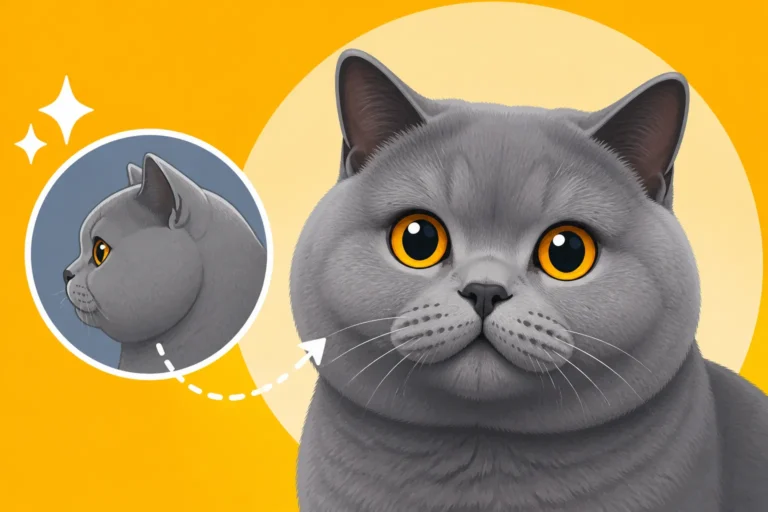
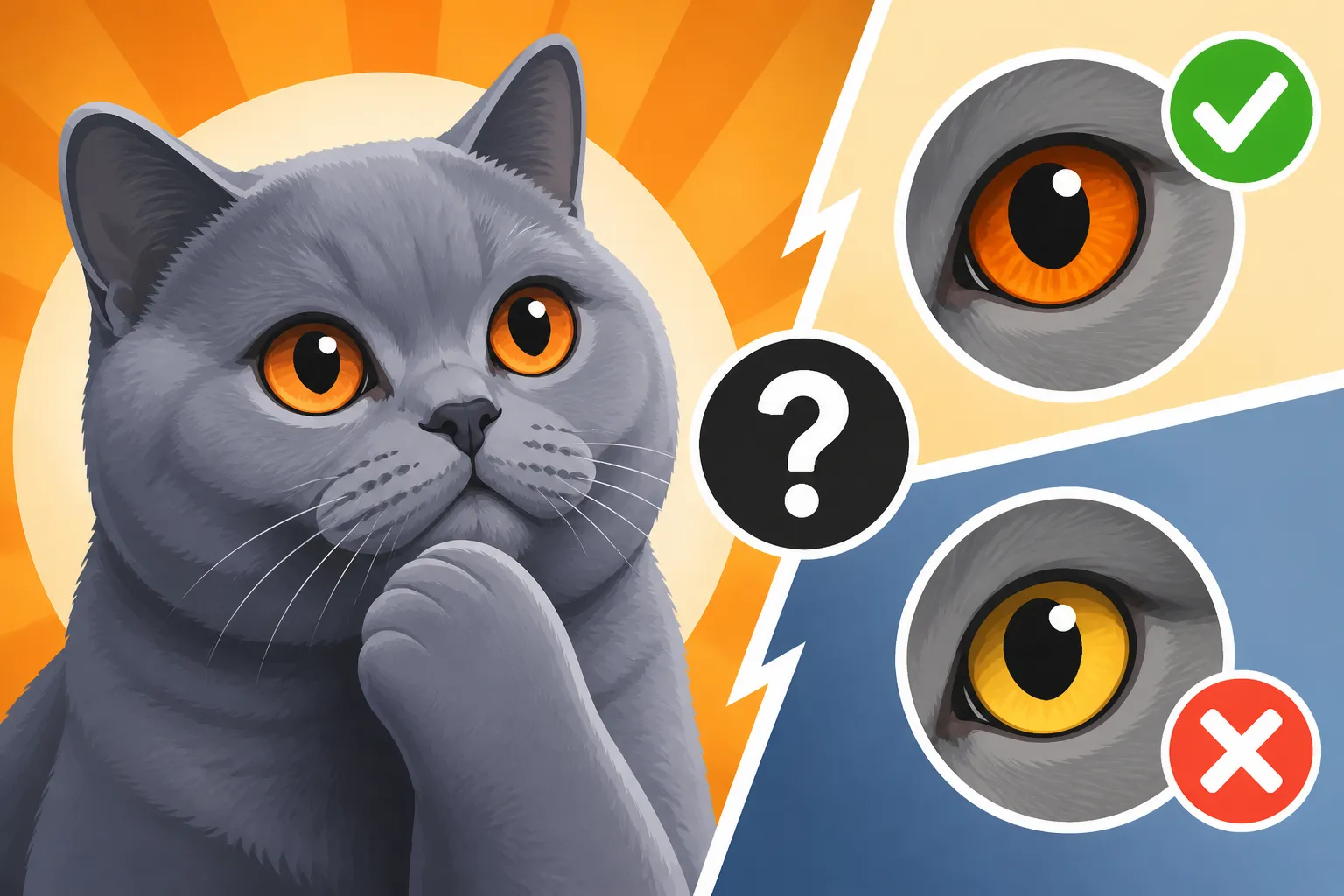
Copper, orange, and deep gold eyes are strongly associated with British Shorthairs, especially solid-colored cats such as blue, black, and cream. But “British Shorthairs should have copper eyes” is too broad a rule. Breed standards commonly pair different coat colors and patterns with different eye colors, and the details can vary between registries.
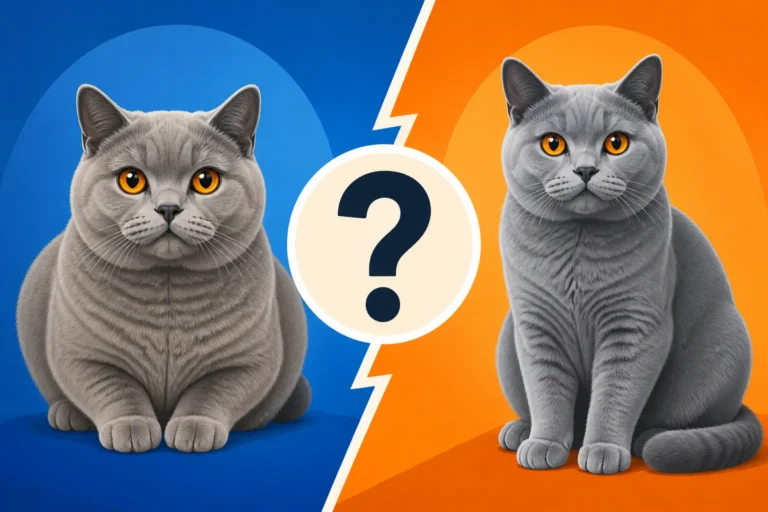
That distinction matters when you are looking at a kitten, considering a breeder’s claims, or simply wondering why your cat’s eyes are green instead of copper. Eye color should be assessed alongside the cat’s coat, pattern, age, and overall health—not as a stand-alone test of whether a cat is a British Shorthair.
Copper is common, but not universal
The familiar blue British Shorthair with a round face and copper eyes is a classic combination. Solid blue cats are often expected to have rich copper, orange, or gold eyes, and many other solid coat colors may also be paired with warm-colored eyes. That popular image is one reason people sometimes assume every British Shorthair should have copper eyes.
A cat with green or blue eyes is not automatically a mismatch. Silver-patterned cats, colorpoints, and white cats may have different expected eye colors. The correct pairing depends on the specific variety and the standard used by the relevant registry. For a broader overview, see Which Eye Colors a British Shorthair Has.
Eye color is also only one part of a breed assessment. A cat’s appearance cannot, by itself, confirm its pedigree. If you are evaluating a kitten, consider the breeder’s documentation and information about the parents as well as the kitten’s physical features.
Coat color and pattern help explain the difference
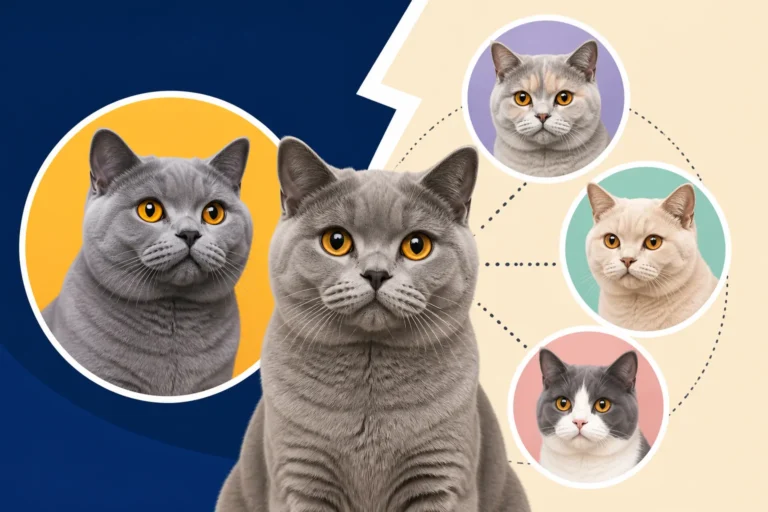
British Shorthairs come in many colors and patterns, not only blue. A solid blue cat may be expected to have copper or gold eyes, while some silver tabbies and shaded cats are associated with green eyes. Colorpoint British Shorthairs are generally associated with blue eyes. White cats may have blue, copper, or odd-colored eyes, depending on the individual and the applicable standard.
The pairings are not just decorative details: breed standards describe the desired appearance for particular varieties. They help explain why two healthy British Shorthairs can have noticeably different eye colors without either being unusual. If you are learning about the breed’s broader range of coats, Which Colors a British Shorthair Comes In is a useful companion topic.
| Coat or pattern example | Eye color often associated with it | What to keep in mind |
|---|---|---|
| Solid blue | Copper, orange, or gold | The classic combination, though exact wording varies by standard |
| Silver tabby or shaded | Often green | The coat’s pattern and variety matter |
| Colorpoint | Blue | A different expected pairing from a solid blue cat |
| White | Blue, copper, or odd-colored | More than one eye-color outcome may be accepted |
| Other solid colors | Often copper, orange, or gold | Check the variety-specific standard rather than relying on a general rule |
These are broad examples, not a substitute for a registry’s written standard. If you are comparing a cat with a particular variety, check that variety’s requirements rather than applying the blue-cat rule to every British Shorthair. You can also explore Which British Shorthair Colors Come With Green Eyes for more on green-eyed varieties.
How eye color develops in British Shorthair kittens
A kitten’s eye color can look different from the color it eventually develops. Many kittens start with blue-looking eyes, then gradually gain pigment as they grow. That normal developmental process can make it difficult to judge a young kitten against an adult breed standard, especially if the final color is expected to be copper, gold, or green.
Why a kitten’s eyes may look blue at first
Newborn kittens’ eyes are not a reliable guide to their adult color. As pigment develops, the eyes may shift from a blue or cloudy-looking appearance toward a more settled shade. The change is gradual, and the timing differs between individuals. A kitten’s early eye color should not be treated as a promise of its final color.
This is one reason responsible evaluation takes patience. A breeder may be able to describe the likely adult eye color based on the kitten’s coat, parents, and development, but a very young kitten’s eyes may not yet show their mature shade clearly. If you are following a kitten’s development, Whether a British Shorthair's Color Changes With Age offers related context about how appearance can change as the cat grows.
When a developing color deserves a closer look
A gradual change in both eyes during kittenhood can be part of normal development. A sudden change in one eye, a new difference between the eyes, or an eye that becomes cloudy, red, swollen, or painful is different. Those are not simply questions of breed appearance and should be discussed with a veterinarian.
It also helps to distinguish eye color from the way an eye looks in a particular room. Natural light, indoor lighting, camera flash, and reflections can make copper eyes appear yellow or make green eyes seem darker. Compare the eyes in soft, natural light before deciding that the color has changed.
If you are wondering whether blue eyes can occur in the breed, the answer depends partly on coat variety. Whether a Blue Eyed British Shorthair Exists explores that question in more detail.
When eye color is a breed detail and when it is a health concern
An eye-color mismatch with an expected coat pairing is usually a question about appearance, standards, or pedigree—not a diagnosis. On the other hand, a noticeable change in an adult cat’s eyes may need prompt attention. The key is to look at the whole picture: whether the difference has always been present, whether it is changing, and whether the cat shows other symptoms.
An unusual pairing does not diagnose a health problem
If your British Shorthair has green eyes where you expected copper, start by checking the cat’s coat variety and the standard you are using. A silver pattern, colorpoint coat, white coat, or another recognized variety may explain the difference. Registries can also differ in how they describe or accept eye-color combinations.
Eye color alone does not establish that a cat is purebred, unhealthy, or unsuitable as a pet. If you are considering a kitten for showing or breeding, ask the breeder which registry’s standard they are following and whether the kitten’s variety is expected to develop a particular eye color. For pets, a healthy, comfortable cat matters more than matching a popular photograph.
Odd-colored eyes can occur in some white cats, with one eye a different color from the other. Whether that pairing is accepted or preferred depends on the relevant standard. For a focused explanation, see Whether an Odd Eyed British Shorthair Is Standard. White coat and blue eyes can also prompt questions about hearing; Whether a White British Shorthair Goes Deaf covers that separate issue.
Watch for changes, not just the shade
A stable eye color that has been present since kittenhood is different from a new change in an adult cat. Contact a veterinarian if one eye changes noticeably, the surface looks cloudy, the pupil shapes differ, or your cat is squinting, rubbing an eye, tearing excessively, or avoiding bright light. Eye problems can worsen quickly, so it is safer not to wait for a color change to “settle” when discomfort or other signs are present.
Avoid using human eye drops or household remedies unless a veterinarian has specifically instructed you to. If there is minor debris around the eye, ask your vet what is appropriate for your cat and how to clean safely. If you are comparing eye-cleaning products at a retailer such as Chewy, check with your veterinary clinic before using a product—especially if the eye is red, painful, or producing unusual discharge. A product intended for general grooming should not be used to treat an eye condition.
How to assess your British Shorthair’s eye color
You do not need specialist equipment to make a reasonable observation. The goal is to look carefully, avoid judging from one photo, and compare like with like: the cat’s age, coat variety, lighting, and the standard relevant to your question.
Use consistent lighting and consider age
Look at your cat’s eyes in indirect daylight rather than relying on a flash photograph. Flash can create glare, and warm indoor bulbs can make gold or copper appear more orange. If you are tracking a kitten’s eye color, take occasional photographs in similar lighting rather than checking repeatedly under different lamps.
For a young kitten, allow for development before deciding that the adult color is unexpected. If the kitten is older and the shade remains unclear, ask the breeder what color is typical for that line and variety. A knowledgeable breeder should be able to explain the expected pairing without promising that every kitten will match a particular photograph exactly.
Ask useful questions if you are speaking with a breeder
If you are choosing a kitten, ask which coat variety the breeder identifies and what eye color is expected as the kitten matures. You can also ask whether the breeder follows a particular registry standard and whether you can see photographs of related adult cats. These questions are more useful than asking simply, “Will the eyes be copper?”
Be cautious of claims that copper eyes alone prove a cat is a purebred British Shorthair. Eye color can be part of the appearance described in a standard, but it is not a stand-alone pedigree certificate. For a wider comparison of the breed’s signature blue appearance and other coat varieties, see What a Blue British Shorthair Looks Like and Whether a Blue British Shorthair Is a Separate Breed From the British Shorthair.
If your concern is an unexpected change rather than the expected color for a coat, speak with your veterinarian. Chewy may be one place owners browse for general grooming supplies, but products marketed for cleaning around the eyes are not a substitute for an examination when symptoms are present. When in doubt, take a clear photo in natural light and ask the clinic whether your cat should be seen.
Disclaimer
This article is for general informational purposes only and does not constitute professional advice. Laws, prices and regulations vary by location and change over time. Consult a qualified professional for guidance on your specific situation.