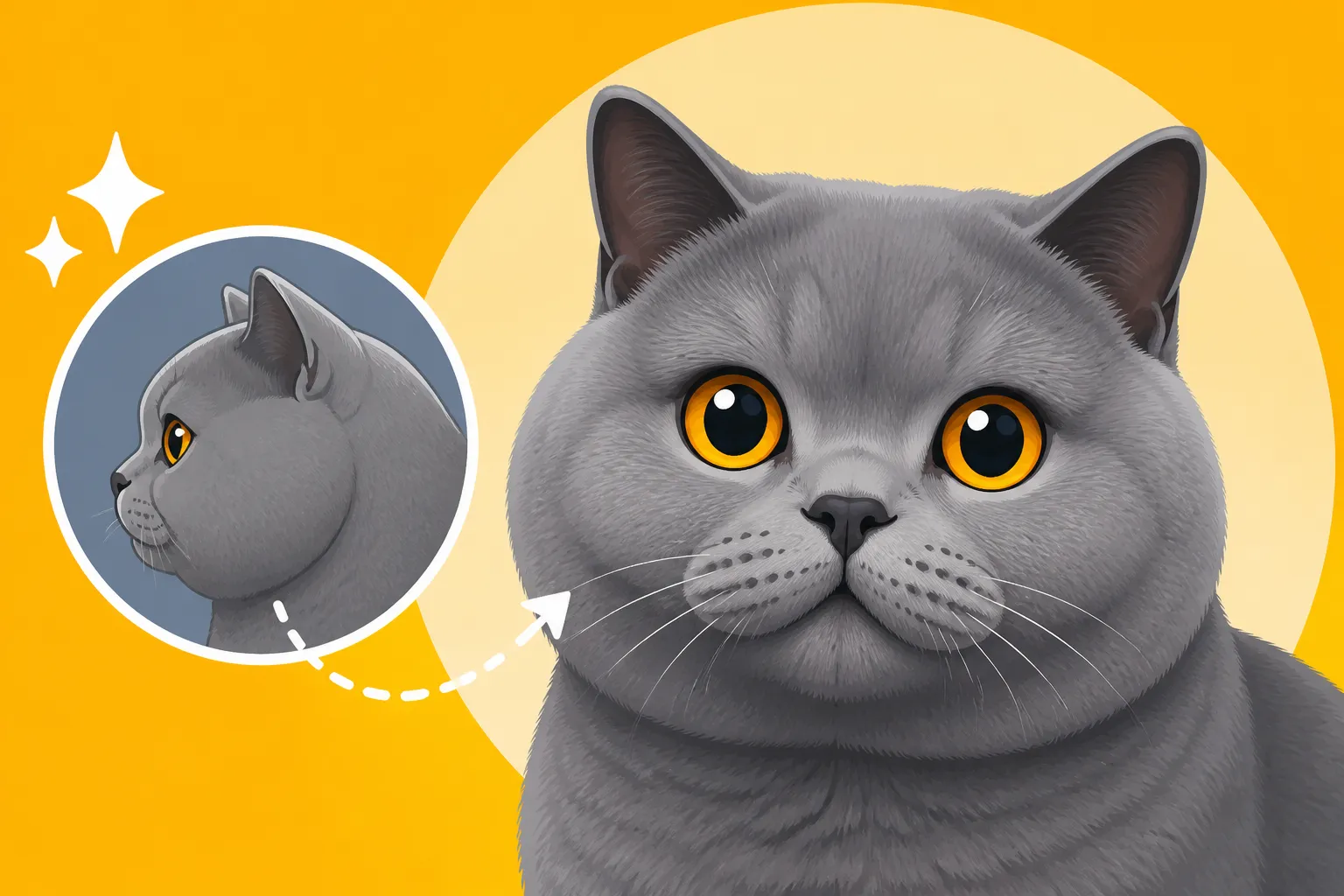
What Full Cheeks Mean on a British Shorthair
A British Shorthair’s full cheeks are part of the breed’s rounded, substantial head—not automatically a sign that the cat is overweight. But plush fur can hide the difference between natural facial shape, extra body fat, and a new swelling that needs attention. This guide explains what full cheeks look like, how they develop, and when a change deserves a vet check.
What full cheeks mean in the British Shorthair
A breed feature, not a separate health sign
In a British Shorthair, “full cheeks” describes the rounded, substantial contours of the face. The cheeks contribute to the breed’s familiar round-headed appearance, alongside a broad skull, round eyes, and a short, broad nose. The overall effect is a cat whose head looks broad and soft-edged rather than narrow or sharply tapered.
The fullness is part of the face’s structure. It is not a pouch of loose skin, and it does not mean the cat has unusually large facial muscles. A British Shorthair’s dense coat can make the cheeks look even more pronounced, so a photo or quick glance may not show where the face ends and the coat begins.
Breed descriptions often call attention to male British Shorthairs’ prominent cheeks, but females can have rounded faces too. Individual cats vary, and a kitten’s face may look less developed than an adult’s. The breed’s signature look is not something a kitten has to display in its fullest form from the start.
For more on the head shape as a whole, see What Shape a British Shorthair's Head Should Be. Full cheeks are one piece of that shape, not a measurement that can be assessed in isolation.
Full cheeks are different from a rounded body
A stocky body and a round face can make it tricky to judge a British Shorthair by appearance alone. A cat may have prominent cheeks and a healthy body condition, or a relatively ordinary-looking face and too much weight around the ribs and abdomen. Facial shape cannot tell you whether your cat is overweight.
Instead, look at the whole body. From above, a healthy cat usually has some waist behind the ribs, though a thick coat may hide it. With gentle pressure, you should be able to feel the ribs beneath the coat without having to press hard. A hanging belly flap can be normal in cats, so it should not be used by itself to judge weight either.
If you’re unsure what you’re feeling through the plush coat, How to Feel a British Shorthair's Ribs offers a more useful check than trying to judge the cat’s weight by the size of its cheeks. Your veterinarian can also assess body condition during an exam and help you track weight over time.
How British Shorthair cheeks develop with age and sex
Why a kitten’s face may look less rounded
British Shorthairs mature gradually. A young cat can have the right general breed appearance without yet having the broad, filled-out head of a mature adult. Cheeks, coat density, and overall body proportions may become more noticeable as the cat grows, so it’s not unusual for a kitten to look less rounded than the adult cats you see in breed photos.
That slow development can cause understandable worry. An owner might compare a six-month-old kitten with a fully grown show cat and wonder whether the kitten’s face is “right.” But photos are easy to misread: lighting, angle, coat condition, and the cat’s age can all make cheeks seem more or less prominent.
A cat’s development is individual, and cheek shape alone cannot confirm pedigree, quality, or health. If you have questions about how your kitten is growing, discuss its overall development with the breeder or veterinarian rather than relying on a single facial feature. For a broader look at maturity, see When a British Shorthair Reaches Full Size.
Why mature males can have especially prominent cheeks
Adult male British Shorthairs are often described as having particularly full cheeks. Hormones can affect facial appearance in intact males, with the cheeks and jowls becoming more pronounced as the cat matures. The amount varies between individuals; a dramatic set of cheeks is not guaranteed, and it is not a requirement for a loving, healthy pet.
The word “jowls” is sometimes used for the thickened lower cheeks of mature males, particularly intact males. It can be confusing because owners may use “cheeks” and “jowls” interchangeably, even though a rounded breed head and hormonally influenced jowl development are not quite the same thing. For a closer explanation of that distinction, see What Full Cheeks Mean on a British Shorthair and What Jowls Are on a Male British Shorthair.
Neutering does not provide a reliable way to predict how a cat’s face will look afterward. A mature male may retain substantial cheek contours, while another cat may never develop very prominent jowls. Decisions about neutering should be made with a veterinarian, based on the cat’s health and circumstances—not as a way to shape its appearance.
| What you notice | More consistent with normal cheek shape | Worth checking with a vet |
|---|---|---|
| Appearance | Rounded, fairly even contours on both sides | A new lump, one-sided swelling, or a change that is getting larger |
| Timing | Present over time or developing gradually with maturity | Appeared suddenly or changed noticeably over a short period |
| Other signs | Cat eats, grooms, and behaves as usual | Drooling, trouble chewing, pawing at the face, pain, or reduced appetite |
| What to do | Monitor the overall face and body condition | Arrange veterinary advice, especially if the cat seems uncomfortable |
How to tell normal cheek fullness from a concerning change
Notice the pattern, not just the size
Normal breed-related fullness is generally part of the face’s overall shape and tends to be relatively even on both sides. It may become more apparent as a young cat matures, but it should not usually appear as a sudden, distinct bulge. If your cat’s face has looked much the same for months and your cat is comfortable, the cheeks are more likely to be ordinary anatomy.
A new change deserves more attention than a naturally round face. Compare the sides gently by looking, not by pressing hard. Notice whether one cheek looks different, whether the change is close to the eye or jaw, and whether the skin or fur seems unusually warm, red, or irritated. Take a clear photo in consistent lighting if you want to track a change before speaking with the clinic.
Do not repeatedly squeeze or probe a lump to try to work out what it is. That can hurt your cat and won’t reliably distinguish normal tissue from a problem. A veterinarian can examine the area and decide whether further assessment is needed. If the change is sudden, painful, or accompanied by other symptoms, contact a clinic promptly.
Look for changes in eating, grooming, and comfort
Facial swelling is more concerning when it comes with signs that your cat feels unwell. Watch for chewing on one side, dropping food, reluctance to eat, drooling, bad breath, pawing at the mouth, or pulling away when the head is touched. Changes in grooming or hiding can also be clues that something is bothering the cat, even if it is not obvious at first glance.
Dental and mouth problems may be difficult to spot at home, especially in a cat that resists having its mouth examined. Don’t force the jaws open. If you notice discomfort, a veterinary exam is the safer route; Gingivitis in a British Shorthair and Tooth Resorption in a British Shorthair explain two dental concerns owners may ask about.
Breathing difficulty, marked facial swelling, or rapid deterioration calls for urgent veterinary care. A cat with trouble breathing should not be made to wait while you monitor the cheeks at home. For less urgent but persistent concerns, call your clinic and describe when the change began and what other signs you’ve noticed.
Caring for a British Shorthair’s face and overall condition
Keep routine checks gentle
You don’t need to measure your cat’s cheeks or inspect its face every day. A calm, familiar routine is more useful: notice how the face usually looks, keep an eye on appetite and grooming, and mention any meaningful change during regular veterinary visits. A quick photo now and then can help you compare over time, particularly if your cat is still growing.
When grooming, use a gentle touch around the face and stop if your cat becomes uncomfortable. British Shorthairs have dense coats, but face shape is not something you should trim or sculpt to make cheeks look fuller. If you need grooming supplies, a retailer such as Chewy can help you browse combs and grooming tools by type; choose equipment suited to a short, dense coat and introduce it gradually.
If your cat avoids brushing or seems bothered by handling around the head, keep sessions brief rather than turning them into a struggle. Positive, low-pressure handling makes it easier to notice changes later and helps maintain trust. For more on the coat itself, see What a British Shorthair's Coat Is Like.
Assess weight with the whole cat in mind
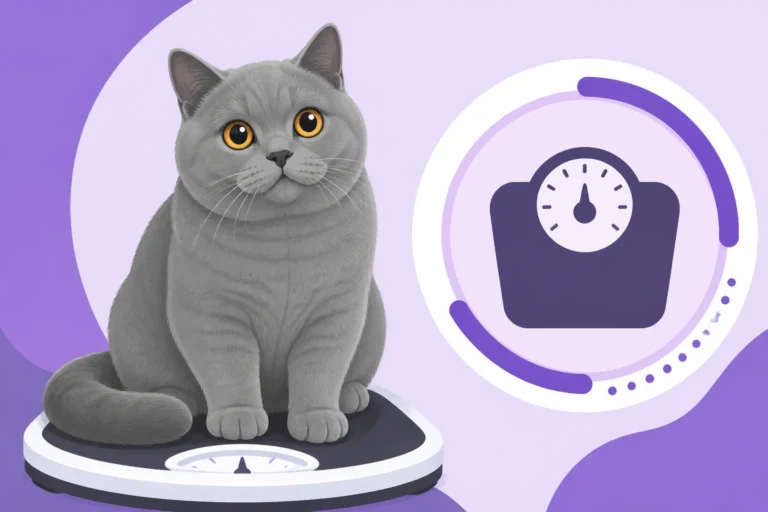
Because British Shorthairs are naturally solid-looking and their coats are thick, weight can be easy to misjudge. A weekly or regular home weigh-in can help reveal a gradual change that is hard to see in the mirror. Use the same scale and similar conditions where possible, and write down the results instead of relying on memory.
A household scale may not register a cat accurately on its own. One practical method is to weigh yourself, then weigh yourself while holding the cat and subtract the first reading. If your cat dislikes being held, ask your veterinary clinic about another way to monitor weight. A pet scale or other weighing equipment can be compared through retailers such as Chewy, but make sure the setup is stable and comfortable before using it.
Avoid cutting food sharply because your cat looks round, or because a weight reading worries you. Cats need gradual, carefully managed weight changes; a veterinarian can help set an appropriate feeding plan and check whether weight gain reflects diet, activity, or another concern. For steps on checking body condition, read How to Score a British Shorthair's Body Condition. If you’re worried about weight specifically, Signs a British Shorthair Is Overweight can help you focus on the clues that matter more than cheek size.
Cheeks are a charming part of the British Shorthair’s look, but they are only one feature of a cat that changes with age, sex, coat, and individual build. If you’re comparing grooming tools or equipment for routine care, Chewy may be one place to compare available categories, while your veterinarian is the right person to assess a new lump, swelling, pain, or change in eating.
Disclaimer
This article is for general informational purposes only and does not constitute professional advice. Laws, prices and regulations vary by location and change over time. Consult a qualified professional for guidance on your specific situation.