Why a British Shorthair Looks Like a Teddy Bear
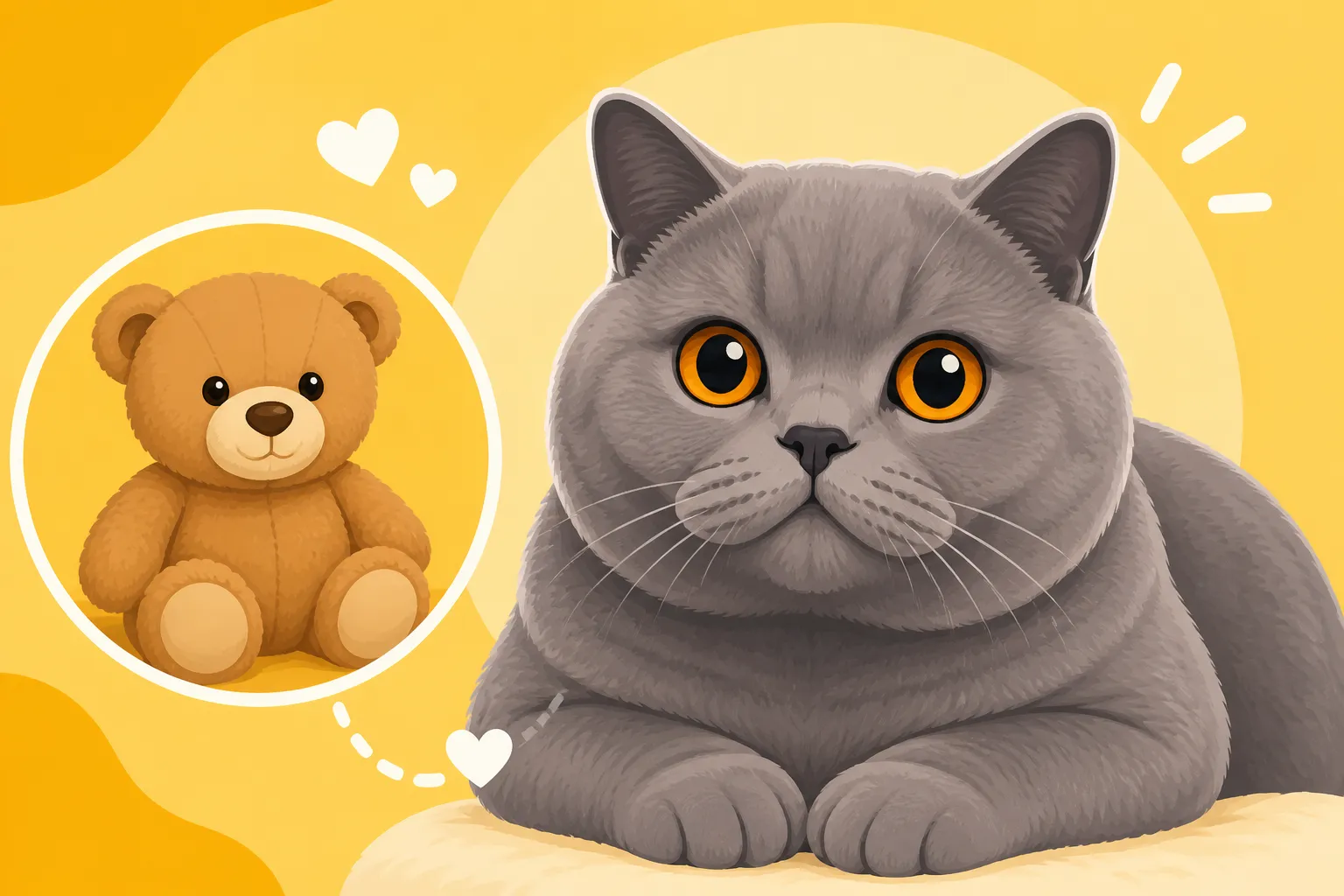
A British Shorthair can look less like a typical house cat and more like a plush teddy bear: round face, full cheeks, large eyes, and a thick coat that seems to stand away from the body. That look comes from a combination of breed features, not one unusual trait. This guide explains what creates the effect and how it changes as a cat grows.
The features that give a British Shorthair its teddy bear look
A round head, full cheeks, and small-looking ears
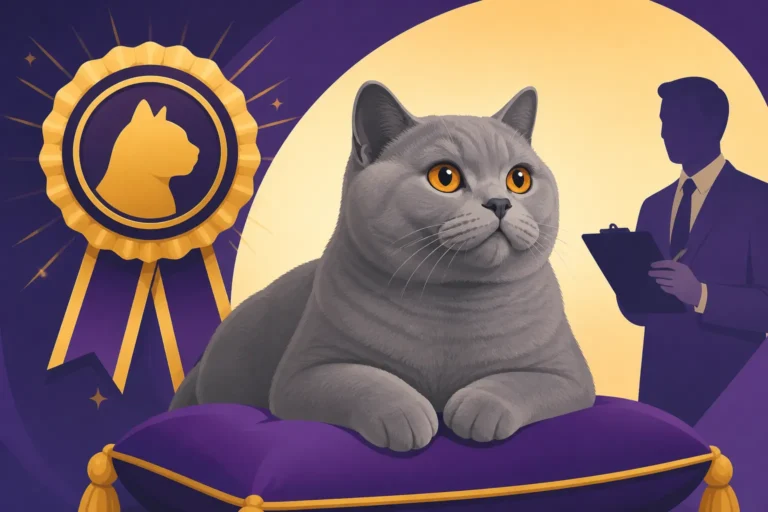
The British Shorthair’s head is broad and rounded, with a short, sturdy muzzle and a strong chin. Its cheeks are especially noticeable in mature males, whose facial shape can become fuller as they grow. Together, these features create the soft, rounded outline people often compare to a teddy bear.
The ears contribute to the impression, too. They are generally small to medium in size and set well apart, so they do not interrupt the rounded shape of the head. Their tips are rounded rather than sharply pointed. The result is a face that looks compact and balanced, not angular.
This is a breed characteristic, not a sign that a cat is overweight or unusually young. A British Shorthair can have full cheeks and a rounded face while being in healthy condition. If you are trying to distinguish a breed’s natural build from extra body fat, compare the face with the rest of the cat and assess body condition separately. The Round Head and Copper Eye a British Shorthair Is Judged On goes into the breed’s facial features in more detail.
Large eyes that add to the soft expression
British Shorthairs have large, round eyes that are set widely apart. Their shape and placement make the face look open and gentle, especially when the cat is relaxed and looking straight ahead. In blue British Shorthairs, the eyes are often copper or gold, producing a striking contrast with the coat. Eye color varies among coat colors and patterns, though, so not every British Shorthair has copper eyes.
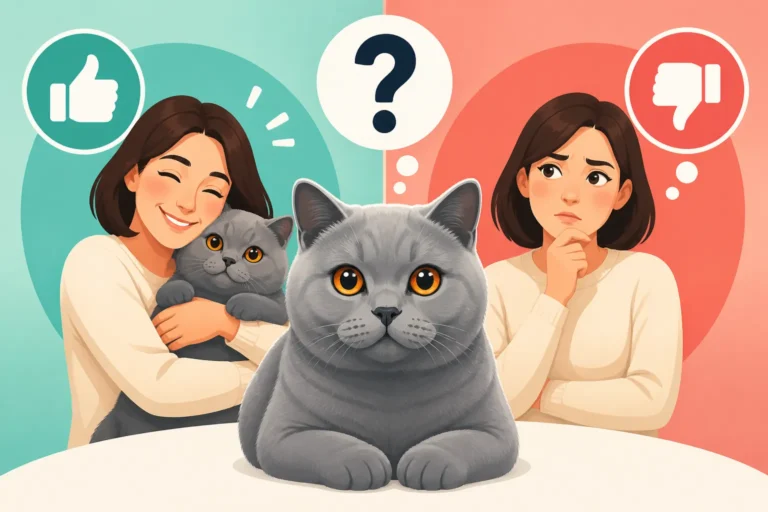
The expression can be a little misleading. A British Shorthair may look sweet and approachable without wanting to be scooped up or cuddled. The breed’s teddy bear appearance describes its physical features, not a guaranteed personality. Individual cats differ, and many enjoy being close to people while preferring to sit beside them rather than on a lap. A British Shorthair Sits Near You, Not On You explores that difference between appearance and affection.
A still face can also look serious or grumpy, particularly when the cat is resting. That does not necessarily mean it is unhappy. Look at the whole picture: posture, ears, tail, activity, appetite, and usual habits. A sudden change in expression or behavior matters more than a face that naturally looks solemn.
A dense coat that creates a plush outline
The British Shorthair’s coat is short but unusually dense, with a firm, springy texture. It stands away from the body rather than lying flat and sleek. That gives the cat a rounded outline, making the body appear soft and stuffed, even though the coat itself is not necessarily silky.
The coat is also a reason the teddy bear comparison can be a little misleading. It may look like something you would want to hug, but cats have their own preferences about handling. A British Shorthair’s coat can be pleasant to stroke, yet the cat may still dislike being held. Let it choose when and how long to interact, and pay attention to signs that it wants a break.
Regular combing helps remove loose hair and keep the coat in good condition. A metal comb can be useful for reaching through the dense coat without rough brushing. If you are shopping for grooming supplies, a retailer such as Chewy may offer several comb styles; choose a tool that feels gentle on your cat and use it with a light hand. Why a Comb Beats a Brush on a British Shorthair explains why the right grooming approach matters for this coat.
The body shape behind the plush appearance
A sturdy, compact build
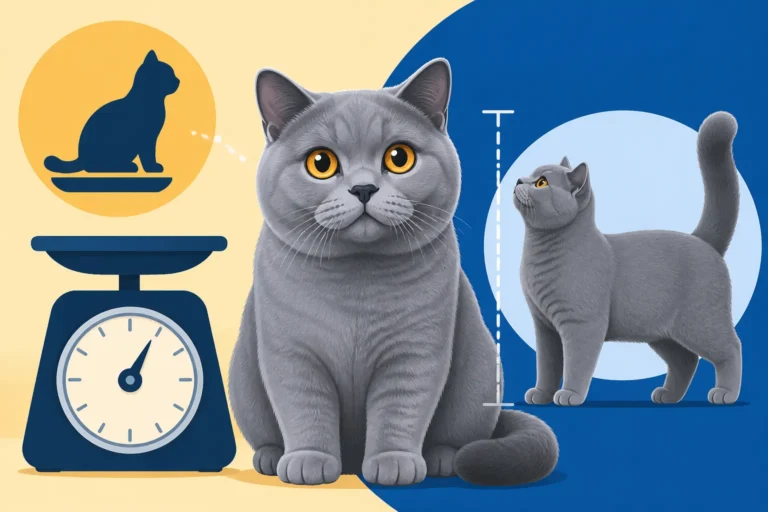
The British Shorthair is a solid, muscular cat with a broad chest, strong legs, and a substantial body. Its overall build is often described as cobby: compact and sturdy rather than long and lean. The combination of that shape and a dense coat makes the cat look especially rounded from the side.
A broad body does not automatically mean a cat is carrying excess weight. The coat can obscure the waist, and the breed’s natural proportions can make it difficult to judge by sight alone. It is more useful to feel gently along the ribs and look at the cat from above and from the side. A healthy cat should have a body shape that suits its frame, not simply the most rounded silhouette.
This distinction matters because the teddy bear look can make weight gain easy to overlook. A cat may seem “naturally chunky” when its waist is becoming less visible or its ribs are increasingly difficult to feel. For practical ways to assess shape through a thick coat, see How to Tell a Chunky British Shorthair From a Fat One and How to Feel a British Shorthair's Ribs Through the Plush.
A thick tail and short, strong legs
The tail is typically thick at the base and rounded at the tip, which adds to the breed’s sturdy appearance. The legs are strong and proportionate to the body. They may look short beside the broad torso, but the breed is not meant to have extremely short legs or a flattened, exaggerated shape.
A British Shorthair should look balanced, not so round or heavy that it struggles to move comfortably. If the cat is reluctant to jump, groom, or walk, do not assume that it is simply being lazy or that its build explains the change. Pain, weight gain, and other health issues can affect movement. A cat’s characteristic outline is not a reason to dismiss new difficulties.
The same visual caution applies to photos and breed descriptions. Camera angles, posture, coat condition, and age can make a cat look more or less rounded. The breed standard gives a general picture, but individual cats will not all have identical proportions. What a British Shorthair Weighs and How Big It Gets provides more context on the breed’s size and build.
| Feature | How it contributes to the teddy bear look | What to keep in mind |
|---|---|---|
| Broad, rounded head | Creates a soft, circular face shape | Face shape alone does not indicate body weight |
| Full cheeks | Add width around the muzzle, especially in mature males | Cheek fullness is a breed feature, not a personality clue |
| Large round eyes | Give the face an open, gentle expression | Eye color depends partly on coat color |
| Dense, upright coat | Makes the outline look plush and rounded | Short hair still needs regular grooming |
| Compact, muscular body | Gives the cat a sturdy, stuffed appearance | Check body condition rather than judging by silhouette |
| Thick tail | Adds to the overall solid proportions | Tail shape varies among individual cats |
How the teddy bear look changes with age and coat color
Kittens do not always look like miniature adults
British Shorthair kittens can have round faces and dense coats, but their proportions change as they grow. A young kitten may look more delicate, with a less-developed body and cheeks. The mature, broad appearance develops gradually rather than arriving all at once.
The breed also tends to mature slowly. A cat can continue filling out after its first birthday, and its head, cheeks, and body may look more substantial as it approaches adulthood. That does not mean a kitten should be pushed to grow faster or fed extra food to achieve a certain look. Growth should be steady and guided by appropriate nutrition, not by a desire for a rounder silhouette.
If you have brought home a kitten and are comparing it with photos of adult British Shorthairs, give it time. Differences in age, lighting, coat stage, and family traits can make comparisons confusing. For more on the gradual development of the breed’s shape, see How Long a British Shorthair Takes to Fill Out.
Coat color changes the impression, not the underlying build
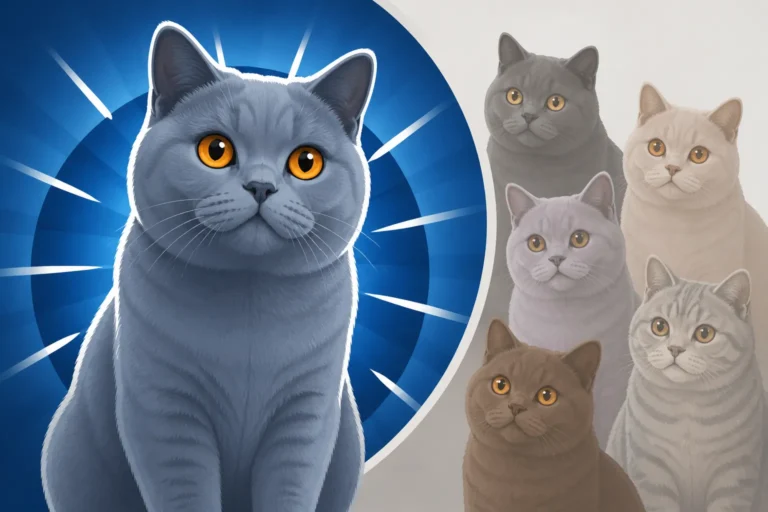
Blue is the best-known British Shorthair color, and its even, solid appearance can emphasize the cat’s rounded outline. But the teddy bear look is not exclusive to blue cats. British Shorthairs come in many colors and patterns, and coat color does not create the breed’s basic head shape, body structure, or coat density.
Some color combinations can make the face appear different in photographs. A strong contrast around the eyes or muzzle may draw attention to particular features, while a uniform coat may make the head and body look like one continuous shape. But a cat’s appearance in a photo can also be affected by lighting, camera distance, and whether its coat is freshly groomed.
If you are choosing a British Shorthair, it is worth looking beyond color and appearance. Ask about health, temperament, care needs, and the cat’s background. The same advice applies whether you are meeting a kitten in a home or considering an adult cat through a rescue. A British Shorthair Comes in More Colors Than You Think explains the range of colors and patterns you may encounter.
Caring for a cat that looks like a plush toy
Grooming the dense coat without overdoing it
A British Shorthair’s short coat is not maintenance-free. Loose hair can collect in the coat and around the home, particularly during seasonal shedding. Gentle combing helps lift dead hair and gives you a chance to check for tangles, skin irritation, or changes in the coat.
Start with short, calm grooming sessions. Let your cat inspect the comb, then try a few strokes over the back or sides before stopping. If it turns away, flicks its tail, tenses, or tries to leave, pause rather than holding it still. A cat that learns grooming does not become a struggle is more likely to tolerate it over time.
Avoid assuming that a thick coat needs forceful brushing or frequent bathing. Too much pressure can irritate the skin or damage the coat’s texture. Chewy and other pet-supply retailers may carry combs and grooming gloves, but the most important choice is a tool suited to your cat’s coat and comfort. For coat-care guidance, see How Often a British Shorthair Needs Combing.
Supporting a healthy body beneath the round outline
The teddy bear look can make it tempting to think of a British Shorthair as naturally heavy. But a broad, muscular frame and excess fat are not the same thing. Measure food portions, keep treats in proportion, and use your veterinarian’s advice to set a healthy feeding plan. A cat that always seems interested in food may still need measured meals rather than an endlessly full bowl.
Movement matters as well. British Shorthairs are often calm, but they still benefit from play and opportunities to explore. Try a wand toy, a short food puzzle, or a game that encourages a few bursts of chasing. If a cat ignores one toy, that does not mean it cannot enjoy play; it may need a different pace, location, or type of activity. Getting a Low Energy British Shorthair to Move offers ideas for encouraging movement without expecting a naturally calm cat to behave like a high-energy breed.
Set up the home for comfort as your cat ages. A sturdy, easy-to-enter bed and a litter box with enough room can help a solid-bodied cat move around more easily. If you are comparing supplies, Chewy may be one place to browse wider beds, low-entry boxes, or food puzzles; check dimensions and your cat’s needs rather than choosing solely by appearance. For litter-box considerations, see Litter and Boxes for a Cat as Wide as a British Shorthair.
Ultimately, the British Shorthair looks like a teddy bear because several breed traits work together: a round head, full cheeks, large eyes, a dense coat, and a compact, sturdy body. The look is charming, but the cat inside it is an individual with preferences, energy levels, and care needs of its own. Enjoy the plush appearance while making decisions based on comfort, health, and the cat’s actual behavior.
Disclaimer
This article is for general informational purposes only and does not constitute professional advice. Laws, prices and regulations vary by location and change over time. Consult a qualified professional for guidance on your specific situation.