A British Shorthair Comes in More Colors Than You Think
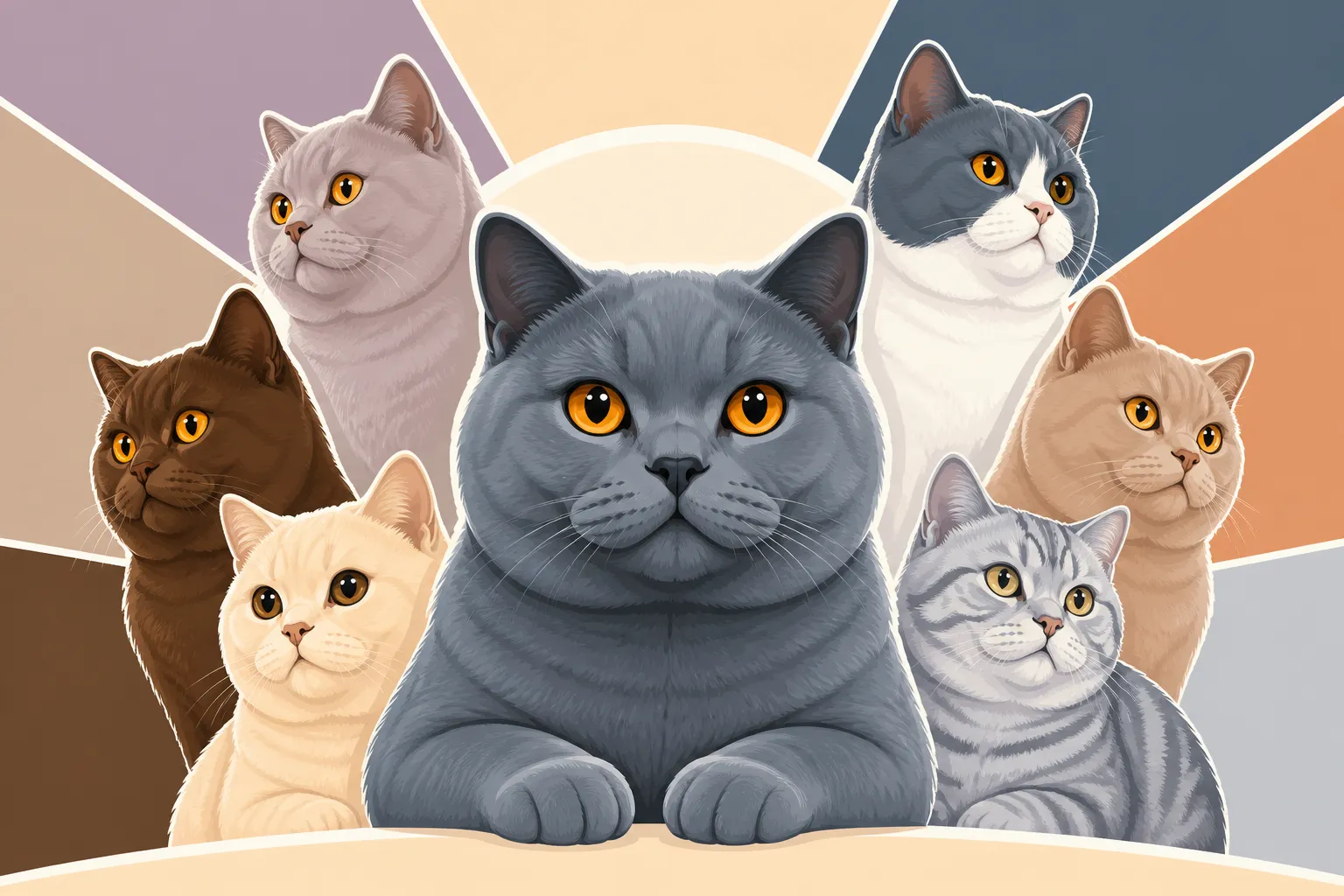
When you first picture a British Shorthair, chances are a certain image immediately pops into your mind: a sturdy, plush, round-faced cat with gorgeous copper eyes, sporting a dense, solid blue coat. It’s the iconic "British Blue," immortalized in countless memes and advertisements. While this classic look is undeniably charming and has made the breed famous, many potential owners are genuinely surprised to learn that the British Shorthair actually comes in an astonishing array of colors and patterns. This guide will take you on a journey through the dazzling diversity of British Shorthair coats, proving there's so much more to this magnificent breed than just blue.
Beyond the Iconic British Blue: A World of Solid Hues
The British Shorthair is celebrated for its dense, plush coat and round, teddy bear-like appearance, and while blue is the most famous, it’s far from the only solid color available. Imagine your surprise when you discover the rich tapestry of single-color coats this breed can sport, each bringing its own unique charm and depth to that classic, cobby physique. Owners often feel a delightful sense of discovery when they see the full spectrum for the first time.
The Classic Blue: Why It's So Famous
Ah, the British Blue. This is the color that really put the British Shorthair on the map, isn't it? When you envision a British Shorthair, that calm, dignified feline with its solid, uniform grey-blue fur is probably what you see. Historically, blue was the dominant color and was so prevalent that for many years, "British Blue" was almost synonymous with the breed itself. Its soft, muted tone perfectly complements the breed's stocky build and large, expressive copper-gold eyes, creating a timeless and elegant look that has captivated cat lovers for generations. It’s no wonder it holds such a special place in the hearts of enthusiasts and the public alike. You can learn more about its history in Why the Blue Became the British Shorthair Everyone Pictures.
The blue color is actually a dilute form of black, meaning the black pigment is softened, resulting in that beautiful greyish-blue hue. The coat should be consistent in color from root to tip, without any shading or tabby markings. This uniform appearance adds to its stately charm. Many breeders still specialize in blues, upholding the tradition and ensuring the quality of this signature color remains paramount. For those seeking that quintessential British Shorthair aesthetic, the blue will always be the standard-bearer, a testament to the breed's enduring appeal.
Despite its ubiquity, a truly perfect British Blue is a sight to behold. The depth of color, the density of the plush fur, and how it perfectly frames those arresting eyes all contribute to its beauty. It’s a color that exudes a quiet sophistication, often associated with the breed's calm and composed temperament. This is the cat that looks perpetually ready for a photoshoot, whether lounging regally on a sofa or observing its surroundings with keen, intelligent eyes.
Rich and Earthy Tones: Black, Chocolate, and Lilac
Moving beyond blue, the British Shorthair offers a palette of deeper, more luxurious solid colors that are equally stunning. Black British Shorthairs, for instance, are incredibly striking, with their sleek, glossy coats absorbing the light and making their round, copper eyes truly pop. Sometimes, in direct sunlight, you might even notice a subtle reddish undertone, especially in kittens, which usually disappears as they mature. Chocolate and lilac are also gaining popularity, offering warm, earthy alternatives to the classic blue.
Chocolate British Shorthairs boast a rich, warm brown color, reminiscent of decadent dark chocolate. It's a deep, luscious hue that can range from a lighter milk chocolate to a darker, more intense bittersweet shade. This color pairs beautifully with their amber or gold eyes, giving them a very distinctive and appealing appearance. Lilac, on the other hand, is a more subtle and sophisticated shade, often described as a warm grey with a pinkish or lavender undertone. It's a dilute of chocolate, much like blue is a dilute of black. A lilac British Shorthair has an ethereal quality, especially when the light catches its soft, velvety fur. You can see more about this beautiful shade in What a Lilac British Shorthair Looks Like.
These colors, while not as widely recognized as blue, offer a wonderful sense of rarity and distinctiveness. Finding a well-bred black, chocolate, or lilac British Shorthair can be a real treasure. They possess all the charming characteristics of the breed – the round head, the powerful body, the plush coat – but with a coat color that sets them apart. They prove that the British Shorthair's appeal isn't just about one specific shade, but the overall harmony of form and fur.
Creamy Delights: Cream and Red
For those who prefer lighter, warmer tones, British Shorthairs also come in solid cream and red. These colors bring a softness and warmth to the breed's appearance, contrasting beautifully with their often intense copper or gold eyes. A solid cream British Shorthair is a picture of gentle elegance, its coat a uniform pale buff or beige, with no hint of white or shading. It’s like a scoop of delicious vanilla ice cream, incredibly soft and inviting.
Red British Shorthairs, sometimes referred to as orange or ginger, are vibrant and full of character. Their coats are a rich, warm reddish-orange hue, consistent throughout, although some ghost tabby markings might be visible, particularly on the legs, tail, and face, due to the genetics of the red pigment. This is often accepted in solid red cats. These fiery-coated felines exude a cheerful and bold presence. Both cream and red colors add another layer of diversity to the British Shorthair palette, showcasing how adaptable and varied the breed truly is.
Imagine a sunny afternoon, a Cream British Shorthair dozing on a window sill, its pale coat glowing in the light. Or a playful Red British Shorthair pouncing on a toy from your Chewy order, its vibrant fur a blur of motion. These colors are not just visually appealing; they often seem to embody a cozy, inviting personality. They are less common than blue, but absolutely captivating for those who encounter them.
The Elegance of White
A solid white British Shorthair is a breathtaking vision of purity and grace. Their coats are a pristine, unblemished white, often with a remarkable shimmer. What's truly fascinating is the variety of eye colors you can find in white British Shorthairs. While many will have the characteristic copper or gold eyes, some may display striking blue eyes, or even heterochromia – one blue eye and one copper eye. These odd-eyed whites are particularly rare and sought after for their unique, captivating gaze.
The genetics behind white cats can be complex, and it's worth noting that white coats can sometimes be associated with certain health considerations, especially deafness, though this isn't universal. Breeders of white British Shorthairs are typically very diligent in their screening processes to ensure the health of their kittens. For anyone considering a white British Shorthair, understanding these potential links and discussing them with a reputable breeder is crucial. For more details, you might want to look into Whether a White British Shorthair Goes Deaf.
A pure white British Shorthair, with its soft, dense fur and dignified demeanor, often looks like a living snowdrift, bringing an undeniable touch of sophistication to any home. They are relatively rare, which adds to their allure. Maintaining that pristine white coat might require a little more attention than other colors, but for many owners, the effort is well worth the reward of such a stunning companion.
The Art of the Tabby British Shorthair: Patterns Galore
If you thought solid colors were the extent of the British Shorthair's wardrobe, prepare to be amazed by the intricate and diverse world of tabby patterns. Tabby cats are not a separate breed but rather cats with a specific gene that produces stripes, swirls, or spots. On a British Shorthair's plush coat, these patterns take on a unique, dense appearance, making them particularly striking. It's a common misconception that "tabby" is a color; in reality, it's a pattern that can appear in various colors, from brown and blue to red and silver.
Classic, Mackerel, and Spotted Tabbies
The tabby pattern expresses itself in several distinct ways, each adding a different texture and visual appeal to the British Shorthair's coat. The Classic Tabby, also known as a blotched tabby, is perhaps the most famous and widely recognized. It features broad, swirling patterns on the sides of the cat, often resembling a bullseye or a marble cake. There's also a distinct "M" shape on the forehead and bands around the legs and tail. This bold, intricate pattern looks especially stunning on the British Shorthair's dense fur, creating a plush, luxurious tapestry.
The Mackerel Tabby is what most people think of when they picture a striped cat. It has narrow, parallel stripes running down the sides of the body, much like the skeleton of a fish (hence "mackerel"). These stripes are evenly spaced and generally unbroken, giving the cat a wilder, more athletic look. On a British Shorthair, these stripes are often softer and more blurred than on other breeds, blending slightly into the plush coat. Finally, the Spotted Tabby is characterized by distinct spots all over the body, which can vary in size and shape. These spots are essentially broken mackerel stripes. Each spot should ideally be round and well-defined, offering a charming, playful appearance. All tabby patterns also feature the classic "M" on the forehead, eyeliner-like markings around the eyes, and often striped legs and ringed tails.
These tabby patterns can come in a variety of base colors, such as brown (black tabby), blue (blue tabby), red (red tabby), and cream (cream tabby), adding even more layers of visual interest. For instance, a brown classic tabby British Shorthair will have rich black swirls on a brownish-orange background, while a blue mackerel tabby will display muted grey stripes on a lighter grey base. The depth and clarity of these patterns are truly beautiful, showcasing the genetic artistry within the breed.
Silver and Golden Tabbies: Shimmering Beauties
Among the most captivating tabby variations are the silver and golden tabbies. These coats possess a truly magical quality, a shimmering luminescence that makes them appear to glow. A Silver Tabby British Shorthair has a striking contrast: black or blue tabby markings on a dazzling, silvery-white ground color. The individual hairs are typically silver at the root, fading into the color of the pattern at the tip, creating a luminous effect. The most common silver tabby is the silver classic tabby, with its dramatic black swirls against a brilliant silver backdrop. They are incredibly popular for their sophisticated and eye-catching appearance.
The Golden Tabby is a newer and increasingly popular color, offering a warm, rich alternative to silver. These cats have black or brown tabby markings on a luxurious, warm golden or apricot ground color. Like the silvers, the individual hairs are often darker at the tip and lighter, a beautiful golden hue, at the root, contributing to their shimmering effect. A well-bred golden tabby British Shorthair truly looks like it's bathed in sunlight, radiating warmth and opulence. You can explore more about this radiant color in What a Golden British Shorthair Is.
Both silver and golden tabbies are admired for their depth and complexity. The interplay of light and shadow on their coats is mesmerizing, making them appear almost alive with movement even when they are perfectly still. These are definitely colors that command attention and showcase the immense versatility of the British Shorthair's genetic makeup. Finding cat trees and toys that complement these metallic coats can be a fun activity when browsing Chewy.
Patched and Torbie Patterns
The world of tabby patterns expands further into more complex and multi-tonal variations, such as patched tabbies and torbies. These patterns introduce a delightful mix of colors, adding even more character to the British Shorthair's already charming appearance. A Patched Tabby is essentially a tabby pattern (classic, mackerel, or spotted) that also includes patches of red or cream. So, imagine a brown classic tabby with distinct patches of red or cream integrated into its swirled pattern. These are typically female cats, as the gene for red/cream color is linked to the X chromosome, and females have two X chromosomes, allowing for both colors to be expressed.
A Torbie, or tortoiseshell tabby, is a patched tabby where the red or cream patches are mingled with black, blue, chocolate, or lilac tabby patterns. Instead of large, distinct patches like a calico, the colors are usually more interwoven and blended. For example, a brown torbie would have black tabby markings interspersed with red tabby markings. The effect is a beautiful, mottled tapestry of stripes and swirls in a warm, multi-hued coat. These cats are always a surprise, as no two torbie patterns are exactly alike, making each one truly unique.
These intricate patterns highlight the genetic artistry within the British Shorthair breed, producing cats that are both visually stunning and utterly individual. They represent a fusion of tabby markings with the charming, random splashes of color found in tortoiseshells, offering a dynamic and captivating aesthetic. Owning a patched tabby or torbie British Shorthair means having a cat with a truly one-of-a-kind coat, a living work of art that continuously reveals new details as you admire it.
The Allure of Particolor British Shorthairs: Patches of Perfection
Particolor British Shorthairs are those magnificent felines adorned with clearly defined patches of two or more distinct colors, typically including white. These are often the cats that make you stop and stare, their coats a vibrant, living mosaic. The arrangement and size of these patches can vary wildly, from small splashes to large, bold areas, making each particolor cat unique. The genetics behind these patterns are fascinating, often involving a combination of color genes and the white spotting gene.
Tortoiseshell: A Mosaic of Color
The Tortoiseshell British Shorthair, affectionately known as a "tortie," is a true masterpiece of nature. This pattern is characterized by a beautiful, often random, mingling of black (or its dilutes like blue or chocolate) and red (or its dilute, cream). The colors are typically swirled or patched together, creating a rich, vibrant tapestry that is absolutely captivating. You won't find two torties with identical patterns; each one is a unique work of art. The black and red pigments usually create a striking contrast, making the tortie a visually dynamic cat. For more on this, you can check out Whether a Tortoiseshell British Shorthair Exists.
What's particularly fascinating about tortoiseshell cats is their genetics: they are almost exclusively female. The genes for black and red fur color are carried on the X chromosome, and since females have two X chromosomes (XX) and males have one (XY), a female can express both black and red simultaneously. A male tortie is a genetic rarity, usually occurring due to a chromosomal abnormality (XXY). This makes every tortie British Shorthair a special, often sassy, lady! Their coats are a celebration of color, full of warmth and character, perfect for brightening any home.
The patches in a tortie can be large and distinct, or they can be smaller and more finely interspersed, creating a "brindled" effect. Regardless of the specific distribution, the overall impression is one of depth and richness. A good tortie British Shorthair will have vibrant, clear colors, often complemented by striking copper or gold eyes that seem to sparkle against their complex coats. They truly embody the phrase "a patchwork of perfection."
Calico and Dilute Calico: More Than Just Three Colors
If you love the multi-colored beauty of a tortoiseshell but also appreciate the clean contrast of white, then the Calico British Shorthair might just steal your heart. A calico cat is essentially a tortoiseshell with the addition of significant white patching. This means you'll see large, distinct patches of black (or blue, chocolate, lilac) and red (or cream) alongside equally distinct areas of pure white. The white typically covers a significant portion of the body, creating clear boundaries between the color patches. Just like torties, calico British Shorthairs are almost exclusively female due to the genetic factors involved. You can read up on them in Whether a Calico British Shorthair Exists.
Adding another layer of nuance is the Dilute Calico. This variant follows the same pattern as a standard calico, but with the dilute forms of the colors. Instead of black and red patches, you'll see blue and cream patches, interspersed with white. This gives the cat a softer, more pastel appearance, equally beautiful but with a gentler contrast. Imagine soft blue-grey, creamy peach, and pristine white patches flowing together on a plush British Shorthair coat – truly stunning.
Calico and dilute calico British Shorthairs are celebrated for their bold, cheerful appearance. The clear white spaces make the other color patches stand out even more, creating a dynamic and visually appealing coat. They are often seen as symbols of good luck in various cultures, and their vibrant personalities often match their colorful coats. Finding a high-quality calico or dilute calico British Shorthair means embracing a cat that is both a living art piece and a charming companion, bringing joy with every glance at their unique pattern.
Bicolor and Van: Dramatic Color Blocks
For those who love striking contrasts and bold statements, the Bicolor and Van patterns offer dramatic flair. A bicolor British Shorthair, as the name suggests, has patches of one solid color (or tabby pattern) combined with white. The most common bicolor is black and white, but you can find blue and white, red and white, chocolate and white, and so on. The key characteristic is that the white covers a significant portion of the underside, chest, legs, and often a blaze on the face, leaving large, distinct patches of the other color on the back, sides, and head. This creates a very appealing, often tuxedo-like appearance, giving them a smart and polished look.
The amount of white can vary, but for a true bicolor, there should be a good distribution. Imagine a gorgeous blue British Shorthair with a pristine white chest, white paws, and a neat white muzzle. It's a classic, charming look that never goes out of style. Bicolors are often among the most expressive, as their contrasting colors highlight their features.
The Van pattern takes the concept of white patching to an extreme. Named after the Turkish Van cat, this pattern features a predominantly white body with color restricted primarily to the head (often between the ears and extending slightly down the back of the neck) and the tail. Sometimes there might be small, isolated spots of color on the body, but the vast majority of the cat's fur is pure white. A Van patterned British Shorthair looks incredibly regal and unique, almost as if they're wearing a little cap and tail of color. These cats are particularly striking, showcasing the incredible range of genetic expression within the breed, offering yet another stunning option beyond the traditional blue.
| Pattern Type | Description | Common Colors | Key Feature |
|---|---|---|---|
| Solid | Uniform color from root to tip, no markings | Blue, Black, Chocolate, Lilac, Cream, Red, White | Single, consistent hue |
| Tabby | Striped, swirled, or spotted pattern | Brown, Blue, Red, Cream, Silver, Golden | "M" on forehead, defined markings |
| Tortoiseshell | Random patches or brindling of black/dilute and red/cream, no white | Black/Red, Blue/Cream, Chocolate/Red, Lilac/Cream | Intermingled colors, almost always female |
| Calico | Distinct patches of black/dilute, red/cream, AND white | Black/Red/White, Blue/Cream/White | Three clear colors including white, almost always female |
| Bicolor | Distinct patches of one solid color (or tabby) and white | Blue/White, Black/White, Red/White, Silver Tabby/White | Clear color blocks with substantial white coverage |
| Van | Predominantly white body with color restricted to head and tail | Any solid color or tabby | Almost entirely white, colored head and tail |
| Shaded | Color only on the tips of the hairs, light undercoat, shimmering effect | Silver Shaded, Golden Shaded | Pale base, colored tips, delicate shading |
| Smoke | Solid colored tips with a stark white or pale undercoat visible when fur moves | Black Smoke, Blue Smoke, Chocolate Smoke | Dramatic contrast when coat parts |
| Colorpoint | Darker color on extremities (points), lighter body, blue eyes | Seal Point, Blue Point, Lilac Point, Chocolate Point | Siamese-like pattern, always blue eyes |
Shaded and Smoke British Shorthairs: Depth and Mystery
Beyond the clear-cut solid and particolor patterns, the British Shorthair also offers more subtle and ethereal coat types: shaded and smoke. These variations play with the depth of the fur, creating an illusion of shifting color and intriguing contrasts, adding a layer of mystery and sophistication to the breed's appearance. They are often incredibly beautiful, with coats that seem to move and change with the light.
Shaded British Shorthairs: Tips of Color
The Shaded British Shorthair is a truly exquisite and delicate coat pattern, characterized by color that appears only on the very tips of the individual hairs, with a much lighter, often pure white or pale cream, undercoat. This creates a stunning shimmering effect as the cat moves, almost as if a fine veil of color has been draped over their lighter base. It's a challenging pattern to breed for perfection, requiring precise genetic expression. The effect is one of remarkable depth and elegance, making these cats look quite aristocratic.
The most famous examples are the Silver Shaded and Golden Shaded. A Silver Shaded British Shorthair has black tipping over a pure white undercoat, creating a magnificent frosted silver appearance. Their eyes are typically green, a stunning contrast to their silvery fur. These cats often look like they're sculpted from moonlight. On the other hand, a Golden Shaded British Shorthair features black or brown tipping over a warm apricot or golden undercoat, giving them a radiant, sun-kissed glow. Their eyes are usually green, amber, or gold, complementing their rich tones. You can delve deeper into this gorgeous color in What a Silver Shaded British Shorthair Is or What a Golden British Shorthair Is.
These shaded coats are prized for their softness and ethereal quality. They are distinct from tabbies because there are no clear markings or stripes; the color is uniformly distributed across the tips. The depth of tipping is crucial: too much color, and it looks like a smoke; too little, and it appears almost white. A perfectly shaded British Shorthair is a marvel to behold, representing the pinnacle of subtle color artistry in the breed.
Smoke British Shorthairs: A Veil of Color
If shaded coats are delicate veils, then Smoke British Shorthairs are dramatic cloaks of color. A smoke British Shorthair appears to be a solid-colored cat at first glance, but when the fur parts or the cat moves, a stark white or very pale silver undercoat is revealed. The individual hairs are solid colored for a significant portion of their length, but the roots are much lighter. This creates a mesmerizing contrast that gives the coat an incredible depth and a somewhat mysterious aura. It's like looking through a dense fog to see something lighter beneath.
Smoke can occur in various base colors, such as Black Smoke, Blue Smoke, Chocolate Smoke, and Lilac Smoke. A Black Smoke British Shorthair, for example, will look like a solid black cat until you ruffle its fur, revealing the gleaming white undercoat underneath. This dramatic effect is particularly striking and unexpected. The contrast is much more pronounced than in a shaded cat, where the tipping is lighter and the undercoat is usually very pale anyway. In a smoke, the shift from a deep, rich color to a pale root is truly a "wow" moment.
Smoke British Shorthairs often have bold, copper eyes that stand out beautifully against their darkly tipped, light-rooted coats. They possess a sophisticated and somewhat enigmatic appeal. When choosing supplies for these beauties, especially grooming tools, remember that their dense coats benefit from good quality combs from retailers like Chewy to keep their undercoats healthy and free from tangles. The smoke pattern adds a wonderful layer of intrigue to the British Shorthair's already diverse palette, offering an option for those who appreciate both boldness and subtle surprises in a feline companion.
The Striking Pointed British Shorthair: Color on the Extremities
Among the many surprising colors and patterns the British Shorthair can display, the "pointed" variety often generates the most excitement and sometimes, a little confusion. These cats bear a striking resemblance to a Siamese in terms of their color distribution, with darker color on their extremities (face, ears, paws, and tail) and a much lighter body. This distinctive look, combined with their characteristic blue eyes, makes them stand out beautifully within the British Shorthair family. They're a testament to the breed's evolving genetic diversity.
Understanding Colorpoint Genetics
The unique coloring of a Colorpoint British Shorthair is due to a specific gene mutation that affects pigment production. This gene is temperature-sensitive, meaning that pigment only develops properly in cooler areas of the body. The extremities—the "points"—are naturally cooler, allowing the color to fully express itself, while the warmer core of the body produces very little pigment, resulting in a pale cream or off-white hue. Kittens are typically born entirely white or very pale, and their points gradually darken as they grow and are exposed to cooler temperatures. This is why a kitten’s points might look a little different from its adult coloring.
This fascinating genetic trait is recessive, meaning both parents must carry the gene for it to be expressed in the kittens. The colorpoint pattern was introduced into the British Shorthair gene pool through outcrosses, particularly with Persian lines, many decades ago during the breed's post-war rebuilding efforts. These outcrosses brought not only new colors but also sometimes, unfortunately, health concerns like Polycystic Kidney Disease Came Into the British Shorthair With the Persians. Today, reputable breeders carefully manage their lines to ensure the health and integrity of these beautiful pointed cats. The stunning contrast and captivating blue eyes are what make colorpoints truly special.
The depth of color on the points can vary from cat to cat, and also depends on environmental factors. Cats living in colder climates might develop darker points, while those in warmer environments might have lighter points. It’s a dynamic and living canvas, constantly adapting. This pattern has a long and interesting history, reflecting the breed's journey and adaptations over the years. You can read more about British Shorthair history in The British Shorthair Started as a British Street Cat.
Popular Colorpoint Variations
Just like solid British Shorthairs come in various colors, so too do the points of a Colorpoint British Shorthair. The base color of the points can be black, blue, chocolate, or lilac, leading to several beautiful variations. The most well-known is the Seal Point, where the points are a deep, rich black-brown, contrasting dramatically with the pale body. These cats are incredibly striking, with dark masks, ears, paws, and tails.
Then there's the Blue Point, which has slate grey-blue points that are a softer contrast to the creamy body. This is a subtle and elegant look, much like the classic British Blue, but with the added distinction of the point pattern. Chocolate Points feature warm, medium brown points, while Lilac Points display delicate, pinkish-grey points, creating a very ethereal and refined appearance. Each of these point colors brings its own unique charm to the British Shorthair's robust physique and sweet expression. Finding the right colorpoint can be a delightful quest, and some breeders might even show their Whether a British Shorthair Breeder Shows Echo Results.
All colorpoint British Shorthairs share the characteristic piercing blue eyes, which are an essential part of the pattern. This vibrant blue eye color stands out beautifully against both the darker points and the lighter body, completing the distinctive colorpoint aesthetic. Whether it's the dramatic Seal Point or the gentle Lilac Point, these cats prove that the British Shorthair's beauty extends far beyond its traditional image, offering a truly diverse and enchanting selection for cat lovers. You can explore Whether a Colorpoint British Shorthair Is Accepted to see how popular this variant has become.
How Coat Color and Pattern Develop in British Shorthairs
Understanding how a British Shorthair gets its amazing coat color and pattern is a journey into basic genetics. It's not just random chance; it's a complex interplay of genes inherited from both parents. For prospective owners, having a basic grasp of this can demystify why a litter might produce such a variety of beautiful kittens, and why certain colors are more common or rarer than others. It also highlights the meticulous work of dedicated breeders who aim for specific colors and patterns while always prioritizing health.
Genetics and Inheritance
At the heart of every British Shorthair's coat color and pattern are genes passed down from its mother and father. Each parent contributes a set of genes, and these genes carry information for various traits, including color, pattern, and dilution. For example, the gene for black pigment is dominant, while the gene for red pigment is on the X chromosome, explaining why tortoiseshell and calico cats are almost always female. Dilution genes, which turn black into blue or chocolate into lilac, are recessive. This means a cat needs two copies of the dilute gene (one from each parent) to express a dilute color. If it only gets one, it's a "carrier" and can pass the dilute gene on without showing it itself.
Patterns like tabby are also genetically determined. The tabby gene is dominant, which means a cat only needs one copy to display a tabby pattern. However, other genes then determine which type of tabby pattern (classic, mackerel, spotted) it will be. Colorpoint genetics, as discussed earlier, are recessive and temperature-sensitive. This intricate genetic puzzle explains why two solid blue British Shorthairs might surprisingly produce a lilac kitten if both carry the recessive chocolate gene. Reputable breeders meticulously track the genetics of their breeding cats to predict potential outcomes and ensure genetic diversity and health. They know their lines, sometimes for generations, making it easier to understand how these beautiful colors emerge.
This is why, when you're looking at a kitten, understanding its parents' colors and any known carrier status can give you a clue about its own genetic potential, even if its current kitten fur is still developing. It’s a fascinating aspect of British Shorthair breeding that combines science with the art of creating stunning animals.
Surprises in the Litter Box
Even with careful genetic planning, a litter of British Shorthair kittens can still hold wonderful surprises. While breeders can predict outcomes with a high degree of accuracy based on the parents' known genetics, recessive genes can sometimes lie hidden for generations, only to surface unexpectedly. For instance, two seemingly solid blue parents who both carry the gene for long hair could, on rare occasions, produce a British Longhair kitten in their litter. Similarly, if both parents are carriers for the colorpoint gene, even if they aren't pointed themselves, they can produce colorpoint kittens. This makes the arrival of each new litter an exciting event, full of anticipation.
Another common "surprise" is how kitten colors evolve. Many kittens are born with very pale or indistinct coats, and their true color and pattern develop over their first few weeks or months. For example, a red or cream British Shorthair kitten might appear almost white at birth, with its vibrant color gradually intensifying. Similarly, tabby markings might be subtle in a newborn, becoming more defined as the fur grows in. Colorpoint kittens are especially notorious for this, being born nearly white and only developing their darker points as they mature and are exposed to cooler temperatures. You may be surprised to see how much a British Shorthair kitten's eye color changes. You can read more about that in Whether a British Shorthair Kitten's Eye Color Lasts.
These transformations are part of the joy of watching British Shorthair kittens grow. It underscores that while genetics lay the foundation, the full expression of a cat's beauty often takes time to unfurl. This continuous development means that the kitten you choose today might look even more magnificent as it matures, showcasing the full splendor of its inherited colors and patterns. Many owners find themselves endlessly fascinated by the subtle shifts and deepening hues of their feline companions.
Beyond Aesthetics: What Color Means (and Doesn't Mean)
While the vast array of British Shorthair colors and patterns is undeniably captivating, it's important to remember that a cat's true essence goes far beyond its coat. Many myths and misconceptions exist about how color might influence a cat's health or personality. As a responsible future owner, it's crucial to separate fact from fiction and prioritize the well-being and temperament of your feline companion above all else. A cat is a lifelong commitment, and its health and happiness matter far more than its specific shade of fur.
Color and Health Associations
For the most part, a British Shorthair's coat color has no bearing on its health. A blue British Shorthair is generally no healthier or less healthy than a chocolate or red one. However, there are a few rare instances where specific color genetics can be loosely associated with certain health considerations. The most well-known example is the link between solid white cats and deafness. While not all white cats are deaf, and many are perfectly hearing, the gene that produces white fur can sometimes be associated with congenital deafness, especially in blue-eyed white cats. This is why responsible breeders of white British Shorthairs will often screen their kittens for hearing.
Another, more general, point often discussed is the prevalence of certain genetic conditions within specific breed lines, regardless of color. For instance, HCM in a British Shorthair Has No DNA Test, which means breeders must rely on regular cardiac screening via ultrasound (echoes) for all colors. Similarly, Polycystic Kidney Disease Came Into the British Shorthair With the Persians and while it has been largely bred out, it was not linked to a specific coat color. So, while a rare link like white and deafness exists, it's far more important to focus on the overall health screening practices of a breeder, rather than making assumptions based purely on coat color. A truly healthy cat is a well-bred cat, irrespective of its hue.
It’s about understanding the breed's genetic predispositions as a whole, rather than fixating on individual colors. Asking about health testing for What a British Shorthair Breeder Should Have Tested and getting a clear health guarantee are far more impactful than choosing a cat solely based on its color to avoid perceived risks. A healthy cat will bring joy and companionship for years, regardless of its beautiful coat.
Does Color Influence Temperament?
This is a question cat lovers have debated for ages: does coat color determine a cat's personality? For British Shorthairs, the answer is a resounding "not really." While anecdotal evidence and old wives' tales might suggest that, say, torties are "tortitude" incarnate (feisty and opinionated) or ginger cats are particularly friendly, scientific studies generally don't support a strong link between coat color and temperament in cats. A British Shorthair's calm, easygoing, and affectionate nature is characteristic of the breed as a whole, irrespective of whether it's blue, silver tabby, or calico. You can delve into this topic further in Whether Coat Color Changes a British Shorthair's Nature.
A British Shorthair's personality is primarily shaped by its genetics (meaning its breed traits, inherited from its parents), its early socialization experiences, and its individual upbringing. A kitten that is handled gently from a young age, exposed to various sights and sounds, and raised in a loving environment is far more likely to develop into a well-adjusted, friendly adult, regardless of its coat. Similarly, factors like whether a cat is neutered or spayed can have a far greater impact on its behavior than its color.
So, while it's fun to speculate, when choosing a British Shorthair, it's best to prioritize a kitten that shows a confident, friendly demeanor, comes from a reputable breeder who focuses on temperament, and has been well-socialized. Your relationship with your cat will be built on mutual respect and affection, not on the color of its fur. Embrace the diversity of colors, but let personality and health be your guiding stars.
Finding Your Perfect British Shorthair Color
Given the incredible spectrum of British Shorthair colors and patterns, how do you choose the "right" one? The first piece of advice is always to fall in love with the cat, not just the color. While it's natural to have aesthetic preferences, the most important factors should be the cat's health, temperament, and whether it's coming from a reputable, ethical breeder. A healthy, well-socialized British Shorthair, regardless of color, will bring immense joy and companionship to your life.
Once you've ensured those crucial elements, then you can indulge your aesthetic desires. Do you adore the classic elegance of a blue? Are you drawn to the shimmering mystery of a silver shaded? Or perhaps the cheerful mosaic of a calico? Don't rush the decision. Take your time to research, visit breeders (if possible), and look at many different British Shorthairs in person or through high-quality photos and videos. Websites like Chewy are great for researching cat supplies, food, and toys, but when it comes to finding a reputable breeder, direct contact and referrals are key.
Remember that each color and pattern tells a story of the breed's rich history and genetic diversity. From the ancestral blue street cats mentioned in The British Shorthair Started as a British Street Cat to the infusions of Persian blood that helped create new colors and coat densities, every hue and design is a part of what makes this breed so special. Ultimately, the "perfect" British Shorthair color is the one that captures your heart and brightens your home, combining stunning looks with a loving, healthy personality.
Disclaimer
This article is for general informational purposes only and does not constitute professional advice. Laws, prices and regulations vary by location and change over time. Consult a qualified professional for guidance on your specific situation.