Whether the Romans Brought the British Shorthair’s Ancestors
Have you ever looked at your British Shorthair, with their ancient, wise gaze, and wondered about their origins? It’s a fascinating thought, to imagine their ancestors roaming the cobbled streets of Roman Britain or perhaps just quietly existing on farms long before any official "breed" existed. This guide will delve into the enduring question of whether the majestic British Shorthair can trace its roots back to the cats brought over by the Romans.
The Roman Empire's Feline Companions
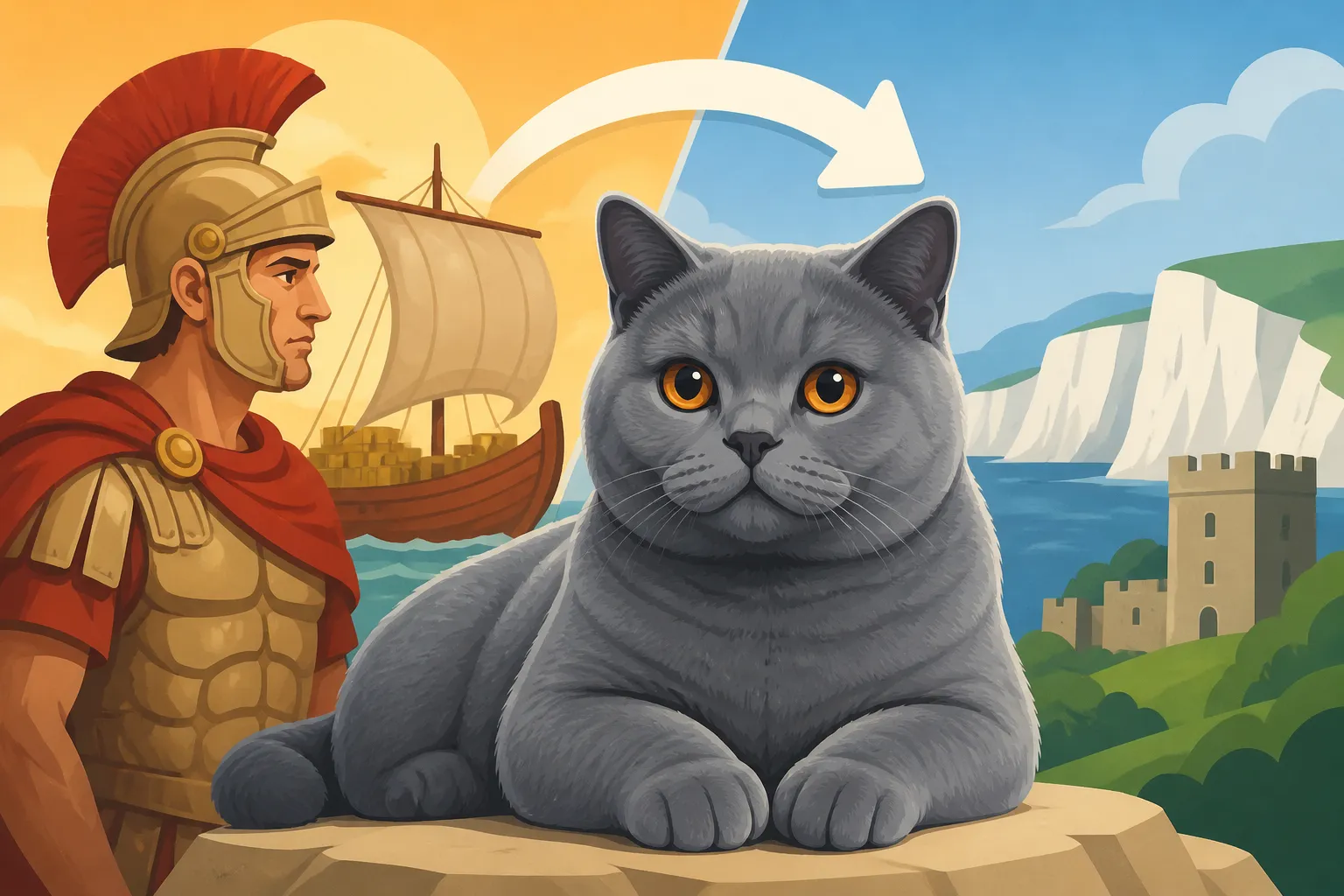
The idea that the Romans might have introduced cats to Britain isn't just a whimsical thought; it's rooted in their historical practices. The Roman Empire was a vast, sprawling entity, and as they expanded, they brought their culture, technology, and yes, their animals with them.
Cats in Roman Society
For the Romans, cats weren't just fluffy companions; they were practical members of the household and military. Imagine a Roman granary, filled with precious grains destined to feed soldiers or citizens. Without effective pest control, these stores would quickly be overrun by rodents. Enter the cat, a silent, efficient hunter, far more effective and less labor-intensive than human efforts alone. These cats were valued for their mousing skills, protecting valuable food supplies from rats and mice. They also served a similar purpose on Roman ships, keeping the holds clear of vermin that could spoil cargo or chew through essential ropes. So, while we might picture them as pampered pets, their primary role was utilitarian, an essential component of Roman infrastructure. This historical context makes the idea of them traveling with Roman legions or merchants quite logical, a far cry from the modern concept of ordering specialized cat food from a place like Chewy for your beloved British Shorthair today.
How Cats Traveled with Romans
The movement of Roman legions across Europe and into Britain involved a monumental logistical effort. Soldiers, supplies, and indeed, camp followers and animals, all traveled together. Cats, being useful for rodent control, would have been present in military camps, settlements, and on supply ships. When a Roman legion established a new fort or town, the infrastructure for daily life, including food storage, would have followed. It’s entirely plausible that cats, as protectors of these vital stores, would have been part of this migration. They weren't shipped over as beloved pets in the way we might carefully transport our own British Shorthairs today; rather, they were working animals, invaluable assets in the ongoing fight against pests in a pre-industrial world. Their presence would have been an organic part of the Roman expansion, spreading wherever Roman influence took root.
Tracing the British Shorthair's Ancestry
Before the concept of distinct cat breeds, cats simply existed, evolving naturally within their environments. The British Shorthair, as we know it, is a relatively modern creation, but its deep roots lie in the general cat population of Britain.
Native British Cats Before Rome
Before the Romans set foot on the British Isles, there were likely already native wildcats roaming the landscape. These were hardy, independent creatures, perfectly adapted to the temperate climate. Whether domestic cats were present before the Romans is a subject of ongoing debate, but many historians believe the arrival of the Romans marked the significant introduction of domesticated felines to the region. These early cats, whether indigenous or early imports, would have been quite different from the robust, teddy-bear-like British Shorthair we adore. They were likely smaller, leaner, and perhaps more skittish, retaining many characteristics of their wild ancestors. The idea of a cat having a distinct "breed" with a specific appearance was centuries away; they were simply "cats," valued for their hunting prowess.
The Evolution of the British Shorthair Breed
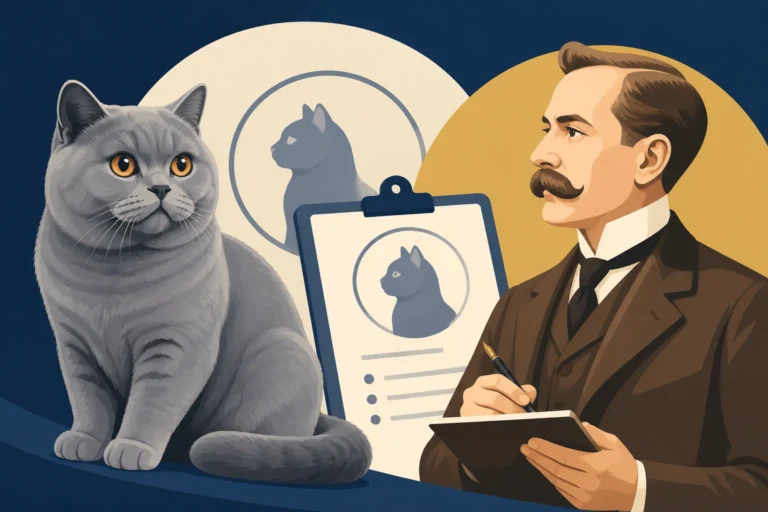
The British Shorthair, as a recognized breed, really began to take shape much, much later, in the 19th century. Harrison Weir, a pioneering figure in the cat fancy, is often credited with "founding" the breed by selecting the finest examples of native British cats—often described as street cats or farm cats—and breeding them for specific traits. He sought to create a standardized cat that embodied the sturdy, intelligent, and calm disposition he observed in these local felines.
This process involved careful selective breeding, focusing on features like the dense, plush coat, the round head, and the striking copper eyes. The goal was to refine these cats into a distinct and identifiable type. In essence, the British Shorthair wasn't "discovered" but rather developed from the common domestic cats that had thrived in Britain for centuries. These were the descendants of any cats that had arrived on the island, whether with the Romans, later traders, or had been native for even longer. This selective breeding eventually gave us the breed we know and love, a cat with a temperament that truly exemplifies its calm and collected heritage, even if you sometimes wish they'd be a bit more playful to work off those treats you bought from Chewy. You can learn more about this in The British Shorthair Started as a British Street Cat.
Debating the Roman Connection
The question of Roman influence on the British Shorthair's lineage is a captivating one, sparking historical and genetic discussions. There are compelling arguments on both sides, making it a rich area for speculation and study.
Arguments for Roman Influence
The primary argument for Roman influence hinges on the simple fact of their extensive presence and the utility of cats. Roman settlements were widespread and long-lasting, covering much of England and parts of Wales and Scotland for nearly 400 years. During this period, trade routes flourished, and legions moved constantly. It's almost inconceivable that cats, so vital for pest control in granaries, homes, and on ships, wouldn't have been part of this extensive movement. The Mediterranean cats that accompanied the Romans would have interbred with any existing native cat populations, or established new ones if domestic cats were scarce prior to their arrival. This foundational influx of feline genetics could have laid the groundwork for the general cat population from which the British Shorthair would later emerge. Imagine the busy Roman port towns, with cats slinking through warehouses, keeping the stores clear. These cats would have been essential, just as important as the provisions they protected. It’s not a stretch to imagine their descendants slowly adapting to the British climate and eventually contributing to the hardy, robust cats that caught Harrison Weir's eye so many centuries later.
Arguments for Independent Development
On the other hand, some theories suggest that the British Shorthair's ancestors may have developed largely independently, or that any Roman influence was less significant than sometimes assumed. It's possible that domestic cats arrived in Britain through other, earlier migrations or trade routes, perhaps with Phoenician traders or other pre-Roman cultures, though evidence for this is sparser. Another point is that while the Romans were present for centuries, the direct genetic lineage might have been diluted or replaced by later introductions from other parts of Europe during subsequent invasions or migrations. The British Isles have a long history of human settlement and trade, and with people came their animals. Each wave of migration could have brought new cat populations, continually adding to the genetic melting pot.
Furthermore, the modern British Shorthair breed, with its distinctive features, was largely a product of deliberate breeding efforts in the 19th century. While its foundation stock came from the general British cat population, the specific characteristics we associate with the breed were refined through human selection, rather than being a direct, unaltered inheritance from ancient Roman cats. The environment and natural selection certainly played a role in shaping the hardiness of these cats, allowing them to thrive as What a British Shorthair Was Kept For on a Farm, but the specific "look" is a more recent development.
Genetic Clues and Modern Understanding
Thanks to advancements in genetic science, we can now look beyond historical records and archaeological finds to understand the deep history of our feline friends. DNA studies offer fascinating insights into the origins and migrations of domestic cats.
Modern DNA Studies
Recent genetic research on domestic cats has revealed a complex and often surprising history of feline migration. Studies often point to two main maternal lineages for domestic cats: one originating in the Near East (which spread with early agriculturalists) and another from ancient Egypt (which spread with the Roman Empire and later maritime trade). When scientists analyze the DNA of modern cat populations, including those in Britain, they can trace these lineages back.
What these studies often show is a mix. While there's strong evidence of cats spreading with the Roman Empire throughout Europe, the exact proportion of that genetic contribution to the present-day British cat population, and specifically to the British Shorthair's core lineage, can vary. Some studies suggest a significant Roman-era input, especially in Western Europe. Other research indicates that later migrations, perhaps during the Viking era or medieval trade routes, also played a substantial role in shaping the genetic landscape of European cats. It’s not a simple case of "A or B"; it’s usually a mosaic of influences over millennia. These genetic analyses provide a much clearer picture than archaeological records alone, helping us to differentiate between the various waves of feline immigration. This really helps us understand How Long the British Shorthair's Ancestors Have Lived in Britain.
The Blending of Ancestries
Ultimately, it’s most realistic to view the British Shorthair’s ancestry as a beautiful blend of many influences over a long period. The cats the Romans brought almost certainly contributed to the genetic pool of cats in Britain. They adapted to the local climate, hunted alongside settlers, and reproduced. Over the centuries that followed the Roman departure, waves of other peoples—Anglo-Saxons, Vikings, Normans—also brought their own cats. Each group would have added to the existing population, creating a rich tapestry of feline genetics.
The British Shorthair, therefore, isn't just a direct descendant of Roman cats, nor is it purely a product of a single, isolated British lineage. Instead, it represents the culmination of centuries of natural selection, interbreeding, and eventually, the deliberate efforts of early cat fanciers like Harrison Weir who saw the potential in these hardy, common domestic cats and decided to refine them. So, when you look at your British Shorthair today, you're not just seeing a descendant of ancient Rome, but a living piece of history, a resilient testament to centuries of feline companionship and adaptation across the British Isles. It’s a remarkable legacy, one that continues to captivate cat lovers and inspires us to ensure their health and happiness, perhaps with the best food and toys from Chewy.
| Aspect of Ancestry | Argument for Roman Influence | Argument for Independent/Later Development |
|---|---|---|
| Arrival in Britain | Romans brought working cats for pest control, establishing the first widespread domestic cat populations. | Cats may have arrived earlier via other trade routes, or Roman influence was diluted by later migrations. |
| Genetic Contribution | Significant initial genetic input from Mediterranean cats with Roman expansion. | Later European cat populations (e.g., Viking, medieval traders) also heavily contributed, diversifying the gene pool. |
| Breed Development | Roman-era cats formed a foundational part of the general British cat population. | The distinct British Shorthair breed was a much later creation (19th century) through selective breeding of existing British domestic cats. |
| Purpose | Primarily utilitarian (mousing) in Roman times. | Evolved into companions, then selectively bred for aesthetic and temperament traits. |
| Evidence | Archaeological finds of cat bones in Roman sites, historical accounts of Roman practices. | Genetic studies showing diverse lineages beyond a single Roman origin; lack of specific "breed" recognition until modern era. |
This fascinating historical journey reminds us that while our cats are cherished family members now, their ancestors played crucial roles in human history, often quietly working alongside us, wherever we went.
Disclaimer
This article is for general informational purposes only and does not constitute professional advice. Laws, prices and regulations vary by location and change over time. Consult a qualified professional for guidance on your specific situation.