Whether a British Shorthair Descends From Roman Ship Cats
It's a question many British Shorthair enthusiasts ponder: did these wonderfully round, calm cats really descend from the fierce, practical felines brought over by the Roman legions? It's a romantic thought, connecting our beloved companions to thousands of years of history. This guide will delve into the historical narratives and scientific insights that shed light on the true origins of the British Shorthair, unraveling the threads of their ancestry and exploring whether those Roman ship cats truly are their forefathers.
The Ancient Journey: Tracing the Domestic Cat to British Shores
When we think about the earliest domestic cats arriving in Britain, it's natural to look towards significant historical events that involved large-scale movement of people and animals. The Roman invasion and subsequent occupation of Britain, starting in 43 AD, certainly fits this description. Roman society was deeply intertwined with cats, valuing them not just as pets, but as highly effective pest control agents. These were the working cats, keeping granaries and homes free from mice and rats, an invaluable service for an army on the move or a burgeoning new settlement.
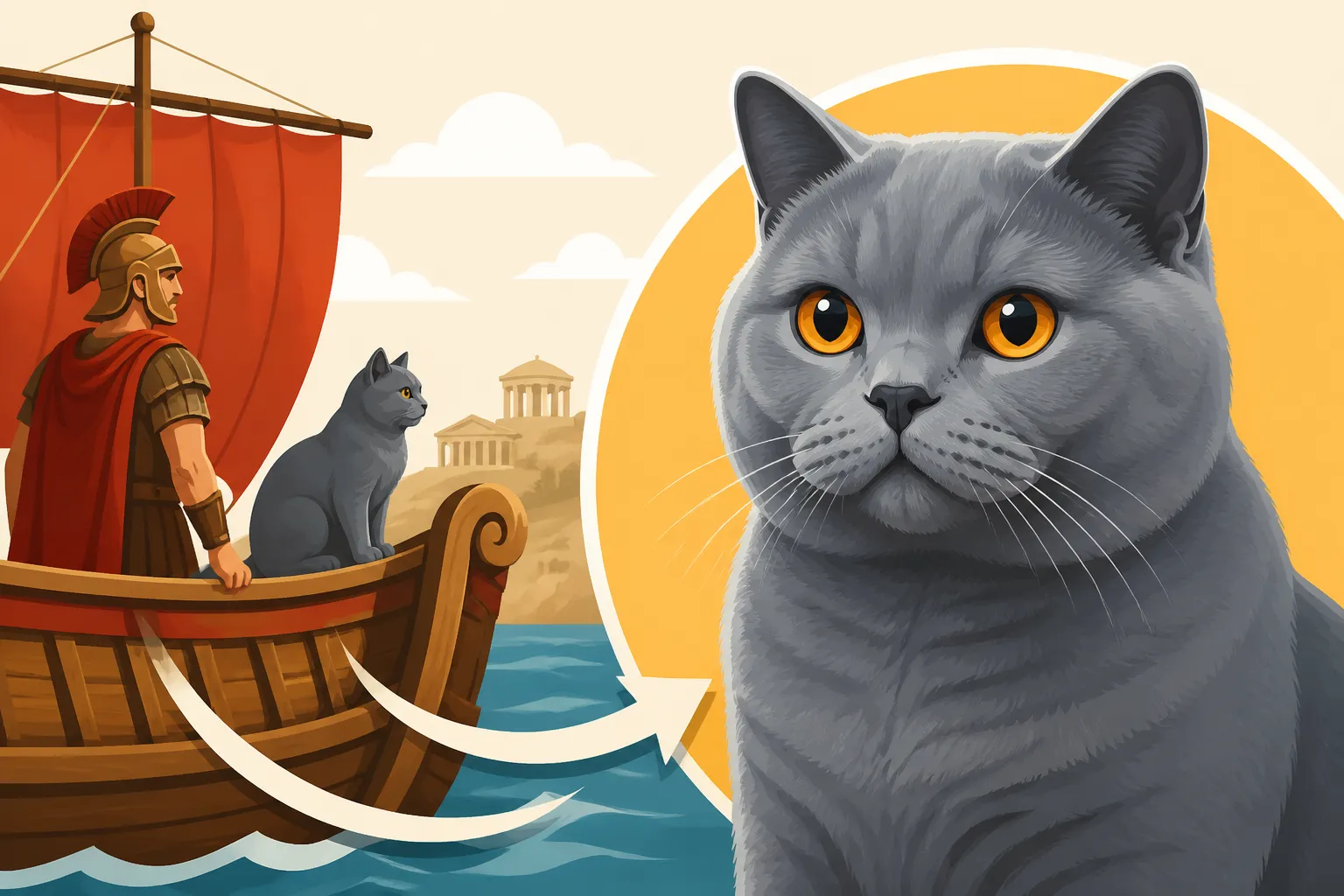
The domestic cat, Felis catus, itself originated from the African wildcat, Felis silvestris lybica, in the Near East. As human civilizations spread, so did their feline companions. It's highly probable that cats journeyed with Roman soldiers and settlers as they expanded their empire, including across the English Channel. Imagine the scene: a Roman galley laden with supplies, soldiers, and perhaps a few essential mousers tucked away, making the perilous journey to a new frontier. These were not pampered show cats, but hardy, adaptable animals, perfectly suited to a life of utility and quiet companionship. Their arrival marked a significant moment, bringing the domestic cat to a land where it had not previously been established in significant numbers.
Before the Romans, it's possible some wildcats existed, but the domestic cat, as we know it, really began to establish a foothold during and after the Roman presence. These initial feline immigrants would have been the foundational stock for many of the cats that later roamed British villages and countryside. Their journey wasn't about establishing a 'breed' in the modern sense, but about survival and integration into human settlements. The very first ancestors of our British Shorthairs were likely rugged survivors, a far cry from the plush, pampered cats we see today, but possessing that innate resilience.
From Roman Shores to British Barnyards: The Ancestry of Early Cats
So, if cats arrived with the Romans, how does that connect directly to the British Shorthair? The lineage isn't a straight, unbroken line, but rather a fascinating tapestry woven over centuries. The cats that disembarked from Roman ships weren't "British Shorthairs" in appearance or pedigree. They were diverse domestic cats, robust and varied, essentially the common street or farm cats of their time. These cats bred freely with each other and, in some cases, might have interbred with the native European wildcat populations, although the extent of this genetic exchange is debated by scientists.
Over many hundreds of years, these free-roaming cats adapted to the British climate and environment. They became the quintessential "British street cat" or "moggies" that would have been a familiar sight in towns and rural areas across the island. These cats developed a sturdy build, a dense coat to withstand the damp, cooler weather, and a generally placid temperament from generations of living alongside people. This natural selection and adaptation played a huge role in shaping the physical and behavioral traits that would eventually be formalized into a breed. Think about the resilience required for a cat to thrive in varied environments, from bustling market squares to quiet farmhouses, where their primary role was ratting. It's a stark contrast to the modern pet British Shorthair, which might enjoy lounging on a soft Whether a British Shorthair Prefers a Floor Bed rather than patrolling a drafty barn.
It wasn't until the 19th century that these common British domestic cats began to be recognized and selectively bred to create a distinct breed. Harrison Weir, a pioneering figure in the cat fancy, championed the idea of showcasing these native cats, seeing their unique charm and character. He took the best examples of these common British cats – those with the sturdy build, round heads, and dense coats – and began the process of selective breeding to enhance these traits. This is the point at which the "British Shorthair" as a recognized breed truly began to form, drawing directly from that long lineage of cats that had populated Britain for nearly two millennia. The story of The British Shorthair Started as a British Street Cat is truly about these hardy, ancient felines.
| Era/Origin | Key Characteristics of Cats | Connection to British Shorthair Lineage |
|---|---|---|
| African Wildcat | Original domestic cat ancestor, adaptable, skilled hunter. | Genetic origin of all domestic cats, including British Shorthair. |
| Roman Ship Cats | Hardy, utilitarian, pest controllers, diverse appearance. | Likely introduced domestic cats to Britain, establishing a foundational population. |
| British Street/Farm Cats | Adapted to local climate, sturdy, dense coats, placid. | Direct ancestors from which Harrison Weir selected and developed the modern British Shorthair. |
| Modern British Shorthair | Cobby body, round head, dense plush coat, calm temperament. | Selectively bred for specific traits, but carries the ancient genetic legacy. |
Genetic Footprints: What Science Says About British Shorthair Origins
While historical accounts provide a compelling narrative, modern genetic studies offer a deeper, more scientific look into the British Shorthair's ancestry. DNA analysis of domestic cats has largely confirmed the journey of Felis silvestris lybica out of the Near East, following human migration patterns. These studies have traced different genetic lines, or haplogroups, across the globe, indicating distinct waves of cat dispersal.
When we look at the genetics of European domestic cats, including those in Britain, there's clear evidence of a significant early influence from cats that spread through the Roman Empire. These "Roman cats" were essentially the common domestic cats that accompanied people across the vast stretches of the empire, contributing their genes to local cat populations wherever they settled. So, in a general sense, the British Shorthair certainly shares a genetic heritage with these early European domestic cats that have a strong Roman connection. It's less about a specific Roman cat breed and more about the historical pathway of the domestic cat itself. For those interested in deeper genetic insights, understanding Whether a DNA Test Confirms a British Shorthair can be quite enlightening regarding genetic markers.
However, it's crucial to understand that the British Shorthair, as a breed, is a much more recent development. The genetic "bottleneck" and selection that occurred during the 19th and 20th centuries, when the breed was formally established, means that its specific genetic signature is a blend of those ancient widespread genes with more recent, deliberate breeding choices. For example, after the World Wars, the breed faced significant declines, and outcrosses to breeds like the Persian were permitted to rebuild numbers and enhance certain features, like coat density and head shape. This means the British Shorthair's DNA isn't purely Roman in a direct, uninterrupted line, but rather a complex blend where Roman-era cats provided the initial genetic foundation, followed by centuries of natural selection among the general British cat population, and then refined by careful human breeding. You can learn more about What the Persian Cross Gave the British Shorthair to understand these later influences.
Why These Ancient Roots Still Matter for Your British Shorthair Today
Understanding the deep historical roots of the British Shorthair, from potential Roman ship cats to the hardy street cats of Britain, offers more than just a fascinating bedtime story. It provides insight into the very essence of the breed we cherish today. These cats are descended from survivors, animals that were valued for their strength, intelligence, and adaptability. This lineage helps explain many of the traits that British Shorthair owners adore: their robust health, their generally calm and independent nature, and their impressive physical presence. They weren't bred for fragility; they were bred for endurance and utility.
Knowing that your British Shorthair has ancestors who sailed on Roman ships or patrolled ancient British farmyards might make you look at their quiet dignity with new appreciation. This historical context underscores the importance of responsible breeding practices today, ensuring that the health and genetic diversity of the breed are maintained. It’s a testament to the fact that while we enjoy their plush coats and teddy bear looks, there's a deep-seated history of resilience in their genes. This also highlights why things like regular vet check-ups and good nutrition are vital, ensuring these historically hardy cats remain healthy throughout their The Twelve to Seventeen Years a British Shorthair Gets. You might even find yourself pondering the journey of a simple bag of cat food from your Chewy delivery, knowing that the needs of domestic cats have endured for millennia, even if the sourcing has become far more convenient!
Furthermore, appreciating their history helps us understand their inherent behaviors. For example, their independent nature and preference for being near you rather than on you might be a subtle echo of their working past, where close physical contact wasn't always the norm. They've evolved to be self-sufficient yet companionable. While the exact genetic link to a specific Roman cat is impossible to pinpoint, the story of cats arriving with the Romans and subsequently populating Britain forms an undeniable part of the broader story of the domestic cat on the island, and therefore, directly impacts the ancestry of the British Shorthair. It reminds us that our British Shorthairs carry a living history within them, connecting us to a lineage stretching back through empires and eras.
Disclaimer
This article is for general informational purposes only and does not constitute professional advice. Laws, prices and regulations vary by location and change over time. Consult a qualified professional for guidance on your specific situation.