What the Persian Cross Gave the British Shorthair
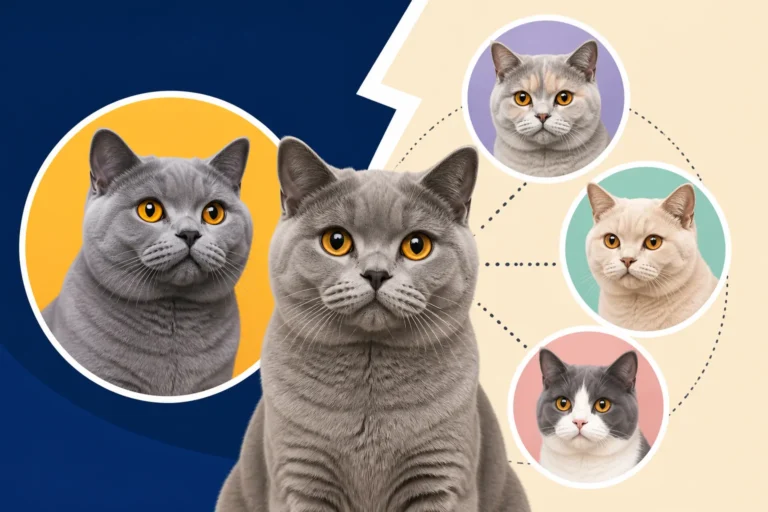
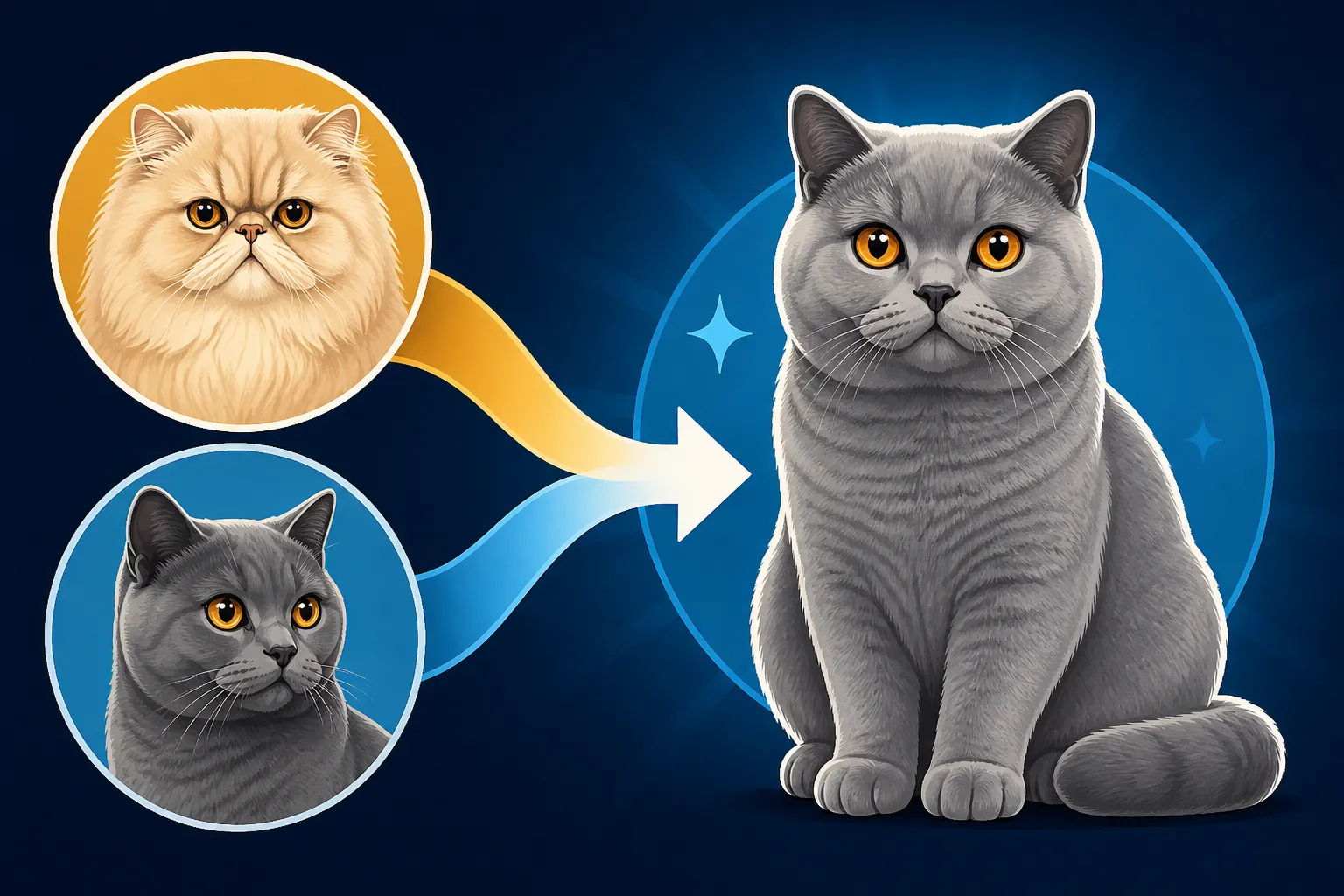
Many British Shorthair enthusiasts marvel at their cat's undeniably adorable, teddy-bear-like appearance, those wonderfully round faces and dense, plush coats. But have you ever stopped to wonder how this distinctive look, so different from its earlier, more utilitarian ancestors, came to be? The truth is, the British Shorthair as we know it today, with its celebrated features, owes a significant debt to a strategic crossbreeding program with Persians, a decision born out of necessity that dramatically reshaped the breed's physical characteristics and, in some ways, even its genetic blueprint. This guide will delve into the profound impact of the Persian cross, exploring why it happened and what it ultimately gave to the beloved British Shorthair.
The Necessity of the Persian Cross
Imagine a breed on the brink, its numbers decimated, its very existence threatened. This was the stark reality facing the British Shorthair after two devastating World Wars. The focus shifted from breeding purebred cats to simply surviving, and many bloodlines were lost forever. Breeders who loved the British Shorthair knew they had to act decisively to save it, even if it meant introducing genes from another breed.
Post-War Scarcity and Breed Preservation
The aftermath of World War I and particularly World War II left cat breeding programs in tatters across Europe. Many established catteries ceased to exist, their lines dispersed or gone. For the British Shorthair, a breed that had only relatively recently gained recognition and a formal standard thanks to pioneers like Harrison Weir, this was a catastrophic blow. The gene pool shrank dramatically, leading to concerns about inbreeding and overall breed vitality. When you look at old photographs of British Shorthairs from before these wars, you'll notice they often had a much leaner, almost "farm cat" appearance, less of the pronounced roundness we associate with them now. The war years erased many of the cats carrying those older traits, leaving a genetic void.
The immediate goal for remaining breeders wasn't about aesthetics; it was about ensuring there were enough healthy British Shorthairs to continue the breed at all. The very survival of the breed depended on careful, sometimes controversial, choices. Faced with a dwindling number of suitable breeding animals, breeders looked for viable options to introduce new blood, enhance genetic diversity, and bring the breed back from the brink of extinction. It was a race against time, and desperate times called for bold measures.
The Search for Genetic Diversity
When a breed's genetic pool becomes too shallow, a host of problems can arise, from reduced fertility to an increased incidence of genetic health issues. Imagine trying to bake a cake with only a few basic ingredients; you might get a cake, but it won't be as rich or complex as one made with a full pantry. For British Shorthair breeders, this meant finding a breed that could inject much-needed genetic variety without completely altering the fundamental characteristics they cherished. The Persian, with its docile temperament and distinct physical traits, was seen as a strong candidate.
The decision wasn't taken lightly, and it wasn't universally popular, even at the time. Some purists worried about diluting the "true" British Shorthair type. However, for those committed to the breed's long-term future, the benefits outweighed the risks. The Persian offered a wealth of genetic material, including traits that, as we'll explore, would later become iconic features of the British Shorthair. It was a calculated move to secure the breed's future, a desperate plea for survival answered by an unexpected ally.
Avoiding Extinction: A Breeder's Dilemma
The challenge for British Shorthair breeders was monumental. They had to rebuild a breed from a very small foundation, ensuring genetic health while also trying to maintain or even improve the breed's "type" – its distinct physical characteristics. Without the introduction of new genes, the breed faced a very real risk of becoming too inbred to sustain itself, or simply fading away as individual cats died out without leaving enough progeny. This is a nightmare scenario for any breed enthusiast.
Consider a small island population where everyone is related; eventually, genetic problems can compound. The Persian cross was essentially a lifeline, providing a fresh influx of genes that allowed breeders to diversify their lines and strengthen the overall health and vigor of the British Shorthair. It paved the way for the breed to not only recover but to flourish and develop the beloved appearance we recognize today. While some might argue about the purity of the lines, the alternative was likely no lines at all.
Physical Characteristics: Coat
One of the most striking features of the modern British Shorthair is its wonderfully dense, plush coat. It's a coat that beckons you to run your fingers through it, often described as "crisp" to the touch, and it's a far cry from the thinner, less luxuriant coats of its pre-war ancestors. This transformation is largely attributable to the Persian influence.
The Plush, Dense Coat We Know Today
The original British Shorthair, before its wartime struggles and subsequent crossbreeding, had a shorter, somewhat coarser coat, more akin to a typical domestic shorthair. It was functional, designed to protect them from the British climate as they went about their business as working cats. However, the Persian is renowned for its incredibly thick, long, and luxurious fur, possessing a dense undercoat that gives it incredible volume. When these two breeds were crossed, the British Shorthair inherited the gene for increased coat density and plushness.
Today, when you stroke a British Shorthair, you immediately notice that unique "crisp" feel that springs back under your hand. This isn't just a random trait; it's a direct result of the Persian adding more layers to the coat, essentially creating a double coat where the undercoat is exceptionally thick. This gives the British Shorthair its iconic "teddy bear" look, making them utterly irresistible. This dense coat also helps them regulate their body temperature, a beneficial trait that was likely a happy byproduct of the cross.
Introducing the Longhair Gene
Here's an interesting twist: the Persian is, by definition, a longhaired cat. When a longhaired cat is crossed with a shorthaired cat, the longhair gene can be carried recessively for generations, only to pop up when two carriers are bred together. This is precisely what happened with the British Shorthair. Even though breeders were striving for a shorthaired cat, the longhair gene from the Persian parentage was inadvertently introduced into the British Shorthair gene pool.
This means that even today, a British Shorthair kitten from two supposedly shorthaired British Shorthair parents can occasionally be born with long fur! These beautiful "British Longhairs" are now recognized as a separate breed in some registries, but their existence is a clear testament to the Persian influence. It’s like finding a surprise gift from a distant relative tucked away in your family tree. For owners, it means if you adopt a British Shorthair, even from a reputable breeder, there's a tiny chance their offspring could be longhaired if they carry the recessive gene. How a British Longhair Comes Out of a British Shorthair Litter delves deeper into this fascinating genetic phenomenon.
Shedding and Grooming Considerations
While the plush coat is undeniably beautiful, it comes with its own set of care requirements. That dense undercoat, inherited from the Persian, sheds. A lot. Especially during seasonal changes, British Shorthairs can "blow their coat," meaning they shed copious amounts of fur. This is a crucial consideration for potential owners. You can't just admire the fluff; you have to manage it.
Regular grooming is essential to keep their coats healthy, prevent mats, and minimize shedding around the house. A good quality steel comb, often found on sites like Chewy, is your best friend here, as brushes often just skim the surface. You'll need to reach down to that dense undercoat to remove loose fur effectively. While British Shorthairs are generally low-maintenance in many areas, their coat requires consistent attention, particularly during shedding seasons. Without proper grooming, that beautiful dense coat can quickly become tangled and uncomfortable for your cat. Which Comb a British Shorthair Needs offers great advice on selecting the right tools.
Physical Characteristics: Head and Body
Beyond the coat, the Persian cross significantly contributed to the overall "cobby" body type and, most notably, the instantly recognizable round head and full cheeks that are hallmarks of the British Shorthair today.
The Iconic Round Head and Full Cheeks
If there's one feature that truly defines the modern British Shorthair, it's that magnificently round head and those glorious, full jowls, especially prominent in males. Before the Persian infusion, British Shorthairs had a more typically triangular or wedge-shaped head, common among many domestic shorthairs. Persians, however, are known for their broad, round heads, small ears set far apart, and a somewhat flattened face. The cross introduced these cranial characteristics into the British Shorthair gene pool.
Over generations, selective breeding emphasized these round features, moving away from the more angular ancestral head shape. The result is the charming, often described as "teddy bear" or "Cheshire Cat" face, complete with those adorable, chubby cheeks. These jowls, especially noticeable in mature males, are a direct inheritance from their Persian ancestors, giving them a perpetually endearing expression. It’s part of what makes them look so solid and well-fed, even when they’re not overweight. What Jowls Are on a Male British Shorthair explains more about this distinctive feature.
Cobby Body and Short, Strong Legs
The term "cobby" is frequently used to describe the British Shorthair's body type – meaning short, stocky, and powerfully built. Again, this is a trait that was significantly enhanced by the Persian cross. Persians have a distinctive cobby body, characterized by a short, broad back, deep chest, and short, thick legs that end in large, round paws. This contributes to their low-slung, substantial appearance.
The pre-war British Shorthairs were often more lithe and athletic, built for chasing vermin. The Persian influence helped transition the breed towards a more robust, heavy-boned structure. This cobby body, combined with their dense coat, makes them appear larger and more substantial than many other cat breeds. It gives them a strong, grounded presence, though it also means they aren't typically avid climbers or jumpers. Their short, strong legs and round paws are perfectly suited for their calm, ground-dwelling nature.
Eye Color and Expression
While the most famous British Shorthair eye color is often a rich copper or gold, a trait associated with the blue coat, the Persian cross also brought a wider range of eye colors and modified the overall facial expression. Persians have large, round eyes, often appearing more open and expressive than those of many other breeds. The gene for this eye shape, combined with the development of the round head, contributed to the British Shorthair's characteristic large, round, widely set eyes.
Before the Persian influence, eye colors might have been more varied and less intensely pigmented. The deep copper eye, in particular, is a stunning feature that was amplified through selective breeding after the Persian cross. For other coat colors, a British Shorthair might have green or blue eyes, but the strong, rich pigmentation is often a nod to the genetic input from the Persian. This gives the British Shorthair its characteristic gentle and sometimes almost perpetually "grumpy" yet endearing expression, adding to their unique charm. Which Eye Colors a British Shorthair Has explores the full spectrum.
Temperament and Health
While the primary reason for the Persian cross was to bolster numbers and enhance physical type, any significant genetic introduction can have ripple effects on a breed's temperament and health profile. The British Shorthair was no exception, experiencing both subtle shifts and the introduction of a notable genetic health concern.
The Introduction of Polycystic Kidney Disease PKD
Perhaps the most significant and regrettable health legacy of the Persian cross was the introduction of Polycystic Kidney Disease (PKD). PKD is an inherited condition that causes cysts to form in the kidneys, progressively enlarging and eventually leading to kidney failure. PKD is prevalent in Persians, and when they were used in the British Shorthair rebuilding program, the gene for PKD unfortunately came along with the desired physical traits.
For a time, PKD was a serious concern within the British Shorthair breed, causing heartbreak for many owners and breeders. However, thanks to dedicated health screening and the development of a DNA test, breeders have worked tirelessly to eradicate PKD from British Shorthair lines. Today, reputable British Shorthair breeders screen all their breeding cats for PKD, and it is largely considered a solvable problem. This history underscores the critical importance of health testing in responsible breeding. If you're considering a British Shorthair, always ensure the breeder provides proof of negative PKD DNA tests for the parents. What Polycystic Kidney Disease Does to a British Shorthair provides a detailed overview of this condition.
Impact on Temperament and Activity Levels
The British Shorthair is celebrated for its calm, gentle, and undemanding temperament. While their original ancestors were likely robust working cats, the Persian cross may have subtly reinforced or even exaggerated some of these more placid characteristics. Persians are famously quiet, laid-back, and tolerant cats, preferring a serene environment to a bustling one.
This gentle nature harmonized well with the emerging "teddy bear" appearance. While it's hard to definitively quantify the exact temperamental shift purely due to the Persian cross, it's widely believed that it contributed to the British Shorthair's famously tranquil disposition. They are known for being affectionate without being overly demanding, enjoying quiet companionship rather than constant activity. This makes them wonderful companions for many households, but it also means owners need to be proactive in encouraging play and exercise to prevent obesity. The calm nature of British Shorthairs makes them excellent companions for families, often getting along well with children and other pets, as discussed in A British Shorthair With Children, Dogs and Other Cats.
Addressing Other Potential Health Concerns
Beyond PKD, the introduction of new genetic material always brings the potential for other health considerations. While no major new breed-specific diseases were definitively linked to the Persian cross in British Shorthairs, responsible breeding practices became even more paramount. The shared ancestry with Persians also means that breeders must remain vigilant for conditions that might manifest in both breeds, even if less commonly in British Shorthairs.
For example, Hypertrophic Cardiomyopathy (HCM) is a concern in many purebred cats, including Persians and British Shorthairs. While not necessarily introduced by the Persian cross, the broader focus on genetic health following the PKD experience has driven British Shorthair breeders to diligently screen for HCM through regular echocardiograms. It highlights the ongoing responsibility breeders have to monitor and test for a range of inherited conditions. What a British Shorthair Breeder Should Have Tested offers a comprehensive list of important health screenings.
Legacy and Modern British Shorthair
The Persian cross was a pivotal moment in the British Shorthair's history, irrevocably shaping its development and leading to the distinct and beloved breed we adore today. Far from being a mere footnote, it's the very foundation of the modern British Shorthair's identity.
Defining the Modern Breed Standard
The physical traits derived from the Persian cross—the round head, full cheeks, dense coat, and cobby body—became the very characteristics that breeders sought to solidify and refine. These features were incorporated into the breed standard, which serves as a blueprint for what an ideal British Shorthair should look like. Each registry, from the CFA to TICA, defines these traits, and they are directly traceable back to that crucial period of crossbreeding.
Without the Persian's genetic contribution, the British Shorthair might have remained a more common, less distinctive domestic shorthair type. The cross essentially supercharged its evolution, transforming it into the iconic "teddy bear" cat. This deliberate selection for specific aesthetic qualities has allowed the British Shorthair to stand out in the world of purebred cats, making it one of the most recognizable and cherished breeds globally.
| Feature | Pre-Persian Cross (Approx. 1900s) | Post-Persian Cross (Modern British Shorthair) |
|---|---|---|
| Head Shape | More wedge-shaped, typical domestic | Round, broad, prominent jowls |
| Coat Density | Shorter, less dense, functional | Plush, very dense, crisp to the touch |
| Body Type | More athletic, lithe | Cobby, stocky, heavy-boned |
| Legs | Longer, leaner | Short, thick, strong |
| Eye Shape | Varied, sometimes almond-shaped | Large, round, widely set |
| Genetic Health | Less known, but no widespread PKD | Potential for PKD (now mostly screened out) |
| Overall Look | More "farm cat" or street cat | "Teddy bear" or "Cheshire Cat" |
Acceptance and Controversy in the Cat Fancy
The integration of Persian lines into the British Shorthair was not without its controversy. For some traditionalists, introducing an "outcross" was seen as compromising the purity of the breed. This debate highlights a common tension in the world of purebred animals: how to balance preservation of historical lines with the necessity of genetic diversity and the desire for specific aesthetic traits.
However, the undeniable success of the British Shorthair post-cross, coupled with the clear benefits to its health and the development of a unique, appealing type, ultimately led to its widespread acceptance. The cat fancy embraced the "new" British Shorthair, recognizing its beauty and charm. The strict rules established by registries now ensure that the British Shorthair maintains its distinct identity while continuing to be a healthy and thriving breed. How Old the British Shorthair Breed Is shows just how far this breed has come.
The Enduring Appeal of the British Shorthair
Today, the British Shorthair is one of the most popular cat breeds in the world, admired for its striking appearance, calm demeanor, and adaptability to various household environments. Much of this enduring appeal can be directly attributed to the features that were either introduced or enhanced by the Persian cross. That round face, that dense coat, that cobby body – these are the visual cues that draw people to the breed.
The British Shorthair's history is a testament to the dedication of breeders who, in a time of crisis, made difficult but ultimately vital decisions. They took a risk, and it paid off, transforming a beloved but struggling breed into a worldwide phenomenon. So, the next time you gaze upon a British Shorthair, remember that beneath that charming, plush exterior lies a history of survival, adaptation, and a significant genetic contribution from its Persian relatives. You might even want to pick up some grooming essentials from Chewy to keep that gorgeous coat in top condition!
Disclaimer
This article is for general informational purposes only and does not constitute professional advice. Laws, prices and regulations vary by location and change over time. Consult a qualified professional for guidance on your specific situation.