Whether the Longhair Gene Is Still in the British Shorthair
It’s a common misconception, and a perfectly understandable one, to assume that a British Shorthair should only have a short coat. After all, the clue is right there in the name! But the reality for many British Shorthair enthusiasts and even breeders can be a bit more complex, and sometimes, a little surprising. You might be wondering if that fluffy kitten in a British Shorthair litter is a "mistake" or something else entirely. This guide will unravel the fascinating story of the longhair gene in the British Shorthair, explaining why it's still present in the breed's genetic makeup and what that means for both breeders and pet owners.
The Post-War Legacy: How the Longhair Gene Entered the British Shorthair
The history of the British Shorthair, like many beloved cat breeds, isn't a straight line. It's a tale of resilience, dedication, and a little bit of genetic mixing, especially in the wake of challenging times. World War I and particularly World War II severely depleted the breeding stock of many purebred cats, the British Shorthair included. It was a dire situation where the very survival of the breed hung in the balance.
A Breed on the Brink: The Need for Outcrossing
Imagine the sheer panic of breeders after the wars, looking at dwindling numbers and realizing their beloved breed was fading away. The options were limited, and tough decisions had to be made to ensure the British Shorthair's continuation. To expand the gene pool and prevent inbreeding depression, responsible breeders had to look outside the existing, scarce British Shorthair lines. This meant carefully introducing other breeds into the lineage. It wasn't a choice made lightly, but a necessary one to rebuild and strengthen the breed, bringing in new vitality and genetic diversity.
The Persian Influence: A Double-Edged Sword
Among the breeds chosen for outcrossing, the Persian cat played a crucial role. Persians were popular, robust, and readily available, making them a logical choice for introducing new blood. They helped re-establish the desired cobby body type, dense bone structure, and round head that are hallmarks of the British Shorthair. However, the Persian, famous for its luxurious, flowing coat, also carried the recessive gene for long hair. When these Persian cats were introduced to British Shorthair lines, they brought that longhair gene with them. It wasn't immediately apparent in the first generation of offspring, as the short hair gene is dominant, but the longhair gene began to quietly spread throughout the breed's genetic fabric. You can read more about this period in The Persians That Rebuilt the British Shorthair After the War.
Understanding the Genetics of Long Hair in Cats
To truly grasp why a short-haired British Shorthair can produce a long-haired kitten, we need to dive a little into the fascinating world of feline genetics. It’s all about dominant and recessive genes, and how they interact to determine a cat’s traits.
The Recessive Nature of the Longhair Gene
The gene responsible for long hair in cats is recessive. What does this mean in practical terms? It means that a cat needs two copies of the longhair gene (one from each parent) to actually display a long coat. If a cat inherits only one copy of the longhair gene and one copy of the dominant shorthair gene, it will still have short hair. This cat, however, is now a "carrier" of the longhair gene. It carries the genetic information for long hair but doesn't show it itself. This is why you can have two seemingly short-haired British Shorthairs produce a fluffy surprise in their litter!
Let's illustrate with a simple table:
| Parent 1 Genotype (LH = Long Hair, SH = Short Hair) | Parent 2 Genotype | Kitten Genotype | Resulting Coat Type | Explanation |
|---|---|---|---|---|
| SH/SH (Shorthair, not a carrier) | SH/SH | SH/SH | Shorthair | Both parents are pure shorthair, so all kittens will be shorthair. |
| SH/SH (Shorthair, not a carrier) | SH/LH (Shorthair, carrier) | SH/SH or SH/LH | All Shorthair | One parent is a carrier, but since the other is pure shorthair, no kitten will inherit two longhair genes. However, some kittens will be carriers. |
| SH/LH (Shorthair, carrier) | SH/LH (Shorthair, carrier) | SH/SH, SH/LH, or LH/LH | Shorthair (approx. 75%), Longhair (approx. 25%) | This is where the magic happens! Both parents carry the recessive longhair gene, making it possible for kittens to inherit two copies of the LH gene and thus have long hair. |
| LH/LH (Longhair) | SH/SH (Shorthair, not a carrier) | SH/LH | All Shorthair | All kittens will be shorthair but will all be carriers of the longhair gene. |
| LH/LH (Longhair) | SH/LH (Shorthair, carrier) | SH/LH or LH/LH | Shorthair (approx. 50%), Longhair (approx. 50%) | A longhair parent bred with a shorthair carrier will produce both shorthair carriers and longhair kittens. |
| LH/LH (Longhair) | LH/LH (Longhair) | LH/LH | All Longhair | Both parents are longhair, so all kittens will be longhair. |
The "Hidden" Gene: Carriers and Unexpected Litters
Because the longhair gene can be carried silently for generations by short-haired cats, it can pop up unexpectedly. A breeder might have a line of British Shorthairs that have consistently produced only short-haired kittens for years. Then, one day, they breed two seemingly pure short-haired cats who happen to both be carriers of the longhair gene, and voila – a fluffy, long-haired kitten appears in the litter. This isn't a genetic mutation; it's the expression of a recessive gene that has been quietly present in the lineage. This phenomenon highlights why genetic testing for the longhair gene has become so important for responsible breeders today.
Identifying Longhaired Offspring in British Shorthair Litters
When you're expecting a litter of round-faced, plush-coated British Shorthair kittens, finding a long-haired one can be quite a surprise. However, distinguishing these "fluffy" siblings from their short-haired littermates becomes easier as they grow.
The Initial Fluff: Spotting the Difference in Kittens
At birth, all kittens are pretty tiny and somewhat scruffy, so it can be tricky to tell the difference right away. However, as the kittens are just a few weeks old, usually around 3-4 weeks, the long-haired individuals will start to stand out. Their fur will appear noticeably longer, softer, and often fluffier than their short-haired siblings. They might have little tufts of hair developing around their ears, on their tail, or between their toes that are absent or far less prominent on the true shorthairs. The key is to look for that extra growth, a lack of the signature "crisp" texture that defines the What a British Shorthair's Coat Is Like even in young kittens.
Growing Into Their Coats: The British Longhair Development
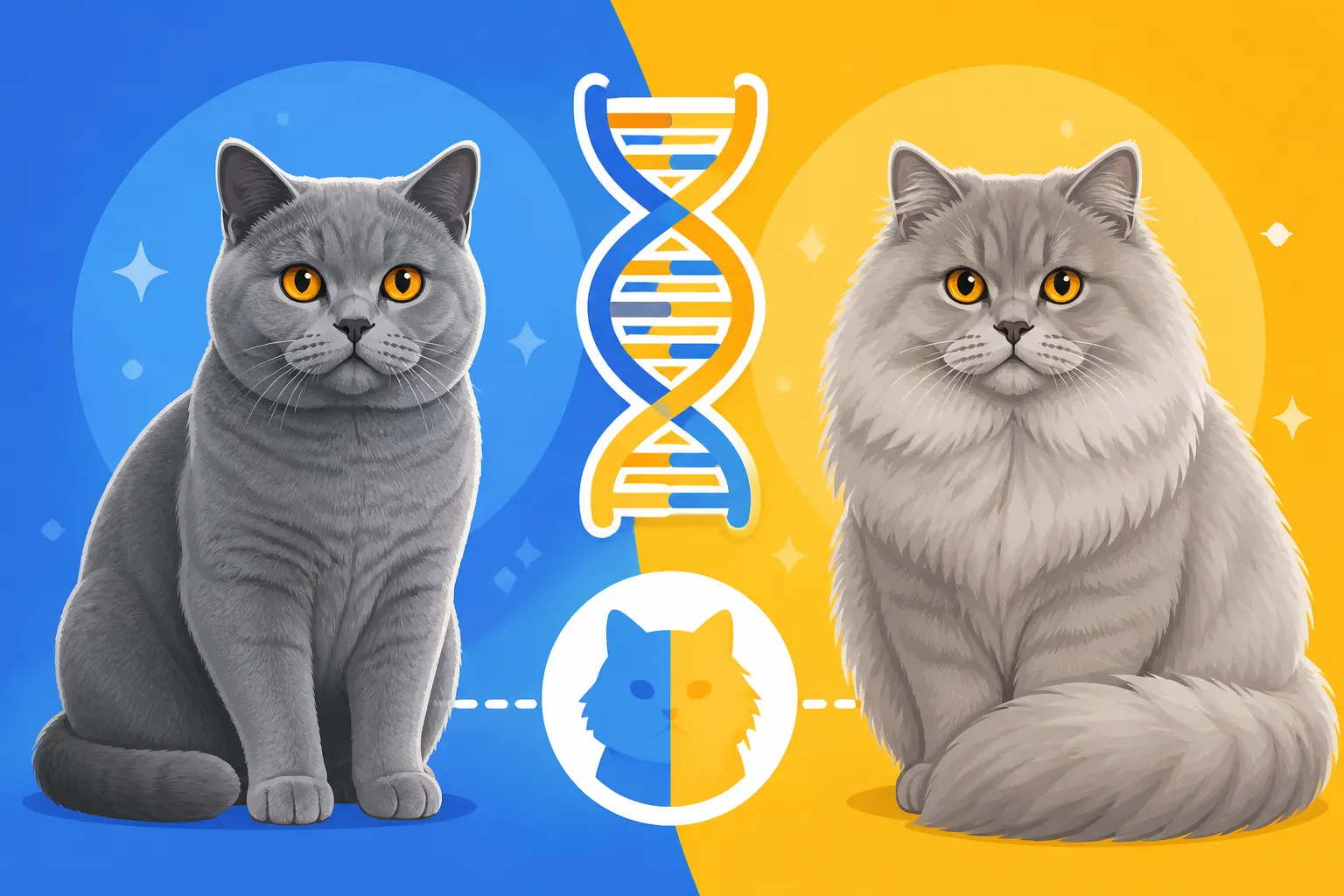
As they mature, the differences become undeniable. A British Shorthair kitten will develop its dense, plush, short coat that stands away from its body. Its long-haired sibling, on the other hand, will continue to grow a flowing, medium-long coat, complete with a full ruff, feathering on the legs, and a magnificent bushy tail. Their coat will feel silkier and less dense than the shorthair's trademark "crisp" texture. It takes time for the full splendor of a longhair coat to develop, often not reaching its full glory until they are two or three years old. This is how a British Longhair truly makes itself known (How a British Longhair Comes Out of a British Shorthair Litter).
The British Longhair: A Breed of Its Own
What was once an unexpected variant in British Shorthair litters has, over time, gained recognition and a distinct identity. The long-haired British Shorthair is now widely accepted as its own breed, known as the British Longhair (or sometimes the Lowlander in some regions). This formal recognition reflects the breed's unique beauty and the dedication of breeders who saw value in these fluffy offspring.
Recognition by Major Cat Registries
Many major international cat associations, such as TICA (The International Cat Association) and FIFe (Fédération Internationale Féline), now recognize the British Longhair as a distinct breed. This means they have their own breed standard, are judged separately in cat shows, and have their own breeding programs. This separation ensures that the unique traits of the British Longhair can be preserved and celebrated, while also maintaining the integrity of the British Shorthair breed standard. It's a testament to the cat fancy's ability to adapt and appreciate new variations, moving from an "oops" moment to a celebrated new breed. This development officially saw How the British Longhair Split From the British Shorthair.
Differences in Appearance and Temperament
While genetically distinct in coat length, the British Longhair largely shares the same temperament and physical characteristics as its short-haired cousin, aside from the obvious coat difference. They still possess that wonderful, calm, easygoing nature that British Shorthair owners adore. They have the same cobby body, round head, expressive eyes, and famous "Cheshire Cat" smile. The main differences, of course, lie in their grooming needs. A British Longhair, with its longer coat, requires more regular brushing to prevent mats and tangles. Owners of British Longhairs often find themselves investing in special grooming tools and perhaps specific detangling sprays, which are readily available on pet supply sites like Chewy, to keep that luxurious coat looking its best.
Responsible Breeding and Genetic Testing
For breeders committed to maintaining the integrity and health of the British Shorthair, the presence of the longhair gene presents both a challenge and an opportunity. Understanding the genetics involved is paramount to making informed breeding decisions.
DNA Testing for the Longhair Gene
The good news is that advancements in veterinary genetics mean breeders no longer have to play a guessing game. A simple DNA test can determine whether a British Shorthair carries the recessive longhair gene (LH). This test is invaluable because it allows breeders to know the genetic makeup of their cats even if they appear short-haired. If a cat tests as N/N (no longhair gene), they will only produce shorthair kittens. If they test as N/LH (a carrier), they have a 50% chance of passing on the longhair gene to their offspring. If they test as LH/LH (a longhair), they will always pass on a longhair gene. This knowledge helps breeders avoid unexpected longhair kittens if their goal is strictly British Shorthairs, or, conversely, allows them to intentionally breed for British Longhairs if that is their chosen path. You can learn more about specific tests in Whether a DNA Test Confirms a British Shorthair.
Ethical Breeding Practices and Transparency
Responsible British Shorthair breeders will be transparent about the genetic status of their breeding cats, especially concerning the longhair gene. They should be able to show proof of genetic testing for both parents if you ask. If a breeder is intentionally producing British Longhairs, they will often market them as such, or at least disclose the possibility within a British Shorthair litter. Ethical breeders prioritize the health and genetic diversity of their lines, and this includes managing the longhair gene responsibly. They understand that transparency builds trust and helps prospective owners make informed decisions. It's crucial to Which Questions to Ask a British Shorthair Breeder to ensure you're getting a kitten from a reputable source.
What This Means for British Shorthair Pet Owners
So, you're looking to bring a British Shorthair into your home. What does all this talk about longhair genes mean for you, the future pet parent? It largely comes down to understanding what you're buying into and being prepared for potential surprises.
Expecting the Unexpected: A Fluffy British Shorthair
If you acquire a British Shorthair kitten from a breeder who has not genetically tested their breeding cats, or from a less reputable source, there's always a slight chance that a long-haired kitten could appear in a litter advertised as "British Shorthair." While most reputable breeders extensively test to prevent this if they are focusing solely on shorthairs, the recessive gene can still pop up. Don't be alarmed if you see a fluffy British Shorthair; it's still a purebred British Shorthair in terms of ancestry and temperament, just with a different coat length. These kittens are often just as charming and can be quite stunning with their flowing fur.
Grooming Differences for Longhaired British Shorthairs
The primary difference for you, as an owner, will be in grooming. A true British Shorthair has a relatively low-maintenance coat that benefits from a weekly comb-through, particularly during shedding seasons like spring when they The Two Weeks a British Shorthair Drops Its Undercoat. A long-haired British Shorthair (British Longhair), however, will require more frequent and dedicated grooming. Their longer, softer fur is more prone to tangles and mats, especially in areas like under their "armpits," behind their ears, and on their hind legs.
You’ll need to commit to daily or at least every-other-day brushing with appropriate tools to keep their coat healthy and free of knots. This isn't just about aesthetics; mats can be painful for a cat, pulling on their skin and potentially leading to skin infections. Investing in a good quality steel comb and perhaps a slicker brush, easily found at pet stores or online retailers like Chewy, will be essential. Regular grooming sessions also provide a wonderful bonding opportunity with your feline companion.
The Charm of Both Coat Types
Ultimately, whether you end up with a classic short-haired British Shorthair or a fluffy British Longhair, you're getting a fantastic companion. Both share the breed's signature sweet, calm, and affectionate personality. They are wonderful family pets, known for their easygoing nature and love of quiet companionship. The presence of the longhair gene simply adds another beautiful variation to this already diverse and beloved breed. So, if you encounter a long-haired British Shorthair, embrace the fluff! They are a testament to the breed's enduring history and genetic richness. And no, Whether a British Shorthair Is Boring is not a question you'll be asking once you meet either version of these wonderful cats!
Disclaimer
This article is for general informational purposes only and does not constitute professional advice. Laws, prices and regulations vary by location and change over time. Consult a qualified professional for guidance on your specific situation.