Whether GCCF and CFA British Shorthair Standards Differ
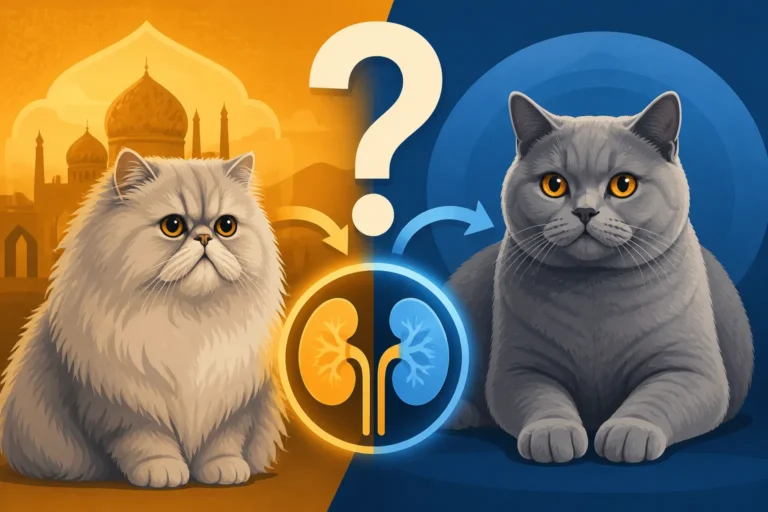
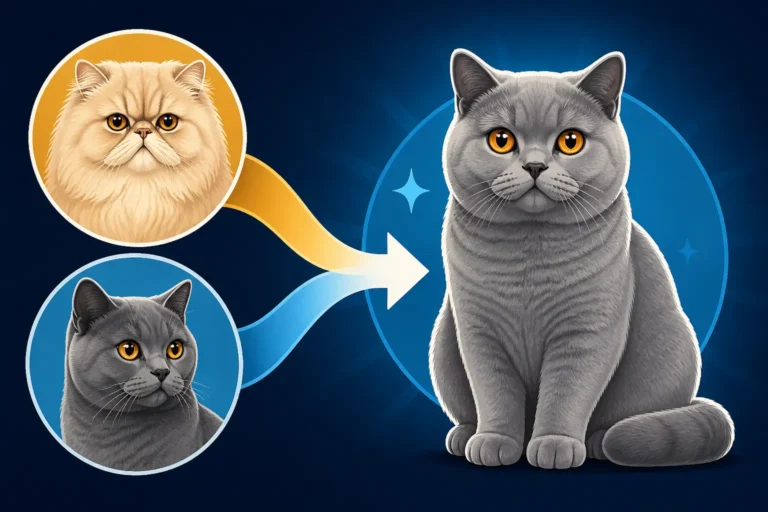
GCCF and CFA British Shorthair standards describe the same breed, but they do not assess every feature in exactly the same way. That can be confusing when you are comparing show results, breeder descriptions, or a cat’s appearance. This guide explains what the two registries broadly look for, where their emphasis can differ, and how to use those standards without mistaking a show preference for a health requirement.
What GCCF and CFA standards are for
One breed, two registry systems
The Governing Council of the Cat Fancy, or GCCF, is a UK cat registry. The Cat Fanciers’ Association, or CFA, is a North American registry. Each publishes breed standards describing the features expected of a British Shorthair entered in its shows. Judges use the relevant registry’s standard to assess an individual cat against that system’s criteria.
The standards are not two competing definitions of an entirely different cat. Both describe a sturdy, short-coated British breed with a rounded head, a substantial body, a dense coat, and an easygoing overall impression. A cat might be shown under one registry’s rules, both registries’ rules, or neither. A pet does not need to meet every show ideal to be a perfectly good British Shorthair.
The distinction matters most when you are reading a show critique or choosing a kitten from a breeder who shows cats. A description such as “strong cheeks” or “excellent coat density” refers to show evaluation, not necessarily to a health advantage. For a broader explanation of how registry rules apply, see Which Registry Standard a British Shorthair Is Judged Against.
Breed standards are judging guides, not medical checklists
A breed standard describes preferred appearance and type. It is not a veterinary screening protocol, and a high show score does not establish that a cat has been screened for inherited or acquired health conditions. Likewise, a minor departure from the standard does not automatically mean a cat is unhealthy.
For example, a British Shorthair may have a head that looks slightly less rounded than a judge’s ideal while still being comfortable, active, and well cared for. Conversely, an attractive, very round-faced cat still needs ordinary veterinary care and appropriate health screening. Appearance alone cannot answer those questions.
If you are considering a kitten, separate three conversations: what the registry standard says, what the breeder’s contract and records show, and what your veterinarian recommends for that particular cat. That approach is more useful than treating a show description as a complete health report.
Where the standards overlap and where emphasis can vary
Head, cheeks, ears, and expression
Both registries favor the British Shorthair’s rounded, broad-headed appearance. The desired impression is not simply a round face viewed from the front: the head should look balanced with the body, with full cheeks and a muzzle that fits the overall shape. The small, set-apart ears and large, round eyes also contribute to the familiar expression.
The wording, arrangement of criteria, and judging emphasis can vary between registry standards. One standard may explain a feature in more detail, or place more attention on a particular aspect of balance. That does not necessarily mean one registry wants a dramatically different head. A judge still evaluates the whole cat rather than awarding quality for one exaggerated feature in isolation.
This is why a photo can be misleading. A close-up may make a cat’s eyes or cheeks look unusually prominent, while hiding the proportions of its head, neck, and body. If you want to understand the head shape itself, What Shape a British Shorthair's Head Should Be is a useful companion topic. The breed should look rounded and substantial without being pushed toward a short-faced appearance that compromises normal function.
Body, coat, and overall balance
The British Shorthair is known for a muscular, compact build and a plush, dense coat that stands away from the body. Both GCCF and CFA standards broadly favor that solid, balanced impression. The coat’s texture is part of the breed’s recognizable look, but it should not be confused with a cat being overweight.
The standards also discourage judging a single feature in isolation. A broad chest, substantial legs, a thick tail, and a rounded outline contribute to the overall type. A particularly heavy cat is not automatically a better example of the breed; body condition and health remain important. This distinction is especially helpful for owners whose cat’s thick coat makes its waist difficult to see. For more on proportions and size, see What a British Shorthair Weighs and How Big It Gets and How a British Shorthair Differs From a Scottish Fold.
In a show setting, coat presentation can affect how clearly a judge sees texture and condition. At home, grooming should be comfortable and practical rather than an attempt to manufacture a show coat. A suitable comb, which you might find at a local pet shop or through Chewy, is a basic care item; it cannot change the cat’s underlying coat quality. Choose a tool that suits the coat and your cat’s tolerance, and ask a groomer or veterinarian if you are unsure what is appropriate.
Color and eye color
Color can be the most confusing part of comparing standards because registries may organize colors and patterns differently. The names used for a color, the way a variety is grouped for competition, and its show classification can vary. Even when two registries recognize similar varieties, their presentation in registration or show materials may not look identical.
Eye color is also considered in relation to coat color in some varieties, so it is not safe to assume that every British Shorthair should have the same eye color. Copper or gold eyes are strongly associated with familiar solid blue cats, but the breed includes many coat colors and patterns. See Which Eye Colors a British Shorthair Has and Which Colors a British Shorthair Comes In before treating a color description as a universal rule.
When buying a kitten, ask the breeder how the kitten is registered and what color or pattern is recorded. If you plan to show, ask which registry’s rules apply to that specific variety and whether the breeder has experience showing it under that system. A casual color label in an advertisement may not match the exact category used by a registry.
| Feature | Broad GCCF and CFA overlap | Why details may feel different |
|---|---|---|
| Head and expression | Rounded head, full cheeks, balanced features | Wording and judging emphasis can differ |
| Body | Sturdy, muscular, compact appearance | Judges assess proportion and balance, not weight alone |
| Coat | Short, dense, plush texture | Grooming and coat presentation affect what a judge can assess |
| Color and pattern | Many British Shorthair varieties are recognized | Names, groupings, and show classifications may vary |
| Eye color | Considered in relation to the cat’s variety | Expectations are not identical for every coat color |
How to compare a cat or breeder’s claims
Start with the registry named in the claim
If a breeder says a kitten is “show quality,” ask what that means in practical terms. Find out whether the breeder is referring to GCCF, CFA, or another registry, and whether the kitten has actually been assessed at a show or is simply expected to have promising features. “Show quality” is not a guarantee that a cat will win, and kittens can change as they mature.
You can then compare the breeder’s description with the relevant registry’s published standard. Focus on the features being claimed rather than relying on vague language such as “perfect type.” Ask for photos showing the whole cat, including a natural side view and a relaxed standing position. Those views make it easier to judge proportions than a tightly framed face photo.
A breeder who shows cats should be able to explain what they value in their lines without suggesting that every pet kitten is defective. The best conversations are specific: perhaps a kitten has a strong head and coat but a feature that makes it less likely to be competitive in a particular show class. That is more informative than a promise of future titles.
Keep show ideals separate from welfare and everyday care
A standard’s preference is not a reason to pursue an extreme feature. The British Shorthair should retain a functional face, comfortable movement, and a body condition that supports health. If a description makes you wonder whether a feature affects breathing, walking, grooming, or eating, ask a veterinarian rather than relying on a show caption or online photo.
This distinction also applies to body size. The breed is substantial, but “bigger” does not automatically mean “better.” A broad frame can be part of breed type, while excess body fat is a health concern. The coat can make it especially hard to judge the waist by sight alone, so regular weighing and a veterinarian’s body-condition assessment are more useful than comparing your cat’s outline with a show photograph. For related guidance, see Whether a British Shorthair Is a Large Breed.
If you are preparing for a show, focus on calm handling, a clean and comfortable coat, trimmed nails where appropriate, and getting your cat accustomed to travel. A well-fitting carrier is more important than a fashionable one; you may find options at Chewy or a nearby pet-supply shop, but choose based on your cat’s size and ease of access. If your cat becomes distressed by travel or handling, discuss a gradual plan with your veterinarian before entering an event.
Questions to ask before choosing a kitten
A few direct questions can help you understand whether a breeder’s claims are about registry standards, appearance, or health:
- Which registry is the kitten registered with, and under what recorded color or pattern?
- Are the parents shown under GCCF, CFA, or another registry?
- What does “show quality” mean in this breeder’s assessment?
- Has an experienced judge or mentor evaluated the kitten, or is the assessment the breeder’s prediction?
- What health screening has been completed for the parents, and can you review the documentation?
- Does the purchase agreement explain registration, breeding restrictions, and the kitten’s health history?
A responsible breeder should answer clearly and provide documentation that matches the claims being made. If you are preparing a show kit, ordinary supplies such as a comb, nail clippers, and a secure carrier can be sourced from a local shop or Chewy. Those tools help with routine care and transport; they do not substitute for a good temperament, sound health, or an honest explanation of the kitten’s pedigree and registration.
What to remember when reading GCCF and CFA standards
GCCF and CFA standards share a recognizable picture of the British Shorthair: a rounded head, sturdy body, dense coat, and balanced overall appearance. Their wording, organization, and emphasis can differ, so a cat’s evaluation should always be understood in the context of the registry and class in which it is judged.
If you are an owner, you do not need to measure your cat against every show detail to care for it well. If you are buying a kitten or considering showing, identify the registry first, check its standard directly, and ask the breeder precise questions. A standard can explain what judges prefer; it cannot, by itself, tell you whether a cat is healthy, suitable for your home, or guaranteed to succeed in the ring.
Disclaimer
This article is for general informational purposes only and does not constitute professional advice. Laws, prices and regulations vary by location and change over time. Consult a qualified professional for guidance on your specific situation.