Whether a British Shorthair Is a Large Breed
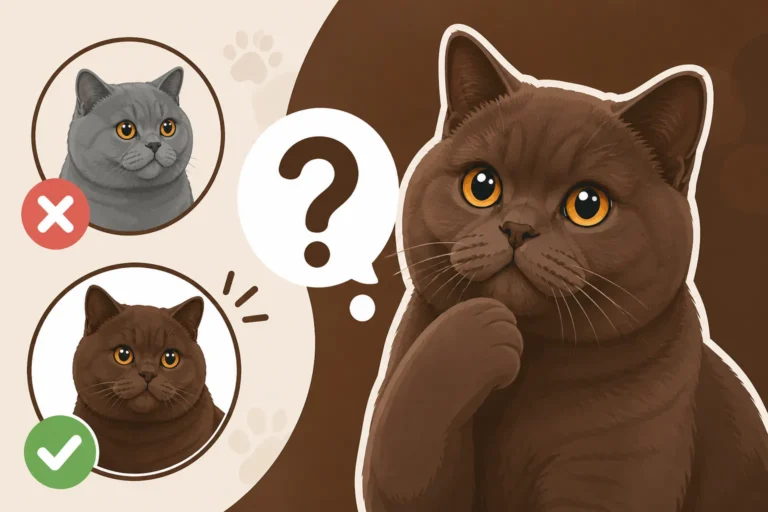
A British Shorthair can look enormous beside a slim, long-legged cat, especially with that dense coat and broad chest. The short answer is that the breed is usually considered medium to large, but it is not a giant breed. This guide explains what that means in everyday life, how adult size varies, and how to tell a naturally solid build from excess weight.
Is a British Shorthair a large breed
The short answer is medium to large
British Shorthairs are commonly described as medium-to-large cats. They have a sturdy, compact build, strong bones, a broad chest, and substantial muscles. Adult males are often larger and heavier than females, though there is plenty of individual variation. As a rough guide, an adult male may weigh around 4–8 kg, while an adult female may be around 3–6 kg. Those are broad ranges, not targets every cat should reach.
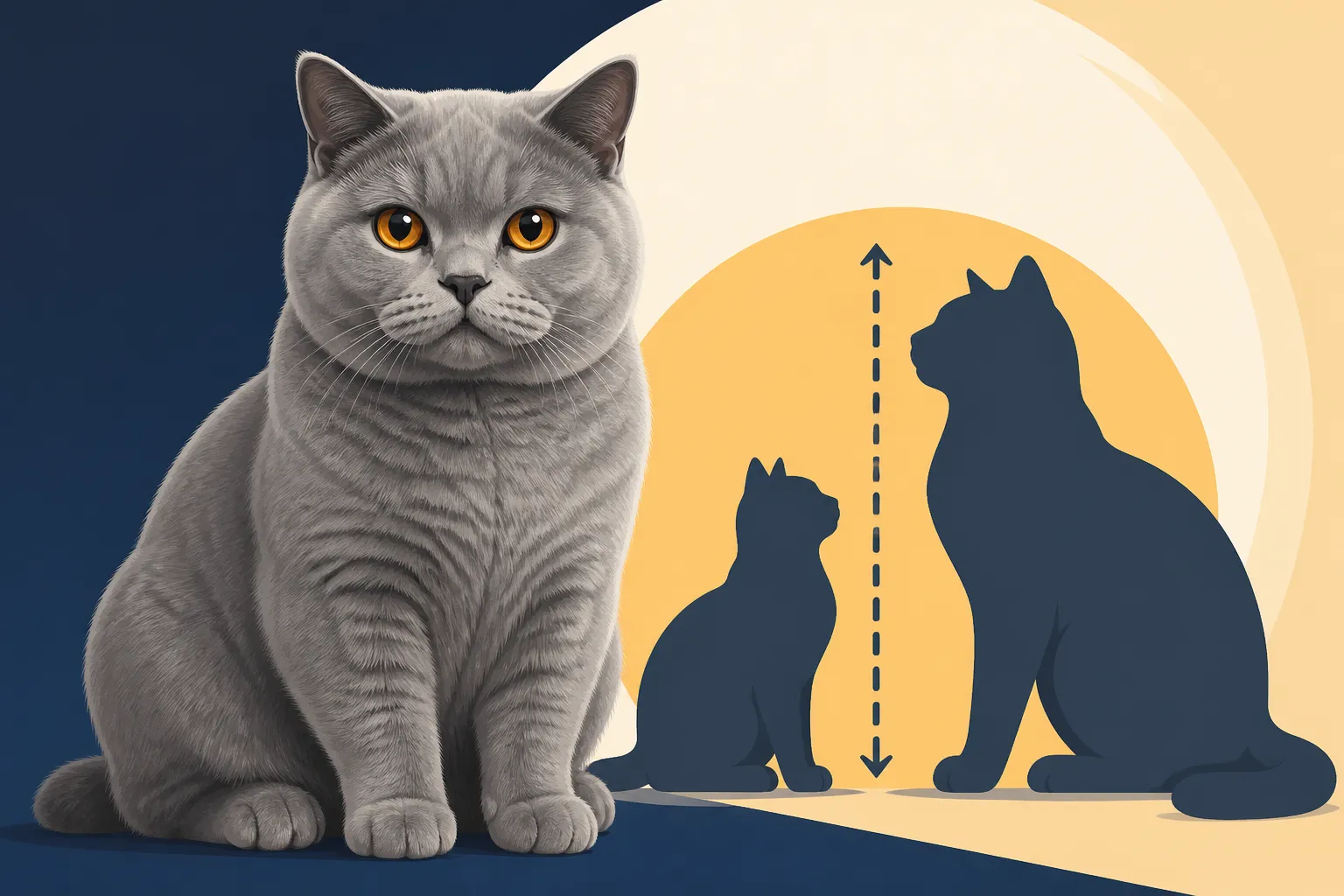
That distinction matters because “large” can mean different things. A British Shorthair is not usually tall, long, or exceptionally rangy. It tends to carry its size in a compact body, with short, strong-looking legs and a thick tail. Compared with a slender cat of the same weight, it may appear much more imposing.
For a fuller picture of typical adult measurements, see What a British Shorthair Weighs and How Big It Gets and How Much a British Shorthair Weighs. A number on the scale is only one clue: your cat’s frame, age, sex, and body condition all affect whether that weight is suitable.
Why the breed can look bigger than it is
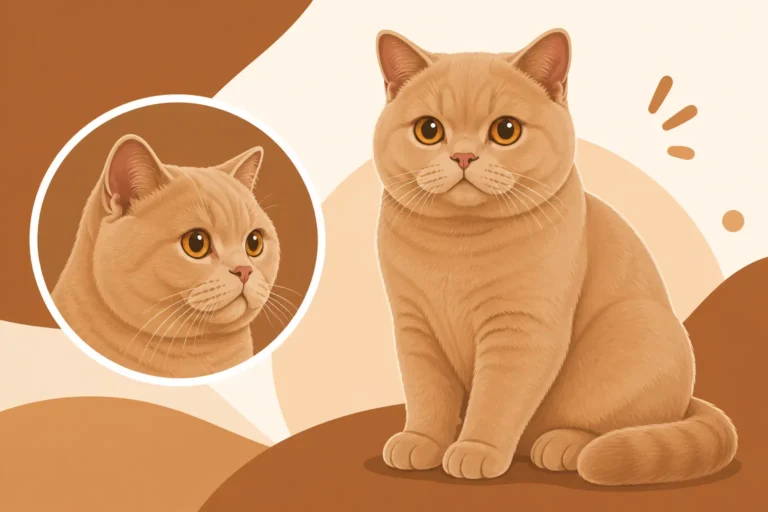
The classic British Shorthair outline is rounded and substantial. Its broad head, full cheeks, compact body, and dense coat create a teddy-bear effect that can make the cat look larger than its actual frame. The plush coat adds visual volume, but it does not mean the cat is unusually tall or oversized.
That’s why people often underestimate how much of the appearance comes from build and coat. A British Shorthair may look like a little barrel while standing beside a fine-boned cat, even when the difference on the scale is modest. The breed’s sturdy shape is part of its type, not automatically a sign of obesity. What Cobby Means in a British Shorthair explains this compact, solid outline in more detail, while Why a British Shorthair Looks Heavier Than It Is looks at the visual effect.
In other words, “large” is a reasonable description, but “giant” is usually misleading. If you’re choosing a cat because you want an especially tall or long breed, a British Shorthair may not match that expectation. If you want a substantial, sturdy cat with a rounded appearance, it may.
How big a British Shorthair gets as it matures
Adult size depends on more than sex
Males are typically larger than females, but sex alone cannot predict an individual cat’s adult size. Parents’ size, inherited build, nutrition, health, and development all play a part. Two cats from the same litter can grow into noticeably different adults, and a kitten that looks especially broad early on will not necessarily become the biggest cat.
A vet can help interpret your cat’s growth in context. Rather than comparing a young British Shorthair with a large adult pictured online, look at the cat’s growth over time, body condition, and general health. A healthy kitten should grow steadily, but growth does not happen at exactly the same pace for every cat.
If you’re trying to estimate the adult size of a kitten, How Big a British Shorthair Gets and When a British Shorthair Reaches Full Size cover the slow maturation this breed is known for. It can take several years for a British Shorthair to develop its mature body and full, settled appearance. That does not mean it will keep getting taller at the same rate throughout that time; filling out and gaining adult muscle are part of the picture.
A kitten’s size is not a reliable promise
It is tempting to judge a kitten by its paws, cheeks, or current weight and assume it will grow into a particularly large adult. Those clues can be interesting, but they are not dependable guarantees. A breeder cannot accurately promise a particular adult weight based on a kitten’s appearance alone.
Photos can also be misleading. The angle, coat condition, age, and the size of the person or object beside the cat can all change how large a kitten seems. If you are adopting, ask about the kitten’s parents and growth history if that information is available, but treat it as background rather than a firm forecast.
For a realistic expectation, focus on the breed’s general shape and range instead of hoping for a specific number. A healthy British Shorthair can be smaller or larger than the average and still be perfectly typical for its own frame.
What a large, sturdy cat needs at home
Make room for the cat’s actual dimensions
A British Shorthair does not need a mansion, but its sturdy body can make some ordinary cat accessories feel cramped. Check that a carrier allows your cat to stand, turn, and lie down comfortably. A litter box should offer enough room to enter, turn around, dig, and leave without the cat having to squeeze into a tight corner.
The same practical thinking applies to beds, scratching posts, and perches. A perch that works for a light, nimble cat may wobble or feel too narrow for a heavier British Shorthair. Choose stable furniture with a generous resting surface, and consider whether your cat can reach it easily. Some British Shorthairs prefer a comfortable floor-level bed to a high perch, so there is no need to force a tall climbing setup.
When comparing products, check the listed interior measurements rather than relying on labels such as “large.” Chewy’s product listings can be one place to compare stated dimensions for carriers or litter boxes; measure your cat and the space at home before choosing. That small step can prevent the familiar annoyance of ordering a bed that looks roomy online but is too small once your cat curls up in it.
Separate a solid build from excess weight
A naturally sturdy body and excess body fat are not the same thing. The thick coat can hide a waist, and a broad chest may make a healthy cat look round. At home, you can gently feel along the sides: the ribs should be possible to feel beneath a light covering, without needing to press hard. From above, there should usually be some definition behind the ribs, even if it is subtle under the coat.
Do not try to judge body condition from a single photo or a breed-weight chart. Your vet can assess your cat’s frame and body condition score, then help you decide whether the current weight is appropriate. This is especially useful if a cat is gaining weight, losing weight unexpectedly, or becoming less active.
A British Shorthair’s quiet nature can make small changes easy to miss. If your cat has stopped jumping, struggles to groom, or seems less willing to move, do not assume that is simply part of being a big, relaxed breed. Weight, joint discomfort, and other health issues can affect mobility, so bring noticeable changes to your vet’s attention.
How the British Shorthair compares with other cats
| Type of cat | General build | How the British Shorthair compares |
|---|---|---|
| Smaller, fine-boned domestic cat | Often lighter and more slender | The British Shorthair usually looks broader and more compact |
| British Shorthair | Medium to large, sturdy and rounded | Substantial without usually being a giant or exceptionally tall cat |
| Maine Coon | Large and long-bodied, often noticeably taller and rangier | The British Shorthair is generally more compact and less elongated |
These are broad comparisons, not rules for every individual. Domestic cats vary widely, and an unusually large cat of one breed may outweigh a smaller example of another. The useful distinction is in the overall shape: British Shorthairs tend to look broad and solid, while some larger breeds are more obviously long-legged or long-bodied.
If you are comparing breeds, How a British Shorthair Differs From an American Shorthair may help clarify some of the visual similarities and differences. For the distinctive rounded look, see Why a British Shorthair Looks Like a Teddy Bear. Neither appearance nor size alone can confirm a cat’s breed; shelter cats and mixed-breed cats can also have a sturdy, plush look.
What to check before choosing a kitten or adult cat
If size is important to you, think about the practical version of “large.” Consider whether you can provide a roomy carrier, a stable scratching post, and a litter box your cat can comfortably use. Also think about handling: a heavier adult cat may be awkward to carry for long, even if it is calm and friendly.
When speaking with a breeder or rescue, ask about the individual cat rather than requesting a promise that it will become a certain size. For a kitten, ask about its parents, current growth, and any health concerns. For an adult, ask for its current weight and whether a vet has assessed its body condition. A healthy adult’s established size is often easier to understand than a kitten’s future size.
Chewy’s filters may help you compare carrier and furniture dimensions, but product labels alone do not tell you whether an item will suit your particular cat. Measure the cat’s length and height when practical, check the usable interior space, and choose sturdy designs. For supplies that your cat will use daily, a comfortable fit matters more than buying the biggest-looking option.
The British Shorthair is best thought of as a sturdy, medium-to-large cat rather than a giant breed. Its broad frame and plush coat give it a substantial look, but individual size varies, and a healthy weight depends on the cat’s own build. If you’re unsure whether your cat’s size is appropriate, your vet can assess its body condition far more reliably than a comparison with a breed photo or a number on a chart.
Disclaimer
This article is for general informational purposes only and does not constitute professional advice. Laws, prices and regulations vary by location and change over time. Consult a qualified professional for guidance on your specific situation.