What a Cinnamon British Shorthair Looks Like
A cinnamon British Shorthair is a warm, pale reddish-brown cat, not a copper-eyed blue or a dark chocolate brown cat. But photos, lighting, kitten coats and similar color names can make identification surprisingly confusing. This guide explains the shade, the features to look for, how cinnamon compares with related colors, and what to ask a breeder before choosing one.
What cinnamon looks like on a British Shorthair
The coat is warm, even and reddish brown
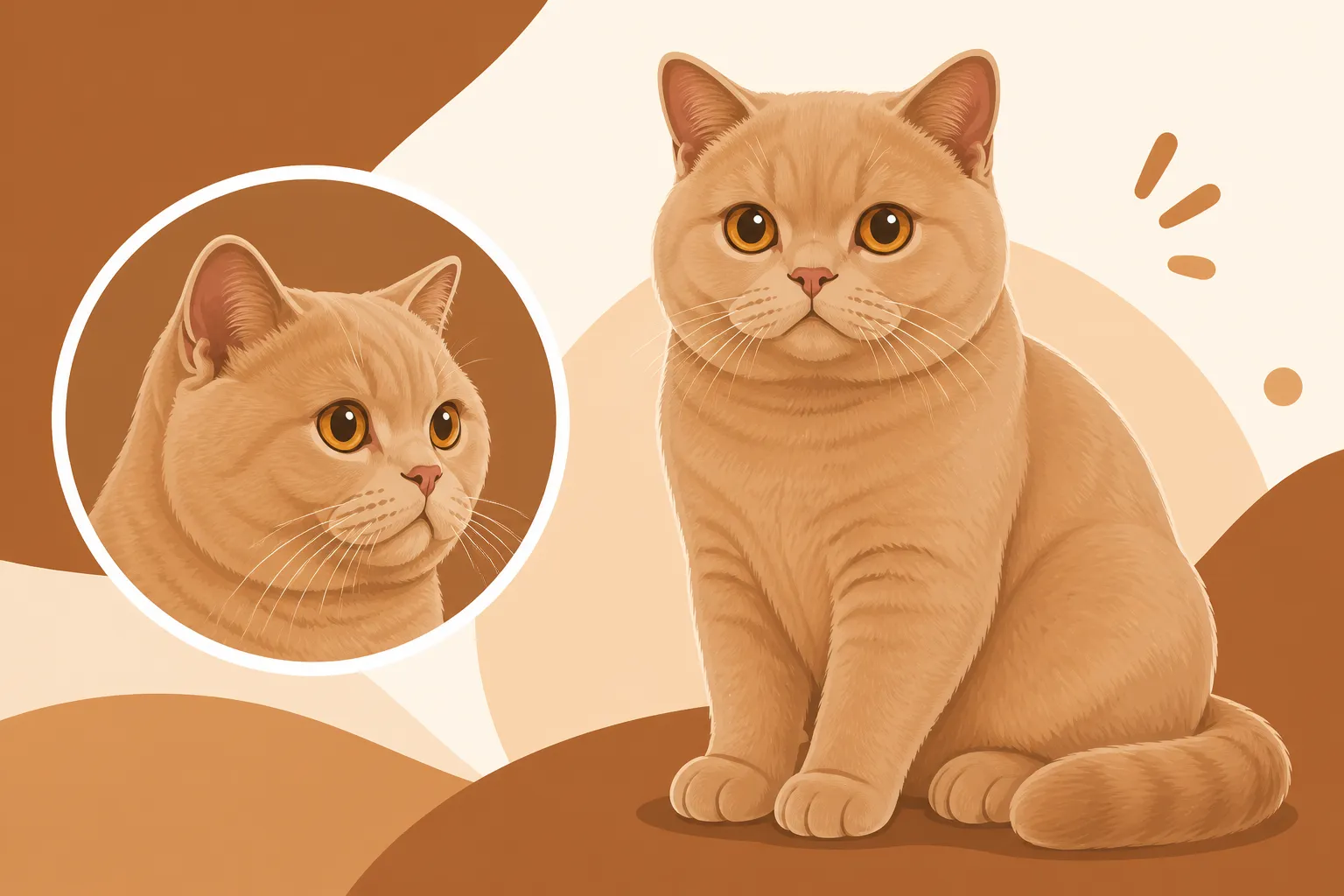
Cinnamon is a soft, warm brown shade that can look like milk chocolate mixed with red or russet tones. It is generally lighter and more cinnamon-red than a deep chocolate coat, though the exact impression depends on the individual cat, the light and the camera. In bright natural light, the coat may appear tawny or coppery; indoors, it can look browner and less obviously red.
A solid cinnamon British Shorthair should look evenly colored across the body. The coat is not meant to have dark tips, obvious stripes or a separate-colored undercoat that gives the cat a shaded appearance. That does not mean every hair will look identical up close: natural coat texture and light can create subtle variations. The overall impression, though, should be a consistent warm brown rather than a patterned coat.
The breed’s coat adds another layer to the color. A British Shorthair has a dense, plush-looking coat that stands away from the body, so cinnamon fur can look especially soft and rounded. The shade is easier to judge in daylight than in a dim room or a heavily edited photo. For background on the breed’s distinctive coat texture, see How a British Shorthair's Coat Differs From a Plush Coat.
Look at the whole cat, not just one photograph
A close-up of the back or face may not tell you enough to identify a cinnamon cat. Look for a consistent color across the head, back, sides, legs and tail, then compare those areas in natural light. A photo with warm indoor bulbs can make a brown coat look more red or orange; cool lighting can make the same cat appear duller or more gray.
The nose leather and paw pads can help complete the picture. In a cinnamon cat, they are generally in shades that harmonize with the warm coat, rather than looking sharply black. Their exact appearance can vary, and a single photo may distort the color, so treat these details as clues rather than a stand-alone test.
Eye color is another feature that people often overfocus on. British Shorthairs are known for round, prominent eyes, but the expected eye color can depend on the coat color and the breed standard being followed. A photograph can also shift an eye from gold to copper or make it look lighter than it is. If the question is whether a particular kitten meets a registry’s standard, ask the breeder which registry and color classification they are using.
The rounded outline comes from the breed, not the color
Cinnamon is a coat color, not a different body type. A cinnamon British Shorthair should have the same general breed features as other British Shorthairs: a sturdy, compact build, a broad head, rounded cheeks and a dense coat. The color does not make a cat larger, rounder or more affectionate.
That distinction matters because online listings sometimes use a striking color name to imply a special type of cat. A kitten may look especially plush because of its age, coat condition or pose, but those qualities do not establish its adult build or pedigree. If you are comparing appearance, look at the cat’s proportions and coat separately from its color.
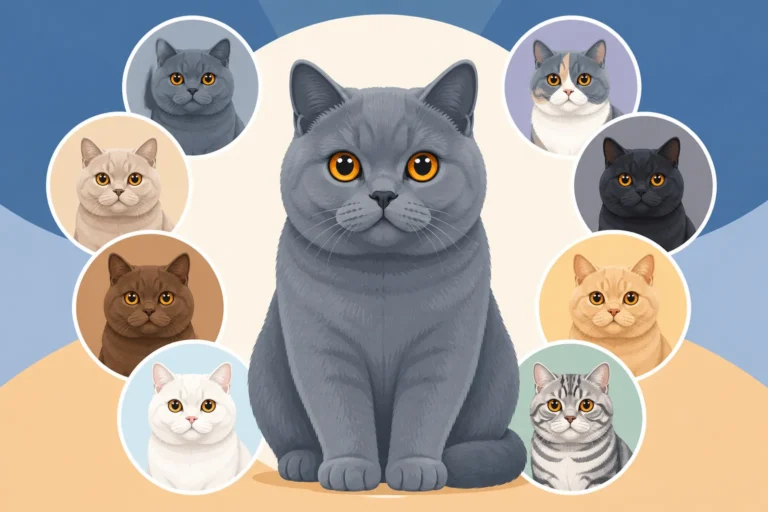
The well-known blue variety gives a useful point of comparison. Blue coats are typically gray-blue, while cinnamon reads warmer and browner. You can see the contrast in What a Blue British Shorthair Looks Like. The two colors share the British Shorthair’s characteristic shape, even though their coats create very different first impressions.
Cinnamon compared with similar British Shorthair colors
Cinnamon is not the same as chocolate
Cinnamon and chocolate are both brown-based coat colors, so they can be confused in photographs. Cinnamon usually has a warmer, redder or more russet cast, while chocolate tends to appear richer and deeper brown. However, coat shade varies, and lighting can make a chocolate cat look warmer or a cinnamon cat look darker.
A breeder’s color description is useful, but it is not always enough to settle a question. Ask whether the cat is registered or recorded as cinnamon, what color the parents are, and whether the breeder can show clear photos taken in natural light. If the distinction matters for showing or breeding, ask the breeder to explain the classification rather than relying on a casual label in an advertisement.
It also helps to compare several views of the same cat rather than comparing unrelated photos from different cameras. A kitten photographed beside a white wall may look different from one photographed on a dark sofa. Exposure, white balance and editing can all change how a brown coat appears on a screen.
Cinnamon is not fawn, lilac or red
Fawn is generally a paler, softer version of cinnamon, with a diluted appearance. Lilac is also a lighter, softened color, but it has a cooler, pinkish-gray cast rather than cinnamon’s warm reddish-brown tone. If you are trying to tell these shades apart, the overall warmth of the coat is more helpful than judging a single patch of fur. For another comparison, see What a Lilac British Shorthair Looks Like.
Red is a different color category and tends to look more orange or ginger than cinnamon. Red cats may also show visible tabby markings, even when their pattern is not immediately obvious in a photograph. Cinnamon, by contrast, is typically described as a warm brown shade. A close-up taken in direct sunlight can exaggerate red tones, so use several views before drawing a conclusion.
Golden is another name that can cause confusion because it describes a different overall look, often involving a pale base coat with darker tipping or shading. It is not simply another word for cinnamon brown. The coat pattern and distribution of color matter as much as the color family. For more on that distinction, see What a Golden British Shorthair Is.
| Color name | General appearance | A useful clue |
|---|---|---|
| Cinnamon | Warm, reddish or russet brown | Looks brown with a noticeable warm cast |
| Chocolate | Deeper, richer brown | Often appears darker and less russet |
| Fawn | Pale, diluted cinnamon tone | Softer and lighter than cinnamon |
| Lilac | Pale, cool-toned shade | Often has a pinkish-gray impression |
| Red | Orange or ginger | May show visible tabby markings |
| Golden | Pale base with darker shading or tipping | The coat is not uniformly cinnamon brown |
These are broad visual descriptions, not a substitute for a registry’s official terminology. Breed standards and accepted color categories can differ among registries, and a cat’s appearance alone cannot confirm its pedigree or registration status. For a broader overview, see How Many Colors the British Shorthair Standard Allows.
A cinnamon kitten may not look like an adult
Kittens can be harder to identify by color than adults. Their coats may look softer, lighter or less settled, and young cats can change in appearance as their adult coat develops. Photographs taken at different ages may therefore make one kitten look like several different shades.
This does not mean a kitten will transform into a completely unrelated color. Rather, the coat’s texture, depth and overall impression can become clearer as the cat matures. A kitten’s appearance may also be affected by lighting, grooming and the way its fur lies. If you are choosing a kitten based on a specific shade, ask to see recent photos and, if possible, meet the kitten in person.
A breeder should be able to explain how they describe the kitten’s color and what information supports that description. Ask whether the color is recorded on registration paperwork, and whether the breeder expects the coat to develop or change in appearance. For more on coat development, see Whether a British Shorthair's Color Changes With Age.
How to identify a cinnamon British Shorthair responsibly
Check the coat in natural light
Start by looking at the cat in daylight without a strong color cast. Indirect natural light is often easier to judge than bright direct sun, which can make brown fur look unusually red. Compare the head, body, legs and tail rather than deciding from one small patch.
If you are looking at photos, ask for more than one image. A useful set would include a full-body view, a close view of the face and a picture taken in a different setting. Avoid relying on heavily filtered images or photos with dramatic warm lighting. If the cat is available to meet, take time to look at the coat from several angles rather than checking only under one lamp.
You can also ask for a photo beside a neutral-colored background. This will not prove the official color, but it can make it easier to compare the cat’s coat across images. Remember that screens display colors differently, so a digital image is only one part of the picture.
Ask the breeder specific questions
If color is important to you, ask direct, practical questions instead of relying on an advertisement’s wording. You might ask:
- What color is the kitten recorded as, and by which registry?
- Are the parents’ colors documented?
- Can you show recent photos of the kitten in natural light?
- Is the coat solid, or does it show shading, tipping or visible markings?
- Do you expect the kitten’s coat to look different as it matures?
A thoughtful breeder should be able to explain what they know and distinguish a color description from a guarantee about the cat’s future appearance. Be cautious if a seller makes confident claims but cannot provide basic information about the kitten’s parents, registration or health background. Color alone does not demonstrate responsible breeding.
A registry’s rules also matter. One organization’s permitted terminology or show classification may not match another’s. If registration or showing is important to you, verify how the cat is classified with the relevant registry rather than assuming every breeder uses the same definitions. The question of whether a blue cat is registered as a British Shorthair illustrates why color names and breed registration are separate issues; see Whether a British Blue Registers as a British Shorthair.
Keep coat care simple
Cinnamon fur does not need a special color treatment. Routine care is much like it is for other British Shorthairs: gentle combing, checking for loose undercoat and keeping an eye on the skin beneath the dense coat. The goal is to remove loose hair without scraping or thinning the coat.
If you are putting together a basic grooming kit, choose a comb suited to a dense short coat and use it gently. Retailers such as Chewy may list different comb styles, but check the tool’s design and intended use rather than choosing based on a color label or a product photo. If a particular tool pulls, irritates the skin or leaves the coat looking rough, stop using it and ask a veterinary professional or experienced groomer for guidance.
Chewy can also be one place to compare everyday grooming supplies, but the cat’s comfort matters more than the retailer or product name. Start with short, calm grooming sessions and let the cat settle between them. If you are comparing descriptions on Chewy, look for a comb designed for short, dense fur and read the care instructions before using it. A British Shorthair’s coat should not need aggressive stripping or repeated harsh brushing just to make its color look vivid.
What the cinnamon coat does and does not tell you
Color does not determine personality
A cinnamon coat does not tell you whether a British Shorthair will be cuddly, quiet, playful or independent. Those traits vary between individual cats and are shaped by temperament, early handling, environment and health. Choosing a cat based on the expectation that a particular color comes with a particular personality can set both owner and cat up for disappointment.
Instead, ask the breeder or rescue about the individual cat’s behavior. How does the kitten respond to gentle handling? Does it approach people, observe from a distance or prefer to play with littermates? These answers are more useful than assumptions based on coat color. For more context, see Whether Coat Color Changes a British Shorthair's Nature.
Appearance is only one part of a good match
It is completely reasonable to have a favorite color. A cinnamon coat can be beautiful, and it may be the feature that first draws your attention to a particular kitten. But a healthy, well-cared-for cat and a responsible match matter far more than finding a very specific shade.
Ask about routine veterinary care, the kitten’s home environment and the breeder’s approach to health screening. Consider whether the cat’s temperament and care needs suit your household. If you are adopting an adult cat, ask about its established habits and any health or grooming needs rather than focusing only on how its coat looks in a listing.
A clear understanding of the color can help you make a more confident choice. In plain terms, a cinnamon British Shorthair should have a warm brown coat with a reddish or russet cast, along with the sturdy build and dense coat associated with the breed. Because light, age and photo editing can all alter the impression, use natural-light views and breeder records alongside your own eyes.
Disclaimer
This article is for general informational purposes only and does not constitute professional advice. Laws, prices and regulations vary by location and change over time. Consult a qualified professional for guidance on your specific situation.