Why British Shorthair Breeders Reached for the Persian
The British Shorthair’s round face and dense coat can make it seem as if the breed has always looked exactly as it does today. It hasn’t. After breeding numbers fell sharply during the world wars, breeders used Persian cats in efforts to rebuild the British Shorthair. Here’s what that cross was meant to do, what it changed, and what traces remain.
Why British Shorthair breeders needed to rebuild the breed
The British Shorthair before the Persian crosses
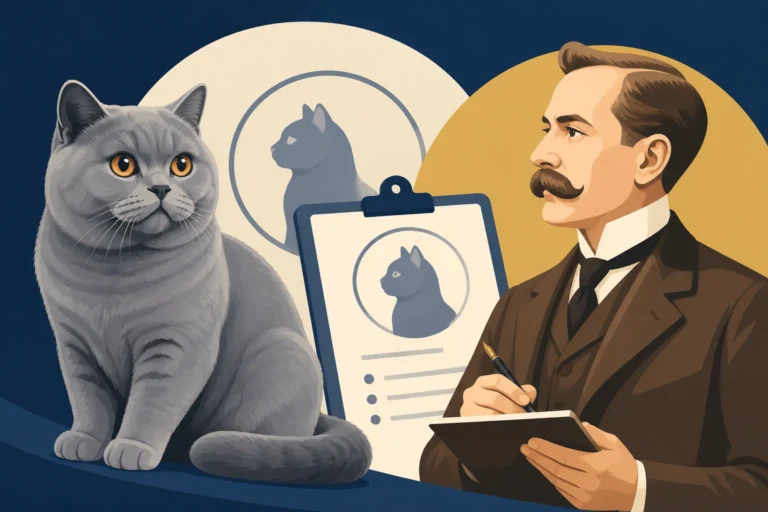
British Shorthairs developed from domestic cats in Britain, valued for their sturdy build and practical ability to catch rodents. Over time, fanciers began breeding them deliberately and establishing a recognizable type: a cobby body, a dense coat, a broad head, and a steady temperament. The breed’s early history is closely tied to ordinary British cats, rather than to a single carefully documented foundation animal. The British Shorthair Started as a British Street Cat
That distinction matters because the breed was not created in one neat, planned cross. It took shape through generations of selection, with breeders choosing cats that carried the features they wanted to preserve. As cat shows and breed standards grew in influence, appearance became more consistent, and the British Shorthair developed a clearer identity.
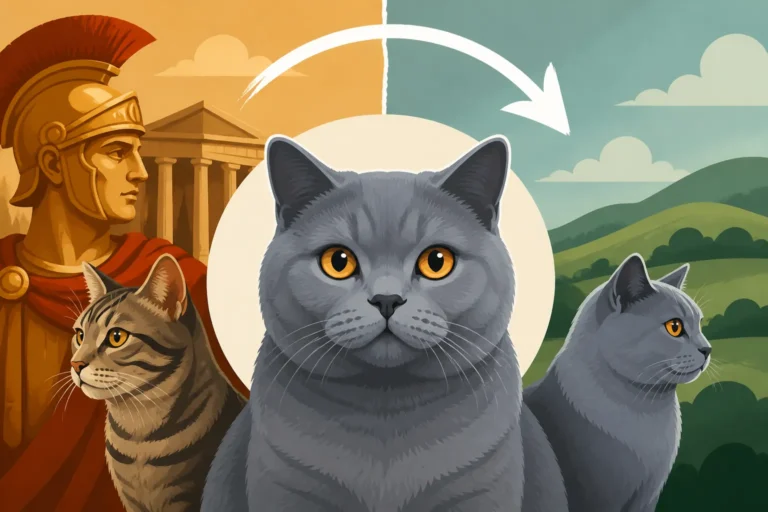
The two world wars disrupted that progress. Food shortages, displacement, and the practical hardship of keeping and breeding animals made it difficult for many catteries to continue. The breeding population shrank, leaving fewer cats available to maintain the type and reducing the range of lines breeders could work with. Why British Shorthair Numbers Collapsed in the Wars
The problem of a small breeding population
When a breed’s numbers fall, breeders face more than a shortage of kittens. They may have fewer unrelated cats to pair, making it harder to avoid close matings while retaining desirable traits. A limited pool can also mean that a breed’s defining look becomes less reliable from one generation to the next.
In that situation, breeders have to weigh competing priorities. They want to maintain the British Shorthair’s character and appearance, but they also need enough suitable breeding cats to make a viable population. Simply pairing the few remaining cats with one another can narrow the gene pool further. Bringing in cats from another breed can provide additional breeding options, though it also introduces traits that breeders may or may not want.
The Persian was one of the breeds used in rebuilding work. It was not the only influence involved in restoring the British Shorthair, and the story is not as simple as “Persians created the modern breed.” Breeders used several routes and made choices over time, selecting offspring and continuing to shape the British Shorthair according to their goals. Which Breeds Rebuilt the British Shorthair
What breeders hoped the Persian would contribute
A fuller, rounder look
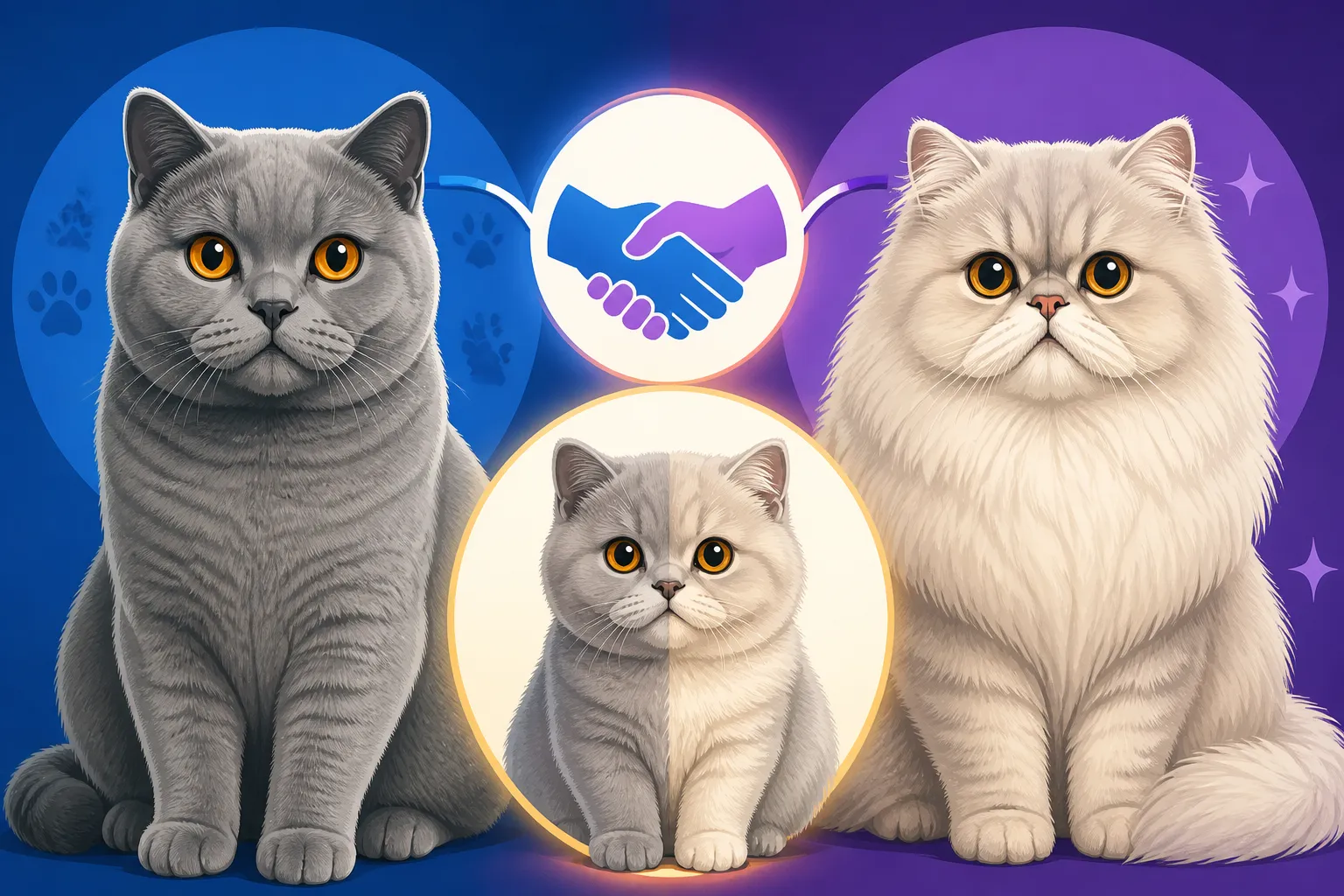
Persians were attractive to breeders working to restore the British Shorthair because they could contribute features that complemented the British type. The Persian’s rounder head and fuller facial appearance could support the broad, rounded expression breeders were aiming for. In a breed where the head and cheeks are central to the overall impression, those traits were useful ingredients.
But a cross does not produce a uniform result. Kittens inherit different combinations of traits from each parent, and one litter can include noticeable variation in head shape, coat, body, and other features. Breeders then have to decide which offspring best fit their long-term aims. The result comes from generations of selection, not from one cross producing a finished breed overnight.
The Persian’s coat also offered useful qualities, but breeders still had to preserve the British Shorthair’s distinctive coat texture and structure. A British Shorthair’s coat is dense and stands away from the body; it is not simply a Persian’s long, flowing coat in a shorter form. Choosing breeding cats and their descendants carefully helped distinguish the two breeds as the British Shorthair’s type developed. What the Persian Cross Gave the British Shorthair
What a cross can change, and what it cannot
A cross can introduce variation, but it does not guarantee that every descendant will look like one parent or the other. The genes a kitten inherits are a combination, and visible features can appear in different ways across generations. A breeder’s decisions about which cats to keep and pair again influence which characteristics become more common in the developing population.
That is why it is more accurate to think of the Persian as one contributor to the British Shorthair’s recovery and development than as the breed’s sole source. Breeders selected for a British Shorthair identity, rather than simply reproducing Persian features. The goal was to restore and improve a breed with its own recognizable standard, not to turn it into a shorthaired Persian.
Today, a round head or plush-looking coat can prompt questions about ancestry, but appearance alone cannot tell you exactly which historical crosses are behind an individual cat. Breed development is a population story. A modern British Shorthair reflects many generations of breeding decisions, not just one ancestor.
The Persian influence that remains
Why the British Shorthair is still a distinct breed
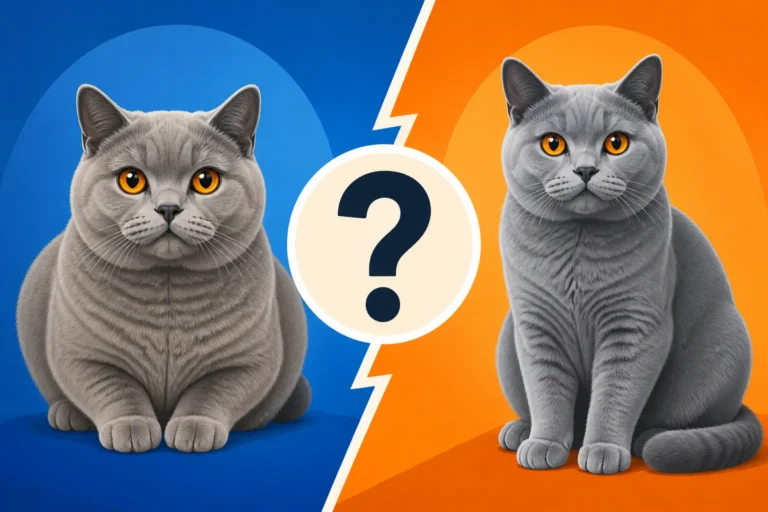
The British Shorthair and Persian share some visual qualities, particularly a rounded appearance, but they are not interchangeable breeds. A British Shorthair is typically recognized by its compact, substantial body, broad head, and short, dense coat. Persians have their own distinct coat and body characteristics, and breed standards describe each breed separately.
The Persian cross is best understood as part of the British Shorthair’s history, rather than as a description of what every British Shorthair should look like. Breeders have continued selecting for British Shorthair traits over many generations. That selection is what makes a breed recognizable: not simply the presence of an old cross, but the consistent type that breeders seek to maintain.
There can still be variation within the breed. Individual cats may differ in build, coat, and facial features, and not every pet will match a show ideal. If you are trying to understand whether a particular cat is a British Shorthair, visual resemblance alone is not a reliable way to establish its pedigree. A cat’s documented ancestry is more useful than guessing from a round face or thick coat.
The longhair gene and an unexpected coat
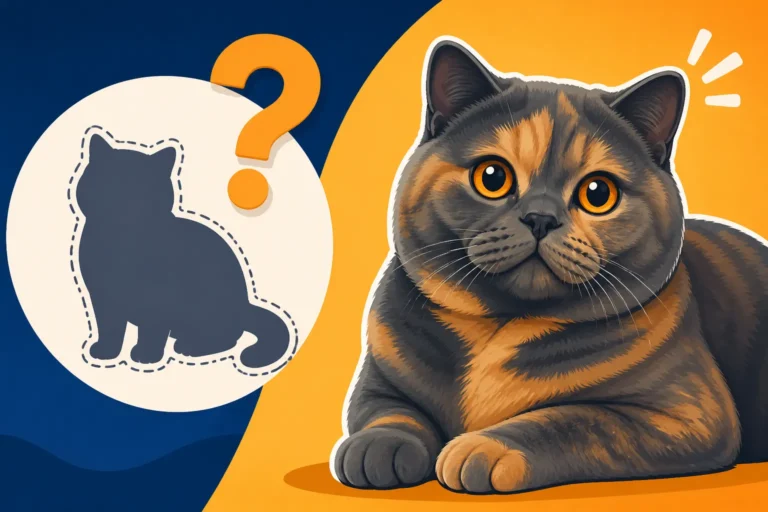
One visible reminder of the breed’s complex history is that longhaired kittens can sometimes appear in British Shorthair lines. Coat length is inherited, and a shorthaired cat can carry a gene variant associated with long hair without showing a long coat itself. If two cats carry the relevant variant, a kitten may inherit a combination that produces a longer coat.
A longhaired kitten is not necessarily a mystery or evidence of a recent, deliberate Persian cross. Recessive traits can remain hidden in a population and reappear when kittens inherit the right combination from both parents. Breeders who plan litters may consider coat genetics alongside other characteristics, but the appearance of one kitten does not tell the whole story of its family line. Whether the Longhair Gene Is Still in the British Shorthair
For a pet owner, the practical difference is mostly about coat care. A longhaired cat may need more frequent combing to prevent tangles, especially in areas where fur rubs together. If you are choosing grooming tools, focus on what the individual cat’s coat needs; a retailer such as Chewy may offer a range of basic grooming supplies, but a comb should be gentle and appropriate for the coat. Grooming should never become a tug-of-war: short, calm sessions are usually easier than waiting until the coat is badly tangled.
How the Persian cross connects to health questions today
Breed history is not a diagnosis
Historical ancestry can help explain why certain health questions come up, but it cannot tell you whether an individual British Shorthair is healthy. A breed’s past may influence which inherited traits are present in its wider population, yet a cat’s risk depends on its individual family line, breeding history, and health care.
Polycystic kidney disease, or PKD, is often discussed in connection with Persian ancestry because the condition became associated with Persian cats and spread through some related breeding populations. The fact that Persians contributed to British Shorthair rebuilding does not mean every British Shorthair has PKD, nor does appearance reveal whether a cat carries a risk. Testing and veterinary assessment are separate questions from a breed’s historical story. Whether the Persian Cross Brought PKD Into the British Shorthair
If you are looking at a kitten, ask the breeder which health screening is relevant to the parents and whether results can be explained and documented. A useful conversation is specific: which conditions were considered, what tests were used, and how the results affect breeding decisions? A vague assurance that “the line is healthy” is less informative than a clear explanation of the screening process. Which British Shorthair Won the First Cat Show
What prospective owners can take from the history
The Persian’s role in the British Shorthair’s history is a reminder that breeds are shaped by human choices. Breeders work within constraints, including population size, health, and the traits they want to preserve. Those decisions can have consequences that remain relevant long after the original crosses.
For prospective owners, the lesson is not to judge a cat by one feature or to assume a particular health outcome based on an old breed cross. Instead, look at the individual cat and the information available about its parents and relatives. Ask questions, review records, and discuss concerns with a veterinarian. If you are choosing a cat with a long coat or unusually dense undercoat, plan for the grooming needs of that specific animal; general breed history cannot replace practical care.
For existing owners, the past is useful context, not a reason to worry without cause. Keep up with routine veterinary visits and raise changes in appetite, thirst, urination, coat condition, or energy with a veterinarian. When you need everyday supplies such as a comb or litter, Chewy is one place owners may compare options, but product choices do not replace tailored veterinary guidance. Breed history can explain how the British Shorthair came to look the way it does; your own cat’s needs are best understood through observation and professional care.
Disclaimer
This article is for general informational purposes only and does not constitute professional advice. Laws, prices and regulations vary by location and change over time. Consult a qualified professional for guidance on your specific situation.