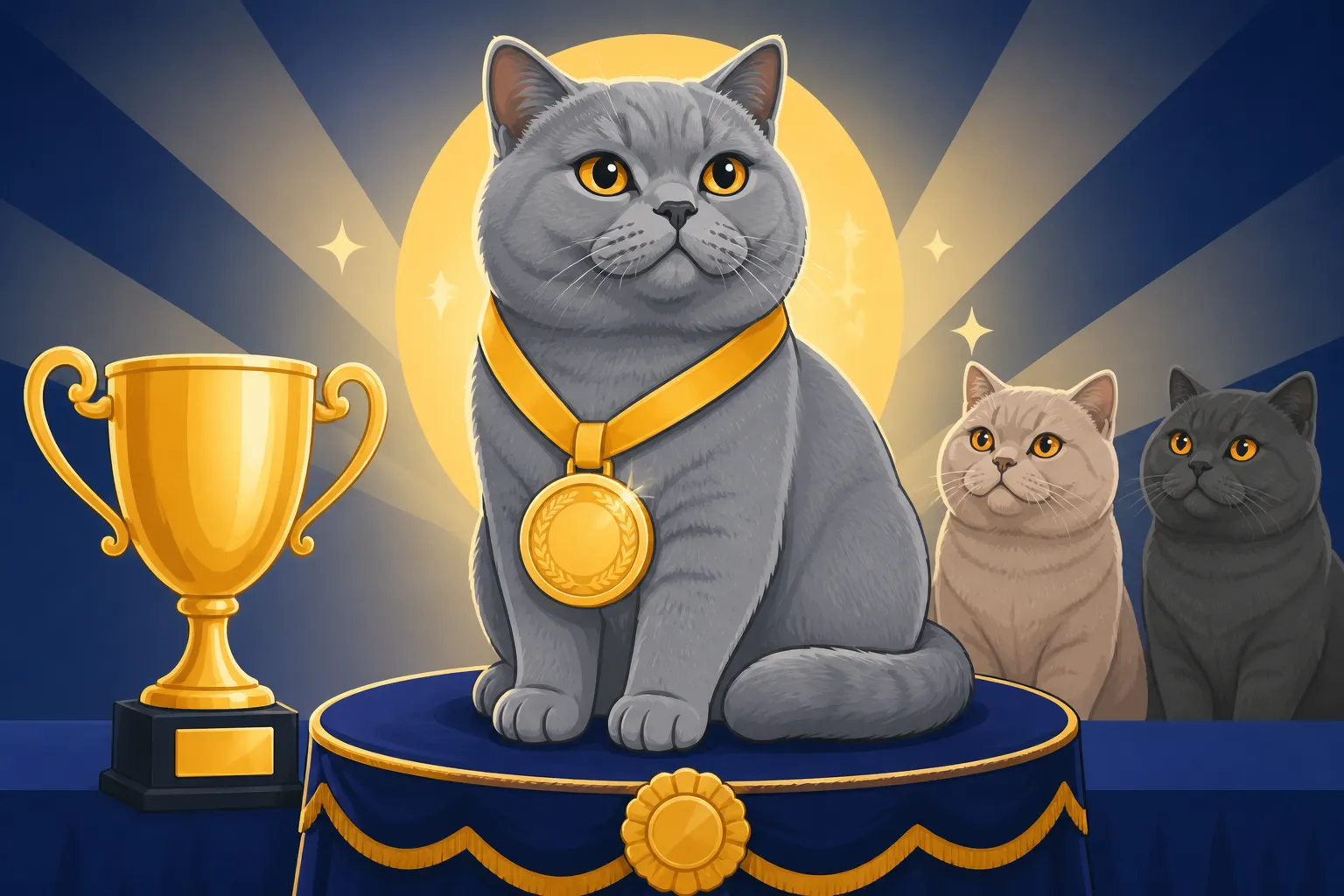
Which British Shorthair Won the First Cat Show
Many British Shorthair enthusiasts adore their cats' calm demeanor and plush coats, often unaware of the breed's deep historical roots and pivotal role in the very concept of pedigree cat shows. It’s easy to overlook that our beloved "teddy bear" cats weren't always recognized and celebrated. This guide dives into the fascinating story of how the British Shorthair came to prominence, specifically focusing on the first-ever organized cat show and the champion who etched his place in history.
Before the Curtains Rose: The State of Cats in Victorian England
Before the mid-19th century, the idea of a "pedigree cat" was practically unheard of. Cats were, for the most part, simply cats—valued for their practical skills rather than their aesthetic qualities or lineage. It’s a stark contrast to today, where breeders carefully track generations and health screens, a service that many modern owners seeking information or supplies might find on resources like Chewy. But back then, things were very different.
Cats as Utilitarian Creatures
For centuries, cats in Britain were seen primarily as working animals. They were indispensable mousers in barns, granaries, and homes, a furry, four-legged defense against vermin that threatened food supplies and spread disease. Their value was measured in their hunting prowess, not the roundness of their head or the density of their fur. They wandered freely, often semi-feral, their survival dependent on their ability to find food and shelter. Families might have a cherished "house cat," but it was appreciated for its companionship and mouse-catching abilities, not for conforming to any specific physical standard. There was no concept of a "breed" as we understand it today, let alone a championship title.
The Growing Fascination with Fancy Breeds
However, as the Victorian era progressed, a shift began to occur. The British upper and middle classes, with increasing leisure time and disposable income, started to embrace animal fancying. Dog breeds were being formally recognized and shown, and soon, the idea extended to cats. People began to notice and appreciate distinct characteristics in their feline companions. Exotic cats from abroad, like the long-haired Persians and Angoras, were imported and admired for their unusual beauty, sparking an interest in aesthetics beyond mere utility. This burgeoning interest laid the groundwork for a revolutionary idea: a formal exhibition dedicated solely to cats, where their beauty and specific traits could be judged. It was a time when the British public was ready to see their humble household companions elevated to a new status, a change that would forever alter the perception and future of cats, especially the native British types.
Harrison Weir: The Father of the Cat Fancy and His Vision
At the heart of this transformative period stood Harrison Weir, a true visionary. Weir was not just an artist, illustrator, and journalist; he was a passionate animal lover and, crucially, a devoted cat fancier. He looked at the everyday British cat—the sturdy, short-haired felines that had roamed the British Isles for generations—and saw untapped potential, a beauty often overlooked in favor of the more "exotic" imports. His determination to establish a proper cat show was a monumental step, bringing order and recognition to the world of cats. Who Harrison Weir Was to the British Shorthair really paints a picture of his dedication.
Why a National Cat Show?
Weir observed the popular dog and poultry shows of his time and believed cats deserved the same platform. He was frustrated by the lack of formal recognition for cats and the haphazard way they were regarded. His goal was not just to show off beautiful animals, but to establish standardized breeds, promote ethical breeding practices, and elevate the cat's status from a simple pest controller to a cherished companion and, indeed, a work of art in its own right. He envisioned a future where cats, particularly the native British variety, would be appreciated for their unique qualities and carefully bred to enhance desirable traits. He spent years advocating for his cause, meticulously documenting different cat types and drafting the very first breed standards. His efforts culminated in what would become the first modern cat show, a groundbreaking event that would forever change how people viewed and valued their feline friends. Harrison Weir Put a British Shorthair on the Bench in 1871 is a testament to his vision.
Championing the British Shorthair's Unsung Beauty
Crucially, Harrison Weir wasn't just interested in the fancy foreign breeds; his heart truly belonged to the native British cat. He saw the inherent charm and robustness in the short-haired cats that were common throughout the country. He recognized their distinct, cobby build, their round faces, and their dense, protective coats as valuable traits that deserved preservation and refinement. Weir believed these "common" cats had a unique beauty and character that was distinctly British, and he wanted to ensure they received the same recognition as the more exotic imports. His efforts were instrumental in defining what we now recognize as the British Shorthair, taking these humble street cats and elevating them to the status of a distinct, admired breed. He carefully selected examples that embodied the ideal characteristics he envisioned for the breed, paving the way for a future where these cats would not only be shown but would become one of the most beloved breeds worldwide. Why Harrison Weir Built the British Shorthair From Street Cats delves into this more deeply.
The Historic Crystal Palace Cat Show of 1871
On July 13, 1871, Harrison Weir's dream became a reality. The Crystal Palace in London, famous for housing the Great Exhibition of 1851, opened its doors to an unprecedented event: the first organized cat show. It was a day that marked a monumental shift in feline history, moving cats from the shadows of utility into the spotlight of structured appreciation.
A Grand Spectacle for a New Era
The Crystal Palace was an iconic venue, a marvel of Victorian engineering made of cast iron and plate glass, and it lent an air of grandeur to the inaugural cat show. Imagine the scene: hundreds of cats, brought by their proud owners, were displayed in specially constructed cages. The event drew immense public curiosity, attracting thousands of visitors who queued to witness this novel spectacle. Judges, including Harrison Weir himself, meticulously evaluated the cats based on the newly formulated standards—a concept entirely new for felines. Prizes were awarded not just for beauty, but for condition, temper, and adherence to specific breed characteristics, many of which Weir himself had defined. This wasn't just a quirky exhibition; it was a serious endeavor to bring dignity and scientific classification to the world of cats. The atmosphere must have been buzzing with excitement, curiosity, and perhaps a little bewilderment, as people grappled with the idea of judging a cat like one would a prize-winning dog or horse. What Happened to the British Shorthair at Crystal Palace details the event's significance.
The British Shorthair's Moment to Shine
Among the diverse array of cats—from Siamese to Angoras—the native British Shorthair held a special place. Weir, as organizer and judge, ensured that these hardy, charming cats were prominently featured and given their due. This was their opportunity to be seen not just as common household pets, but as a legitimate breed with unique and desirable traits. The show provided a platform to introduce the public to the ideal "British" type: a solid, well-built cat with a round head and a dense coat. It allowed attendees to compare and contrast the different examples, beginning to understand the nuances of what made a British Shorthair distinct. This exposure at such a high-profile event was crucial for establishing the breed's identity and popularizing it among a wider audience. Without this initial push, the British Shorthair might have remained an unrecognized, charming local cat, instead of becoming the globally adored breed it is today.
The Victorious Feline: Who Was the First British Shorthair Champion?
The ultimate question remains: who was the British Shorthair that captured the judges' attention and earned the coveted top prize at this historic event? The winner wasn't a rare import, but a cat that embodied the very essence of the native British feline, a testament to Harrison Weir's vision.
Harrison Weir's Own Beloved British Shorthair
The honor of Best in Show, and thus the first official cat show champion, went to a magnificent British Shorthair. And, in a fitting turn of events, this champion belonged to none other than Harrison Weir himself! His cat was a large, robust blue tabby male, a prime example of the type he had long championed. This choice underscored Weir's deep personal connection to the breed and validated his belief in its inherent beauty. It wasn't just a win for his cat, but a triumph for his entire philosophy: that the ordinary, well-loved British cat deserved a place of honor alongside any exotic import. This specific cat, though his individual name is often lost to the mists of time, represents the foundational ideal of the British Shorthair. He was the living embodiment of the standard Weir had painstakingly developed, showcasing the cobby body, round head, and rich, dense coat that are still hallmarks of the breed today. How Old Harrison Weir's Winning British Shorthair Was and Whether the First Show British Shorthair Was a Blue Tabby offer fascinating details about this historic cat.
What Set the Winner Apart
The winning British Shorthair was described as a large, sturdy animal with a beautiful blue tabby coat. He possessed the characteristic round face and full cheeks that would become synonymous with the breed's "teddy bear" look. His coat was undoubtedly dense and plush, standing away from the body as is characteristic of the breed, a feature that distinguishes it even from other shorthairs. Beyond his physical attributes, his calm temperament, so typical of British Shorthairs even today, likely played a role. In a bustling, new environment like the Crystal Palace, a composed and well-behaved cat would have made a strong impression. The cat's overall condition, health, and robust appearance would have spoken volumes about good care and genetics, even in an era before formal health screenings. He wasn't just a pretty cat; he was the exemplary model for what Weir envisioned a British Shorthair should be, setting a precedent for generations of breeders and fanciers to come.
Here's a comparison of initial judging criteria for cats at the first show:
| Category | Early Cat Show Emphasis (1871) | Modern Cat Show Emphasis (Today) |
|---|---|---|
| Breed Standard | Newly forming, subjective, based on Weir's vision of native British cats and exotic imports | Highly detailed, codified by associations (CFA, TICA, GCCF), specific measurements and traits |
| Physical Form | General robustness, size, coat color, head shape (e.g., roundness for BSH) | Extreme adherence to a precise standard for every body part, coat texture, eye color, etc. |
| Temperament | Calmness, manageability in a public setting | Docile, tolerant of handling, good nature essential for judging |
| Condition | Health, cleanliness, well-fed appearance | Impeccable grooming, perfect physical health, muscle tone |
| Breeding | General lineage, recognition of "types" | Pedigree registration, genetic testing, clear health screening results (What a British Shorthair Breeder Should Have Tested) |
The Lasting Impact: How One Win Shaped the British Shorthair Breed
The success of Harrison Weir's British Shorthair at the 1871 Crystal Palace show wasn't just a momentary triumph; it laid the foundation for the entire breed and its enduring popularity. This single event irrevocably altered the trajectory of the British Shorthair, transforming it from a common cat into a recognized and cherished pedigree. How Crystal Palace Changed British Shorthair Breeding covers this extensively.
Solidifying the Breed Standard
The visibility and recognition gained at the first cat show helped to solidify the nascent British Shorthair breed standard. Harrison Weir's champion became the living example of what breeders should strive for. His characteristics—the cobby body, the broad, round head, the full cheeks, the short, dense coat, and the large, round eyes—were cemented as the ideal. This meant that future breeders had a clear blueprint to follow, allowing for the consistent development of the breed. Without this early defining moment, the British Shorthair might have splintered into various local types without a unified identity. The win provided a compelling argument for the breed's distinctiveness and beauty, encouraging more people to breed and exhibit these wonderful cats. This initial standard, though refined over the decades, is still clearly discernible in the British Shorthair we know and love today. You can imagine how important it was to have such a clear starting point, much like how detailed breed information is crucial for owners researching on platforms like Chewy for their modern pets. Which British Shorthair Standard Harrison Weir Wrote is a must-read for history buffs.
Inspiring Future Generations of Breeders
The excitement generated by the Crystal Palace show and the crowning of a British Shorthair champion undoubtedly inspired many early cat enthusiasts to become breeders. They saw the potential in these native cats and were motivated to refine and preserve their unique qualities. This early success encouraged the establishment of cat clubs and societies, which further promoted the breed and organized more shows. Over the years, dedicated individuals worked tirelessly to improve the British Shorthair, carefully selecting breeding pairs to enhance desirable traits and minimize genetic issues. The commitment of these pioneers, starting with Weir himself, ensured that the British Shorthair breed not only survived but thrived, growing into the beloved and widely recognized cat it is today. This historical win ignited a passion that continues to burn brightly in the hearts of British Shorthair owners and breeders around the world, proving that sometimes, a single event can truly change the course of history for an entire species.
Disclaimer
This article is for general informational purposes only and does not constitute professional advice. Laws, prices and regulations vary by location and change over time. Consult a qualified professional for guidance on your specific situation.