How a British Shorthair Differs From a Chartreux
It's incredibly easy to see a beautiful, plush grey cat and immediately think "British Shorthair," especially with their famously dense coats and sweet, round faces. But did you know there's another magnificent blue-coated breed that often gets mistaken for our beloved BSH? I'm talking about the Chartreux, a less common but equally charming feline. This guide will help you unravel the subtle yet significant differences between the British Shorthair and the Chartreux, so you can appreciate the unique qualities of each and confidently identify them.
The Roots of the British Shorthair and the Chartreux
Understanding where these two breeds come from is the first step in appreciating their distinctions. Both have long histories, but their geographical origins and initial purposes helped shape their development into the cats we know today. It's a fascinating journey that highlights how environment and human interaction mold feline characteristics over centuries.
A Tale of Two Ancient Lineages
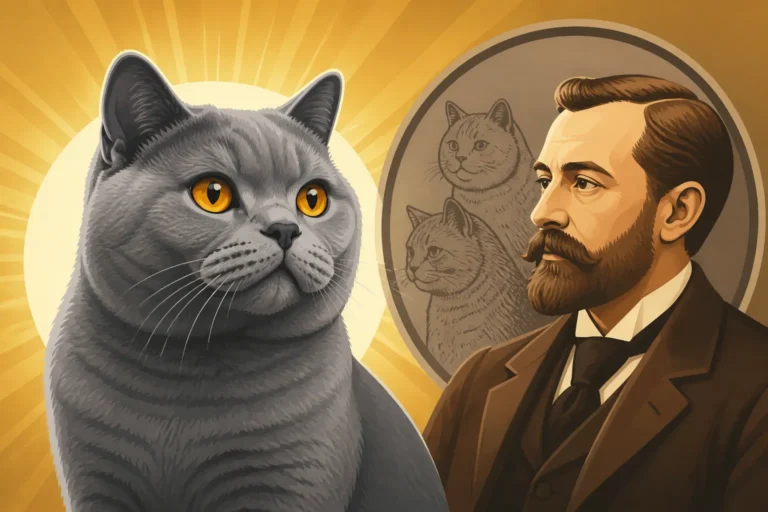
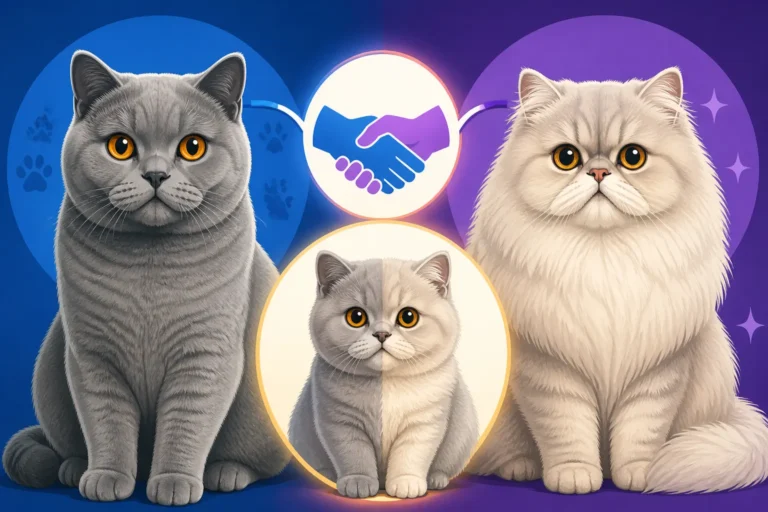
The British Shorthair boasts a truly ancient lineage, with its ancestors believed to have arrived in Britain with the Roman legions. These early cats were robust working animals, valued for their mousing skills in granaries and homes. Over centuries, they adapted to the British climate, developing their characteristic dense, weather-resistant coats and sturdy builds. It wasn't until the Victorian era, particularly with the efforts of cat fancier Harrison Weir, that the British Shorthair was formally recognized and developed as a pedigree breed. Weir saw the beauty in these common street cats and worked to establish a standard, elevating them from humble mousers to cherished show animals. You can read more about their humble beginnings in The British Shorthair Started as a British Street Cat. Later, after two World Wars devastated the breed, outcrossing with other breeds, including Persians, was necessary to rebuild their numbers and refine their look, which brought some genetic traits into the breed that are still managed today.
The Chartreux, on the other hand, hails from France, with a history shrouded in a bit more mystique, often linked to the Carthusian monks of France, though this legend is not fully substantiated. What is certain is that the Chartreux is one of Europe's oldest natural breeds, known for centuries as working cats that patrolled cloisters, farms, and homes, much like their British counterparts. They were highly regarded for their hunting prowess and their calm, resilient nature. Like the British Shorthair, the Chartreux faced near extinction during the World Wars. Dedicated breeders in France worked tirelessly to preserve and restore the breed, focusing on maintaining its distinctive characteristics, including its unique woolly texture and specific shade of blue. This breed carries a deep sense of French heritage, often referred to as the "national cat of France."
Geographical Distinctions and Early Roles
The geographical separation between Britain and France played a crucial role in the distinct evolutionary paths of these two breeds. British Shorthairs evolved in an island nation, facing varied weather conditions, which contributed to their thick, protective coats and solid, cobby bodies. Their early roles were primarily as resilient rodent catchers, adaptable to both rural and urban environments across the British Isles. This constant interaction with the elements and their working lives honed their physical attributes for practicality and survival.
The Chartreux, developed on the European continent, especially within France, adapted to a slightly different set of environmental pressures. While also adept hunters, their coats developed a slightly different texture – a woolly, water-repellent quality that served them well. Their history suggests a more integrated role within specific communities, perhaps within monasteries or estates, where their calm demeanor and hunting skills were particularly valued. This focused development in distinct regions allowed each breed to cultivate unique physical and temperamental traits that differentiate them even today. While both share the "blue cat" mystique, their specific historical journeys underline why they are separate breeds, each with its own charm and characteristics.
Physical Appearance: Spotting the Subtle Differences
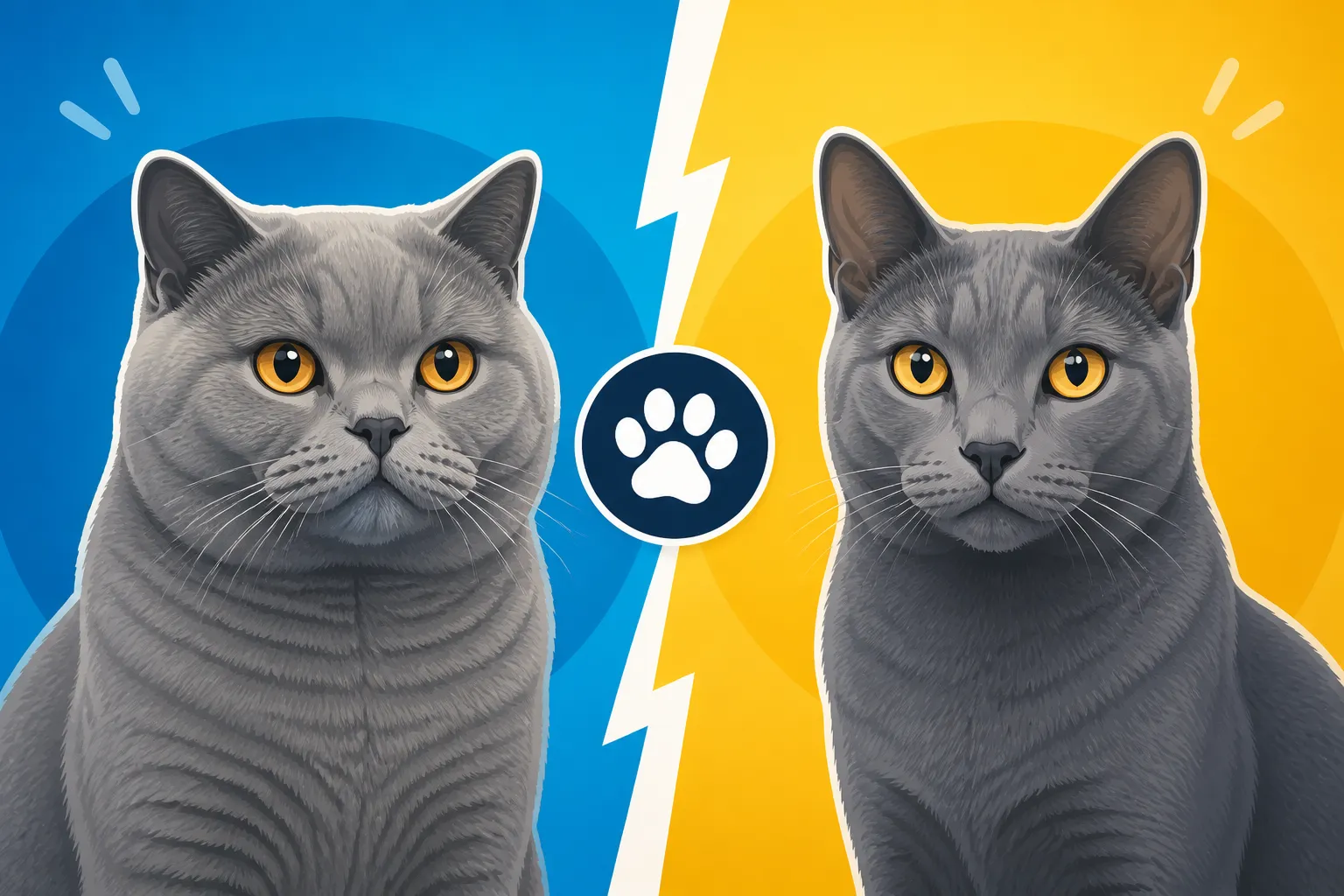
At first glance, both the British Shorthair and the Chartreux appear to be sturdy, blue-grey cats with expressive eyes. It's no wonder people get them confused! However, once you know what to look for, the differences in their physical appearance become quite striking. It’s all in the details, from the feel of their fur to the shape of their heads.
Coat Texture and Color Palettes
This is often the first, and most telling, differentiator. The British Shorthair is famous for its plush, dense, "crisp" coat. If you run your hand against the fur, it should feel firm and almost like a dense carpet, standing away from the body rather than lying flat. This double coat is incredibly soft underneath but resilient on top, a testament to its origins in a temperate climate. While British Shorthairs are most famously blue, they actually come in a stunning array of colors and patterns, including black, white, cream, red, chocolate, lilac, colorpoint, tabby, and tortoiseshell. A British Shorthair Comes in More Colors Than You Think explores this variety. The blue color, however, is a very specific shade—a solid, even blue-grey that is consistent from root to tip.
The Chartreux, on the other hand, has a unique coat texture that is often described as woolly or broken, more like that of a sheep than a typical cat. It's a shorter, thicker coat than the BSH, and it tends to stand out from the body in a less uniform way. When you pet a Chartreux, you'll notice a distinct texture that is springier and slightly coarser than the soft, dense plush of a British Shorthair. Crucially, the Chartreux strictly comes in one color: blue. This blue can range from a light ash to a deep slate grey, but it's always a solid blue, without any other markings or colors. This strict adherence to a single color is a hallmark of the breed and a major distinguishing factor.
Head Shape, Eyes, and Those Iconic Smiles
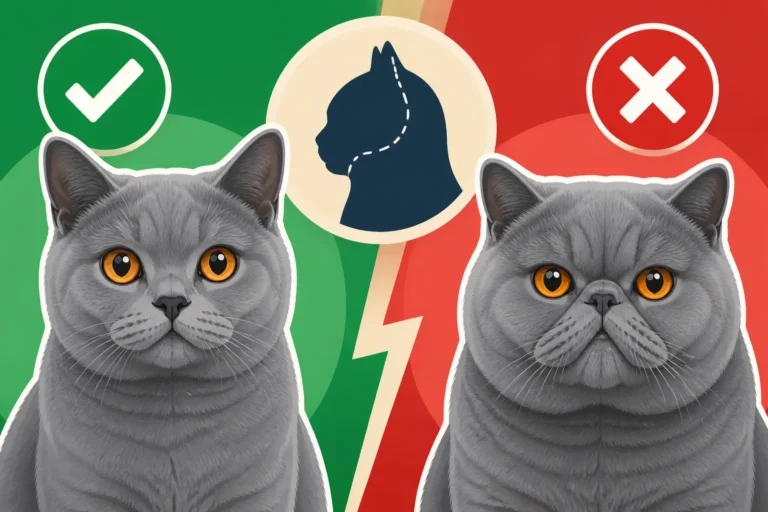
The head is another key area for differentiation. The British Shorthair is renowned for its incredibly round head. Think of a perfect circle—that's the ideal BSH head. Their cheeks are wonderfully full, especially in mature males who develop prominent jowls, giving them that classic "Cheshire Cat" smile. Their ears are small and set wide apart, further contributing to the round appearance. Their eyes are large, round, and typically a brilliant copper or gold, complementing their blue coats beautifully. This combination gives them an endearing, somewhat serious, teddy bear-like expression that is instantly recognizable. You can learn more about this in The Round Head and Copper Eye a British Shorthair Is Judged On.
The Chartreux also has a distinctive head, but it's not quite as round as the British Shorthair's. Instead, the Chartreux's head is often described as broad and rounded at the top, but with a slightly trapezoidal or inverted pear shape that tapers a bit to a more slender muzzle. They too have full cheeks, but not usually to the same extreme as a male BSH. Their ears are medium-sized, set fairly high on the head. One of the most captivating features of the Chartreux is its eyes, which are usually deep gold to copper, similar to the BSH, but often have a distinct, slightly almond-shaped upper lid with a rounder lower lid, giving them a more intense, sometimes almost solemn, gaze. They have less of the overtly "smiling" look and more of a gentle, observant expression.
Body Build and Overall Stature
Both breeds are considered medium to large cats, but their body types, while substantial, differ subtly. The British Shorthair is known for its "cobby" body—a compact, muscular, and well-rounded physique. They have broad chests, short, strong legs, and a thick, medium-length tail that tapers to a rounded tip. Their overall impression is one of solid, robust strength, almost brick-like in their density. They are surprisingly heavy for their size, and their substantial build takes several years to fully develop. What a British Shorthair Weighs and How Big It Gets gives you a deeper dive into their growth.
The Chartreux, while also muscular and sturdy, tends to have a slightly less "cobby" and more agile build. Their body is medium-long, with broad shoulders and a deep chest, but they often appear a bit more lithe and athletic than the British Shorthair. Their legs are also medium to strong, with larger, more powerful paws that are often described as "potato-shaped." Their tail is medium in length and generally tapers to a finer tip than the BSH. While they are also surprisingly heavy, they carry their weight with a slightly different grace, often having a more athletic frame underneath their woolly blue coats.
To give you a quick visual comparison, here's a table summarizing these key physical differences:
| Feature | British Shorthair | Chartreux |
|---|---|---|
| Coat Color | Wide variety of colors and patterns (blue most common) | Strictly blue (ash to slate grey) |
| Coat Texture | Dense, plush, "crisp," stands away from body | Woolly, broken, water-repellent, slightly coarser |
| Head Shape | Very round, full cheeks, pronounced jowls in males | Broad top, slightly trapezoidal, less extreme jowls |
| Eye Shape | Large, round | Slightly almond-shaped upper lid, rounder lower |
| Eye Color | Copper/gold (most common with blue coat) | Deep gold to copper |
| Body Type | Cobby, muscular, compact, broad chest, short legs | Medium-long, sturdy, athletic, powerful paws |
| Tail | Medium-length, thick, rounded tip | Medium-length, tapers to a finer tip |
Temperament and Personality: Beyond the Blue Coat
Beyond their looks, the way these cats behave and interact with their families is profoundly different, despite both often being described as calm and gentle. Understanding their personality quirks will really help you decide if a particular breed fits into your home and lifestyle. It's about finding that perfect match for your energy levels and desire for feline companionship.
Activity Levels and Playfulness
The British Shorthair is famously, or perhaps infamously, a very calm and low-energy cat. While kittens are playful, adult BSHs quickly settle into a more sedate lifestyle. They are not typically prone to scaling curtains or bouncing off walls. Their play sessions tend to be short, often involving a favorite toy mouse or a laser pointer, and they are usually content to observe the world from a comfortable spot on the sofa. Getting a British Shorthair to move can sometimes be a challenge, and owners need to actively encourage play to keep them healthy and prevent obesity. How Active a British Shorthair Is delves into this. They much prefer a slow, meandering chase to an intense athletic sprint.
The Chartreux, while also considered a calm breed, possesses a slightly higher energy level and a more pronounced playful streak that can last well into adulthood. They enjoy interactive play, often engaging in games of fetch with their favorite toys and displaying a natural curiosity about their surroundings. They are known for their quick reflexes and agility, often displaying a graceful, almost dog-like loyalty and willingness to engage with their human companions in various activities. While they won't be as hyperactive as some oriental breeds, they definitely have more "zip" than a typical British Shorthair. They appreciate mental stimulation and benefit from regular play sessions that tap into their intelligent and somewhat mischievous nature.
Vocalizations and Affection Displays
When it comes to vocalizations, the British Shorthair is often described as one of the quietest cat breeds. They have soft, often barely audible meows, chirps, and trills. They are not demanding cats and typically communicate their needs through quiet nudges or by simply sitting nearby. When they do vocalize, it's usually a gentle request for attention or food, rather than a loud, persistent plea. This makes them ideal companions for those who appreciate a peaceful home environment. They are affectionate but not overly demonstrative; they prefer to be near you rather than on you, often choosing to lounge on the arm of a chair or at the foot of the bed. How Vocal a British Shorthair Is explains more about their quiet nature.
The Chartreux, conversely, is a bit more vocal than the British Shorthair, though they are still far from being a "chatty" breed. They are known for a wider range of vocalizations, including small chirps, trills, and sometimes a gentle, soft meow. Their voices are often described as pleasant and not insistent, but they use them more frequently to communicate with their owners. Chartreux are also renowned for their deep purrs, which can be quite loud when they are content. In terms of affection, they are incredibly devoted and bond deeply with their families. They often seek out physical closeness, enjoying lap time and cuddles, and are known for following their owners from room to room. Their affection is often expressed through gentle head butts and purring closeness.
Adaptability and Social Needs
The British Shorthair is a highly adaptable cat, generally content in most household environments. They handle changes well, provided they have a sense of routine and security. They are perfectly happy as an only cat, quite independent, and don't typically suffer from separation anxiety. While they are usually good with children and other pets, they appreciate their personal space and quiet time. They are not usually the type to seek out constant interaction, making them suitable for busy individuals or families who want a calm, unobtrusive companion. What a British Shorthair's Temperament Is Really Like highlights their easygoing nature.
The Chartreux is also quite adaptable but thrives on companionship and interaction. While they can be independent, they truly flourish when they are part of a family that offers them attention and engagement. They form strong bonds and can become quite attached to their primary caregivers, sometimes displaying a dog-like loyalty. They generally get along well with respectful children and other well-behaved pets, often enjoying playful interactions. Due to their intelligent and social nature, they do best in homes where they receive consistent interaction and mental stimulation. Leaving them alone for extended periods might lead to them finding their own ways to entertain themselves, which sometimes isn't what you'd prefer for your furniture! They are quite smart and can even learn tricks if you're patient.
Health Considerations and Lifespan
When considering bringing any cat into your home, understanding their potential health challenges and what kind of long-term care they'll need is incredibly important. Both British Shorthairs and Chartreux are generally robust breeds, but like all purebred animals, they have some predispositions worth knowing about. Knowing these can help you better prepare for their future health needs.
Common Health Concerns in Both Breeds
For British Shorthairs, one of the primary health concerns is hypertrophic cardiomyopathy (HCM), a common heart condition in many cat breeds. While there isn't a DNA test specifically for British Shorthair HCM, responsible breeders regularly screen their breeding cats with cardiac ultrasounds (echocardiograms) to detect the condition. Another concern, especially given their somewhat sedentary nature and love for food, is obesity. British Shorthairs gain weight easily, and excess weight can lead to a host of other issues like diabetes, arthritis, and liver problems. Polycystic Kidney Disease (PKD) was once a significant concern, likely introduced through outcrosses with Persians, but thanks to widespread DNA testing, it's now much rarer to find affected lines. Whether the British Shorthair Is a Healthy Breed explains this more thoroughly. Good breeders test for PKD, and thankfully, a DNA test is readily available.
Chartreux are generally considered a very healthy and hardy breed with few genetic predispositions. However, like any cat, they can still be susceptible to common feline ailments. Patellar luxation, a condition where the kneecap dislocates, has been noted in the breed, though it's not widespread. They can also be prone to urinary tract issues if their hydration isn't adequately managed, something to keep in mind when selecting food and water sources. Like British Shorthairs, their muscular build means they benefit from maintaining a healthy weight to prevent undue strain on their joints. Reputable Chartreux breeders will also screen for common health issues and provide health guarantees.
Grooming Needs and Maintenance
Despite their dense coats, British Shorthairs are surprisingly low-maintenance in terms of grooming. Their short, plush fur doesn't tend to mat or tangle easily. A weekly brush or comb-through, especially during seasonal shedding periods, is usually sufficient to remove loose hair and prevent hairballs. However, during the two weeks or so when they "blow their undercoat," you might find yourself needing to comb daily. How Often a British Shorthair Needs Combing goes into more detail. The density of their coat does mean they can't groom their backs easily if they become overweight, leading to potential skin issues. Otherwise, basic nail trims, ear checks, and dental care are standard, just like for any cat.
The Chartreux's woolly coat also requires relatively minimal grooming. Its slightly coarser texture means it's less prone to matting than some longer-haired breeds. Regular brushing, perhaps two to three times a week, is generally enough to keep their coat healthy and minimize shedding. They do have a fine undercoat that will shed, particularly seasonally, so increasing grooming frequency during those times is a good idea. Their water-repellent coat can sometimes feel a bit oily or dusty, but bathing is rarely necessary unless they get into something truly messy. Like the British Shorthair, consistent dental hygiene, nail trims, and ear cleaning are important parts of their routine care. For both breeds, I often recommend tools like a good metal comb or a rubber curry brush, which you can find readily on sites like Chewy, to help keep those coats looking their best.
The Verdict: Which Breed is Right for Your Home?
Deciding between a British Shorthair and a Chartreux really comes down to what you're looking for in a feline companion. Both are wonderful cats, but their subtle differences in temperament and needs mean one might be a better fit for your specific home and lifestyle than the other. It's about aligning your expectations with the reality of each breed.
Lifestyle Compatibility
If you're someone who appreciates a calm, independent, and relatively undemanding companion, the British Shorthair might be your ideal match. They thrive in quiet households, are excellent for those with busy schedules who want a cat that won't constantly seek attention, and are generally laid-back with children and other pets. Their low energy levels mean they won't demand hours of playtime, preferring short bursts of activity and plenty of naps. They are the quintessential "gentle giants" of the cat world, content to be admired from afar or enjoy a quiet cuddle on the sofa. If you work long hours or travel frequently, a British Shorthair's independent nature can be a huge plus.
The Chartreux, while also calm, is often described as having more "personality" and a greater need for interaction. They are devoted, intelligent, and enjoy being actively involved in family life. If you're looking for a cat that will follow you around, engage in games of fetch, and truly become a shadow, the Chartreux might be a better choice. They are fantastic companions for families who can provide consistent attention and mental stimulation. Their slightly more active nature and greater sociability mean they might not be as happy being left alone for extended periods as a British Shorthair. They often forge strong, almost dog-like bonds with their owners and appreciate a home where they are a central part of daily activities.
Availability and Ethical Sourcing
Finding either a British Shorthair or a Chartreux from a reputable breeder requires patience and research. British Shorthairs are quite popular, so while you might find more breeders, you'll still likely encounter waiting lists, especially for specific colors like the classic blue. It's crucial to seek out breeders who prioritize health screening, socialize their kittens, and provide health guarantees. Asking to see health certificates for HCM echoes, PKD DNA tests, and blood typing is essential. Remember, a British Shorthair is a long-term commitment, often living The Twelve to Seventeen Years a British Shorthair Gets, so choosing wisely is paramount.
Chartreux are less common in many parts of the world, meaning you might have to search a bit wider for a reputable breeder. Their scarcity sometimes means longer waiting lists and potentially a higher price point, though this can vary greatly. Again, ethical sourcing is paramount. A good Chartreux breeder will be passionate about the breed, knowledgeable about its health and temperament, and transparent about their breeding practices. They should be willing to discuss their cats' lineage, health testing, and how they raise their kittens. Never hesitate to ask questions about the kitten's parents, their health, and how the kittens have been socialized. Both breeds deserve a loving home, and choosing a healthy, well-adjusted kitten from a responsible breeder is the best start. You can often find a wide array of cat supplies, from specific foods to enrichment toys, on sites like Chewy, no matter which breed you choose.
Disclaimer
This article is for general informational purposes only and does not constitute professional advice. Laws, prices and regulations vary by location and change over time. Consult a qualified professional for guidance on your specific situation.