Whether the Whiskas Cat Was a British Shorthair
The familiar Whiskas cat is usually shown as a silver tabby, and that look is often associated with the British Shorthair. But coat pattern alone cannot confirm a cat’s breed, and advertising campaigns may feature different cats. This guide explains what can—and cannot—be concluded about the Whiskas cat, and how to recognize a British Shorthair beyond its stripes.
Is the Whiskas cat a British Shorthair
Why people associate the Whiskas cat with the breed
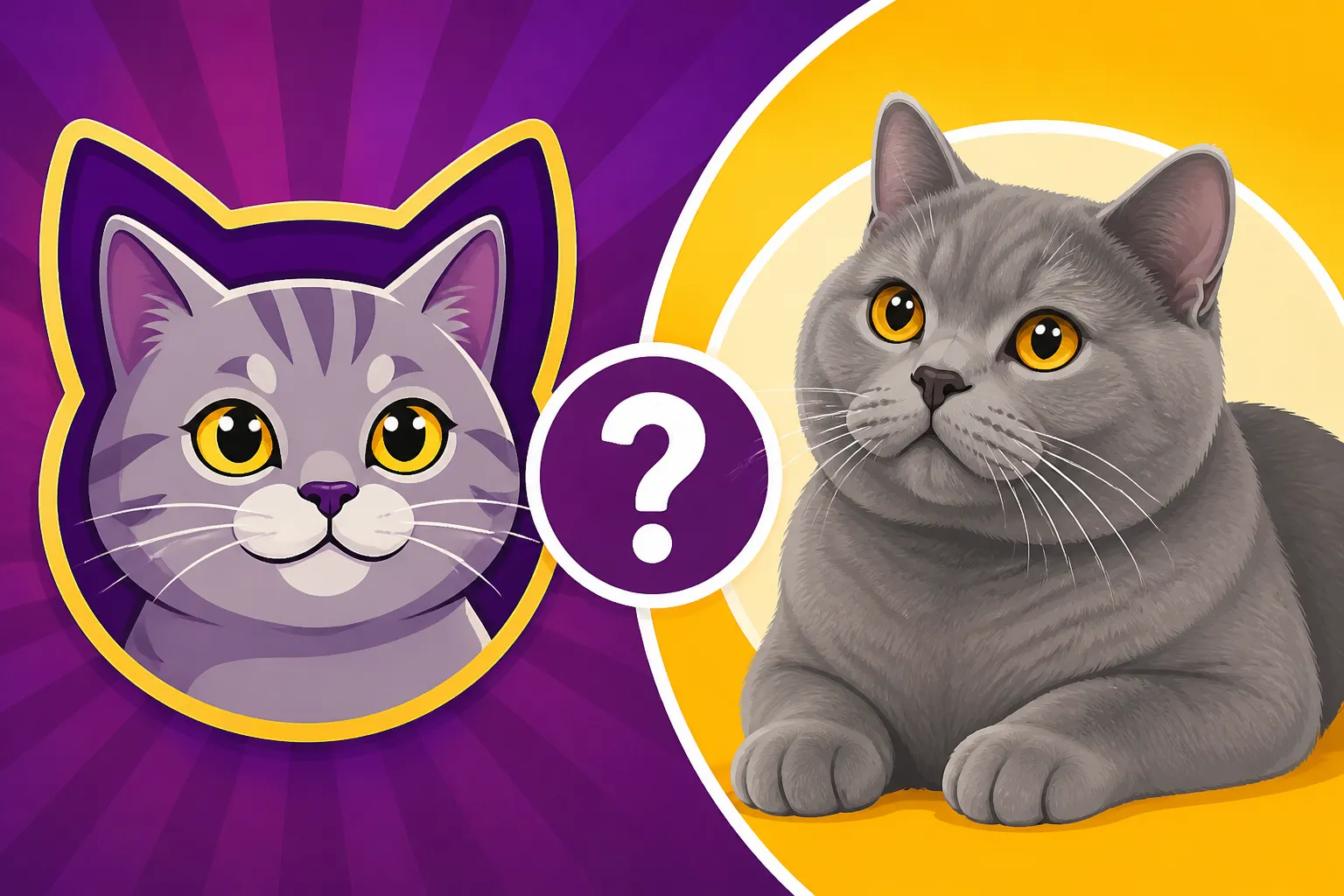
The classic Whiskas cat is widely recognized for its silver tabby coat: a pale background marked with darker stripes and a distinctive “M” shape on the forehead. That coloring is familiar on British Shorthairs, whose round faces, plush coats, and solid-looking build make them easy to recognize in photographs and adverts. It is understandable that viewers connect the advertising cat with the breed.
There is an important distinction, though, between saying a cat looks like a British Shorthair and confirming that it is one. A cat can have the same silver tabby pattern without belonging to that breed. A photograph or television advert rarely gives viewers enough information to verify ancestry, and an advertising character may represent a particular appearance rather than a documented pedigree.
So the careful answer is that the Whiskas cat is commonly identified with the British Shorthair look, especially the silver tabby variety. That description should not automatically be treated as proof that every cat used in Whiskas advertising was a British Shorthair.
Why there may not be one single Whiskas cat
A long-running advertising identity can involve more than one campaign, photograph, or animal performer. The cat shown in one advert might not be the same cat used in another, and a brand image can continue even as the production changes. That makes it difficult to treat “the Whiskas cat” as the name of one specific, consistently documented animal.
It also helps to separate three things people often blend together: the cat in a particular advert, the recognizable silver tabby advertising image, and the breed people associate with that image. The first is a real animal used in a production; the second is a visual character; the third is a breed identification that requires stronger evidence than appearance alone.
If you are looking for a related example, Which Advertising Cat Was a British Shorthair explores why a familiar cat in an advert may be identified with a breed even when the available visual evidence cannot establish pedigree.
What the Whiskas cat’s appearance can tell you
Silver tabby is a pattern, not a breed
“Silver tabby” describes coat appearance. It does not, by itself, tell you whether a cat is a British Shorthair, another pedigree breed, or a mixed-breed cat. Tabby markings occur in many domestic cats, and silver coloring can appear in more than one breed. That means the coat is a useful clue about appearance, but not a reliable stand-alone breed test.
British Shorthairs come in a range of colors and patterns, including tabby varieties. The best-known image may be the blue British Shorthair, but blue is only one coat color. A striped or patterned cat can still fit the breed’s appearance; it does not become a different breed simply because it is not solid blue. For an overview, see Which Colors a British Shorthair Comes In and Whether a Tabby British Shorthair Is Standard.
| Feature | What it may suggest | What it cannot confirm |
|---|---|---|
| Silver tabby coat | A recognizable color and pattern | British Shorthair ancestry |
| Round face and full cheeks | A look associated with some British Shorthairs | A registered pedigree |
| Dense, plush-looking coat | A feature often seen in British Shorthairs | That the cat belongs to the breed |
| A familiar advertising role | The cat was selected to fit a visual identity | The animal’s breed or family history |
The distinction matters because a striking coat can make a cat look “obviously” like a particular breed, even when the evidence is incomplete. A silver tabby domestic shorthair may resemble a silver tabby British Shorthair in a still image, particularly if the camera angle emphasizes the face and coat. The resemblance is real, but resemblance is not documentation.
Look at the whole cat, not just its coat
When breed is being assessed, coat color is only one small part of the picture. British Shorthairs are generally associated with a sturdy, cobby body, a broad chest, substantial legs, a thick tail, and a rounded head with full cheeks. Their dense coat also tends to give a plush impression. A single advertisement shot may show some of these features, but it seldom reveals enough of the cat’s proportions or movement to support a confident identification.
Even a close-up can be misleading. A cat photographed from the front may appear especially round-faced; a fluffy coat can make the body look wider; lighting can change how silver markings appear. The breed’s characteristic outline becomes easier to assess when you can see the whole cat from different angles, rather than one posed face or cropped promotional image. What Shape a British Shorthair's Head Should Be gives more detail on the head shape people often associate with the breed.
For the same reason, a recognizable “teddy bear” look is not proof on its own. A mixed-breed cat can have round eyes, a broad face, and a dense coat, while a genuine British Shorthair may not match an idealized advertising image exactly. Individual cats vary, and camera work can make those differences seem smaller or larger than they are.
How to tell appearance from confirmed breed
Pedigree is stronger evidence than a photograph
For a cat to be reliably identified as a pedigree British Shorthair, the most useful evidence is its documented lineage and registration through an appropriate cat registry. A breeder’s records and the cat’s pedigree can establish ancestry in a way that visual resemblance cannot. This is why breed identification for a particular advertising cat depends on information about that individual animal, not just how it looks on screen.
A DNA test may provide information about a cat’s genetic ancestry, but it should not be treated as a simple certificate proving that a cat is a registered British Shorthair. Breed ancestry testing and pedigree registration answer different questions. If you are curious about what genetic testing can establish, Whether a DNA Test Confirms a British Shorthair explains the limits of interpreting a test as definitive breed proof.
For a viewer, the practical takeaway is straightforward: unless reliable records identify a specific Whiskas advertising cat, the safest description is that it is a silver tabby cat commonly associated with the British Shorthair appearance. That answer is more precise than declaring every Whiskas cat a confirmed member of the breed.
Compare the breed’s overall type with other cats
British Shorthairs are sometimes confused with other cats that have short coats, round faces, or a solid build. A still image can make those distinctions especially hard to judge. Comparing overall body shape, head structure, coat texture, and documented ancestry is more useful than focusing on one feature such as stripes or eye color.
Some cats that look like British Shorthairs may be domestic shorthairs or mixes. That does not make them less appealing or less deserving of care; it simply means that appearance and pedigree are separate matters. How to Tell a British Shorthair From a Moggy offers a broader guide to the difference between a breed’s typical look and the evidence needed to identify a particular cat.
It is also easy to assume that the best-known British Shorthair image must be the breed’s only standard look. The familiar blue cat is prominent in popular culture, but British Shorthairs are not limited to that color. Why Blue Is the Only British Shorthair Color People Know looks at how one color became so closely tied to the breed’s public image, while How a British Shorthair Differs From an American Shorthair helps explain why similar-looking cats are not automatically the same breed.
What to say when someone asks about the Whiskas cat
Give a clear answer without overstating what is known
If someone asks whether the Whiskas cat was a British Shorthair, a fair short answer is: “The familiar Whiskas cat is usually associated with the silver tabby British Shorthair look, but the coat and appearance alone do not prove the breed.” This acknowledges the widely recognized resemblance without claiming certainty about every cat used in every campaign.
That distinction is useful because people often ask the question after seeing a silver tabby and wanting to know whether they have spotted a British Shorthair. The cat could be one, but the stripes alone cannot settle it. Look for the broader build and head shape, and, if the identity of a particular cat matters, look for reliable pedigree or production information.
A good answer can also note that a brand’s visual identity and an individual animal’s breed are not the same thing. The advertising image may be strongly associated with a British Shorthair even if a particular campaign used a different cat, or even if the animal’s documented ancestry is not publicly established.
Keep the familiar image in perspective
The Whiskas cat is a useful example of how popular culture can shape our idea of a breed. A cat shown repeatedly with silver stripes and a round face can become the image people picture when they hear “British Shorthair,” even though the breed includes a broader range of colors, patterns, and individual features.
That public association does not make the image wrong; it simply makes it incomplete. The familiar cat may resemble a British Shorthair closely, while the breed itself is best understood through its overall characteristics and documented ancestry. Keeping those points separate lets you enjoy the iconic look without mistaking a recognizable coat pattern for definitive proof.
So, was the Whiskas cat a British Shorthair? It is commonly described and recognized as one, or as having the British Shorthair look. Without clear evidence about a specific cat from a specific campaign, however, the most accurate answer is that the famous silver tabby image is strongly associated with the breed, but appearance alone cannot confirm it.
Disclaimer
This article is for general informational purposes only and does not constitute professional advice. Laws, prices and regulations vary by location and change over time. Consult a qualified professional for guidance on your specific situation.