Whether a British Shorthair Has Won a National Title
A British Shorthair can earn major show honors, but “national title” does not mean one universal award shared by every cat registry. The wording can be confusing: a cat might win a national ranking, a show-season award, or a formal championship title. This guide explains what those honors mean, how British Shorthairs compete for them, and what a title does—and does not—tell you about a cat.
Can a British Shorthair win a national title
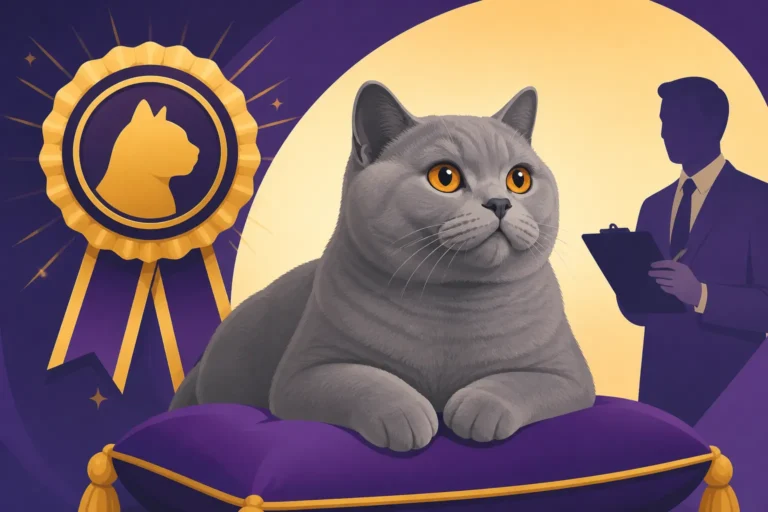
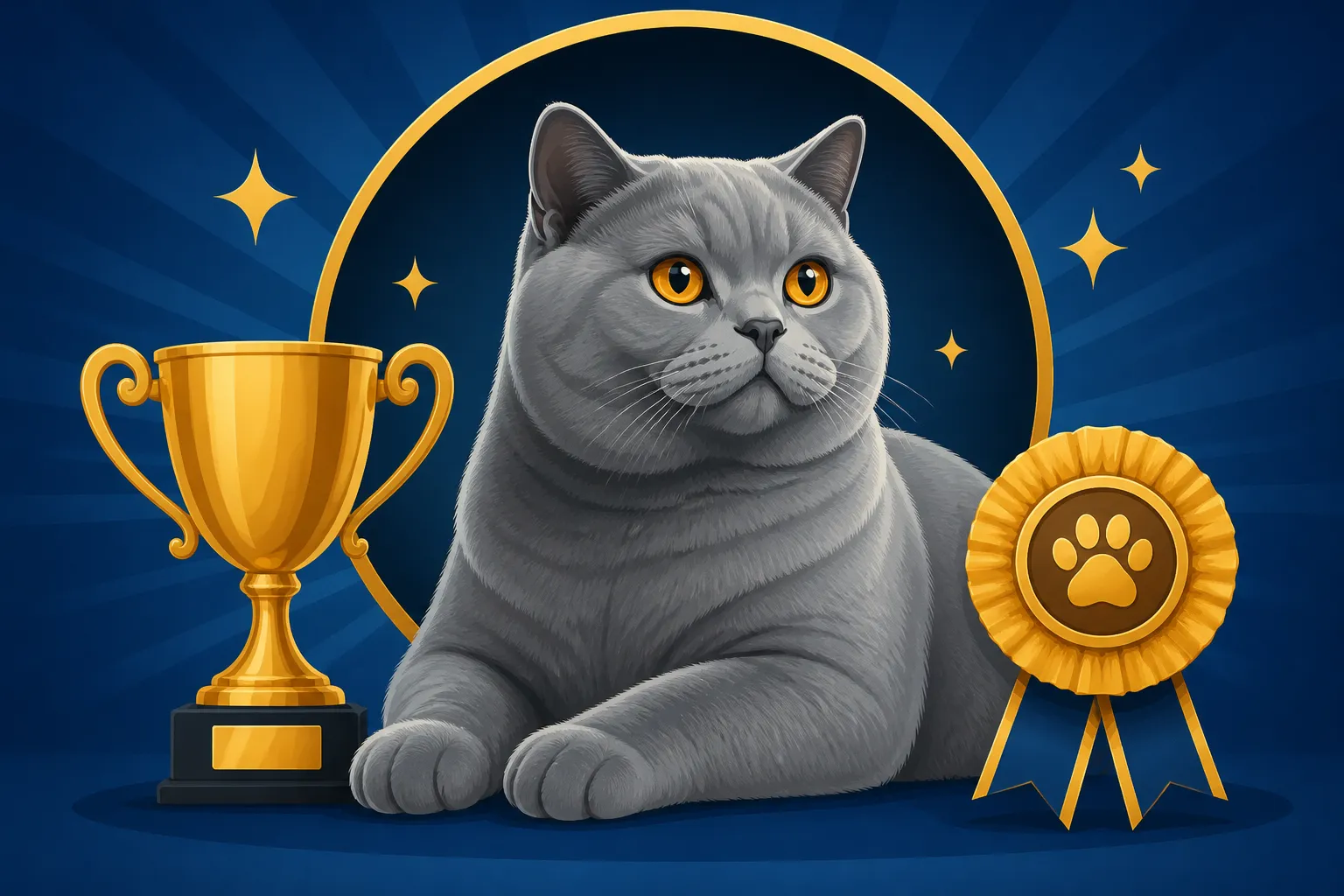
Yes. British Shorthairs compete in organized cat shows and can earn high-level awards, including national rankings in registries that use them. But there is no single worldwide title called “National Champion” that applies in the same way across every registry and country.
That distinction matters when you see a breeder, owner, or show report describe a cat as a national winner. The phrase may refer to a particular organization’s award system, rather than a formal title that every cat-show body recognizes.
What people mean by a national title
In casual conversation, “national title” often means a cat has achieved a notable position in a competition that includes entries from across a country or a broad geographic area. Some registries rank cats based on their results over a show season; others emphasize awards earned at individual shows and titles accumulated through competition.
A British Shorthair may therefore be described as nationally ranked or nationally awarded without holding a formal title with the exact words “National Champion.” The name and meaning of an award depend on the organization, the competition format, and the season in which the cat competed.
It helps to ask for the precise award name rather than relying on a broad phrase. “Won a national title” could mean a top ranking, a specialty award, a show-level win, or a championship title. These achievements can all be impressive, but they are not automatically interchangeable.
Why the registry matters
Cat registries have their own rules, breed standards, show structures, and award terminology. A British Shorthair’s eligibility and the way its results are recorded depend on the registry hosting the show. For example, a title in one organization may not transfer as an equivalent title in another.
If you are checking a particular cat’s achievements, look for the registry and the award’s full name. The organization’s own records, show results, or official title documentation are more informative than a short description in a social media profile or sales listing. For background on how standards differ, see Which Registry Standard a British Shorthair Is Judged Against.
The same care is useful when comparing a show title with popularity or breed recognition. A cat’s award is a result within a particular competition system; it does not mean the breed itself holds a title. For a broader look at breed rankings, see Where the British Shorthair Ranks in Registrations.
How British Shorthairs earn show awards
A show award is not simply a prize for having the roundest face or the plushest coat. Judges assess a cat against the standard used by the registry, and show results reflect how well that individual cat fits the standard on the day it is judged.
The process also involves more than appearance. Cats must be presented appropriately, handled safely, and entered in the correct class. A calm, well-prepared cat may have a smoother show experience, but temperament alone does not replace the physical criteria in the breed standard.
Judges assess the individual cat
British Shorthairs are recognized for their substantial, balanced build, rounded head, dense coat, and other breed characteristics. The exact wording and emphasis can vary by registry, so a cat that does well under one standard is not necessarily being judged by an identical checklist everywhere.
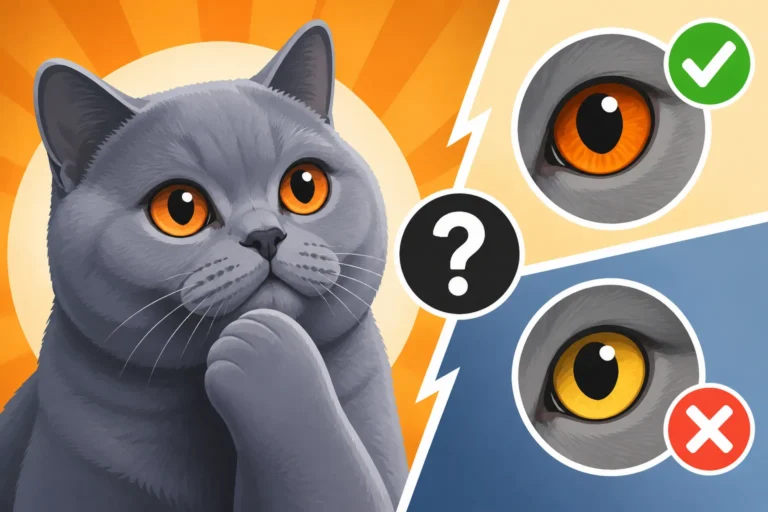
Judges examine the whole animal rather than rewarding a single feature in isolation. A round head, for instance, is part of the familiar British Shorthair look, but it must fit the overall proportions and type being assessed. The related guide The Round Head and Copper Eye a British Shorthair Is Judged On looks more closely at those distinctive features.
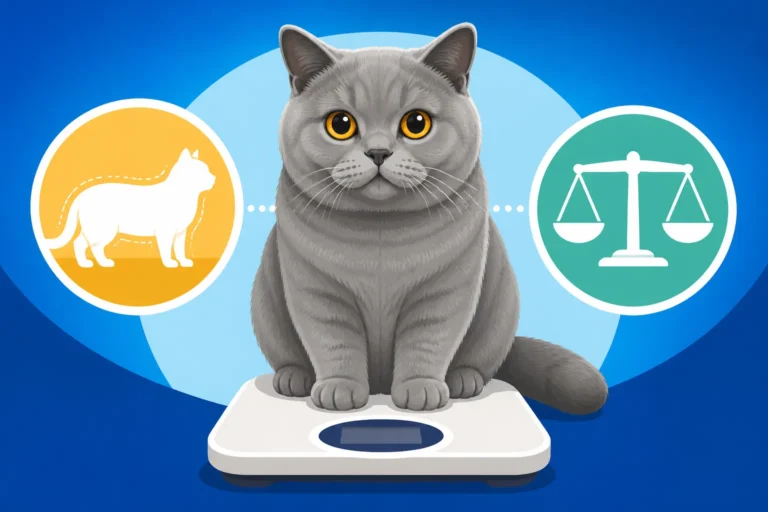
Weight and body shape also need to be understood in context. British Shorthairs are naturally sturdy, but a heavier cat is not automatically a better example of the breed. A show assessment is not a contest to see which cat weighs the most; sound condition and appropriate structure matter. See How Much a British Shorthair Weighs for more about typical size and weight considerations.
Show preparation is part of the experience
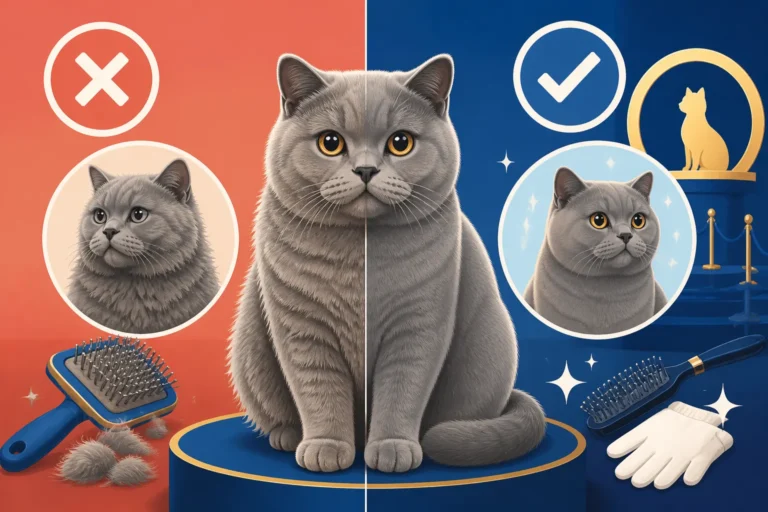
Owners generally prepare by making sure the cat is comfortable with its carrier, grooming routine, and the unfamiliar sights and sounds of a show environment. A dense coat may need regular, gentle care, but excessive grooming or last-minute fussing can make a cat uncomfortable. The aim is a clean, healthy-looking cat—not an animal stressed by an elaborate routine.
Practical preparation can include a familiar carrier, a suitable comb, nail-care supplies, and any materials required by the show organizer. If an owner is comparing basic grooming or travel supplies, Chewy is one place people may look; the best choices still depend on the cat’s needs and the show’s rules. For a fuller explanation of presentation, see How a Show British Shorthair Is Presented.
The cat’s comfort should remain the priority. A British Shorthair that is tense, tired, or overwhelmed may need a quieter approach, more practice at home, or a break from showing. A title is never worth pushing a cat beyond what it can comfortably tolerate.
What a title tells you and what it does not
A national award can show that a cat performed exceptionally well within a specific competition system. It can be a meaningful achievement for the cat and its owner, and it may reflect careful breeding, preparation, and participation in a competitive show season.
Still, a title has limits. It is not a guarantee that every kitten from that cat will have the same qualities, nor does it serve as a complete measure of health, temperament, or suitability as a companion.
A title is not a health certificate
A show award reflects competition results. It does not, by itself, prove that a cat has been screened for every inherited condition or that it will never develop a health problem. Those questions require appropriate veterinary care and relevant health information, not a trophy or a ranking.
This distinction is especially important for anyone choosing a kitten. Ask about the parents’ health history and screening, and request clear explanations of what has and has not been assessed. A show record may be part of a breeder’s background, but it should not replace health documentation or a thoughtful conversation about the kitten’s needs.
It is also reasonable to ask whether a cat’s title was earned in a recognized registry and what the title specifically represents. A transparent owner or breeder should be able to explain the award without suggesting that it guarantees health or quality in every respect.
A title does not predict a kitten’s future show career
Kittens inherit traits from both parents, and their adult appearance develops over time. Even when a kitten comes from titled parents, no one can promise that it will become a champion or achieve a national ranking. Growth, health, temperament, and how closely the cat develops to a particular standard all play a role.
There is also a difference between a kitten being sold as a potential show prospect and being guaranteed a show result. A breeder can discuss the kitten’s qualities and the reasons it may be considered promising, but competition outcomes depend on the individual cat and the judging environment.
For prospective owners, the most useful question may not be “Will this kitten win?” but “Is this kitten a good match for my home?” A winning record can be fascinating, but the everyday fit—activity level, handling preferences, health, and care needs—will matter much more in a family living room.
How to check a British Shorthair’s national award claim
If you come across a British Shorthair described as a national winner, you do not need to dismiss the claim or take it on faith. A few clear questions can help you understand what the achievement means and whether it has been described accurately.
| What to check | Why it matters | Useful follow-up question |
|---|---|---|
| Registry or show organization | Award systems and title names vary | Which registry recorded the result? |
| Exact award name | “National title” can be informal shorthand | What was the full title or award? |
| Competition season or show | Rankings may relate to a particular season or event | Was this a season ranking or an individual show result? |
| Supporting record | Documentation helps distinguish an official result from a general claim | Is there an official result page or title record? |
| Health information | Show awards do not replace health screening | What health checks and veterinary records are available? |
Ask for the full award details
A straightforward request is: “Could you tell me which registry awarded the title and what the exact award was?” That question is polite, specific, and easy for a knowledgeable owner or breeder to answer. If the response stays vague, ask whether the result was a national ranking, a show placement, or a formal championship title.
You can also check whether the cat’s name and result appear in the registry’s official records or show documentation. Names may be recorded differently in different contexts, so a registered name can be more useful than a pet name. If a result is not easy to locate, that does not automatically mean the claim is false; it does mean the exact achievement is worth clarifying.
Treat wording such as “nationally famous,” “top show cat,” or “champion bloodline” as descriptions that need context. They may point to a genuine achievement, but they are not substitutes for the name of the award or the body that granted it.
Keep the award in perspective
There is a long history of organized cat shows, and British Shorthairs have been part of that tradition. But being a show breed, winning a major award, and being the right cat for a particular household are separate things. For a little historical context, see Whether the British Shorthair Was the First Show Cat.
A national win can be a lovely point of pride, especially for people who have invested time in showing and caring for their cat. It is best understood as recognition in a defined competition—not as a universal certification of health, a guarantee of offspring quality, or proof that every British Shorthair should look or behave the same way.
If you are considering a British Shorthair as a companion, pay attention to the individual cat. Ask about health, daily care, socialization, and temperament, and make sure you understand what the award actually means. A title can add an interesting chapter to a cat’s story, but the relationship you build at home is not judged in a show ring.
Disclaimer
This article is for general informational purposes only and does not constitute professional advice. Laws, prices and regulations vary by location and change over time. Consult a qualified professional for guidance on your specific situation.