Whether a British Shorthair Mix Keeps the Look
A British Shorthair mix may inherit the breed’s round face, dense coat, and solid build, but there is no dependable way to predict the full look from one parent’s pedigree alone. If you are comparing kittens, adopting a shelter cat, or wondering whether your cat will grow into that teddy-bear appearance, this guide explains which traits may carry through and why mixed-breed cats can surprise you.
What a British Shorthair mix may inherit
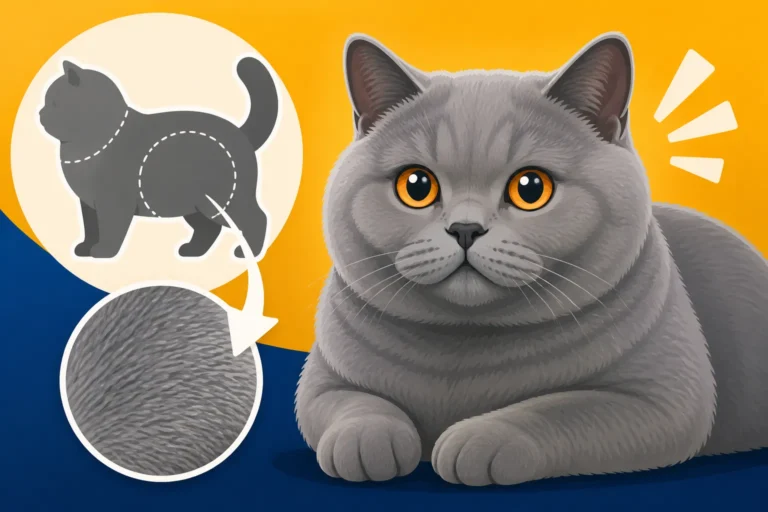
The round face and sturdy build
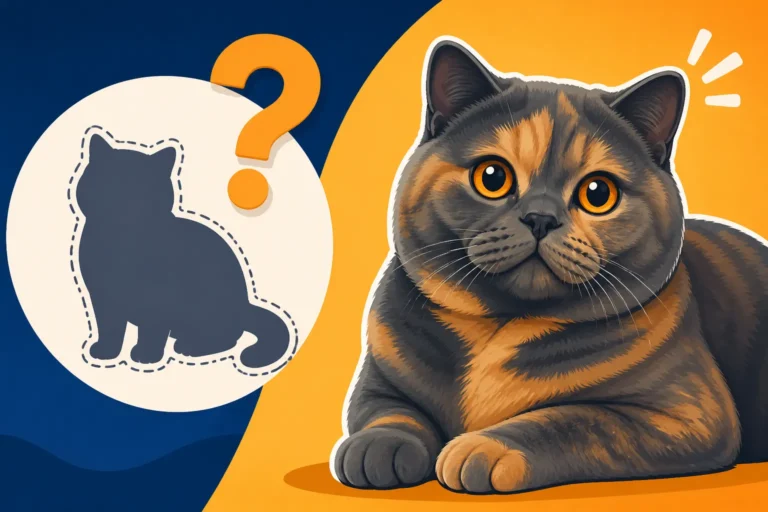
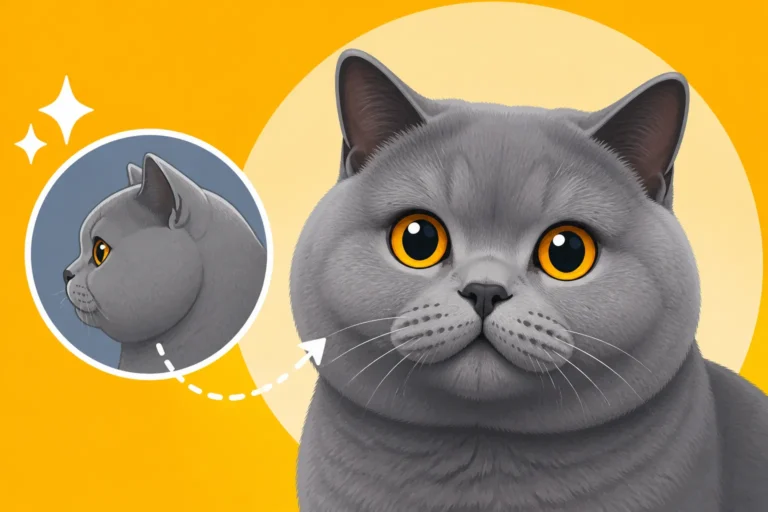
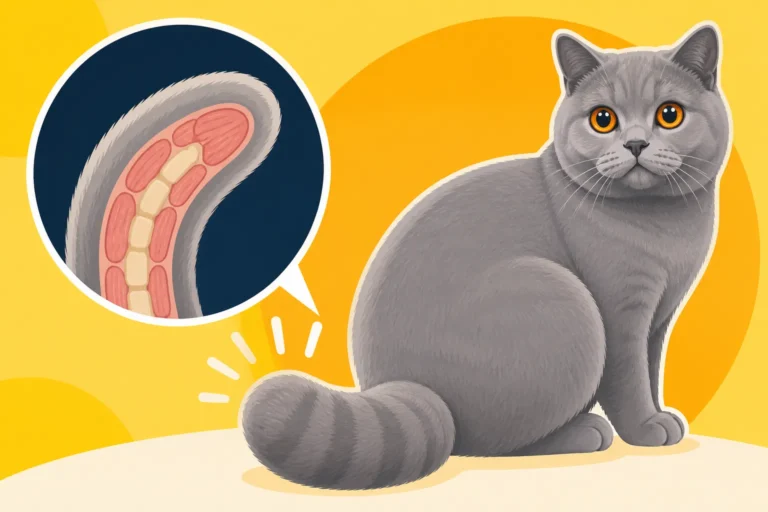
A mixed-breed kitten can inherit some of the features people associate with British Shorthairs: a broad head, full cheeks, a compact body, and a dense-looking coat. But these traits do not come as one guaranteed package. A kitten might have the round face of its British Shorthair parent and a longer, slimmer body from the other side of its family. Another may have a sturdy frame but a narrower muzzle.
Appearance also changes as a kitten matures. British Shorthairs are slow to develop their full adult build, and a young cat’s proportions can look quite different from its eventual shape. A kitten with a relatively fine face at three months might broaden as it grows, while one that seems especially round early on may end up looking more like its non-British parent. Growth, nutrition, and individual variation all matter.
It helps to look at the whole cat rather than treating one feature as proof of breed. A round face alone does not establish British Shorthair ancestry, and a mix does not have to match the show-standard outline to be a lovely, healthy cat. For a better sense of how size and body shape vary in the purebred, see What a British Shorthair Weighs and How Big It Gets and The Round Head and Copper Eye a British Shorthair Is Judged On.
Coat length, texture, and color
A British Shorthair mix may have a short, dense coat, but coat length and texture depend on the genes inherited from both parents. A cat can look shorthaired as a kitten and develop a fuller adult coat later. If longer-haired ancestry is present, a mix may grow a noticeably fluffier coat than you expected. Even two kittens from the same litter can end up with different coat lengths or textures.
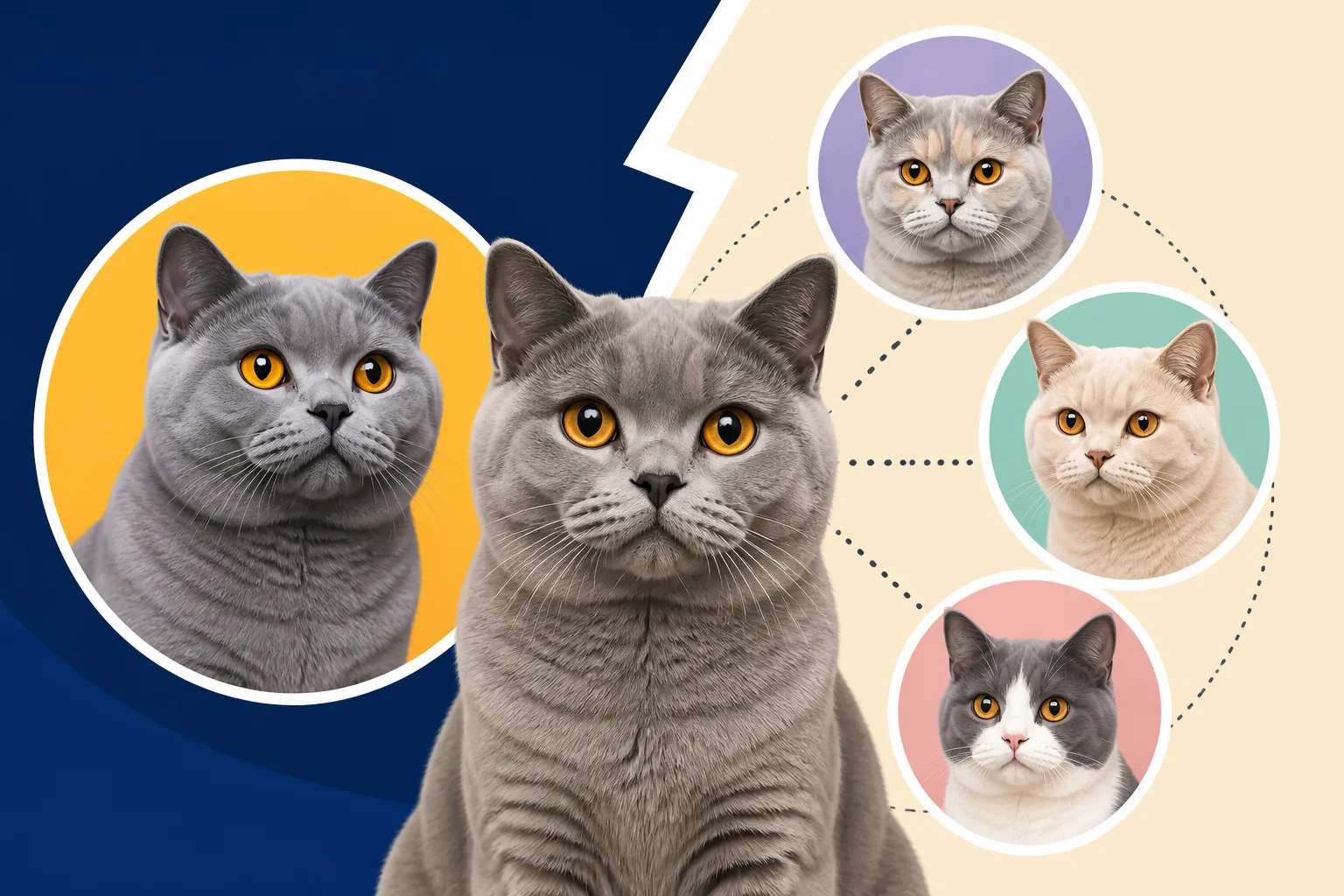
Color is just as variable. A blue-gray coat is strongly associated with the breed, but British Shorthairs come in many colors and patterns, and a mixed cat can inherit combinations from either parent. The coat may also change subtly as the cat matures. A kitten’s early coloring is not always a perfect preview of its adult shade. For more on the range in the breed itself, see A British Shorthair Comes in More Colors Than You Think and Whether a British Shorthair's Color Changes With Age.
| Trait | What a mix might inherit | Why it can vary |
|---|---|---|
| Face shape | Broad head or rounded cheeks | Facial features come from both parents and may not develop evenly |
| Body type | A sturdy, compact frame | Size and proportions vary with ancestry, sex, and individual growth |
| Coat | Short and dense, or longer and fluffier | Coat-length genes are inherited from both sides of the family |
| Color and pattern | Blue-gray, solid, tabby, or a mix of markings | Coat color and pattern depend on multiple inherited traits |
| Adult appearance | A partial resemblance to a British Shorthair | A kitten’s look can change as its coat and body mature |
Why a mix does not always look like a British Shorthair
Appearance is inherited in combinations
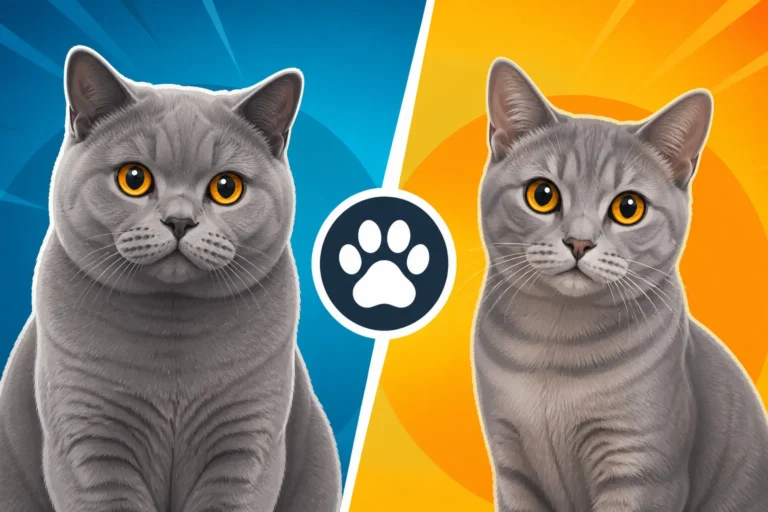
It is tempting to picture a mixed kitten as an exact halfway blend of its parents. In real life, inherited traits do not necessarily combine so neatly. A kitten may take after one parent in coat color, another in body shape, and neither in face. Siblings can look surprisingly different even when they share the same mother and father.
Many visible characteristics are influenced by more than one gene. That means a parent’s appearance cannot tell you exactly which combination a kitten will receive. A British Shorthair parent may have a round head and plush coat, but the kittens might inherit only one of those qualities—or express them less strongly. The other parent’s ancestry can also affect the result in ways that are not obvious from a quick glance.
Age can add to the uncertainty. British Shorthairs typically take time to fill out, so a mix may not develop a broad, substantial build until later, if at all. Rather than trying to predict the adult look from a very young kitten, watch how the face, coat, and body change over time. Take occasional photos from a similar angle and ask your veterinarian whether your cat’s growth and body condition look appropriate.
A similar look does not confirm ancestry
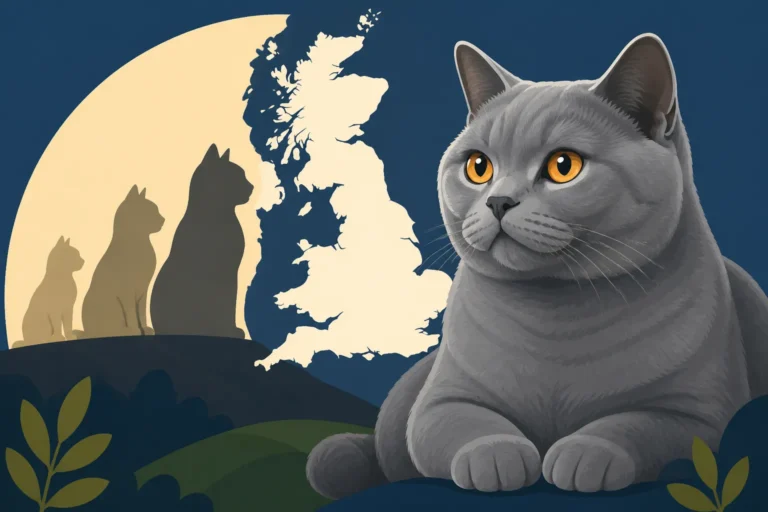
A shelter cat with a round face and plush coat may resemble a British Shorthair without having a documented British Shorthair parent. Many cats share broad or rounded features, and domestic shorthairs can have dense coats and stocky bodies too. Appearance can suggest a resemblance; it cannot reliably establish a cat’s pedigree.
Commercial DNA tests may offer information about genetic markers or possible ancestry, but they should not be treated as a definitive certificate that a cat is a British Shorthair. Breed identification from a test is not the same as documented pedigree records. If you are curious about what a test can and cannot tell you, read Whether a DNA Test Confirms a British Shorthair.
This distinction matters most when someone is selling a kitten based on a breed label. Ask what documentation supports the claim, and request information about the parents rather than relying only on photos or a verbal description. If the cat is being adopted, a shelter may only be able to describe its appearance or known history—and that is perfectly useful information without turning resemblance into certainty. How to Tell a British Shorthair From a Moggy explores why visual identification can be difficult, while Whether a Shelter Cat Can Be a British Shorthair looks at what adoption records can realistically establish.
How to judge a British Shorthair mix realistically
Look at the parents, but keep expectations flexible
Seeing both parents can give you clues about the range of traits a kitten might inherit. If one parent has a short coat and the other is longhaired, for instance, that is worth factoring into your expectations. A parent’s build and face may also give you a general idea of the family’s appearance. Still, parents provide clues, not guarantees. The kitten may resemble one more than the other, or show a combination that neither parent displays clearly.
If only one parent is known, or the cat came through a rescue, there may be little reliable history to draw on. Focus on what you can observe: coat length, body proportions, temperament, and health. If you are adopting, ask whether the organization knows anything about the cat’s background, but do not feel that an unknown pedigree makes the cat less special or less deserving of a good home.
For prospective buyers, a responsible breeder should be willing to explain the kitten’s parentage and provide appropriate records. Be cautious if a seller promises that every kitten will have a particular face, adult size, coat, or personality. Genetics do not allow that kind of certainty, especially in a cross. A kitten’s eventual appearance can be part of the fun, but it is not something a seller can guarantee simply by showing you a British Shorthair parent.
Prioritize health and care over the label
A cat’s needs are shaped by its individual condition, not just its breed description. A mix with a thick coat may benefit from regular combing, while another with a short coat may need less help. A cat with a broad, heavy frame still needs appropriate portions and activity, but body shape alone does not tell you whether it is overweight. Your veterinarian can help assess weight, dental health, and other routine care needs.
For basic grooming, choose tools suited to your cat’s actual coat rather than buying equipment solely because the cat is called a British Shorthair mix. A gentle comb can help you check for loose hair and small tangles, especially around the chest and hindquarters. Chewy is one place owners may look for combs and other routine grooming supplies, but the important part is choosing a tool that feels comfortable on your cat and using it gently.
The same practical approach applies to everyday supplies. If a stocky cat struggles to turn around in a small carrier or use a cramped litter box, choose a roomier option based on its measurements. Chewy carries a range of carriers and litter products, but check the dimensions and your cat’s access needs rather than relying on a breed name to pick a size. For a new cat, a gradual introduction to handling, grooming, and the carrier can make routine care less stressful. Chewy may also be convenient for replacing familiar supplies after a move or adoption, but keep the cat’s preferences and veterinarian’s advice at the center of your choices.
What to expect as your cat grows
Track changes without trying to force a particular look
A mixed kitten will develop on its own timeline. Keep an eye on steady growth, appetite, energy, coat condition, and body shape, and bring concerns to your veterinarian. Weighing your cat periodically can help you notice gradual changes that are difficult to spot beneath a dense coat. If your cat is gaining weight quickly or seems uncomfortable moving, a veterinary check is more useful than comparing its silhouette with photos of purebred cats.
Do not restrict food in an attempt to make a cat look more like a breed standard or to prevent a naturally sturdy build. Cats need appropriate nutrition for their age and health, and rapid or unsupervised weight loss can be harmful. If your cat needs to lose weight, ask your veterinarian for a safe plan that considers its current diet, activity, and medical history.
A mix may become rounder-faced or fuller-coated with age, but it may never have the exact appearance of a pedigreed British Shorthair. That is normal. A cat’s identity and quality of care do not depend on whether its features match a particular breed description.
Enjoy the resemblance without needing certainty
If your cat has the classic round face, dense coat, or solid build, it is fine to enjoy the resemblance. Just keep the language honest: “British Shorthair mix” is a reasonable description when there is some known ancestry, while “looks like a British Shorthair” is more accurate when the background is unknown. That small distinction avoids promising a pedigree the available information cannot support.
Most importantly, choose and care for the cat in front of you. Whether the resemblance is strong, slight, or only obvious in a kitten photo, your cat’s comfort, health, and temperament matter far more than a breed label. A mixed cat can have the plush teddy-bear look people love—or surprise you with a completely different adult appearance—and still be exactly the right companion for your home.
Disclaimer
This article is for general informational purposes only and does not constitute professional advice. Laws, prices and regulations vary by location and change over time. Consult a qualified professional for guidance on your specific situation.