Whether a Scottish Fold Is a British Shorthair With Folded Ears
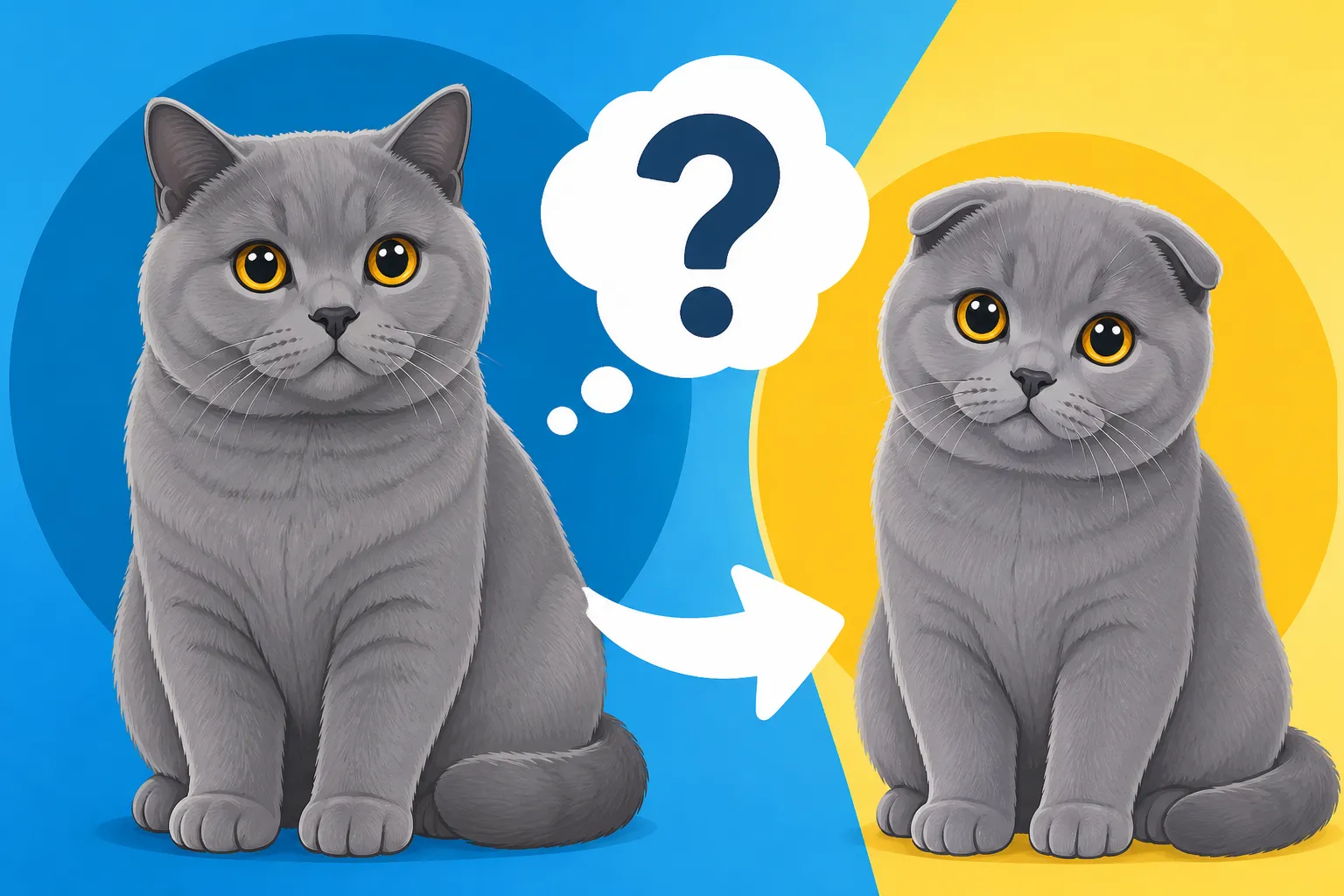
A Scottish Fold is not simply a British Shorthair with folded ears, even though the breeds can share a round face, sturdy body and plush coat. Their histories overlap, which makes the resemblance understandable, but their breed identities and the genetic cause of the folded ears are different. This guide explains how to tell them apart and what the distinction means when choosing a cat.
Why Scottish Folds and British Shorthairs Look Alike
Their histories overlap, but they are distinct breeds
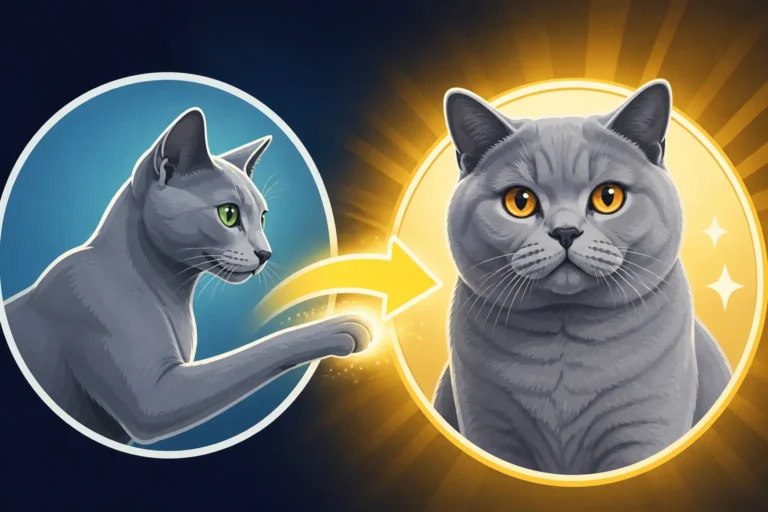
The Scottish Fold traces its beginnings to a cat in Scotland with an unusual ear shape. Breeders developed a distinct breed from cats carrying the folded-ear trait, using other cats—including British Shorthairs in the breed’s development—to build and maintain the population. That shared history helps explain why some Scottish Folds have a round head, dense coat and substantial build that look familiar to British Shorthair fans.
But a breed’s ancestry is not the same thing as its present-day identity. British Shorthairs and Scottish Folds are recognized as separate breeds in cat registries that accept them. Breed standards describe different defining features, and pedigree records identify a cat according to its documented ancestry and registration—not simply its coat, body shape or ears. For context on the British Shorthair’s development, see Which Breeds Rebuilt the British Shorthair.
A Scottish Fold may have short or long hair, depending on its ancestry and the registry’s naming rules. A British Shorthair is a separate breed with its own standards and history. That distinction remains true even if an individual Fold looks remarkably like a British Shorthair in every feature except its ears.
Folded ears come from a genetic trait, not a cosmetic trim
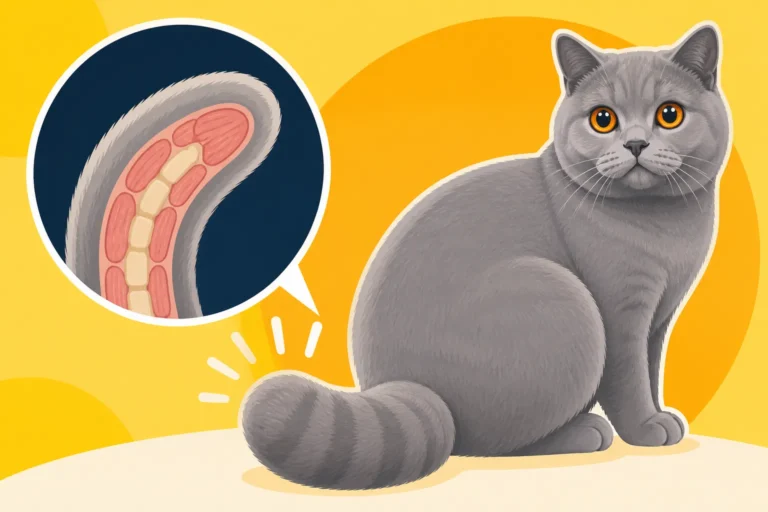
The Scottish Fold’s ears fold because of an inherited cartilage-development trait. It affects cartilage beyond the ear, too, and is associated with a skeletal condition known as osteochondrodysplasia. The effects vary between cats, but the same genetic trait that creates the recognizable folded ears can also affect bones and joints.
This is why folded ears are not just a harmless visual variation or a feature that can be added to a British Shorthair. A British Shorthair with upright ears remains a British Shorthair; a cat with folded ears is not automatically a Scottish Fold either. Breed identity depends on verified lineage and registration, while the ear shape is a physical feature.
The health implications matter when comparing the breeds. Folded ears may be charming to look at, but that appearance is linked to a trait with potential welfare consequences. Anyone considering a Fold should ask detailed questions about the cat’s health, family history and veterinary care—not just whether the ears are folded neatly.
How to Tell the Breeds Apart
Look at the whole cat, not one feature
An upright-eared British Shorthair typically has small-to-medium ears set apart on a broad, rounded head. Its dense, plush coat and solid, compact build contribute to the familiar “teddy bear” look. Scottish Folds can share a rounded head and sturdy frame, but their ears fold forward and down to varying degrees. Some Folds have ears that appear only slightly bent; others have a more pronounced fold.
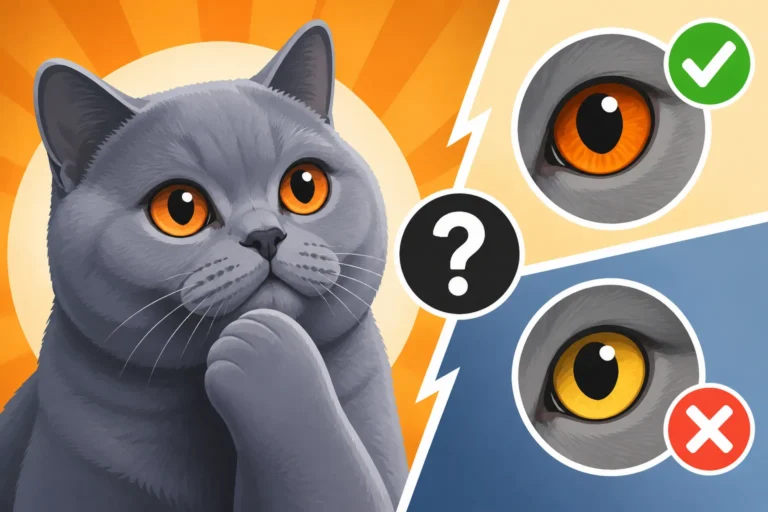
Coat color is not a reliable shortcut. Both breeds can appear in many colors and patterns, and a blue-gray coat alone does not establish that a cat is a British Shorthair. Likewise, a round face, copper-colored eyes or a plush coat may make a Fold resemble a British Shorthair without changing what breed the cat is. For a closer look at the British Shorthair’s head shape, see What Shape a British Shorthair's Head Should Be.
| Feature | British Shorthair | Scottish Fold |
|---|---|---|
| Defining ear shape | Upright ears | Ears that fold forward in folded-ear cats |
| Breed identity | Separate recognized breed | Separate recognized breed |
| Coat | Short, dense coat in many colors and patterns | Shorthaired or longhaired, depending on the cat |
| Shared appearance | May have a round head and sturdy body | May also have a round head and sturdy body |
| Key health consideration | General breed health and individual screening | Fold-associated cartilage and skeletal concerns |
Breed standards can differ between registries, and individual cats do not always look like show illustrations. A mixed-breed cat may also have some traits that resemble either breed. If appearance matters to you, it can help to learn How to Tell a British Shorthair From a Moggy, but looks alone cannot confirm pedigree.
A straight-eared Fold is not automatically a British Shorthair
Some Scottish Fold litters include kittens whose ears remain upright. These cats are often called Scottish Straights, although naming and registration practices can vary between organizations. They may share ancestry with their folded-ear littermates, but upright ears do not turn them into British Shorthairs.
This distinction can be confusing because people sometimes assume that a kitten with straight ears must be a British Shorthair parent breed or a cross. In reality, a kitten’s breed status depends on its documented lineage and the rules of the registry involved. Ask for pedigree and registration records if a seller describes a cat as a purebred Fold, a Straight or a British Shorthair.
The reverse is also true: folded ears alone do not prove that a cat is a well-bred Scottish Fold. A seller’s label is not a substitute for transparent records. If paperwork is unavailable, it is more accurate to describe the cat by its known features and history than to make a confident breed claim based only on appearance.
What the Difference Means for Health and Choosing a Cat
Ask about health, not just pedigree
A responsible conversation about a Scottish Fold should include the folded-ear trait’s possible effects on cartilage and bones. Ask what health signs the breeder or rescue has observed, what veterinary assessments have been performed and whether the cat has shown stiffness, lameness, reluctance to jump or sensitivity when handled. A veterinarian can advise on an individual cat’s condition and what monitoring makes sense.
For a British Shorthair, ask about the parents’ health and what screening has been done for concerns relevant to the breed. No breed label guarantees that a cat will be healthy, and no single test can answer every health question. A useful starting point is Whether the British Shorthair Is a Healthy Breed, alongside a discussion with a veterinarian about the particular cat you are considering.
Avoid choosing a cat solely because a physical trait looks appealing. Folded ears should prompt questions about welfare, not just admiration. If a breeder dismisses health concerns, cannot explain the cat’s background or pressures you to pay before you can review records, take time to reconsider. A thoughtful breeder or rescue should welcome reasonable questions and let you make an informed decision.
Match the cat’s needs to your home
Whether you choose a British Shorthair, a Scottish Fold or a mixed-breed cat, plan for the practical needs of the individual animal. A comfortable carrier, an appropriately sized litter box, scratching surfaces and regular veterinary care matter more than matching accessories to a breed label. If you are comparing carrier dimensions or other basic supplies through a retailer such as Chewy, check the product measurements against the cat’s actual size and mobility rather than relying on a breed description.
A Fold with joint discomfort may need easier access to favorite resting places, litter and food. A wide, low-entry litter box may be more comfortable for a cat that finds stepping or turning difficult. For a larger, stockier British Shorthair, make sure the box and carrier offer enough room for the cat to enter, turn around and settle without squeezing. Chewy and local pet shops can be places to compare general supplies, but a veterinarian can help when the cat’s needs are related to pain or limited movement.
British Shorthairs also mature gradually and can become heavy if portions and activity are not managed. Their plush coat can make it difficult to judge body shape by sight alone. Learn about What a British Shorthair Weighs and How Big It Gets and keep an eye on body condition rather than assuming that every round-looking cat is simply built that way. When buying food or grooming basics—whether through Chewy or another retailer—follow veterinary guidance for your cat instead of choosing products based only on breed marketing.
Questions to Ask Before You Bring One Home
Use records and clear answers to assess a breeder or rescue
Start by asking what breed the cat is being represented as and what evidence supports that description. For a pedigreed cat, request the relevant registration and lineage documents. For a rescue or an adult cat with an uncertain background, ask what is known about its history and have a veterinarian assess its health. Honest uncertainty is more useful than a confident breed claim that has no paperwork behind it.
If the cat is a Scottish Fold, ask specifically about the folded-ear trait and any signs of discomfort or mobility changes. Find out whether the cat has been examined by a veterinarian and whether its care history is available. Ask how the breeder approaches breeding decisions and what steps are taken to prioritize the cats’ welfare. Be wary of anyone who treats the folded ears as purely decorative or suggests that the trait has no health relevance.
For a British Shorthair, ask about parental health, veterinary records and relevant breed screening. You can also use How a British Shorthair Differs From a Scottish Fold as a starting point for clarifying what the seller means by each breed name. A reputable seller should be willing to explain the distinction without implying that one is merely a version of the other.
Make the choice around the individual cat
A breed can give you clues about appearance and possible care considerations, but it cannot tell you everything about temperament, comfort or future health. Spend time observing how the cat moves, responds to handling and uses its environment. Ask whether it enjoys being picked up, how it reacts to ordinary household activity and what routines it is already used to. If possible, meet the cat where it normally lives.
If you already have a cat at home, plan a gradual introduction rather than expecting a new arrival to settle in immediately. Prepare a quiet space, separate food and water, and give the cats time to adjust at their own pace. The right choice is not necessarily the cat with the most recognizable look; it is the cat whose needs you understand and can meet over its lifetime.
So, a Scottish Fold is not a British Shorthair with folded ears. The breeds have historical connections and can share a similar appearance, but they are distinct, and the Fold’s ear shape comes from an inherited trait with important health implications. Confirm breed claims with records, ask direct welfare questions and make your decision based on the individual cat—not on its ears alone.
Disclaimer
This article is for general informational purposes only and does not constitute professional advice. Laws, prices and regulations vary by location and change over time. Consult a qualified professional for guidance on your specific situation.