How Long the British Shorthair Took to Recover
The British Shorthair did not bounce back from the world wars in a few seasons. War disrupted breeding, reduced the number of cats available to rebuild the breed, and left breeders with difficult choices about preserving its familiar look. This guide explains why recovery took decades, which crosses helped, and what “recovery” meant for the modern British Shorthair.
Why the British Shorthair needed to recover
War disrupted breeding and reduced the available gene pool
Before the world wars, British Shorthairs had been developed from domestic cats in Britain and were becoming established as a pedigreed breed. The wars brought much more than a pause in cat shows. Food shortages, disrupted daily life, and the loss of breeding animals made it difficult for breeders to maintain planned lines. In a small population, losing even a limited number of healthy, unrelated cats can have a lasting effect.
The damage was not simply that fewer kittens were born during wartime. Breeders also had fewer suitable cats to pair afterward. Cats that survived might be closely related, while other promising animals were no longer available. That narrowed the choices for rebuilding a consistent population and made it harder to preserve health, temperament, and the breed’s distinctive appearance at the same time.
The two wars affected the breed at different points in its development. The first interrupted an already growing fancy; the second again placed breeding and showing far behind basic needs. To understand the scale of the challenge, see Why British Shorthair Numbers Collapsed in the Wars. The important point is that “recovery” meant restoring a viable breeding population, not merely restarting exhibitions.
The postwar challenge was both numbers and breed type
When breeding resumed after the Second World War, the remaining British Shorthairs did not automatically produce enough kittens to rebuild the breed. There were too few suitable cats, and the surviving lines could not necessarily be paired without concern about close relationships. Breeders had to decide how to broaden the population while retaining the sturdy, rounded look people associated with the British cat.
That trade-off helps explain why recovery took so long. A quick increase in kitten numbers would not, by itself, restore a stable breed. Breeders needed multiple generations of planned matings, careful selection, and records that helped them understand which traits were appearing in each line. Some offspring might contribute useful health or genetic variety but not have the desired coat, body, or head type. Others might look closer to the ideal but offer fewer useful choices for future pairings.
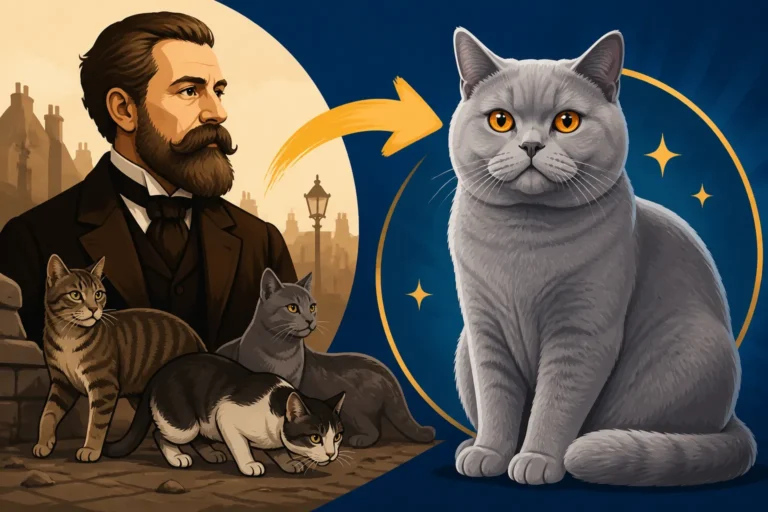
This was not a simple before-and-after transformation. The postwar British Shorthair emerged through a gradual process: finding suitable cats, making crosses where necessary, and selecting descendants over generations. The story connects to the breed’s earlier beginnings in The British Shorthair Started as a British Street Cat, but postwar rebuilding had a different problem to solve: it had to restore a limited pedigreed population under difficult conditions.
How breeders rebuilt the breed
Why Persian cats were part of the solution
Persians were among the breeds used in rebuilding the British Shorthair after the war. Outcrossing gave breeders additional cats to work with when the available British Shorthair population was too small for easy, responsible pairings. The choice was also practical: Persians could contribute qualities that breeders valued in shaping the look of the British cat.
A cross does not create a finished British Shorthair in one generation. The first-generation kittens may inherit a mixture of traits, and their appearance can vary. Breeders then have to select descendants that better match the desired British Shorthair type and plan further matings. This takes time because the characteristics breeders want do not always appear together in a predictable way.
The Persian contribution is often discussed in relation to the breed’s rounder head and fuller coat, although the results depended on particular lines and generations. The historical role of that cross is explored in The Persians That Rebuilt the British Shorthair After the War and What the Persian Cross Gave the British Shorthair. It is also part of the reason some health questions in the breed are discussed through its ancestry, including Whether the Persian Cross Brought PKD Into the British Shorthair.
Other breeds and careful selection widened the options
Persians were not the only cats involved in rebuilding. Other shorthair breeds, including the Chartreux and Russian Blue, are associated with postwar efforts to strengthen or broaden British Shorthair lines. The exact role of each breed varied across breeding programs; it is more accurate to think of a number of efforts than one universal recipe followed by every breeder.
The cats selected for crosses could contribute useful variation, but their descendants still needed to be evaluated against the British Shorthair’s developing standard. Breeders worked over generations to select for traits such as a substantial, compact body, a dense coat, and a broad, rounded head. A cat that helped broaden a line did not necessarily become the model for the breed’s appearance.
That distinction matters when people imagine that one outcross “made” the modern British Shorthair. The recovery depended on multiple pairings and the choices breeders made afterward. Which Breeds Rebuilt the British Shorthair gives more detail on the breeds linked with that process, while Why British Shorthair Breeders Reached for the Persian explains the pressures that made outcrossing appealing.
| Part of recovery | What breeders were trying to address | Why it took time |
|---|---|---|
| Rebuilding population size | Too few suitable cats were available for planned breeding | A larger population required several generations |
| Broadening breeding options | Close relationships among remaining cats limited pairings | New lines had to be introduced and assessed |
| Restoring breed type | Crossbred descendants could vary in appearance | Desired traits had to be selected over generations |
| Maintaining a stable breed | Health and appearance both mattered | Selection could not be judged from a single litter |
How long recovery took
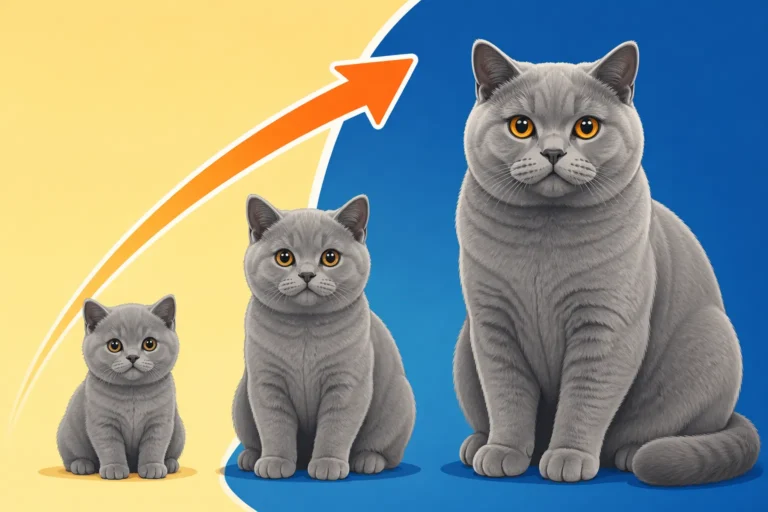
Recovery was a process measured in generations
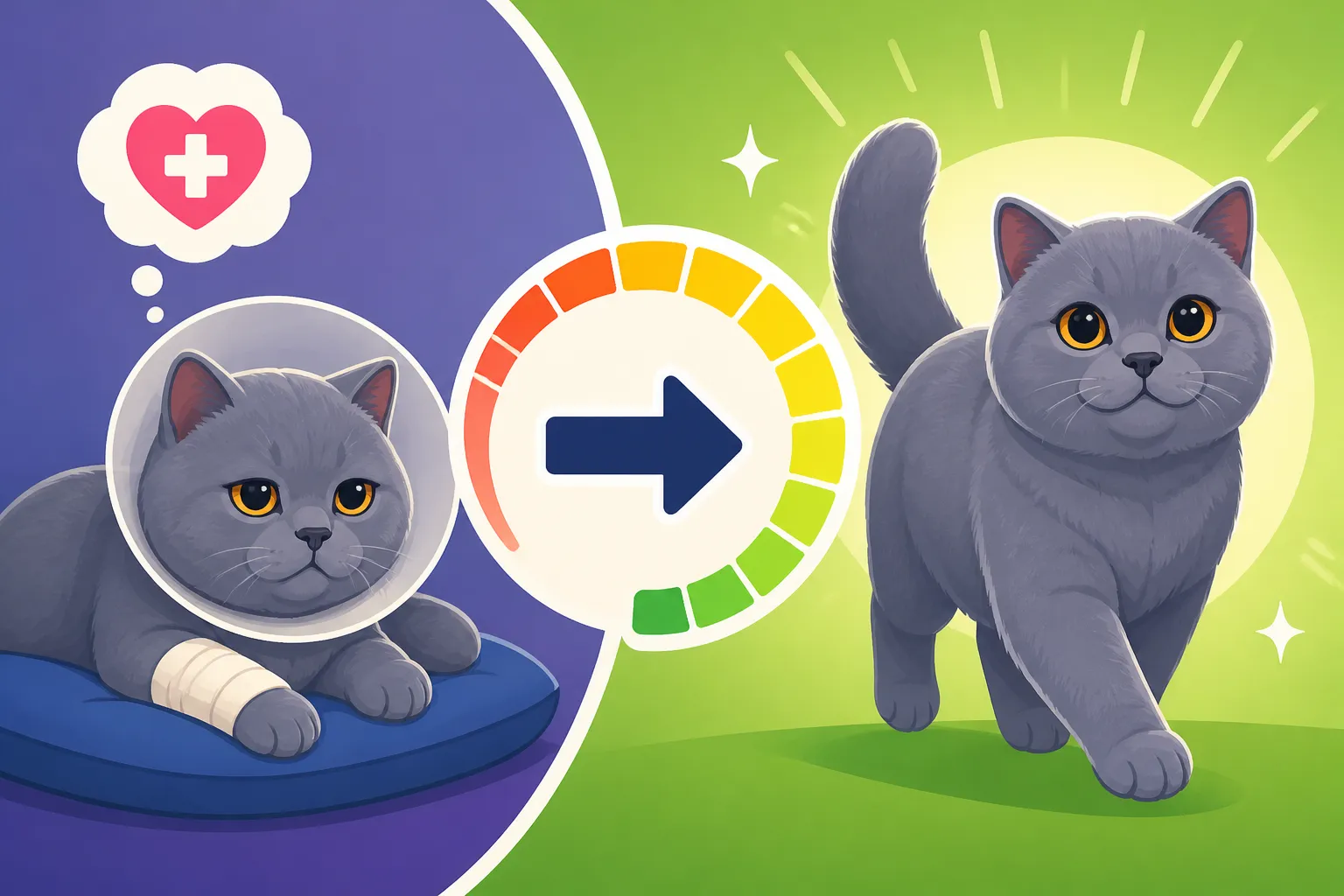
There is no single date when the British Shorthair can be said to have fully recovered. The breed did not switch from “lost” to “restored” in one year. Breeding resumed after the war, but rebuilding the population, refining its type, and establishing dependable lines were separate tasks. Those tasks overlapped and advanced at different speeds.
A useful way to understand the timeline is to separate initial recovery from consolidation. Initial recovery meant having enough cats to resume planned breeding. Consolidation meant producing generations that consistently resembled the emerging standard and could support healthy, ongoing breeding programs. A breed can reach the first milestone while still needing considerable work on the second.
That is why historical accounts may seem to offer different answers to “how long did recovery take?” One writer may focus on the immediate postwar restart, while another may mean the longer period during which breeders developed recognizable, stable lines. The safest answer is that recovery began in the postwar years and continued over decades, rather than being completed in a brief postwar burst.
The modern breed reflects choices made over time
Today’s British Shorthair is the result of that extended rebuilding and later selective breeding. Its familiar rounded features and dense coat were not simply preserved unchanged from before the wars; breeders shaped and stabilized the type through generations. That does not mean every modern British Shorthair has an identical ancestry or that all breeding programs followed the same path.
Nor does “recovered” mean that every historical genetic concern disappeared. A breed can become numerically established and visually consistent while still having a gene pool shaped by past bottlenecks and selective breeding. Questions about genetic variation and the ongoing effects of ancestry are considered in Whether the British Shorthair Is Genetically Diverse Now. The answer is more nuanced than a simple declaration that the breed either recovered completely or did not.
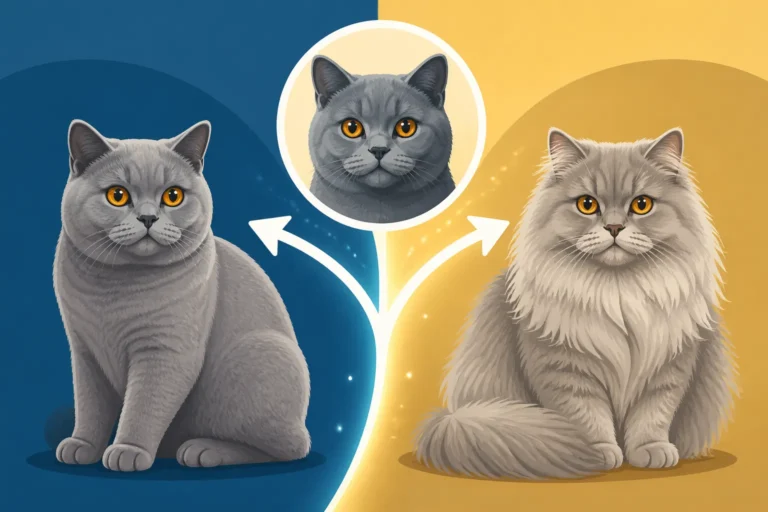
The story also helps explain why breed history is not only about appearance. Breeders’ decisions affected which lines continued and which traits became more common. Later distinctions among British Shorthair varieties, including the development of the British Longhair, reflect further decisions about inherited traits and breed recognition. For that related history, see How the British Longhair Split From the British Shorthair.
What “recovery” means for the breed today
It does not mean every modern cat has the same wartime ancestry
A British Shorthair’s pedigree reflects individual breeding lines, so it would be misleading to assume that every cat has the same direct path through the postwar crosses. The broad history describes how breeders addressed a reduced population; it does not prove the exact ancestry of any particular kitten. For that, a breeder’s pedigree records are more relevant than a general breed-history account.
It is equally important not to treat the history as evidence that modern British Shorthairs are simply Persians in short coats. Outcrossing was part of rebuilding, but selection over generations established a distinct British Shorthair type. The breed’s present-day identity comes from that longer process, not from a single cross or one defining ancestor.
The same caution applies to health. Historical ancestry can help explain why some conditions are discussed in the breed, but a cat’s individual risk depends on its family lines and health history. Breed history is useful context, not a substitute for a veterinarian’s advice or a breeder’s documented screening information.
Why this history matters to prospective owners
For someone choosing a British Shorthair, the postwar story offers a reminder that pedigreed breeds are shaped by human decisions as well as by their original populations. When asking about a kitten, it is reasonable to focus on the breeder’s current practices: how they keep pedigree records, what health screening they undertake, and how they make breeding decisions. The historical recovery does not establish whether a particular breeder is responsible.
It can also help put appearance in perspective. The breed’s classic look was refined over time, and kittens from the same litter may still differ in how quickly they develop their adult coat, body, and head shape. A young cat should not be judged as a finished example of the breed before it has matured. The history explains why breed type developed over generations; an individual cat also develops at its own pace.
Most of all, the recovery is a story of persistence rather than a sudden comeback. Breeders worked with a diminished population, introduced new options where needed, and selected descendants carefully over many generations. The British Shorthair’s familiar presence today is the outcome of that long effort, while its history remains a useful reminder to value sound breeding and health alongside the teddy-bear appearance.
Disclaimer
This article is for general informational purposes only and does not constitute professional advice. Laws, prices and regulations vary by location and change over time. Consult a qualified professional for guidance on your specific situation.