Whether the Persian Cross Brought PKD Into the British Shorthair
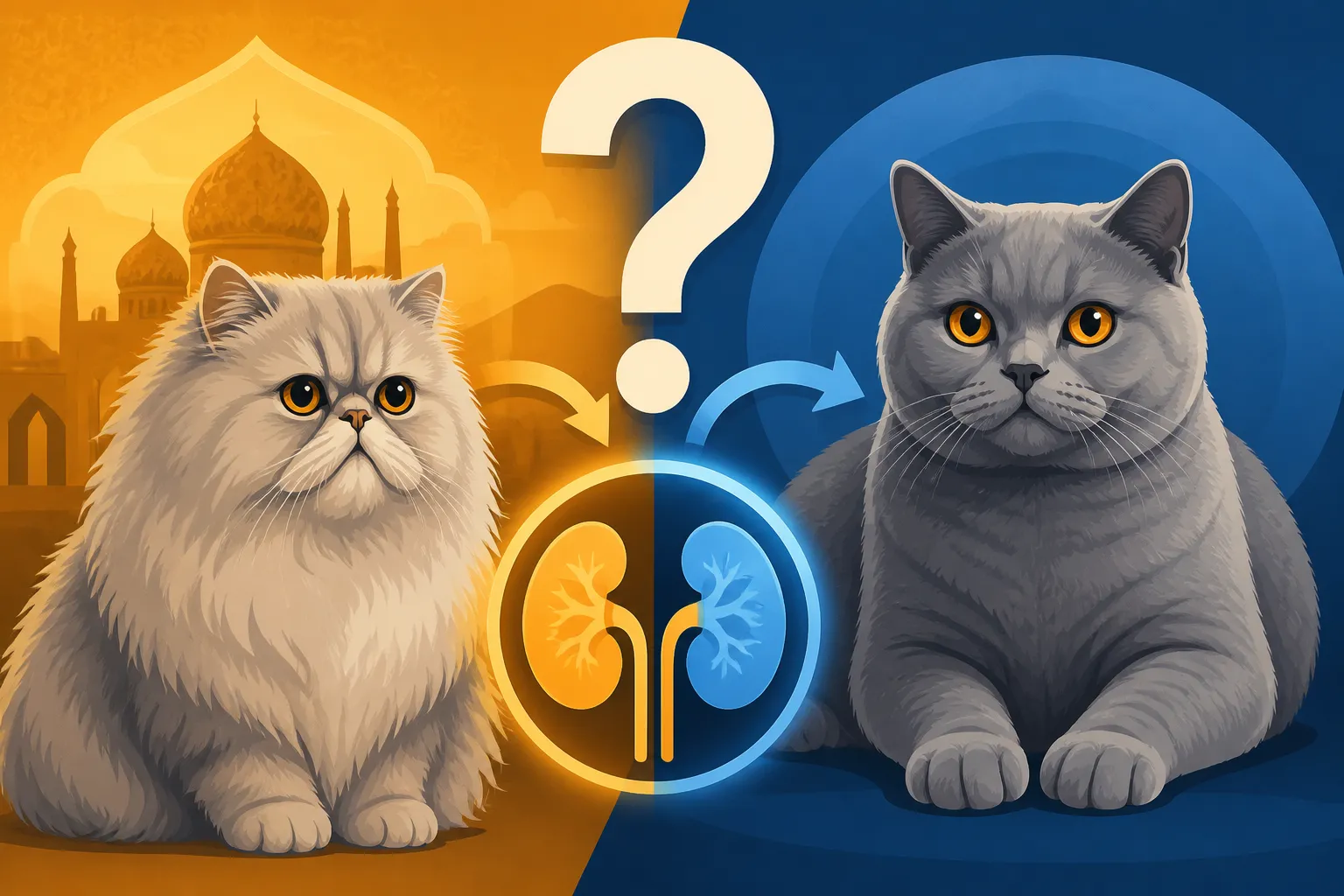
A Persian cross likely helped bring the gene for polycystic kidney disease into some British Shorthair lines, but that does not mean every British Shorthair has PKD. The breed was crossed with Persians during its postwar rebuilding, and PKD is strongly associated with Persian ancestry. Here’s what that history can—and cannot—tell you about an individual cat’s risk.
How Persian ancestry became part of the British Shorthair story
Why breeders crossed British Shorthairs with Persians
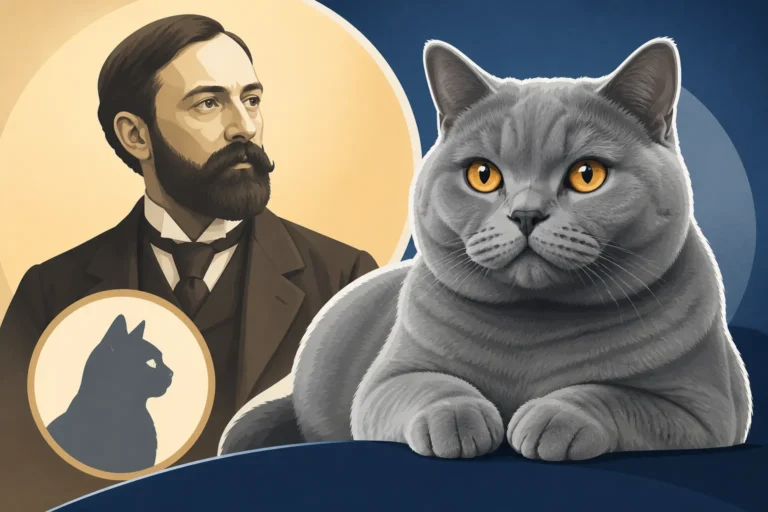
British Shorthair numbers fell sharply during the Second World War. In the years that followed, breeders worked to rebuild the breed, using crosses with other cats, including Persians. Those crosses helped restore the population and influenced the modern British Shorthair’s appearance and gene pool.
The history matters because PKD, or polycystic kidney disease, has long been associated with Persian cats. The condition is usually linked to an inherited mutation in the PKD1 gene. If a cat carrying that mutation was part of a crossbreeding program, the mutation could be passed down to descendants.
That makes Persian ancestry a plausible route by which PKD entered some British Shorthair lines. It does not establish that every Persian cross carried the mutation, or that every modern British Shorthair inherited it. Breed history can point to a possible source; it cannot diagnose an individual cat. For more about the historical connection, see How PKD Reached the British Shorthair.
What the cross does not prove
It is easy to hear “Persians were used in the breed’s history” and conclude that British Shorthairs are all at high risk of PKD. That leap is not justified. A shared ancestor does not mean every descendant carries the same gene variant, especially when many generations and many breeding lines separate today’s cats from the original crosses.
The reverse assumption is risky too. A cat that looks thoroughly British Shorthair, or comes from a breeder who says the line has no Persian cats recently, cannot be considered clear on appearance alone. Genetic traits do not announce themselves in coat color, head shape, or pedigree descriptions that owners can easily interpret.
In practical terms, Persian ancestry is useful context, not a substitute for health information. A cat’s individual risk is better assessed through appropriate testing and veterinary care. What Polycystic Kidney Disease Does to a British Shorthair explains what the condition involves once it is present.
What PKD is and how it can affect a cat
How inherited PKD develops
In PKD, fluid-filled cysts form in the kidneys. Affected cats are born with the inherited tendency to develop cysts, but the cysts and their effects may become more significant over time. The pace and degree of progression can vary, so a cat may appear well for a long period before kidney function is affected.
PKD is generally inherited as an autosomal dominant condition. In plain language, a cat that inherits one copy of the associated mutation may be at risk of developing the disease and passing the mutation to offspring. That is why a positive result can matter even when a cat has no obvious symptoms.
A genetic result and a clinical assessment answer different questions. A DNA test looks for a specific inherited variant. An ultrasound looks at the kidneys and can identify structural changes, though the meaning of a scan depends on the cat’s age, the quality of the examination, and the veterinarian’s interpretation. For a closer look at the process, read How PKD Cysts Damage a British Shorthair's Kidney.
Why a cat may seem healthy at first
Early PKD may not cause clear signs at home. A cat can eat, play, and behave normally while cysts are present. When kidney function declines, signs can be subtle at first: changes in thirst or urination, reduced appetite, weight loss, vomiting, or a coat that looks less well kept. These signs can also have other causes, so they do not confirm PKD on their own.
This quiet progression is one reason a breeder’s health records and a veterinary examination matter. Waiting for a cat to look ill before asking about kidney health can mean missing the chance to identify inherited risk earlier. Conversely, a symptom such as increased drinking should not automatically be attributed to PKD; a veterinarian may need to investigate several possible causes.
If a cat has a positive test or concerning scan, the next step is not to assume the worst. The vet can explain what the result means, assess kidney function, and set a monitoring plan. Owners looking for practical signs to watch for can also read Signs a British Shorthair's Kidneys Are Failing.
How testing helps clarify a British Shorthair’s risk
DNA testing and ultrasound answer different questions
A DNA test can identify the well-known PKD1 mutation associated with inherited PKD in cats. It can be especially useful for breeding decisions because the result concerns an inherited variant, rather than only the cat’s condition on the day of the test. Ask the veterinarian or laboratory what exact mutation the test covers and how to interpret the result for the cat in question.
Ultrasound offers a different kind of information: it allows a veterinarian to examine the kidneys for cysts. It may be considered when genetic information is unavailable, when a cat’s history is uncertain, or when clinical concerns need investigation. A normal scan should be interpreted in context, since age and examination quality can affect what is visible.
Neither method should be treated as a universal guarantee about every kidney problem. A test for a particular mutation does not rule out all possible kidney disease, and an ultrasound is not a promise that no future health issue will arise. Discuss which approach makes sense with a veterinarian, especially if the cat’s background is incomplete. Whether the PKD1 DNA Test Covers British Shorthairs and Whether a British Shorthair Should Be PKD Tested cover these questions in more detail.
| Information available | What it can tell you | What it cannot tell you by itself |
|---|---|---|
| Persian ancestry in the breed’s history | Why PKD is relevant to some British Shorthair lines | Whether an individual cat carries a mutation |
| A PKD-related DNA test | Whether the specific mutation tested for is detected | Whether the cat has every possible kidney condition |
| Kidney ultrasound | Whether visible cysts or structural changes are present at the time of the scan | A guarantee about lifelong kidney health |
| Symptoms such as increased thirst | That a veterinary assessment may be needed | That PKD is definitely the cause |
Questions to ask a breeder or veterinarian
If you are considering a kitten, ask the breeder whether the parents have been tested for PKD and request the actual records rather than relying on a verbal assurance. Clarify whether the result belongs to the parent named in the pedigree, what kind of test was performed, and whether the documentation identifies the test and outcome. A responsible breeder should be comfortable explaining the results and how they inform breeding choices.
For an adopted adult or rescue cat, complete records may not exist. That is not proof that the cat has PKD, and it is not a reason to avoid veterinary care. Tell the veterinarian that the cat is a British Shorthair and share any available pedigree, prior test results, or health history. The vet can advise whether testing is useful based on age, symptoms, and background. What a British Shorthair Breeder Should Have Tested offers a broader checklist for health conversations.
When health records are scattered between a breeder, clinic, and home files, keep copies together. If you use Chewy for routine food or supply orders, it can be helpful to keep those purchase records alongside the veterinary documents—but product orders are not a substitute for test certificates or a vet’s interpretation. Use the clinic’s records as the medical source of truth.
What a PKD result means for breeding and everyday care
Breeding decisions should use verified results
Because PKD can be inherited, a cat with a positive result should not be bred casually or paired without a clear understanding of the risk to kittens. Breeders should discuss results with a veterinarian and make decisions that prevent passing a known disease-associated mutation to another generation. Testing both prospective parents and keeping records helps avoid guesswork.
A negative result is useful only when you know what was tested and whose result it is. Ask for documentation tied to the actual cat, rather than relying on a general claim that a cattery is “PKD free.” Breeding plans also involve other health and welfare considerations, so PKD screening is one part of responsible breeding, not the entire health picture.
If you are buying a kitten, treat a breeder’s willingness to answer questions as part of your evaluation. A careful explanation is more meaningful than a sweeping promise that a particular breed or line cannot develop kidney disease. For the specific breeding question, see Whether a PKD Positive British Shorthair Should Be Bred.
Care after a positive result
A positive result does not mean a cat is currently in kidney failure. It means the result needs interpretation and a plan. The veterinarian may recommend monitoring, which can include examinations, blood or urine testing, blood pressure checks, or imaging depending on the cat’s circumstances. The timing and type of follow-up should be tailored by the clinic rather than guessed from a breed label.
Do not start a kidney diet, supplements, or medication simply because a cat has a positive genetic result. Diet changes should be based on veterinary advice and the cat’s actual health status. If a vet does recommend a particular food, confirm the exact product and feeding plan with the clinic before placing an order through any retailer, including Chewy. Food choices can change as a cat’s needs change, so check back rather than assuming a previous recommendation applies indefinitely.
For a cat with confirmed kidney disease, practical routines can make monitoring easier: note appetite, water intake, litter-box habits, and weight, and contact the vet if you see a persistent change. Keep the test report and follow-up notes in one place. If Chewy is where you usually reorder food, maintaining a consistent list of the vet-approved product can reduce accidental changes—but contact the clinic if the prescribed or recommended food is unavailable or the cat stops eating it. The central point is simple: the Persian cross explains why PKD deserves attention in the breed, while individual testing and veterinary assessment explain what it means for your cat.
Disclaimer
This article is for general informational purposes only and does not constitute professional advice. Laws, prices and regulations vary by location and change over time. Consult a qualified professional for guidance on your specific situation.