How Many British Shorthair Colors Exist in Total
British Shorthairs come in far more than the familiar blue, but there is no single universally accepted number of colors. The total depends on whether you count only base coat colors or also patterns and combinations, and on which cat registry’s standard you use. This guide explains how those counts work and how to identify the main color groups without mistaking a pattern for a separate color.
Why There Is No Single Count of British Shorthair Colors
Base colors are not the same as coat varieties
A coat color is the underlying pigment, such as black, red, or blue. A pattern describes how that pigment appears across the coat: as stripes, patches, shaded tipping, or points on the face and limbs. Add a modifier such as silver or golden, and the same base color can produce another recognized variety.
That distinction is why one list might count a British Shorthair’s base colors while another counts every color-pattern combination. For example, a black-based coat may appear as a solid black cat, a black tabby, a black-and-white bicolor, or a black smoke. These are visibly different varieties, but they do not necessarily represent four unrelated base pigments.
Registry standards add another layer. Different organizations may recognize different varieties, group them differently, or update their accepted listings at different times. A breeder’s description may also be more specific than a general breed overview. So if you see one source saying “dozens” and another giving a much larger number, they may simply be counting different things.
The practical answer
There are several core coat colors, with many more varieties once patterns and modifiers are included. It is more useful to think in terms of color families than to look for one final number that applies everywhere. A short list of base colors can expand considerably when you include tabby markings, white spotting, colorpoints, silver, golden, shaded, and smoke effects.
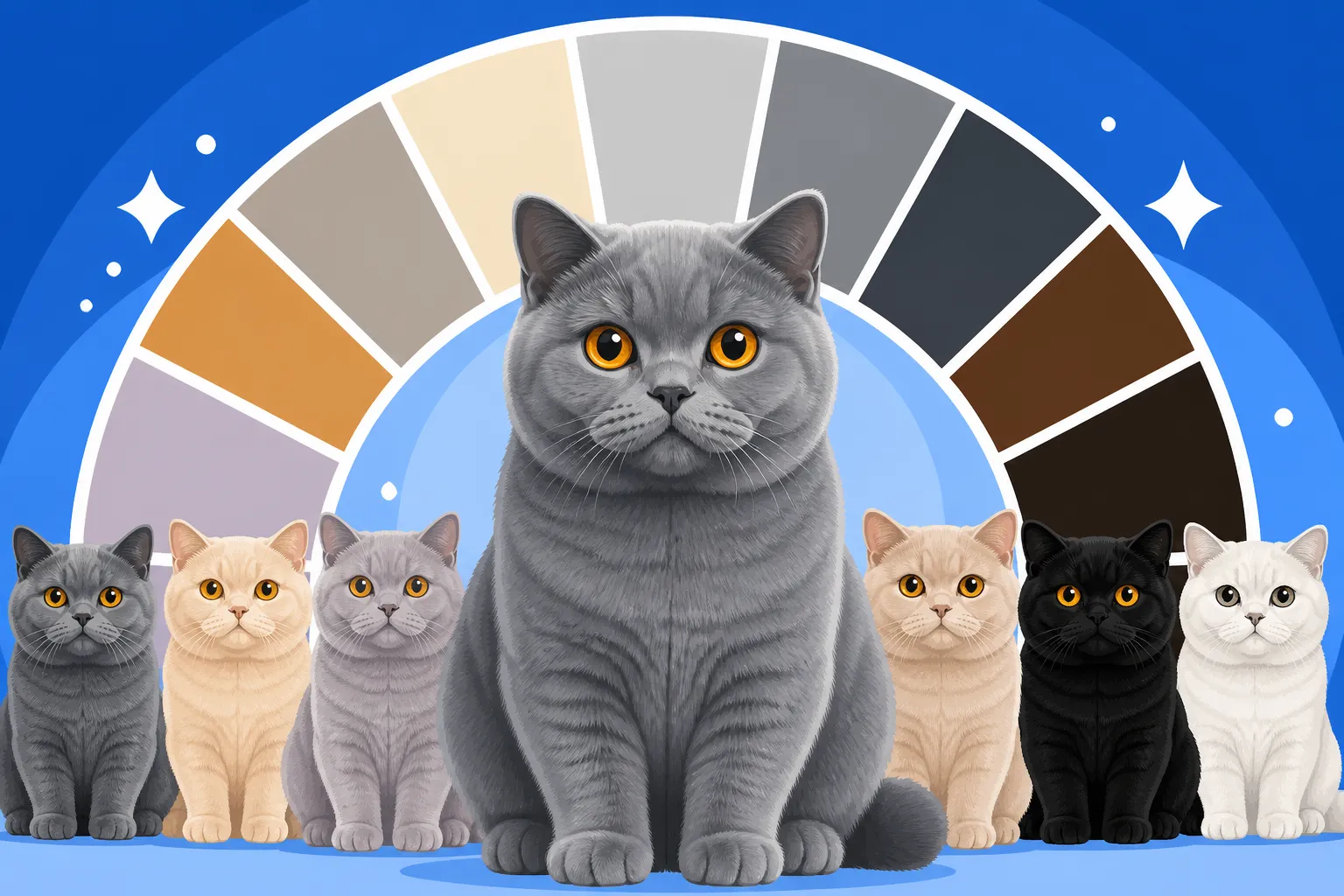
The best-known British Shorthair is the blue, but blue is only one variety. The breed can also be found in solid black, white, red, cream, chocolate, lilac, cinnamon, and fawn, among other combinations recognized by particular registries. Some colors are less commonly seen, and availability varies between breeders and regions.
For a broader introduction to the breed’s variety, A British Shorthair Comes in More Colors Than You Think is a useful companion read. It helps explain why a quick search for “British Shorthair colors” can return a much longer list than the basic solid-color options.
The Main British Shorthair Color Families
Solid colors
Solid coats have one main color across the body, though subtle shading can occur. Blue is the familiar blue-gray shade often associated with the breed. Other solid colors include black, white, red, cream, chocolate, lilac, cinnamon, and fawn, depending on the registry standard and the individual cat’s registration.
Color names can sound more dramatic than they look in everyday light. “Blue,” for example, means a diluted gray rather than a bright blue. Lilac is a soft, pale gray-pink tone, while cream is a diluted form of red. A kitten’s coat may also change in appearance as it matures, so a young cat’s color can look less settled than an adult’s.
The word “solid” does not mean every hair is perfectly identical from root to tip. Coat density, lighting, seasonal shedding, and the cat’s age can all affect how the color looks. If you are comparing kittens, try to view them in natural light and look at the coat roots as well as the surface. Photos taken under warm indoor lighting can make a blue coat look browner or a cream coat appear nearly white.
Tabby, tortoiseshell, and bicolor coats
Tabby refers to a marking pattern rather than one specific color. British Shorthairs may have tabby markings in patterns such as classic swirls, mackerel stripes, spotted markings, or ticked coats. The markings can appear with different base colors, which multiplies the number of named varieties.
Tortoiseshell coats combine patches or mingled areas of two colors, commonly black and red or their diluted forms. In a British Shorthair, tortoiseshell may appear as a solid-looking mix or alongside a tabby pattern. The patches can vary from sharply separated areas to a more blended, mottled appearance. As with other coat descriptions, the registry and breeder may use a more precise label than everyday conversation does.
Bicolor cats have white combined with another color. The amount and placement of white can vary: one cat may have a small white patch, while another has extensive white across the chest, legs, face, or body. Because markings vary from cat to cat, two British Shorthairs can share the same basic color designation and still look quite different.
For more on the range of patterns, Which Colors a British Shorthair Comes In and How Many Colors the British Shorthair Standard Allows can help clarify why a color list may depend on what is being counted.
Silver, golden, shaded, smoke, and colorpoint coats
Silver and golden describe coat effects that change how pigment appears. In a silver variety, pale or nearly white areas contrast with darker tipping or markings. Golden coats have warm, rich tones, often with darker shading or tipping. Each effect can appear with different patterns, so “silver tabby” and “golden shaded” are not simply alternative names for solid silver or solid gold coats.
Shaded cats have color concentrated more heavily toward the tips of the hairs, creating a light-to-dark effect across the coat. Smoke cats can look nearly solid when the coat lies flat, but the pale roots become visible when the fur parts or moves. This can make identification confusing: a smoke kitten may appear darker or more uniform at first glance than it does later.
Colorpoint British Shorthairs have darker color on areas such as the face, ears, paws, and tail, with a paler body. The contrast and shade can vary. Whether a particular colorpoint variety is accepted for registration or show purposes depends on the organization and its rules. That is one reason a seller’s use of a color name does not automatically tell you how a cat would be classified under every registry.
| Coat description | What it refers to | Why it adds to the count |
|---|---|---|
| Solid | One main color across the coat | Several base colors may be recognized |
| Tabby | Stripes, swirls, spots, or ticking | Patterns can occur with different base colors |
| Tortoiseshell | Patches or mingled areas of two colors | Color combinations vary, including diluted versions |
| Bicolor | White combined with another color | White markings differ in amount and placement |
| Silver or golden | A coat effect involving pale areas and colored tipping | May be combined with tabby or shaded patterns |
| Smoke | Darker outer coat with paler roots | Can look different depending on coat movement and lighting |
| Colorpoint | Darker coloring on the points and a paler body | Point color and registry acceptance can vary |
How to Identify a British Shorthair’s Color
Look beyond the surface shade
Start by checking the coat in natural daylight. Indoor bulbs can shift colors, and phone cameras often alter contrast or warmth. Look at several areas of the body, including the back, sides, chest, and base of the tail. If the coat looks solid, gently part the fur to see whether the roots are the same shade or noticeably paler.
Next, check for markings. Faint stripes may be easier to see on a kitten or in certain lighting, while adult coats can make patterns look more subtle. Notice whether there are clear rings, swirls, spots, or ticking, and whether white patches are present. If you are looking at a young cat, remember that the coat can develop and settle as the kitten grows.
If the cat’s registration papers or breeder records give a formal color description, use that as a starting point rather than trying to diagnose the color from a photo. Ask how the breeder arrived at the description and which registry or standard it follows. A listing on a pet marketplace or retailer page cannot establish a cat’s pedigree or official registration color. Even browsing cat-care items through a retailer such as Chewy will not answer that question; coat classification comes from the cat’s appearance and relevant registration records.
Don’t confuse color with breed identity or health
Coat color alone cannot confirm that a cat is a British Shorthair. Other cats and mixed-breed cats can have similar coloring, including the familiar blue-gray coat. Breed identification is based on more than color, and appearance alone is not a substitute for reliable pedigree information. For a closer look at the blue variety, see What a Blue British Shorthair Looks Like and Whether a Blue British Shorthair Is Actually Rarer.
Color also does not tell you whether a cat is healthy, well bred, or suited to your home. A striking coat can draw attention, but it should not replace questions about health screening, temperament, the kitten’s early care, and the breeder’s records. Whether Coat Color Changes a British Shorthair's Nature explores another common misconception: a cat’s color is not a dependable way to predict its personality.
Be wary of claims that a particular coat color guarantees special health or behavior traits. Likewise, be cautious about supplements or foods advertised as a way to “create” a rare color. A cat’s inherited coat color is determined by genetics; food cannot turn a blue British Shorthair into a lilac one. If the coat suddenly changes, becomes patchy, or looks unhealthy, that is a care or veterinary question, not a color-variety question. A retailer such as Chewy may be a convenient place to browse ordinary grooming supplies, but it is not a substitute for veterinary advice about a coat change.
Choosing a British Shorthair by Color
Decide what matters beyond appearance
It is completely normal to have a favorite. Many people begin their search because they love the classic blue look, while others are drawn to golden shading, silver markings, or a particular tabby pattern. The useful next step is to treat color as one preference among several, not as the main measure of a kitten’s quality.
Ask the breeder what color the kitten is registered as, whether the coat may change as it matures, and what colors the parents are. If you are considering a less familiar variety, ask for clear photos in natural light and an explanation of the terminology. This is especially helpful when names such as shaded, smoke, silver tabby, or colorpoint are being used, since those labels describe different features of the coat.
Take time to assess the kitten’s environment and care as well. A responsible breeder should be comfortable discussing health records and the kitten’s development, rather than relying on a rare-color label to justify a decision. If you want help preparing questions, Which Questions to Ask a British Shorthair Breeder is a practical place to start.
Understand rarity and pricing claims carefully
Some colors or combinations may be less commonly available in a particular area, but “rare” is not a universal category with one consistent meaning. A color may be uncommon in one breeding program and more familiar in another. Registry recognition, local demand, breeder preferences, and the availability of suitable breeding cats can all affect what you see advertised.
A rare-sounding name should not be treated as proof of quality or value. Ask what the color description means, whether it appears on the cat’s records, and whether the breeder is describing a recognized variety or using informal marketing language. If a seller focuses heavily on color while avoiding questions about health and documentation, slow down and ask for clear answers before making a commitment.
Coat color can influence what you search for, but the best choice is the individual cat whose needs and temperament fit your household. Once your kitten comes home, routine care matters more than trying to preserve a particular shade. Gentle grooming and appropriate nutrition support coat condition, but neither changes the cat’s inherited color. Chewy may be one option for comparing everyday pet-care products, while a veterinarian or breeder can guide questions about the cat’s specific coat and health.
The clearest answer, then, is that British Shorthairs come in many color varieties, but no single total covers every registry and every way of counting. Count base colors and you get a shorter list; count patterns, white markings, shading, and combinations too, and the number grows quickly. Looking at the color family, pattern, and registration description together gives a much more useful answer than relying on one headline figure.
Disclaimer
This article is for general informational purposes only and does not constitute professional advice. Laws, prices and regulations vary by location and change over time. Consult a qualified professional for guidance on your specific situation.