Whether a Fold Eared British Shorthair Can Be Registered
A kitten with folded ears may look like a British Shorthair in every other way, but appearance alone does not decide its pedigree or registration. The answer depends on the cat’s documented ancestry and the rules of the registry involved. This guide explains what folded ears can mean, what paperwork to check, and how to verify a breeder’s registration claim before you buy.
Can a fold-eared cat be registered as a British Shorthair
Registration depends on pedigree and registry rules
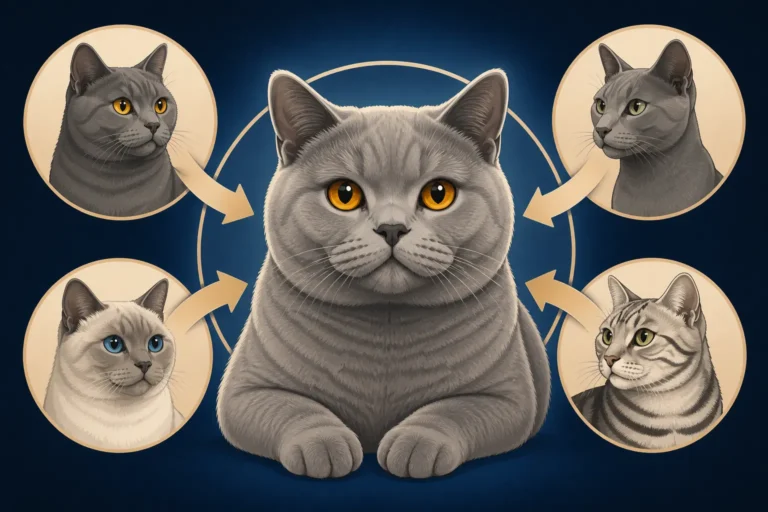
Cat registration is not a visual judgment that a cat “looks enough like” a breed. A registry usually records a cat’s ancestry and applies its own rules about which breeds and matings are eligible. A round face, dense coat, sturdy body, and folded ears do not, by themselves, establish British Shorthair pedigree.
A cat with folded ears may be registered under a different breed classification if its ancestry and the registry’s rules support that classification. It may also be recorded as a crossbreed, pet, or other category—or may not qualify for pedigree registration at all. The precise answer depends on the organization, the parents’ registered breeds, and the documents available.
That is why a seller’s phrase “fold-eared British Shorthair” needs clarification. Ask which registry they mean, what breed appears on the registration paperwork, and whether the kitten itself is eligible to be registered—not merely whether its parents have papers. A breeder saying “the litter is registered” is not the same as showing that the particular kitten has a British Shorthair pedigree.
For a useful comparison of the breeds’ physical traits and histories, see How a British Shorthair Differs From a Scottish Fold. The resemblance can be convincing, but breed identity and registration status are separate questions.
Folded ears point to a different breed history
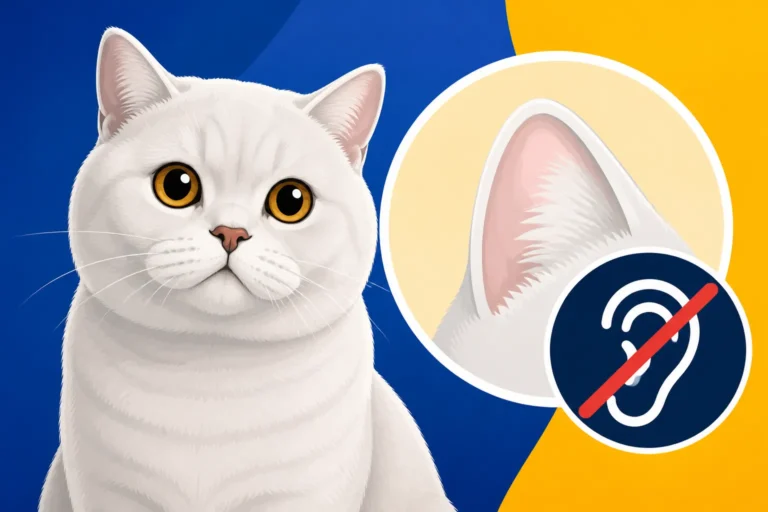
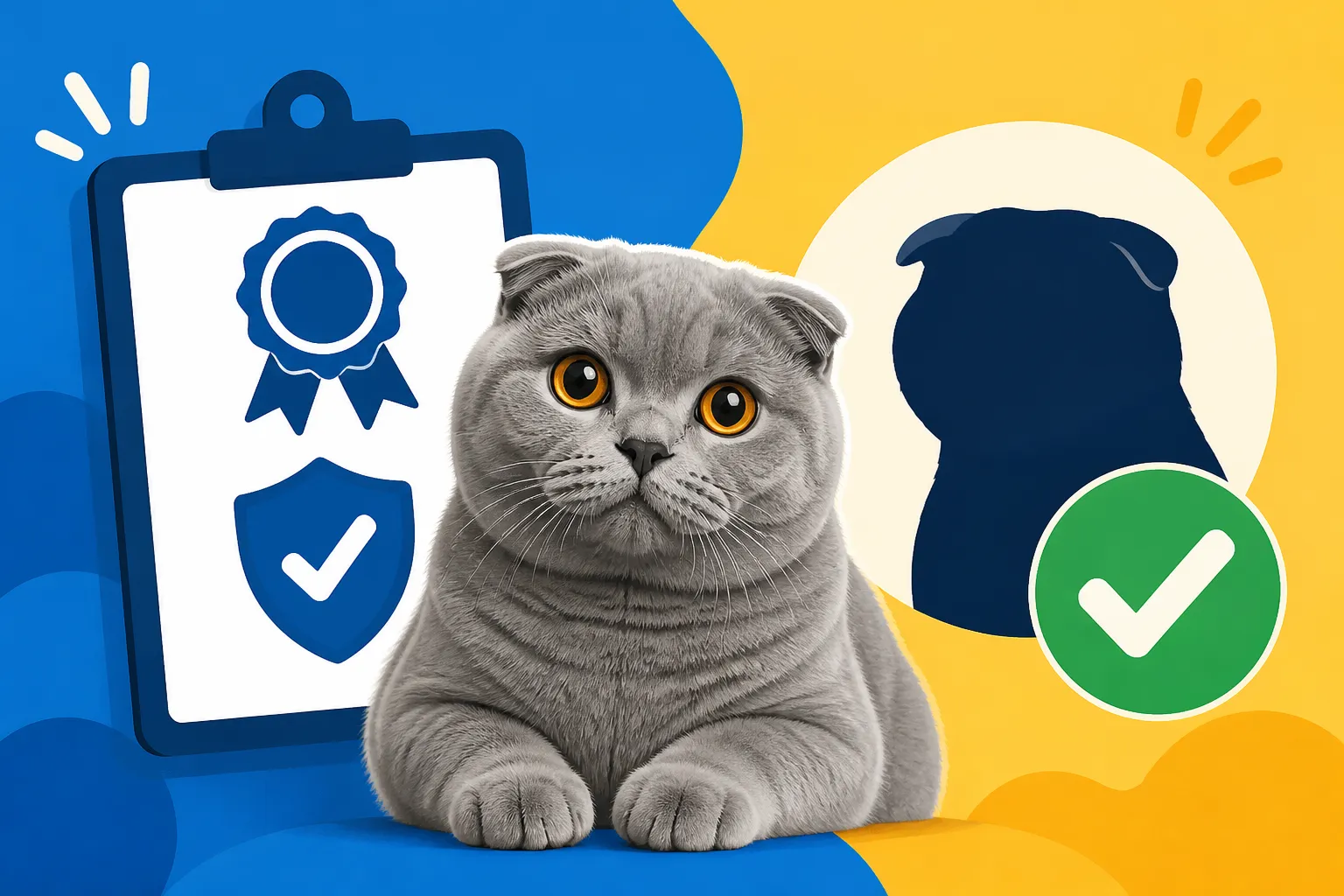
The folded ear is strongly associated with the Scottish Fold. It is not a standard British Shorthair feature. British Shorthairs have upright ears, and their breed identity is based on ancestry and a recognized standard, not on having a particular fashionable appearance.
A folded-ear cat could have British Shorthair somewhere in its family tree, but that does not automatically make it registrable as a British Shorthair. If the cat comes from a cross between a British Shorthair and a Scottish Fold, the offspring’s appearance and registration eligibility are still governed by the relevant registry’s rules. A seller cannot create a recognized pedigree category simply by naming the cross.
This distinction matters even if the kitten has a plush coat and the familiar round British Shorthair face. A mix may inherit some traits from one parent and some from the other, and siblings can look quite different. For more on how much appearance can tell you, read Whether a British Shorthair Mix Keeps the Look and Whether a Scottish Fold Is a British Shorthair With Folded Ears.
Why the registry matters
Different organizations can have different rules
There is no single worldwide rulebook for every cat registry. Organizations maintain their own breed standards, approved outcrosses, registration categories, and breeding policies. A mating or kitten that is accepted in one organization or country may not receive the same status elsewhere.
Before relying on a breeder’s claim, identify the exact registry. Ask for the organization’s full name and the kitten’s registration certificate or application details. Then contact that registry directly and ask whether the cat’s documented parentage qualifies for British Shorthair registration under its rules. A breeder’s explanation is useful, but the registry is the authority on its own records.
Some sellers use the word “registered” loosely to mean that a cattery is listed somewhere, that a parent has papers, or that a kitten has been entered in a general database. Those things do not necessarily mean the kitten is registered as a British Shorthair. Ask what the certificate actually states: breed, registration number, sire and dam, and any restrictions or notations.
Registry standards can differ, so it can help to read Which Registry Standard a British Shorthair Is Judged Against and Whether GCCF and CFA British Shorthair Standards Differ. Treat these as a starting point, then verify the specific litter with the relevant organization.
What to ask the breeder for
Request clear copies of the kitten’s registration paperwork, if issued, and the registration documents for both parents. The names and numbers should match across the records. If the kitten is too young for a final certificate, ask for the application or litter registration details and confirm how and when the kitten’s own paperwork will be provided.
Ask the breeder to explain, in writing, why the kitten has folded ears and how the parents are described on the official documents. If the seller says the kitten is a British Shorthair but the paperwork says Scottish Fold, crossbreed, or another category, ask them to explain the difference rather than accepting a verbal assurance.
A simple checklist can keep the conversation clear:
| Question | What to verify |
|---|---|
| Which registry issued or will issue the paperwork? | The organization’s full name and contact details |
| What breed is listed for the kitten? | The exact wording on the certificate or application |
| What breeds are listed for both parents? | Parent names, registration numbers, and recorded breeds |
| Is this kitten eligible for British Shorthair registration? | A direct answer from the registry, ideally in writing |
| Are there restrictions or special notes? | Any limits on breeding, showing, or registration status |
| When will the kitten’s documents be provided? | A clear timeline and what happens if papers are delayed |
A legitimate seller should not be offended by reasonable paperwork questions. If they avoid naming the registry, offer only cropped or unclear documents, or insist that folded ears are “just a British Shorthair variation” without evidence, pause before paying a deposit.
Folded ears are also a health concern
The fold is linked to cartilage and bone development
Folded ears in Scottish Fold cats are associated with a genetic cartilage condition. The visible ear shape is not simply a harmless styling feature: the underlying cartilage difference can affect other parts of the body, including bones and joints. The severity and timing of problems can vary, so a kitten that appears comfortable today is not proof that it will remain unaffected.
This is one reason to look beyond a cute photograph or a seller’s description. Ask what veterinary assessment has been done, whether the breeder has discussed the risks with a veterinarian, and whether the parents or close relatives have had mobility or joint problems. Be wary of anyone who dismisses all concern by saying the kitten has only “a little fold” or that the ears are the only thing that will ever be affected.
A veterinary exam can assess the kitten’s current condition, but it cannot guarantee that no inherited problem will develop later. If a breeder is making health claims, ask what evidence supports them and discuss the kitten’s specific background with your veterinarian before committing.
Do not treat a DNA test as a pedigree certificate
A DNA test may provide information about certain inherited traits or ancestry estimates, depending on the test. It does not replace a registry’s pedigree records, and it does not automatically make a cat eligible for registration as a British Shorthair. A result suggesting that a cat has British Shorthair ancestry is not the same as a documented pedigree accepted by a registry.
If a seller presents a DNA report as proof that a fold-eared kitten is a registered British Shorthair, ask the registry whether that report is relevant to its rules. You can learn more about the limits of genetic breed identification in Whether a DNA Test Confirms a British Shorthair. A DNA result may be one piece of background information, but it cannot establish the details of a kitten’s recorded parentage on its own.
Also keep health testing separate from pedigree paperwork. A cat can have a DNA report and still lack recognized registration documents; conversely, registration does not mean every possible health risk has been ruled out. Ask for each type of evidence directly rather than assuming one document proves everything.
How to check a seller’s claim before you commit
Verify documents with the organization
Start by asking the seller for the registry name, the kitten’s registration number or application details, and the registered names of both parents. Contact the organization using contact information you find independently, not only a link or phone number supplied by the seller. Provide the details and ask whether the kitten’s breed designation and parentage are consistent with its records.
If paperwork has not yet been issued, ask whether the litter has been registered and whether the kitten will receive an individual certificate. Clarify what happens if the registry declines the application or records the kitten under a different category. Put any promise about registration in the purchase agreement.
Keep copies of the advertisement, messages, contract, receipts, and documents. A receipt from a pet retailer such as Chewy can show that you bought food or supplies, but it cannot establish a cat’s breed or pedigree. Likewise, a microchip record or veterinary file can help identify the animal but is not a pedigree certificate.
If you are adopting rather than buying from a breeder, ask the rescue what it knows about the cat’s background and whether any original pedigree documents were surrendered with the animal. When records are missing, it is more accurate to describe the cat as a possible British Shorthair or a British Shorthair mix than to claim confirmed registration. A Chewy order history may help you keep track of routine care after adoption, but it has no bearing on registry status.
Notice warning signs without rushing the decision
Be cautious if a seller uses “rare,” “exclusive,” or “purebred” language to justify a folded-ear kitten’s price but cannot produce verifiable registration records. Other warning signs include pressure to pay immediately, inconsistent parent details, a refusal to identify the registry, or claims that the kitten’s appearance is all the proof anyone needs.
Do not let a deposit or a delivery deadline push you into skipping verification. You can ask for time to contact the registry and your veterinarian. A careful breeder should be able to explain the kitten’s ancestry, registration category, and health considerations without making you feel unreasonable for asking.
If you already have the cat, there is no need to make registration the measure of its value as a companion. The practical priorities are accurate records, appropriate veterinary care, and an honest description of what is known about its ancestry. If you are still deciding whether to purchase, however, clarify the breed and registration claim before signing or paying.
For a fold-eared cat, the most reliable answer is not based on how closely it resembles a British Shorthair. It comes from the actual pedigree documents and the rules of the registry that would record it. Ask for the paperwork, confirm the details directly, and consider the health implications of the folded-ear trait as carefully as the breed label.
Disclaimer
This article is for general informational purposes only and does not constitute professional advice. Laws, prices and regulations vary by location and change over time. Consult a qualified professional for guidance on your specific situation.