How Many Colors the British Shorthair Standard Allows
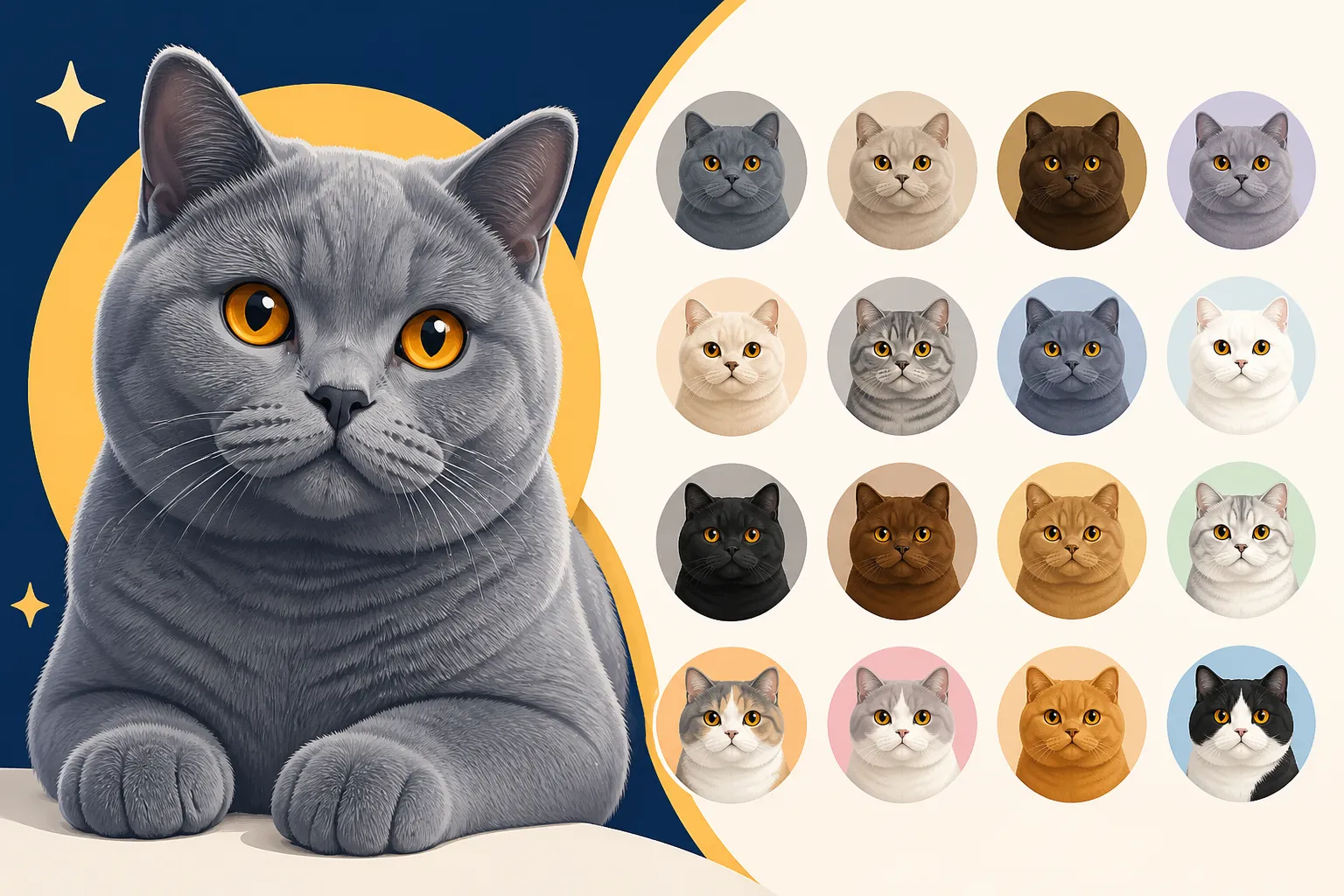
A British Shorthair’s official color count depends on which cat registry you mean and how it groups colors, patterns, and markings. There isn’t one universal number shared by every breed standard. The useful short answer is that the breed comes in many recognized varieties—often described as more than 100 color-and-pattern combinations—but a registry’s own rules determine what counts as an accepted variety.
Why there is no single official color count
Breed standards and color lists are not the same thing
A breed standard describes the features a cat should have, including its body type, coat, and sometimes the colors or patterns permitted for registration or competition. Different registries publish their own standards and show schedules, so their lists may not match exactly. A color accepted by one organization may be grouped differently—or treated differently—by another.
There is also a difference between a standard and a registry’s detailed color list. The standard may describe broad categories, while a registration or show schedule divides them into specific varieties. For example, a broad category such as tabby can include several pattern types and occur in more than one base color. Counting each combination separately produces a much larger total than counting only the broad categories.
That is why a single number can be misleading. If one person counts just base colors and another counts base colors plus patterns and white markings, both may give different totals without either having made a simple arithmetic mistake. For a useful overview of the range, see A British Shorthair Comes in More Colors Than You Think and Which Colors a British Shorthair Comes In.
What “allowed” means in practice
“Allowed” can refer to several different things: whether a color is accepted for registration, whether a cat can compete in a particular show class, or whether a breeder considers the color desirable. Those are related questions, but they are not interchangeable. A cat may have a recognized color and still not match every feature a judge looks for in its variety.
The answer can also depend on where the cat is registered. Organizations such as the GCCF, CFA, and TICA maintain their own rules and descriptions. If you need a precise answer for a specific kitten, show, or registration, check the relevant organization’s current breed standard and color schedule rather than relying on a general online list.
For everyday ownership, a difference in registry classification usually does not change the care the cat needs. A blue, cream, silver tabby, or colorpoint British Shorthair still needs the same attention to health, coat care, weight, and temperament. Color identifies appearance; it does not tell you whether a cat is healthy or a good match for your home.
How color, pattern, and markings multiply the varieties
Base color is only one part of the description
A base color is the underlying coat color, such as blue, black, white, red, or cream. British Shorthairs can also be described by pattern, including tabby, tortoiseshell, shaded, smoke, or colorpoint. Some cats have white markings, which adds another detail to the description.
Put those features together and the number of possible combinations grows quickly. A tabby pattern can appear in different base colors; a tortoiseshell coat combines colors; and white can appear alongside various colors or patterns. A list that counts every recognized combination can therefore be much longer than a list of base colors alone.
It helps to read a color description as a set of clues rather than as one single label. “Blue” names the color, while “tabby” describes a pattern. “Colorpoint” describes where color appears on the body, and white markings describe another visible feature. The terms can overlap in a description, depending on the cat and the registry’s system.
Pattern names describe how color appears
Tabby is not just one look. A British Shorthair may have a classic, mackerel, spotted, or ticked tabby pattern, with the exact terms and accepted combinations depending on the registry. The pattern describes the arrangement of markings, not a separate base color. See Whether a Tabby British Shorthair Is Standard for more on how tabby varieties fit into the breed.
Colorpoint cats have a lighter body with darker coloring on areas such as the face, ears, legs, and tail. Whether a particular colorpoint variety is accepted depends on the registry’s rules, so it is worth checking the relevant standard if registration or showing matters to you. Whether a Colorpoint British Shorthair Is Standard explores that distinction.
White markings can further change the visual description. A cat might have a mostly colored coat with white areas, or a pattern in which white is a defining feature. These combinations are one reason general breed descriptions often say British Shorthairs come in a very wide range of colors and patterns instead of giving a single straightforward number.
| What is being counted | Example | Why the total changes |
|---|---|---|
| Base colors | Blue, black, cream, or white | Counts the underlying color without patterns |
| Patterns | Tabby, shaded, smoke, or colorpoint | One pattern may occur with several base colors |
| Markings | White areas or tortoiseshell coloring | Adds another coat feature to the description |
| Registry varieties | A specific color-and-pattern class | Each organization may group or list varieties differently |
Familiar British Shorthair colors and what the labels mean
Blue is famous, but it is not the whole breed
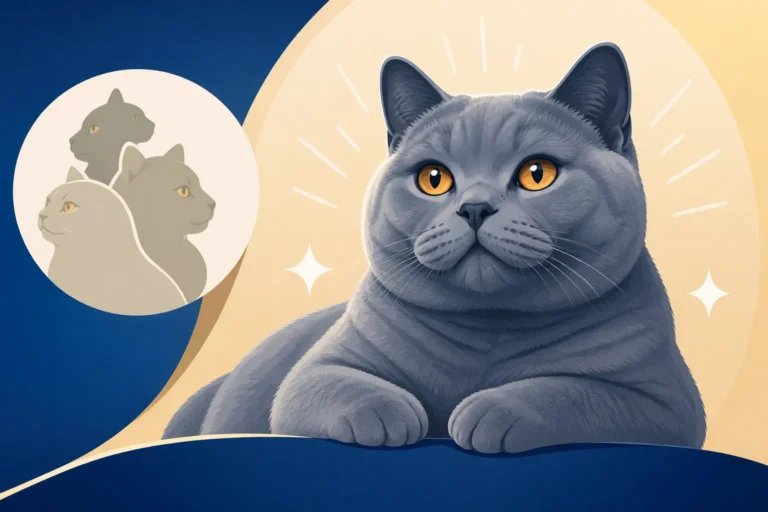
The blue British Shorthair is probably the variety many people picture first: a solid blue-gray coat, round face, and plush appearance. Its popularity has helped make “British Blue” a familiar phrase, but blue is a color variety of the British Shorthair, not a separate breed. The breed also appears in many other colors and patterns. For more background, read Why the Blue Became the British Shorthair Everyone Pictures and What a Blue British Shorthair Looks Like.
The label “blue” may sound as though it refers to a bright or vivid blue, but in cat coat descriptions it means a diluted gray coat. The shade and overall appearance can vary, and the coat’s dense texture can affect how the color looks in different light. A photograph taken indoors may make the coat seem darker or flatter than it appears in daylight.
People sometimes use “British Blue” as shorthand for the familiar solid-blue look. In registration terms, though, the cat is still a British Shorthair, and its accepted variety depends on the registry. Whether a British Blue Registers as a British Shorthair explains why the wording can cause confusion.
Other colors include solids, patterns, and combinations
Beyond blue, British Shorthairs may be seen in solid colors such as black, white, red, and cream, as well as in patterned and mixed-color varieties. Names such as silver tabby, golden shaded, smoke, and tortoiseshell refer to different ways color is distributed across the coat. The precise names and accepted combinations depend on the relevant registry.
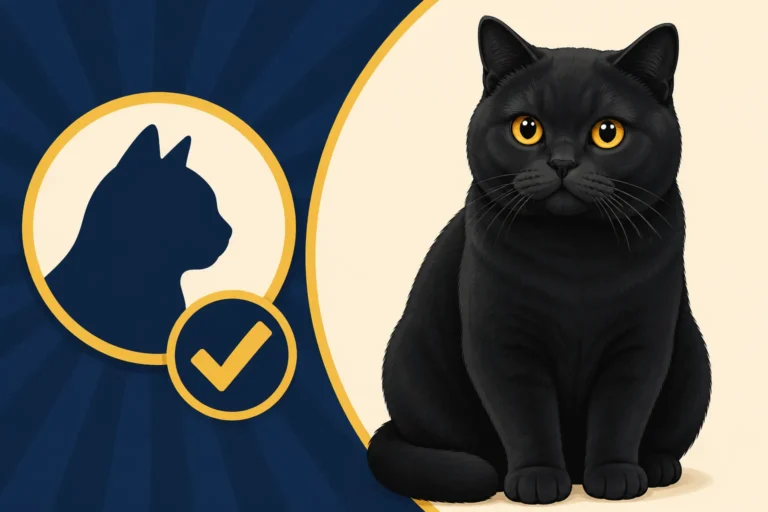
A black British Shorthair is not automatically less authentic or less “standard” than a blue one. The important question is whether the specific color and pattern are recognized under the organization involved. If you are comparing descriptions, Whether a Black British Shorthair Is Standard can help clarify the distinction between a cat’s appearance and its registration category.
Eye color is another feature people often mix into color discussions. It can be an important part of a variety’s description, but it is not simply another coat color. Depending on the coat variety, different eye colors may be associated with the standard. See Which Eye Colors a British Shorthair Has for a separate look at that topic.
How to check whether a specific color is accepted
Start with the registry, not a seller’s label
If you are buying a kitten, ask the breeder which registry the litter is registered with and what color or variety is recorded for the kitten. A casual phrase in an advertisement may describe the coat in everyday language rather than use the registry’s exact classification. A written registration document or pedigree is more useful than a social media caption when you need to confirm the official wording.
Ask for the color name as it appears on the paperwork, and ask whether the breeder can explain how the variety is classified. A responsible breeder should be comfortable discussing the coat description and the registration organization. If you are comparing breeders, the color should not distract from questions about health screening, the kitten’s care, and the conditions in which it was raised.
If showing matters to you, go directly to the organization under which the cat will be shown. Check the breed standard and the variety schedule, then confirm any details with the show organization if the wording is unclear. A general article can explain the terminology, but only the relevant registry can answer whether a specific variety qualifies under its rules.
Do not confuse coat color with health or temperament
Color is a description of appearance. It does not, by itself, establish a cat’s health, pedigree quality, or personality. Two kittens with different colors can have the same need for careful feeding, regular veterinary care, and gentle socialization. A rare-looking coat is not a substitute for health information or a thoughtful breeder.
The same caution applies to temperament assumptions. People sometimes claim that a certain color makes a cat more affectionate, calmer, or more playful, but coat color is not a reliable way to predict an individual British Shorthair’s nature. The cat’s personality is best understood by observing the individual and asking the breeder or rescue about its behavior. See Whether Coat Color Changes a British Shorthair's Nature for more on that common question.
If you are choosing a British Shorthair as a companion, focus first on whether the breed and the individual cat suit your home. Color can be a fun preference, but it is only one part of the decision. The most accurate answer to “how many colors does the British Shorthair standard allow?” is therefore: many recognized varieties, with no single universal count across all registries. For an exact classification, use the standard and color schedule of the registry that applies to the cat.
Disclaimer
This article is for general informational purposes only and does not constitute professional advice. Laws, prices and regulations vary by location and change over time. Consult a qualified professional for guidance on your specific situation.