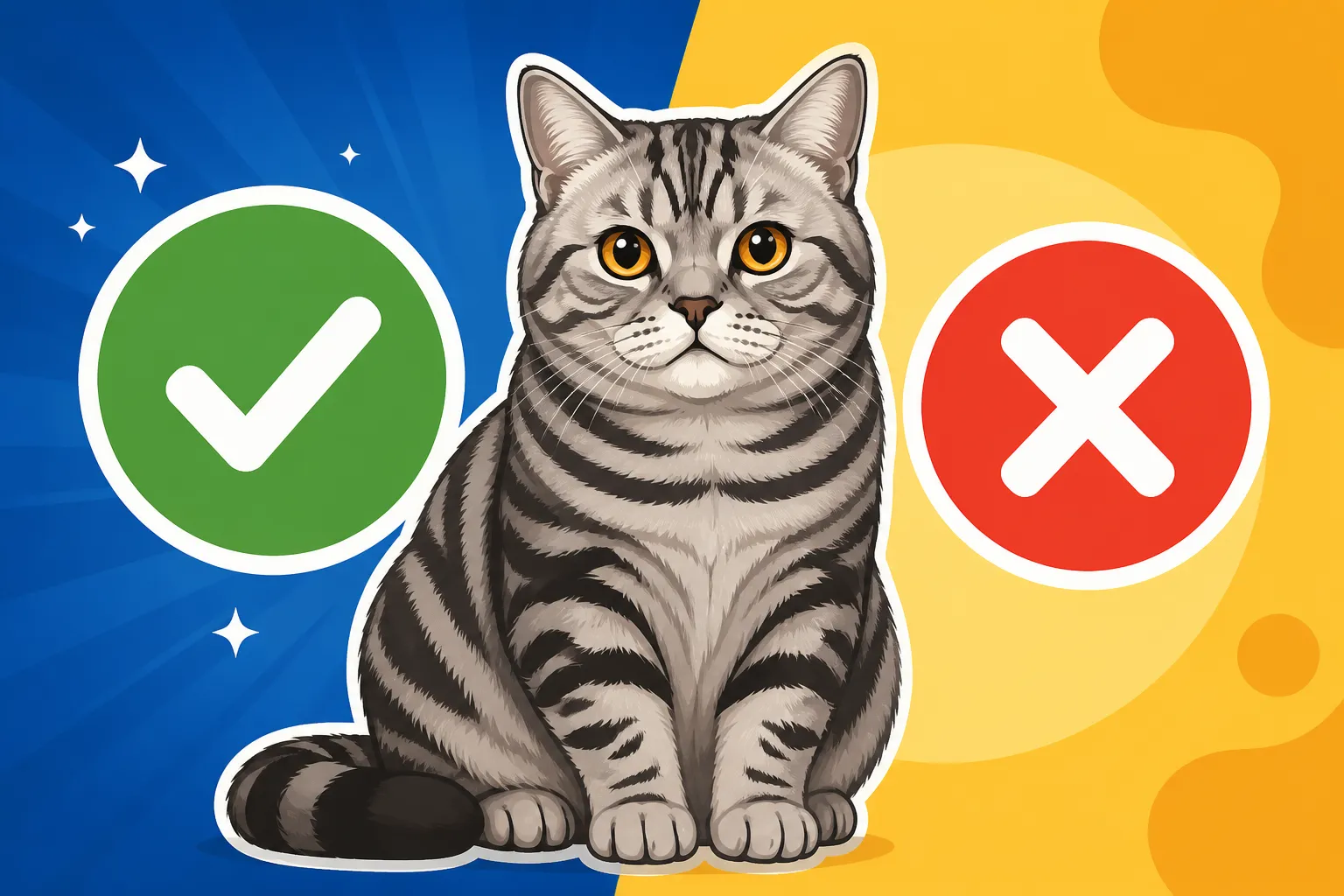
Whether a Tabby British Shorthair Is Standard
A tabby British Shorthair is not automatically outside the breed standard. “Tabby” describes a coat pattern, not a separate breed or a single color, and many tabby British Shorthairs are recognized. The detail that matters is whether the cat’s type, coat, pattern, and color meet the requirements of the registry or show system being used.
Is a tabby British Shorthair considered standard
Tabby is a pattern, not a breed or color
Tabby describes markings on a cat’s coat. It is not a separate breed, and it does not tell you the cat’s base color by itself. A British Shorthair may have a tabby pattern in colors such as brown, blue, red, cream, silver, or combinations of colors, depending on the individual cat and the registry’s recognized varieties.
The word “standard” can also mean two different things. Someone asking whether a tabby British Shorthair is standard might mean, “Is this a recognized British Shorthair?” Or they might mean, “Would this cat be eligible for a particular show class?” The answer to the first is generally yes: tabby is a recognized pattern in the breed. The answer to the second depends on the cat’s specific pattern, color, physical traits, and the rules of the registry.
That distinction helps explain why two tabby cats can both be British Shorthairs but be treated differently in a show setting. One might fit a recognized color-and-pattern category closely, while another may have markings or color combinations that are not accepted in the same way by that particular organization.
A tabby still needs to look like a British Shorthair
Coat pattern alone does not determine breed type. A tabby British Shorthair should still have the breed’s characteristic sturdy, substantial build; a broad chest; rounded head; full cheeks; and dense, plush coat. The tabby markings do not replace those features or make a cat a British Shorthair by themselves.
This matters because cats from other breeds and domestic cats can also be tabby. A round face or thick coat might remind someone of a British Shorthair, but appearance alone cannot confirm a cat’s pedigree. If you are choosing a pedigree kitten, ask the breeder about registration and parentage rather than relying on coat color or a shop listing.
For a closer look at the breed’s defining shape, see The Round Head and Copper Eye a British Shorthair Is Judged On and What a British Shorthair Weighs and How Big It Gets. These traits are useful context when you are trying to separate a coat-pattern question from a breed-type question.
What tabby markings can look like
Classic, mackerel, spotted, and ticked patterns
“Tabby” is an umbrella term. It can include several different marking patterns, and their appearance varies. A classic tabby often has bold, curved swirls or broad patches on the sides. A mackerel tabby tends to have narrow stripes running down the body. A spotted tabby has spots or broken stripes, while a ticked coat can look more evenly shaded because individual hairs have bands of color and the body may show fewer obvious stripes.
These descriptions are useful for everyday identification, but show terminology and classification can vary. A registry may define pattern categories in a particular way or recognize some color-and-pattern combinations differently from another organization. If show eligibility matters, check the relevant registry’s written breed standard and class rules rather than assuming that a casual label is enough.
Markings can also be more or less distinct depending on the coat color, age, and individual cat. A silver tabby, for example, may look very different from a brown tabby even if their pattern type is similar. For an overview of the recognized range, explore A British Shorthair Comes in More Colors Than You Think and Which Colors a British Shorthair Comes In.
The M on the forehead and other familiar details
Many tabbies have a visible M-shaped marking on the forehead, along with lines around the eyes and markings on the legs and tail. The contrast and clarity of these markings differ from cat to cat. Some tabbies have crisp, high-contrast stripes; others have softer or less sharply defined markings.
A kitten’s coat can be especially confusing. Young cats may show faint or temporary-looking markings that become more or less noticeable as the coat matures. A solid-colored kitten can sometimes have faint “ghost” markings, while a tabby kitten’s pattern may change in appearance as its coat develops. It is sensible to ask the breeder how the coat is expected to look as the kitten grows, but no one should promise an exact adult appearance from a very young kitten with absolute certainty.
A tabby pattern is also not the same thing as a flaw. Whether a particular mark is desirable for showing depends on the class and standard, but ordinary variation in markings does not, by itself, mean that the cat is not a British Shorthair. If your main goal is a loving companion, small differences in stripe shape or contrast are usually less important than health, temperament, and responsible breeding.
How registry and show standards affect the answer
Breed recognition and show eligibility are not identical
A registry’s breed standard describes the features used to assess the breed, but show rules also determine how cats are entered and judged. A tabby British Shorthair may be a recognized example of the breed while being entered in a specific color or pattern class. The exact classification can depend on the registry, the coat color, and the pattern shown.
That is why a broad online statement such as “all tabby British Shorthairs are show-standard” is too sweeping. The pattern may be recognized, but a particular cat’s eligibility and competitive assessment also depend on details such as coat condition, pattern quality, eye color requirements for that variety, and overall conformation. A recognized pattern does not guarantee that an individual cat meets every show criterion.
If you are buying a kitten specifically for showing, ask the breeder which registry the kitten is registered with and how that registry classifies the color and pattern. Request the registration details and ask what the breeder means by “show quality.” Those questions are more useful than relying on a seller’s use of “standard” without explaining the standard they mean.
A quick way to check a tabby British Shorthair claim
Use the following checklist when a breeder, rescue, or listing describes a cat as a tabby British Shorthair:
| What to check | Why it matters |
|---|---|
| Breed registration or pedigree information | A tabby pattern alone does not prove breed |
| Registry or organization involved | Standards and class descriptions can vary |
| Specific color and pattern description | “Tabby” alone may be too broad for show classification |
| Parent information | Helps you understand the kitten’s background and expected type |
| Health and care records | Coat appearance is not a substitute for responsible care |
| Meaning of “standard” in the listing | It may refer to breed recognition, appearance, or show potential |
A careful breeder should be able to explain the kitten’s registration and describe what they know about its pattern without making unrealistic promises. If the seller cannot say which registry or standard they are referring to, treat “standard” as an informal sales description rather than a formal guarantee.
For more on breed history and appearance, Why the Blue Became the British Shorthair Everyone Pictures explains why people often think first of the solid blue coat, while How to Tell a British Shorthair From a Moggy addresses why looks alone can be misleading.
Choosing and caring for a tabby British Shorthair
Look beyond coat pattern when choosing a kitten
It is easy to get caught up in choosing between a silver tabby, a brown tabby, or a blue-patterned kitten. Those preferences are perfectly understandable, especially when you have pictured a particular look for years. Still, coat pattern should be only one part of the decision.
Ask about the kitten’s health history, socialization, living environment, and the parents’ temperament. A responsible breeder should welcome thoughtful questions and should not pressure you to make a quick decision based only on a striking coat. If you are adopting, ask what is known about the cat’s background and health, while remembering that an adult rescue may have an incomplete history.
The tabby coat does not require a completely different care routine from other British Shorthair coats. Its dense coat benefits from regular gentle combing, and seasonal shedding may mean loose fur becomes more noticeable around the home. A suitable comb can help remove loose undercoat without tugging. If you are comparing tools through retailers such as Chewy, focus on a comb that suits a dense short coat rather than assuming a heavy-duty deshedding tool is automatically better.
Coat care and everyday shopping
A British Shorthair’s coat can feel thick and plush, but aggressive brushing is not a shortcut to a better-looking tabby pattern. Use gentle strokes, take breaks if your cat becomes uncomfortable, and check for loose fur around the chest, sides, and hindquarters. Regular handling also gives you a chance to notice changes in the skin or coat, such as irritation, unexpected thinning, or tangles.
Online retailers such as Chewy may be convenient for comparing basic grooming supplies, but the important part is choosing a product that is comfortable and appropriate for your cat. Introduce a comb gradually: let your cat sniff it, comb for a short time, and reward calm cooperation. A British Shorthair that dislikes being restrained may do better with brief grooming sessions than one long session that turns into a struggle.
Food and body condition deserve attention too. The tabby pattern does not determine a cat’s appetite or weight, and the breed’s sturdy appearance can make extra weight hard to spot. If you shop for food through Chewy or another retailer, use the feeding guidance as a starting point rather than a substitute for advice tailored to your cat’s age, activity, and body condition. For more on the issue, see What a British Shorthair Should Weigh and How to Score a British Shorthair's Body Condition.
Common misunderstandings about tabby British Shorthairs
A blue tabby is not the same as a solid blue cat
The familiar British Blue is a solid-colored British Shorthair, while a blue tabby has a blue-toned coat with tabby markings. The word “blue” refers to a diluted gray color in cat-coat terminology, not a bright blue shade. Depending on the pattern and contrast, the markings on a blue tabby may be subtle or clearly visible.
This is one reason photographs can be misleading. Lighting, camera settings, and a kitten’s age can make tabby markings look stronger or weaker than they do in person. If you are assessing a kitten, ask for clear views in ordinary light and a precise written description of the coat. For a broader explanation of the solid color people most often associate with the breed, see What a Blue British Shorthair Looks Like.
“Pedigree,” “standard,” and “show quality” do not mean the same thing
A pedigree describes recorded ancestry. A breed standard describes the features used to assess a breed. “Show quality” is commonly used to suggest that a cat has traits a breeder considers promising for showing, but the phrase should be explained rather than accepted as a guarantee. A tabby British Shorthair can be pedigreed and recognized while still being sold as a companion rather than as a show prospect.
If your goal is simply to welcome a British Shorthair into your home, you do not need a kitten with perfect show markings. Look for responsible care, honest information, and a good fit for your household. If showing is important, ask for the specific registry standard and class details, and understand that judges assess the whole cat—not just the pattern.
In practical terms, “tabby British Shorthair” is a reasonable description of a British Shorthair with a tabby coat pattern. Whether a particular cat meets a formal show standard is a narrower question that depends on its individual features and the rules being applied. A breeder who clearly explains that distinction is giving you a much more useful answer than someone who treats “standard” as a vague selling point.
Disclaimer
This article is for general informational purposes only and does not constitute professional advice. Laws, prices and regulations vary by location and change over time. Consult a qualified professional for guidance on your specific situation.