How Many British Shorthairs Were Shown at Crystal Palace
It's easy to look at our fluffy, pampered British Shorthairs today, lounging on their favorite cat trees or demanding cuddles, and forget that there was a time when cats were simply barn animals, valued for their mousing skills rather than their pedigree. This guide will take you back to a pivotal moment in feline history, the first cat show at Crystal Palace in 1871, and reveal how many of our beloved British Shorthairs made their debut and the profound impact that event had on the breed we know and adore today.
The Dawn of the Cat Fancy: Harrison Weir and Crystal Palace
Before the late 19th century, the concept of a "pedigree cat" was virtually nonexistent. Cats were generally seen as utilitarian creatures, kept around farms and homes to control rodent populations. They were beloved by many, certainly, but their beauty and distinct characteristics weren't typically celebrated in a formal, organized way. It's hard to imagine a time when our dignified British Shorthairs weren't recognized for their unique charm, isn't it?
The Vision Behind the First Cat Show
Enter Harrison Weir, a true visionary and an ardent cat lover. He wasn't just any cat enthusiast; he was an artist, an author, and a passionate advocate for the welfare and recognition of cats. Weir deeply admired the common domestic cats of Britain, observing their various types and colors, and he saw potential for them to be appreciated for their aesthetic qualities, much like dogs and other livestock were at the time. He lamented the lack of public recognition for these animals and sought to elevate their status. He envisioned a future where cats were not only cherished companions but also admired for their specific breed traits, paving the way for the cat fancy we know today. You can learn more about What Harrison Weir Did Besides Breed British Shorthairs to understand the breadth of his influence.
Weir's goal was ambitious: to gather the finest examples of British domestic cats, categorize them, and present them to the public in a grand exhibition. This wasn't just about showing off pretty cats; it was about establishing standards, encouraging responsible breeding, and ultimately, improving the health and well-being of cats across the country. It was a monumental undertaking, trying to convince people that these everyday felines deserved a stage alongside prize-winning dogs and fancy poultry.
Setting the Stage: The Grand Exhibition of 1871
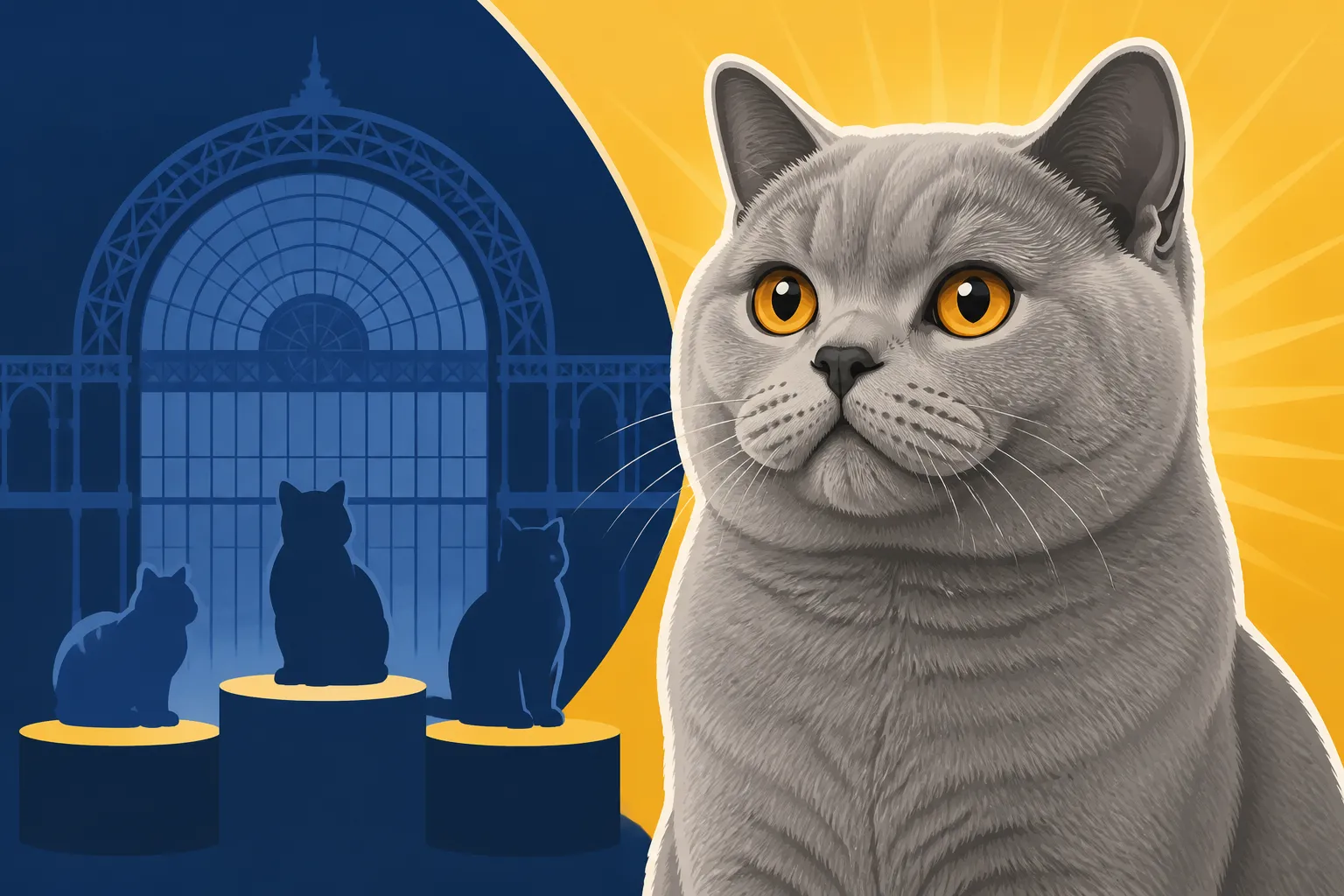
The chosen venue for this revolutionary event was none other than the magnificent Crystal Palace in London. Originally built for the Great Exhibition of 1851, Crystal Palace was a monumental structure of cast-iron and plate-glass, representing the pinnacle of Victorian engineering and a symbol of national pride. It was a place where innovation and grandeur converged, making it the perfect, albeit perhaps surprising, backdrop for the world's first formal cat show.
Imagine the scene: the hustle and bustle, the curious crowds, and the sheer novelty of cats being presented for judgment. It was far removed from a quiet Sunday afternoon browsing cat food on Chewy, that's for sure! This grand setting lent an air of legitimacy and importance to an endeavor that many might have initially scoffed at. People paid an entry fee, much like visiting a museum or a fair, to witness this unprecedented spectacle. This event truly marked When the British Shorthair First Appeared at a Cat Show.
Weir meticulously organized the event, creating classifications for cats based on their coat length, color, and size. His detailed descriptions and rules became the bedrock of future breed standards. This wasn't just a quirky exhibition; it was the birth of the modern cat fancy, and the British Shorthair was right at the heart of it.
How Many British Shorthairs Actually Attended the Show?
It's natural to wonder about the specifics of that first groundbreaking show. How many cats were there in total, and more importantly for us British Shorthair enthusiasts, how many of "ours" made it to the benches? The answers lie in the historical records, which, while sometimes a little vague by modern standards, paint a fascinating picture.
Unraveling the Historical Records
Harrison Weir himself documented the event thoroughly in his influential book, "Our Cats and All About Them." According to his accounts, the first Crystal Palace cat show featured a grand total of around 170 cats. This might seem like a small number compared to today's massive cat shows, but for a pioneering event, it was incredibly successful and drew a considerable crowd.
Within those 170 cats, the specific number of felines that would unequivocally be recognized as "British Shorthairs" as we define them today isn't a precise figure with an exact tally. This is because the concept of distinct breeds was still in its infancy. Many of the cats were categorized broadly as "Short-haired British" or "Domestic Short-haired," essentially the local cats of Britain that Harrison Weir so admired. He was taking the best examples of what he considered the quintessential British domestic cat and giving it a formal identity. So, while we can't point to a single number and say "exactly X British Shorthairs," it's understood that a significant portion of those 170 cats were the ancestral stock of what would become the British Shorthair breed. Many were indeed the sturdy, round-faced, short-coated cats that captured Weir's imagination and formed the basis of the breed standard.
The Significance of Those Early Entries
Whether there were fifty or a hundred identifiable early British Shorthairs, their presence at Crystal Palace was nothing short of revolutionary. Before this show, these cats were simply "cats." Afterward, they were types of cats, with potential for development into distinct breeds. This public display and formal judging process instantly elevated their status. Suddenly, the local alley cat, if it possessed desirable traits, could be seen as something noble and worthy of admiration.
The early entries proved that there was public interest in seeing these animals celebrated. It laid the groundwork for breeders to start selectively pairing cats to enhance specific features, moving away from random breeding towards intentional development. This initial show sparked a movement that would forever change how we view and interact with our feline companions, transforming them from mere rodent control into cherished, pedigreed members of our families. It truly shows How Crystal Palace Changed British Shorthair Breeding.
The British Shorthair Standard Born at Crystal Palace
The Crystal Palace show wasn't just a parade of pretty kitties; it was the crucible in which the modern British Shorthair breed standard was forged. Harrison Weir had a very clear vision for what constituted the ideal "British Cat," and he used this event to articulate it.
Defining the Ideal: Weir's Influence on the Breed
Harrison Weir's influence on the British Shorthair cannot be overstated. He essentially drafted the first blueprint for the breed, describing what he considered to be the perfect specimen. He championed a cat that was robust, substantial, and distinctly British. He admired their strength, their calm demeanor, and their round features. This was a stark contrast to the more exotic, slender breeds that would gain popularity later. Harrison Weir Put a British Shorthair on the Bench in 1871 precisely to establish this ideal.
His standard called for a cobby (stocky) body, a broad chest, short, strong legs, and a thick tail. But perhaps the most iconic feature he emphasized was the head: large and round, with full cheeks, round eyes, and small, rounded ears set wide apart. This gave the British Shorthair that endearing "teddy bear" look that we still cherish today. The texture of the coat was also important: dense, plush, and short, standing away from the body, providing excellent insulation. He believed this robust appearance was a hallmark of the true British cat, perfectly adapted to the climate and history of the Isles.
The Look of the First Show British Shorthairs
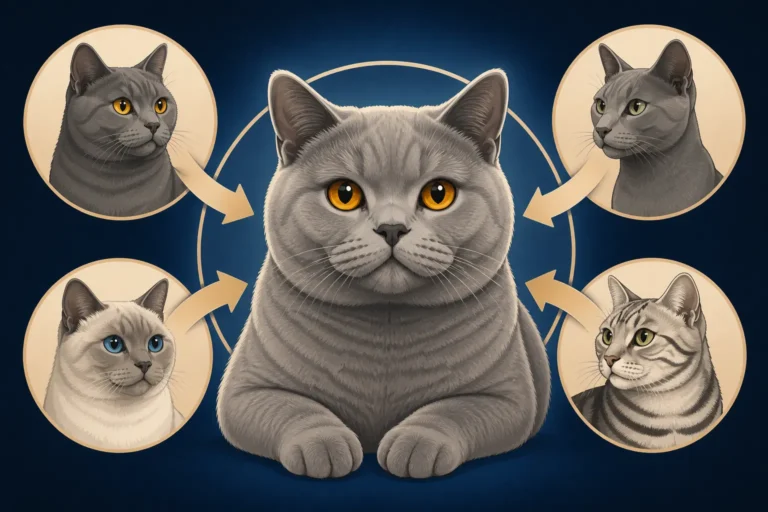
While Weir's standard was aspirational, the cats actually shown at Crystal Palace in 1871 likely presented a wonderful variety, showcasing the raw material from which the breed would be refined. Many would have been what we consider "landrace" cats—cats that naturally developed traits suitable for their environment without intensive human intervention. They probably weren't as uniformly "round" or "cobby" as the British Shorthairs we see winning championships today, but they would have embodied the sturdy, handsome qualities Weir admired.
The colors would have been varied too, with tabbies, blacks, whites, and possibly some solid blues, though the iconic "British Blue" was still gaining prominence. It's thought that Which British Shorthair Won the First Cat Show was a blue tabby, which tells us a lot about the diversity present even among the winners. Over time, through selective breeding guided by Weir's standards, these characteristics became more consistent, leading to the distinct and recognizable British Shorthair we celebrate. It's fascinating to think about how those early cats evolved into the plush, delightful companions that might be curled up next to you right now.
The Lasting Impact of Crystal Palace on the British Shorthair
The 1871 cat show at Crystal Palace wasn't just a fleeting moment of Victorian eccentricity; it was a foundational event that irrevocably changed the trajectory of the British Shorthair breed and the entire world of cat fancy. Without it, our British Shorthairs might never have become the beloved, recognized breed they are today.
From Farm Cat to Pedigreed Darling
Before Crystal Palace, a British Shorthair was, for all intents and purposes, a common domestic cat. They were valued, certainly, but their identity was tied to their utility as mousers rather than their inherent beauty or specific genetic traits. The show pulled these cats out of the shadows of the barn and into the spotlight, conferring upon them a new sense of dignity and importance.
This shift was profound. It meant that people started looking at their cats differently. Instead of just "Ginger" or "Smokey," owners began to see distinct characteristics, a "type" that could be refined and celebrated. This catalyzed the formation of dedicated breeding programs. Breeders, inspired by Weir's vision, began to work on solidifying the traits he outlined, consciously selecting cats for their round heads, dense coats, and calm temperaments. This marked the beginning of a deliberate effort to shape and preserve the British Shorthair's unique attributes, transitioning them from anonymous working cats to cherished, pedigreed companions.
The Legacy of Early Recognition
The early recognition at Crystal Palace had a ripple effect that continues to influence the British Shorthair breed and the cat fancy as a whole. It instilled in early breeders a commitment to the breed's standard and health. This focus on clear standards helped ensure the British Shorthair maintained its distinctive look and temperament over generations, even through challenging times like the World Wars when breed numbers plummeted. The Persians That Rebuilt the British Shorthair After the War is a testament to the dedication breeders had to preserve the breed's core traits.
Today, when you buy a premium cat food like those found on Chewy for your British Shorthair, or when you take them for their regular vet check-ups, you're benefiting from this legacy. The emphasis on pedigree also brought with it a greater awareness of health and genetics, leading to the screening practices we expect from responsible breeders today. The British Shorthair's consistent popularity and widespread recognition across the globe can be directly traced back to that audacious first step taken by Harrison Weir at Crystal Palace. It gave this truly British feline its rightful place in history and in our homes.
The Evolution of the British Shorthair: Beyond 1871
The initial triumph at Crystal Palace was just the beginning of the British Shorthair's journey. Like any breed, it has undergone significant changes and faced various challenges over the decades. Understanding this evolution helps us appreciate the magnificent cats we share our lives with today.
Refining the Breed: From Past to Present
After the 1871 show, the British Shorthair, then often simply referred to as the "British Cat," began to gain traction. Breeders focused on enhancing the desired traits outlined by Harrison Weir. This meant consistent effort to achieve that characteristic roundness in the head, the cobby body, and the plush, dense coat. It wasn't an overnight transformation; it took many generations of careful breeding.
One of the most significant periods of refinement came after the two World Wars, which decimated many cat breeds in Europe, including the British Shorthair. To save the breed, outcrossing with other breeds, notably the Persian, was permitted. This infusion of new genetics helped restore numbers and also contributed to the extreme roundness and denseness of coat we associate with the British Shorthair today. While this was crucial for the breed's survival, it also brought new considerations, such as managing potential genetic health issues. For instance, Polycystic Kidney Disease Came Into the British Shorthair With the Persians. Today, breeders are very focused on health testing to ensure the well-being of their lines.
Modern British Shorthairs: Health, Temperament, and Care
The modern British Shorthair is a testament to generations of dedicated breeders. They are renowned not only for their striking appearance but also for their wonderfully calm and affectionate temperaments. They are generally robust cats, but like all breeds, they have specific health considerations. Regular veterinary check-ups are vital, and responsible breeders continue to screen for hereditary conditions.
For example, Hypertrophic Cardiomyopathy (HCM) is a concern in the breed, and while there's no DNA test for it in British Shorthairs, annual cardiac ultrasounds (echos) are recommended. You can learn more about The Yearly Echo That Replaces a British Shorthair Gene Test. Managing their weight is also crucial, as their calm demeanor can sometimes lead to Obesity Is the British Shorthair's Real Disease. Feeding a high-quality, portion-controlled diet is essential for their long-term health, and shopping for the right specialized foods on platforms like Chewy makes this much easier.
Today, the British Shorthair is a beloved companion, fitting perfectly into quiet households and offering a comforting, steadfast presence. Their easy-going nature and distinctive looks have made them one of the most popular breeds globally, a far cry from the utilitarian farm cats that first graced the benches of Crystal Palace over a century and a half ago.
Disclaimer
This article is for general informational purposes only and does not constitute professional advice. Laws, prices and regulations vary by location and change over time. Consult a qualified professional for guidance on your specific situation.