How Old Harrison Weir’s Winning British Shorthair Was
Many British Shorthair enthusiasts often find themselves tracing the roots of the breed's official recognition, wondering about the very first cat show and the champion that emerged. It’s a common frustration to encounter fragmented historical accounts without truly understanding the full context of that pivotal moment, especially concerning the individuals and the cats who made it happen. This guide will meticulously unravel the story of Harrison Weir, the mastermind behind the inaugural cat show, and illuminate the specific age and significance of his winning British Shorthair at the legendary Crystal Palace event.
The Visionary Behind the First Cat Show: Harrison Weir's Legacy
Before 1871, the idea of a "cat show" was utterly foreign to most people. Cats were largely utilitarian creatures, valued for their mousing abilities or simply enjoyed as household companions, without much thought given to specific breeds or appearances beyond a general appreciation. There was no organized "cat fancy" as we know it today, no formal breed standards, and certainly no prestigious events where felines vied for ribbons and titles. This made the efforts of one man, Harrison Weir, all the more extraordinary.
The State of Cats Before the Show Ring
In the mid-19th century, cats were, for the most part, simply cats. People might have admired a particularly fluffy cat, or a striking black one, but these were personal preferences, not codified breed traits. The vast majority of cats were what we would now call domestic shorthairs or longhairs, varying widely in appearance and lineage. There was no concerted effort to breed for specific characteristics, nor was there a community dedicated to preserving distinct feline types. This lack of structure meant that many cats, even those with unique features, were seen as common, their beauty unappreciated by any formal standard.
Life for most cats was practical; they earned their keep. Whether on farms, in homes, or prowling city streets, their primary role was pest control. While beloved by their owners, they didn't command the same kind of attention or reverence seen in the world of dog breeding or livestock. The idea of carefully curating a cat's appearance, tracking its pedigree, or displaying it for public judgment was simply not on anyone's radar. This context is crucial to understanding the sheer novelty and ambition of Harrison Weir's undertaking.
Harrison Weir's Passion and Purpose
Harrison Weir was not just an ordinary cat lover; he was an artist, an author, and a true visionary. His passion extended beyond merely appreciating cats; he believed they deserved the same respect, recognition, and organized development as other domesticated animals, particularly dogs, which already had a thriving show circuit. Weir saw intrinsic beauty and distinct characteristics in different types of cats, even those he gathered from the streets of Britain, recognizing the potential for established breeds. He spent years meticulously observing, sketching, and documenting various feline forms, developing a deep understanding of what he considered ideal physical traits.
It was this profound appreciation and foresight that drove him to conceptualize the first modern cat show. He wanted to elevate the status of cats, to bring them out of the shadows and into the spotlight, showcasing their diverse beauty and establishing a framework for their future development. Weir's dedication was singular; he wasn't just organizing an event, he was fundamentally reshaping how society viewed and valued felines. He believed that by creating a formal exhibition, he could inspire others to appreciate, breed, and preserve distinct cat types. Indeed, his efforts are why we have many of the distinct breeds we cherish today, including the British Shorthair. Harrison Weir Put a British Shorthair on the Bench in 1871 is a testament to his pivotal role.
Organizing the Grand Event at Crystal Palace
Bringing such a revolutionary idea to fruition was no small feat. Weir tirelessly campaigned, gathered support, and meticulously planned the event. The chosen venue, the magnificent Crystal Palace in London, was already famous for hosting grand exhibitions, including the Great Exhibition of 1851. It provided a suitably impressive backdrop for what Weir hoped would be a groundbreaking display of feline beauty. He drafted detailed rules for judging, outlined categories, and encouraged owners from across the country to enter their beloved pets.
The first Crystal Palace Cat Show, held on July 13, 1871, was a resounding success, drawing an astonishing number of entries and a curious public. It was a spectacle, an event unlike any other before it, and it firmly cemented the idea that cats could be more than just mousers; they could be subjects of aesthetic appreciation and selective breeding. The show wasn't just about parades of pretty pets; it was about laying the groundwork for genetic diversity, selective breeding, and the establishment of formal cat breeds, many of which were still in their infancy or simply "types" at that point. When the British Shorthair First Appeared at a Cat Show describes this pivotal moment in detail.
The Inaugural Champion: A 14-Month-Old Blue British Shorthair Queen
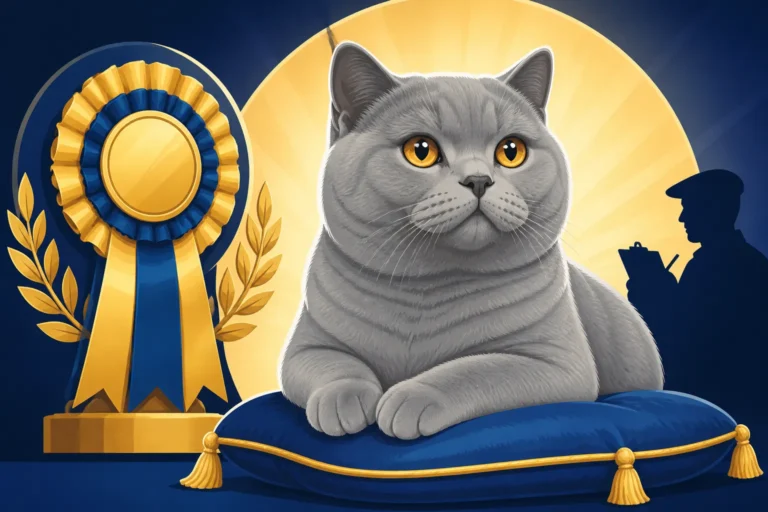
Among the many cats showcased at this historic event, one feline stood out, capturing the judges' admiration and securing the coveted Best in Show title. This cat, owned and exhibited by none other than Harrison Weir himself, became an instant icon, forever etched in the annals of cat history.
Identifying the Winning Cat
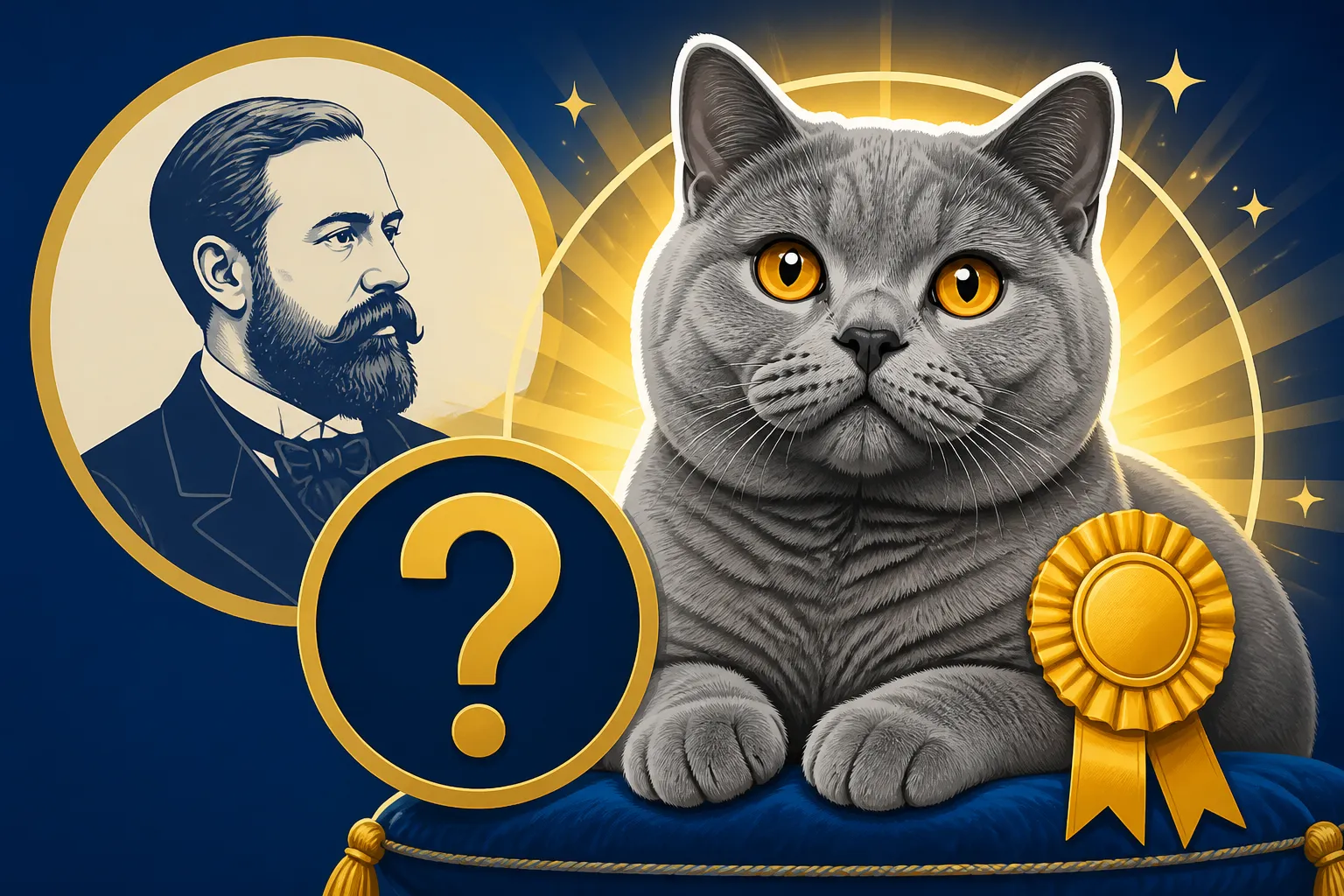
The champion of the very first cat show at Crystal Palace in 1871 was a beautiful female Blue British Shorthair. While her specific registered name might not be as widely known today as some modern champions, her victory was absolutely foundational. She epitomized the robust, round-faced, dense-coated ideal that Weir envisioned for the emerging British Shorthair breed. Her dignified composure and striking appearance left a lasting impression, setting a very high bar for future competitors. This specific cat wasn't just a pet; she was a living embodiment of the standard Harrison Weir sought to establish for the native British working cat.
Her win wasn't a random stroke of luck; it was a carefully considered decision by judges who were, in many cases, guided by Weir's own developing ideas of what a "good" cat should look like. She was the ideal representation of the British Shorthair, even before the breed fully solidified its modern characteristics. This particular cat became the blueprint, the living example of the breed's potential, demonstrating the beauty that could be found and cultivated in the common domestic cat. She was the benchmark against which all subsequent British Shorthairs would be implicitly measured. Which British Shorthair Won the First Cat Show provides more context on this historic achievement.
The Significance of Her Youth
What truly stands out about Harrison Weir's winning British Shorthair is her age: she was a mere 14 months old at the time of her triumph. This detail is far more significant than it might first appear. At just over a year, she was still a young cat, but one that had already developed the key characteristics that would define the British Shorthair breed. Her achievement at such a young age demonstrated that the desired "type"—the broad head, round eyes, cobby body, and dense, plush coat—could be reliably established and recognized early in a cat's life through careful breeding.
Her youth highlighted the potential for consistent breeding. It wasn't an ancient, fully matured cat that had slowly acquired its imposing stature over many years; it was a vibrant, still-developing feline who nonetheless embodied the ideal. This would have been encouraging to other budding breeders, suggesting that the effort to create distinct cat breeds was indeed viable and that the desired traits could be achieved within a relatively short timeframe, rather than waiting for an animal to reach full maturity, which for a British Shorthair can take up to three to five years to truly "fill out."
Her Appearance and Temperament
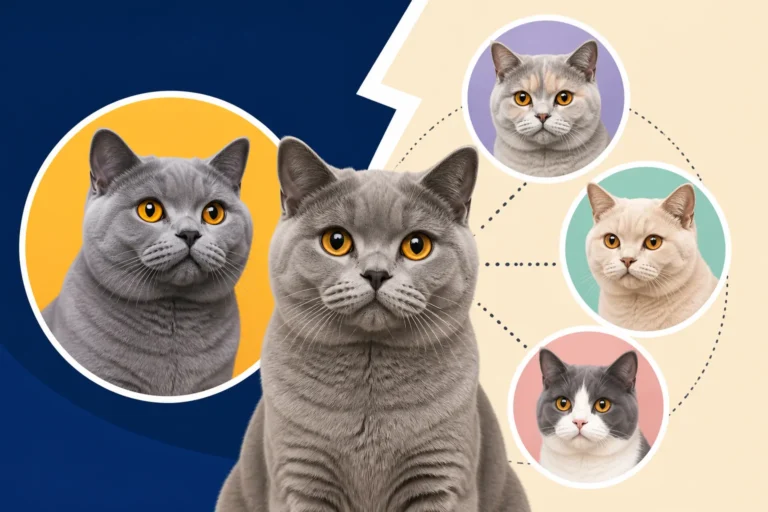
Harrison Weir described his champion as a magnificent example of the domestic shorthair, praised for her immense size, strength, and remarkable composure. She was a "Blue" British Shorthair, a colour that would quickly become synonymous with the breed and remains incredibly popular today. Her coat was thick and plush, standing away from her body, a hallmark of the British Shorthair's unique texture. Her eyes were a deep, rich copper, complementing her blue fur perfectly and adding to her captivating presence. She possessed the distinctive round head and full cheeks that contribute to the breed's endearing "teddy bear" look.
Beyond her striking physical attributes, her temperament was equally noteworthy. For a cat to win such a prestigious award at a crowded and potentially stressful event like a cat show, she would have needed a calm, steady disposition. British Shorthairs are renowned for their placid and easygoing nature, and Weir's champion likely embodied this trait, allowing her to confidently display her charms to judges and the public alike. This combination of physical beauty and serene character helped to cement the desirable traits that breeders would strive for in generations to come.
The Impact of That First Win on the British Shorthair Breed
The victory of Harrison Weir's 14-month-old British Shorthair at the 1871 Crystal Palace show was not just a personal triumph; it was a monumental event that irrevocably altered the course of cat breeding and laid the essential foundation for the British Shorthair breed as we know it today.
Shaping the Breed Standard
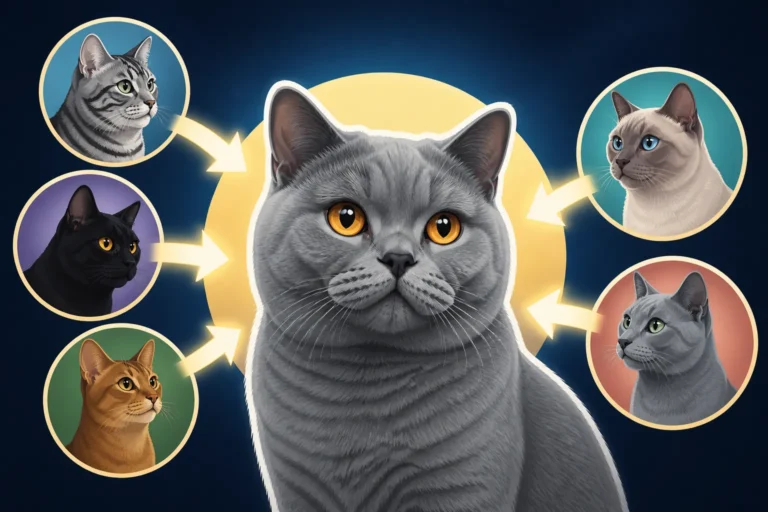
Harrison Weir's champion provided a tangible, living example of his vision for the ideal British Shorthair. Prior to this, the "British Shorthair" was more of a concept—a collection of desirable traits found in native British cats. Her win, and Weir's subsequent writings and advocacy, began the process of formalizing these traits into a definitive breed standard. This standard outlined the desired physical characteristics, from the cobby body and broad chest to the round head, full cheeks, and short, dense coat. It provided a blueprint for breeders, offering clear goals for selective breeding.
This initial standard, heavily influenced by his winning cat, became the guiding principle for early British Shorthair breeders. They now had a reference point, a collective understanding of what constituted a "good" example of the breed. This standardization was critical in preventing the breed from fragmenting into disparate types and ensured a consistent development path. Over time, as more cats were bred and shown, the standard would be refined, but its core tenets were established by that groundbreaking first winner.
Popularizing the British Shorthair
Winning Best in Show at the very first cat exhibition immediately put the British Shorthair, or at least Weir's interpretation of it, into the public consciousness. People who attended the show, or read about it in the newspapers, were introduced to the idea of a distinct British cat breed that was worthy of admiration and cultivation. The publicity surrounding the event helped to popularize the British Shorthair, drawing attention to its unique charm and solid build. Suddenly, the common domestic cat was elevated to a position of prestige.
This newfound popularity sparked an interest in breeding and owning these sturdy, good-natured cats. Owners wanted their own "teddy bear" cat, and the demand for British Shorthairs began to grow. This surge in interest was crucial for the breed's survival and development, as it encouraged more people to participate in the nascent cat fancy and contribute to the breed's genetic pool. Without that early recognition and the resulting public interest, the British Shorthair might have remained an unrecognized "landrace" of cat, rather than evolving into one of the world's most beloved breeds.
Establishing a Foundation for Future Breeding
The success of Weir's cat validated his entire endeavor and provided tangible proof that organized cat breeding could work. It served as a powerful incentive for others to join the cat fancy, to start their own catteries, and to continue the work of developing and refining cat breeds. The show proved that there was public appetite and scientific merit in such an undertaking. The careful selection and breeding principles championed by Weir, and demonstrated through his own winning cat, became the foundation upon which the entire world of pedigree cat breeding was built.
| Characteristic | Description (Harrison Weir's Ideal) | Importance to Breed Development |
|---|---|---|
| Age of Winner | 14 months old | Demonstrated early type recognition and breeding consistency. |
| Coat | Dense, short, plush, standing away from body | Defined iconic British Shorthair texture, emphasized robust nature. |
| Head Shape | Large, broad, round, full cheeks | Established the "teddy bear" look, critical for breed recognition. |
| Body Type | Cobby, sturdy, broad chest, short legs | Highlighted strength and resilience of the native British cat. |
| Color | Blue | Became the quintessential British Shorthair color, synonymous with the breed. |
| Temperament | Calm, composed, dignified | Set the standard for the breed's gentle, easygoing nature. |
The first show and its champion laid the groundwork for cat registries, formal pedigrees, and the long-term health and welfare considerations that define responsible breeding today. It was the spark that ignited the entire British cat fancy and subsequently influenced cat breeding worldwide. How Crystal Palace Changed British Shorthair Breeding delves deeper into these transformative effects.
From Victorian Show Cat to Modern Companion
The journey of the British Shorthair from Harrison Weir's champion to the beloved companions we share our homes with today is a fascinating evolution, marked by advancements in care, standards, and accessibility.
The Evolution of Care and Standards
In the Victorian era, cat care was rudimentary compared to today's sophisticated approaches. While Weir's cat was undoubtedly well-cared for, modern understanding of feline nutrition, veterinary medicine, and environmental enrichment has progressed immensely. Today, British Shorthairs benefit from specialized diets, routine vaccinations, advanced diagnostics, and a wealth of knowledge about their specific health needs. For instance, concerns like Obesity Is the British Shorthair's Real Disease and HCM in a British Shorthair Has No DNA Test are now extensively studied and managed through preventative care, targeted diets, and regular veterinary check-ups.
Breed standards themselves have also evolved, becoming more detailed and precise while still honoring the original vision. Breeders today adhere to rigorous guidelines set by international cat registries, ensuring genetic health, conformation, and temperament are maintained and improved. This means that while Harrison Weir's champion provided the initial template, modern British Shorthairs are the product of over a century of careful, dedicated breeding, resulting in the consistent, healthy, and beautiful cats we adore.
Accessing British Shorthair Information and Supplies Today
Unlike Harrison Weir's era, when information was scarce and specialized supplies non-existent, today's British Shorthair owners have unparalleled access to resources. Whether you're researching potential breeders, seeking advice on diet, or looking for specific grooming tools for that dense coat, a wealth of knowledge is literally at your fingertips. Online communities, breed-specific forums, and official registry websites provide a constant stream of information and support.
For practical needs, everything from high-quality, breed-appropriate food to enrichment toys and grooming essentials can be easily sourced. Reputable online retailers, such as Chewy, offer a vast selection of products tailored to a British Shorthair's needs, often with detailed descriptions and customer reviews to guide purchasing decisions. This accessibility ensures that new and experienced owners alike can provide the best possible care for their feline companions, a luxury Harrison Weir could only have dreamed of. You can find specialized diets formulated for maintaining a healthy weight for British Shorthairs, or even durable scratching posts and activity centers, all readily available through platforms like Chewy, making it simpler than ever to cater to your British Shorthair's every need.
Celebrating the Enduring Appeal
The 14-month-old British Shorthair that won Harrison Weir's heart and the first Best in Show ribbon sparked a phenomenon. Her victory was the opening chapter in a story that continues to unfold, demonstrating the enduring appeal of this magnificent breed. From her humble beginnings as a representative of the common British domestic cat, she set the stage for the British Shorthair to become a symbol of quiet dignity, strength, and charm. Today, the British Shorthair is celebrated globally, cherished for its calm temperament, distinctive teddy bear appearance, and loyal companionship.
We carry forward the legacy of Harrison Weir's vision with every British Shorthair we welcome into our homes. The commitment to maintaining the breed's health, temperament, and beauty continues, building upon the foundation laid by that pioneering cat at Crystal Palace. It’s a testament to the power of a single individual's passion and the undeniable charisma of a particular feline that a 14-month-old cat from 1871 still influences our appreciation and understanding of the British Shorthair breed today. Whether seeking premium food or a new cat tree for your chunky companion, resources like Chewy play a role in supporting the modern British Shorthair owner in providing top-tier care, bridging the gap between historical origins and contemporary needs.
Disclaimer
This article is for general informational purposes only and does not constitute professional advice. Laws, prices and regulations vary by location and change over time. Consult a qualified professional for guidance on your specific situation.