Whether a Shelter Cat Can Be a British Shorthair
A shelter cat can be a British Shorthair, but a round face, plush coat, and sturdy body cannot prove pedigree on their own. Those features also appear in domestic shorthairs and mixed-breed cats. This guide explains what “British Shorthair” can mean in a rescue listing, how to assess the evidence, and what to ask before adopting.
What It Means for a Shelter Cat to Be a British Shorthair
Pedigree, appearance, and breed influence are not the same thing
A cat may be described as a British Shorthair for different reasons. In the strictest sense, a pedigree British Shorthair has documented ancestry recorded through a recognized cat registry. A shelter may have that documentation if the cat arrived with registration papers or reliable information from a previous owner or breeder.
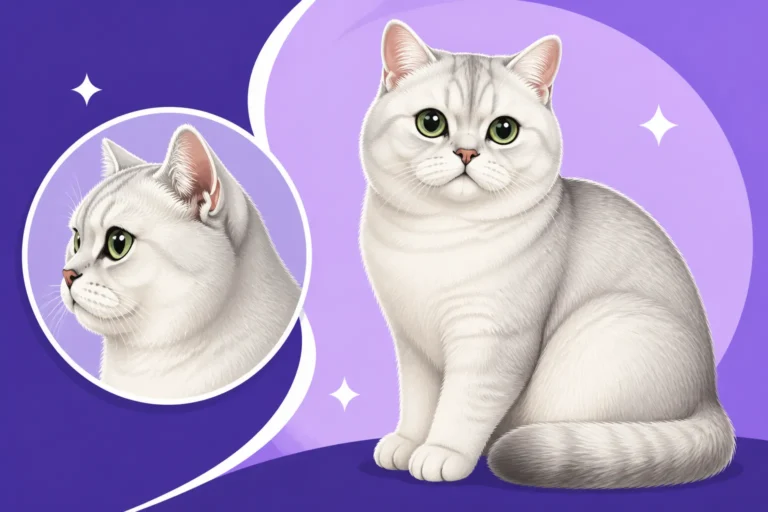
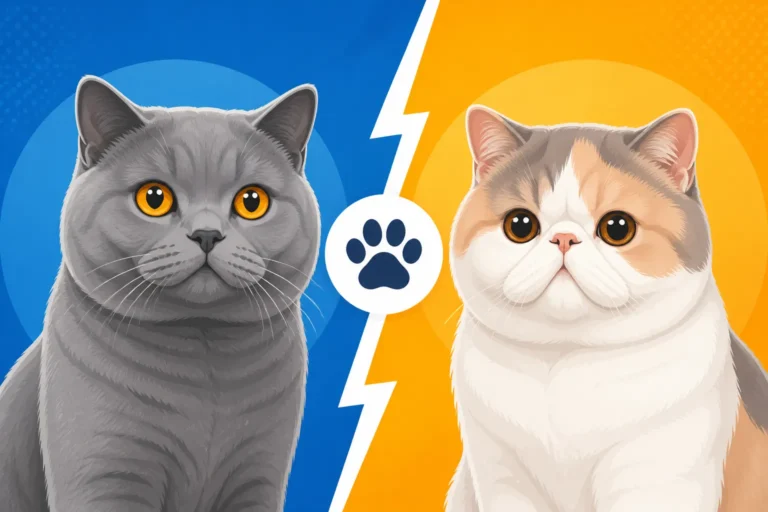
A cat can also look strongly like a British Shorthair without having a known pedigree. A dense coat, round head, full cheeks, broad body, and relatively sturdy legs are associated with the breed, but no single feature—and no combination of visible features—confirms ancestry. Domestic shorthairs come in a wide range of shapes and coat textures, and mixed-breed cats can inherit traits that resemble a particular purebred.
There is also a middle ground: a cat may have a British Shorthair parent or more distant breed influence, but no papers to establish a full pedigree. In everyday conversation, people might call that cat a “British Shorthair mix.” That description may be plausible, but it remains an estimate unless there is dependable family history.
This distinction matters most when someone is choosing a companion rather than buying a registered show cat. A shelter cat’s personality, health, and fit with your home are usually more useful adoption considerations than whether its ancestry can be proven. For more on the difference between resemblance and identity, see How to Tell a British Shorthair From a Moggy and Whether a DNA Test Confirms a British Shorthair.
Why shelter records may not confirm a breed
Rescue organizations often work with incomplete histories. A cat may arrive as a stray, be surrendered without paperwork, or come from a household that knew the cat only by its appearance. Shelter staff may use a breed label to describe what a cat seems to resemble, not to certify its lineage.
That does not mean staff are being careless. Breed labels can help adopters picture a cat, and shelters usually have limited information about an animal’s earlier life. But a label such as “British Shorthair” on an online profile may be an appearance-based guess unless the listing explains how the breed was established.
If the cat was surrendered by an owner, ask whether the previous owner provided registration documents, breeder contact information, or a medical history that names the breed. If the cat was found as a stray, ask whether the breed description is simply the shelter’s visual assessment. The answer helps you understand what you know—and what remains uncertain—without diminishing the cat’s value as a companion.
How to Assess a Cat That Looks Like a British Shorthair
Treat physical traits as clues, not proof
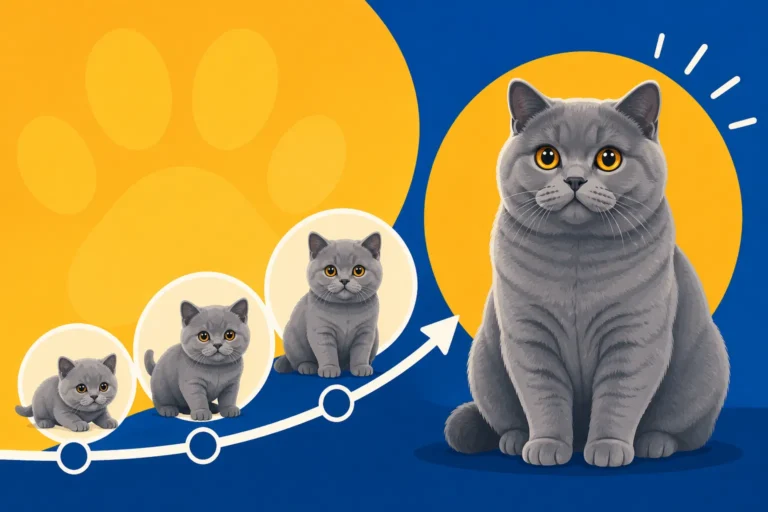
British Shorthairs are often recognized by a compact, substantial build and a dense coat that stands away from the body. Their heads tend to look round, with full cheeks and a short, broad muzzle. The breed comes in many colors and patterns, so a cat does not have to be blue-gray to resemble one. The familiar blue coat is simply the variety many people picture first.
Still, appearance is a weak way to establish ancestry. Shelter cats may be overweight, underweight, young, senior, or recovering from illness, all of which can change how their bodies look. A thick coat can make a cat seem broader than it is, while age or poor condition can make a normally sturdy cat appear lean. Coat color is not a reliable breed marker either. A blue-gray cat is not automatically a British Shorthair, and a cat of another color is not automatically ruled out.
Think of the physical resemblance as a starting point for questions, not a verdict. If a shelter listing says “British Shorthair mix,” you can reasonably ask what led to that description. The answer may be “the previous owner reported it,” “papers were provided,” or “the cat has a similar build and coat.” Those answers represent very different levels of evidence.
For context on the traits people commonly associate with the breed, read The Round Head and Copper Eye a British Shorthair Is Judged On, A British Shorthair Comes in More Colors Than You Think, and What a British Shorthair Weighs and How Big It Gets. Breed-standard appearance can help explain why a cat looks familiar, but it cannot replace reliable ancestry records.
What DNA tests can and cannot tell you
A commercial cat DNA test may offer information about genetic ancestry or inherited traits, depending on the test. It should not be treated as a substitute for pedigree registration. A DNA result may suggest that a cat shares ancestry with a breed, but it cannot necessarily establish that the cat is a registered, purebred British Shorthair.
Different testing services may also analyze and describe ancestry in different ways. If you are considering a test, read what the specific service says it can determine, what its results mean, and whether it is intended for ancestry, health traits, or both. Do not assume a test can provide a definitive breed certificate just because it returns a breed-related estimate.
For most adopters, paying for a DNA test is optional. If your main concern is whether the cat will be affectionate, active, comfortable with children, or suitable for a particular home, spending time with the cat and asking the shelter about observed behavior will usually help more. If your concern is inherited health risk, discuss the cat’s history and any symptoms with a veterinarian rather than relying on a breed guess alone.
| Evidence available | What it can reasonably tell you | What it cannot establish by itself |
|---|---|---|
| Registration papers with verifiable details | A documented pedigree, if the records are authentic and match the cat | The cat’s current health or temperament |
| Previous owner’s account | Possible breed history and useful background | Pedigree, unless supported by records |
| Shelter’s visual description | Which physical traits staff think the cat resembles | Purebred status or ancestry |
| DNA ancestry estimate | Genetic similarities identified by that particular test | Automatic registry recognition or a complete family tree |
| Veterinary examination | Current health findings and care needs | Breed identity based on appearance alone |
Questions to Ask Before Adopting
Clarify what the breed label is based on
A simple, friendly question can clear up most confusion: “Do you know whether this cat has pedigree papers, or is British Shorthair the shelter’s best guess based on appearance?” It gives staff room to explain what they know without putting them on the defensive.
If the cat came from a previous home, ask whether any documents, breeder details, vaccination records, or veterinary notes came with it. If papers are mentioned, ask whether you can review them and whether the cat’s identifying details match. A pedigree document is most useful when it can be connected confidently to the individual cat, rather than being a paper that merely names a breed.
Ask about the cat as an individual, too. How does it respond to visitors? Has it lived with other cats, dogs, or children? Does it enjoy being handled, or does it prefer sitting nearby? These details are more predictive of everyday life than a breed label. Many prospective adopters picture a plush, calm British Shorthair and expect a particular temperament, but individual cats can differ widely. What a British Shorthair's Temperament Is Really Like offers a useful reminder that breed tendencies are not guarantees.
Focus on health and fit, not an uncertain label
Ask what the shelter knows about the cat’s medical history, including veterinary examinations, vaccinations, parasite care, dental concerns, medications, and any ongoing symptoms. If the cat is described as a British Shorthair but has no reliable pedigree, it is sensible to treat that as unconfirmed background rather than assuming specific breed-related risks are present or absent.
Before adoption, ask whether the shelter has noticed changes in appetite, energy, breathing, mobility, coat condition, or litter-box habits. If anything concerns you, arrange a veterinary examination and bring along the shelter’s records. A vet can assess the cat’s current condition and recommend appropriate follow-up. Breed identity cannot replace that individual evaluation.
Consider the practical setup the cat will need once home: a secure carrier, suitable food, a quiet place to settle, and a litter area that is easy to reach. If you are preparing a first supply list, retailers such as Chewy may be one place to compare routine pet-care essentials; check that any food or other item matches the shelter’s instructions and the cat’s needs. The important point is not to buy supplies based on a presumed breed, but to make the transition comfortable and follow the advice given by the rescue and your veterinarian.
Adopting the Cat You Actually Meet
Let behavior and household compatibility guide you
Imagine meeting two cats at a shelter. One has the rounded face and dense coat you associate with a British Shorthair, but hides throughout the visit. Another looks more like an ordinary domestic shorthair and calmly approaches, then settles near you. Neither reaction tells the whole story—stress can change behavior—but the second cat’s appearance should not be dismissed just because it lacks a breed label.
Spend time asking staff how each cat behaves outside the adoption room. Some cats need time to warm up, especially after a move or a period of uncertainty. A shy first meeting does not automatically mean a poor fit, just as a friendly greeting does not guarantee the cat will enjoy every kind of handling. Take into account your home’s noise level, other pets, children, and how much time you can give a new arrival to settle.
If you have your heart set on a particular personality, be honest about that preference while staying flexible about breed. People are often drawn to British Shorthairs because they like the cat’s solid, teddy-bear appearance or expect a calm companion. But a rescue cat’s individual history and temperament matter more than a visual match to a breed description. For a broader look at the breed’s background and traits, see What People Get Wrong About the British Shorthair.
Give a newly adopted cat time to settle
A shelter cat may need a quiet room at first, with food, water, a litter box, a resting spot, and somewhere to hide. Let the cat explore at its own pace rather than carrying it around to introduce it to every room and person on the first day. A relaxed, gradual introduction gives you a better chance to see the cat’s normal habits once the stress of moving begins to ease.
Keep the first few days predictable. Offer the food the shelter has been using if possible, and ask before making a sudden diet change. Sit nearby without insisting on contact. Some cats seek attention quickly; others may need several days or longer before they come out confidently. That adjustment period says little about whether the cat is a British Shorthair and a great deal about how it is coping with change.
If the cat’s coat, build, or face prompted the breed question, you can still enjoy those features without needing a definitive label. Whether the cat is a documented pedigree, a possible mix, or a domestic shorthair with a familiar look, adoption is about welcoming the individual animal in front of you. The most dependable match is one whose needs and temperament fit your household—not one whose appearance happens to fit a breed description.
Disclaimer
This article is for general informational purposes only and does not constitute professional advice. Laws, prices and regulations vary by location and change over time. Consult a qualified professional for guidance on your specific situation.