How a British Shorthair Differs From an Exotic Shorthair
A British Shorthair and an Exotic Shorthair can look remarkably alike at first glance: both are round-faced, sturdy cats with dense, plush coats. The differences become clearer in their faces, grooming needs, movement, and typical social style. This guide explains what to look for—and what those distinctions may mean when choosing a cat or caring for one.
The clearest differences between the two breeds
Face shape and breathing
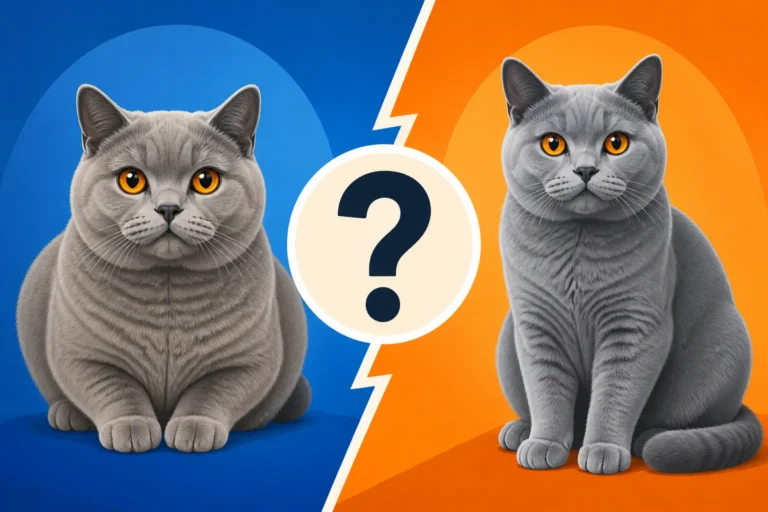
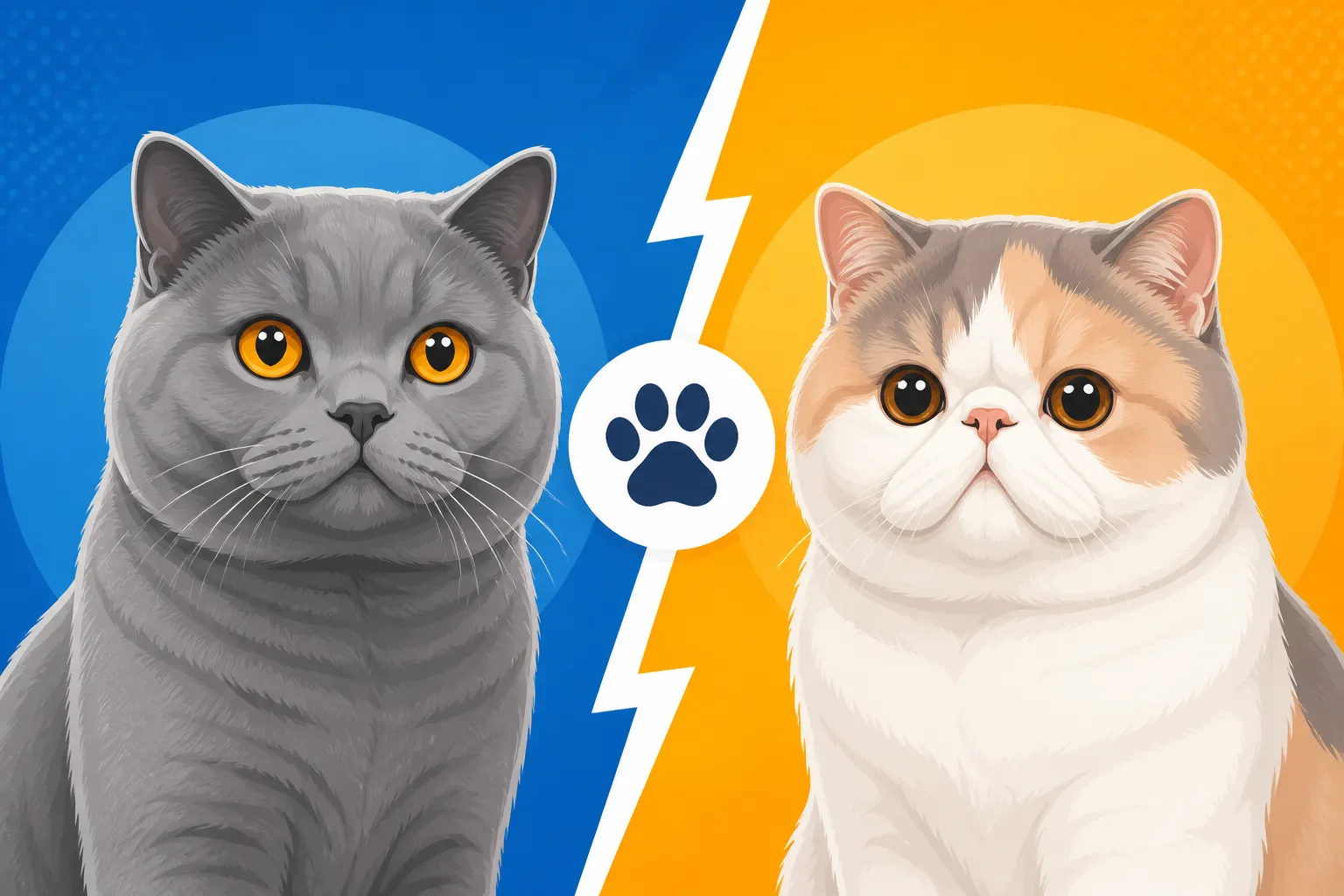
The most noticeable difference is often the face. A British Shorthair generally has a rounded head, full cheeks, and a short nose, but the nose should still have a visible bridge and the face should not look extremely flat. An Exotic Shorthair is a shorthaired Persian, so its face may be much flatter, with a shorter muzzle and a more pronounced transition between forehead and nose.
That distinction is more than a matter of appearance. A very short muzzle can be associated with noisy breathing, reduced tolerance for heat or exertion, and difficulty keeping the eyes and face clean. Not every Exotic Shorthair has these problems, and an individual cat’s health matters more than its breed label, but it is sensible to observe how a cat breathes while resting and after gentle play.
British Shorthairs can have round, expressive faces too, which is why photographs sometimes make the breeds hard to tell apart. For a closer look at breed type, compare the head and profile rather than relying on a single front-facing photo. What Shape a British Shorthair's Head Should Be explains the British Shorthair’s facial structure in more detail.
Body shape, coat, and overall impression
Both breeds are compact and solid-looking, but a British Shorthair usually has a broad, substantial body with a deep chest and sturdy legs. Its coat stands away from the body, giving the cat a rounded, almost teddy-bear outline. The look is dense and plush, but the coat should not be mistaken for a long-haired coat.
The Exotic Shorthair also has a thick, plush coat, and its body can look similarly rounded. Its face tends to dominate the impression: the flattened profile and large, round eyes often make it look more like a shorthaired Persian. A British Shorthair’s expression is usually less extreme, with a more defined muzzle and a broad, rounded head.
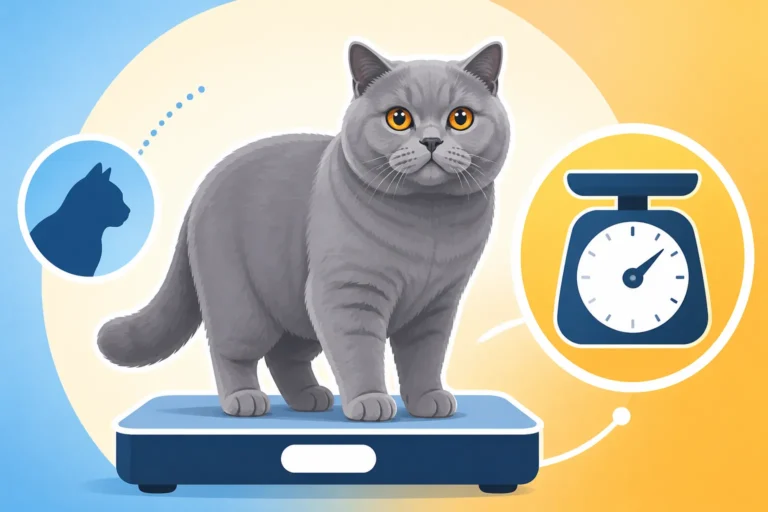
Size alone is not a dependable way to identify either breed. A well-built British Shorthair may look heavier than a cat of similar weight because of its broad frame and dense coat. Body condition, age, sex, and individual build all matter. How Much a British Shorthair Weighs offers more context about size and why a scale reading cannot tell the whole story.
| Feature | British Shorthair | Exotic Shorthair |
|---|---|---|
| Face | Rounded, with a visible muzzle and nose bridge | Often flatter, with a shorter muzzle |
| Coat | Dense and short, often standing away from the body | Short and plush, associated with Persian ancestry |
| Build | Broad, sturdy, and muscular-looking | Compact and substantial, with variation between individuals |
| Grooming focus | Regular combing, especially during shedding | Regular combing plus attention to facial folds and eye discharge when present |
| Common visual clue | Round cheeks and a distinct muzzle | Flat profile and a very short nose |
| Important health consideration | Maintain healthy weight and discuss breed-appropriate screening with a vet | Pay attention to breathing, eyes, skin folds, and ability to cope with heat |
These are general breed tendencies, not a diagnosis or a promise about an individual cat. Pedigree, breeding choices, health history, and daily care can all affect what a particular cat looks and acts like.
Coat care and everyday maintenance
Shorthaired does not mean no grooming
Neither cat is a “wash-and-forget” pet. Both have dense coats that can hold loose undercoat, particularly during seasonal shedding. A gentle comb can lift dead hair and help you notice flakes, tangles, or skin irritation before they become harder to manage. The British Shorthair’s coat has a distinctive dense texture, which is part of why routine combing is useful even when the coat looks tidy. What a British Shorthair's Coat Is Like describes that texture more fully.
For a British Shorthair, a brief combing session on a regular schedule is often easier than waiting until loose fur is everywhere. During heavier shedding, you may need to comb more frequently. Keep the session calm and short at first: a few strokes, a pause, and a treat can build a better association than trying to comb the whole cat in one go.
An Exotic Shorthair may also need regular combing despite having short fur. The coat can be dense, and individual cats vary in how much loose hair they shed or tolerate grooming. If the cat has facial folds, check them gently for moisture or debris, and ask a veterinarian how to care for them if irritation or an odor develops. For more on routine coat care, see How Often a British Shorthair Needs Combing.
Eye and face care
A flatter face can make eye care more noticeable in some Exotic Shorthairs. Tear staining or discharge may collect around the eyes, and facial folds can need gentle monitoring. Use a clean, soft cloth or a product recommended by your veterinarian; avoid putting household cleaners or unapproved drops near the eyes. Persistent discharge, squinting, redness, or a change in the eye’s appearance deserves veterinary attention rather than repeated wiping alone.
British Shorthairs may have watery eyes too, but their less flattened facial structure generally means facial cleaning is not as defining a part of routine care. Any cat can develop eye irritation or infection, so the practical rule is to notice what is normal for your own cat. A sudden change is more important than whether a little clear moisture appears occasionally.
If you are buying grooming supplies, choose tools suited to the cat’s coat and comfort rather than buying a large collection at once. A local pet shop or Chewy may be convenient for comparing basic combs and cloths, but ask your veterinarian before using a medicated product or anything intended to treat skin or eye problems.
Weight, feeding, and movement
Both breeds can have a sturdy, rounded appearance, which makes it easy to mistake excess weight for simply being “built that way.” A thick coat can also hide the waist. Check body condition by looking from above and gently feeling along the ribs; if you are unsure, ask your vet to assess your cat and recommend a feeding plan.
British Shorthairs are often calm, but a quiet temperament does not remove the need for daily activity. Short, low-pressure play sessions, food puzzles, and toys rotated over time can help encourage movement. An Exotic Shorthair may also enjoy gentle play, though energy and play preferences vary widely from cat to cat. Avoid pushing either cat to exercise in a way that causes distress or labored breathing.
Measure meals rather than estimating from a bowl, especially if your cat is gaining weight. Chewy and other pet retailers can be a source of portion scoops or puzzle feeders, but feeding amounts should be guided by the food’s instructions and your veterinarian’s advice. For broader breed-specific context, Obesity Is the British Shorthair's Real Disease explains why weight management deserves steady attention.
Temperament and household fit
Affection does not always mean lap-sitting
British Shorthairs are often described as affectionate but self-contained. Many like to be in the same room as their people, follow household routines, or settle nearby without wanting to be carried or held for long. An owner who expects a cat to spend every evening in their lap may be surprised by a British Shorthair that chooses the next chair instead.
Exotic Shorthairs are also often easygoing, and some are notably people-oriented. Their Persian background is commonly associated with a quieter, relaxed style, but no breed description can guarantee a particular cat’s personality. Socialization, past experiences, age, and the home environment shape how a cat responds to handling and company.
When meeting a cat, notice its behavior rather than relying only on a breeder’s or shelter’s description. Does it approach voluntarily? Does it relax after a few minutes? Can it move away when it has had enough? Those small observations can tell you more about day-to-day compatibility than a label such as “cuddly” or “calm.” How Affectionate a British Shorthair Is explores the difference between showing affection and wanting constant contact.
Quiet does not mean inactive or low-maintenance
Both breeds may be quieter than highly vocal cats, but a quiet cat still needs play, companionship, litter-box care, and regular health checks. A British Shorthair may prefer a predictable routine and play in short bursts rather than seeking constant entertainment. An Exotic Shorthair may also enjoy a calm household, but it still needs opportunities to explore and move.
Think about your normal day. If you work outside the home, plan for a comfortable resting place, fresh water, a clean litter box, and a little interaction before and after work. If you have children or other pets, supervise early introductions and make sure the cat has quiet places to retreat. A cat that seems “easy” should still be allowed to set its own boundaries.
It can help to keep expectations practical: not every cat will enjoy being picked up, wear a harness, or greet visitors. Give a new cat time to settle before deciding that it is unfriendly or uninterested. What a British Shorthair's Temperament Is Really Like offers a closer look at the breed’s commonly reported social style.
Health, choosing a cat, and making the comparison
Health questions worth asking
A breed name does not replace an individual health history. Ask about the cat’s veterinary care, known conditions in its family, and any screening relevant to its lineage. For a British Shorthair, ask what the breeder or rescue knows about heart health and inherited conditions, and discuss appropriate ongoing care with your veterinarian. Whether the British Shorthair Is a Healthy Breed provides a broader overview of breed health considerations.
For an Exotic Shorthair, ask specifically about breathing, eye health, facial folds, and whether the cat has shown difficulty with heat or activity. Watch the cat breathe when resting. Persistent open-mouth breathing, obvious effort, or noisy breathing should not be dismissed as an adorable breed trait. A veterinarian can assess whether a cat’s facial structure is affecting its comfort.
In either breed, ask for clear records rather than relying on vague assurances that a cat is “healthy.” If you are considering a kitten, notice whether it is alert, clean, and able to move and breathe comfortably. If you are adopting an adult cat, ask about appetite, litter habits, activity, medications, and previous veterinary findings. A transparent history helps you prepare and gives your vet useful context.
How to choose between them
Choose based on the actual cat and the care you are prepared to provide, not just the round face or plush coat. If you prefer a cat with a more defined muzzle and a sturdy, independent presence, a British Shorthair may appeal to you. If you are drawn to the Persian-like face and are comfortable keeping a close eye on breathing and facial care, an Exotic Shorthair may be a fit—provided the individual cat is comfortable and healthy.
Before committing, spend time with the cat if possible. Ask how it responds to grooming, visitors, handling, and ordinary household noise. Find out whether it has lived with children or other pets, and what helps it settle. A quiet first meeting does not necessarily reveal a cat’s full character, so ask for specific examples of its behavior at home.
Whether you choose a kitten or an adult, make sure your household can support the cat’s needs throughout its life. That includes routine veterinary care, coat maintenance, an appropriate diet, play, and a safe indoor environment. If you are still weighing temperament and lifestyle, Whether a British Shorthair Is Right for You can help you think through the fit before deciding.
A practical way to tell them apart
If you are looking at a photograph, start with the profile. A British Shorthair usually has a more visible nose bridge and muzzle, while an Exotic Shorthair often has a flatter face and shorter nose. Then look at the overall outline: the British Shorthair’s coat tends to create a rounded, dense silhouette, while the Exotic’s flatter face often remains the strongest visual clue.
In person, consider comfort as well as appearance. The cat should breathe without obvious struggle, move comfortably, and respond to normal activity in a way that suits its age. A cat’s willingness to play or approach you can vary by personality, so do not make a decision from one brief interaction.
Finally, remember that mixed ancestry, grooming, lighting, and individual variation can make identification uncertain. If registration or pedigree matters to you, ask for documentation and speak with a reputable breeder or relevant registry. If your priority is a healthy companion, clear care records and a comfortable, confident cat matter more than winning a guessing game about breed.
Disclaimer
This article is for general informational purposes only and does not constitute professional advice. Laws, prices and regulations vary by location and change over time. Consult a qualified professional for guidance on your specific situation.