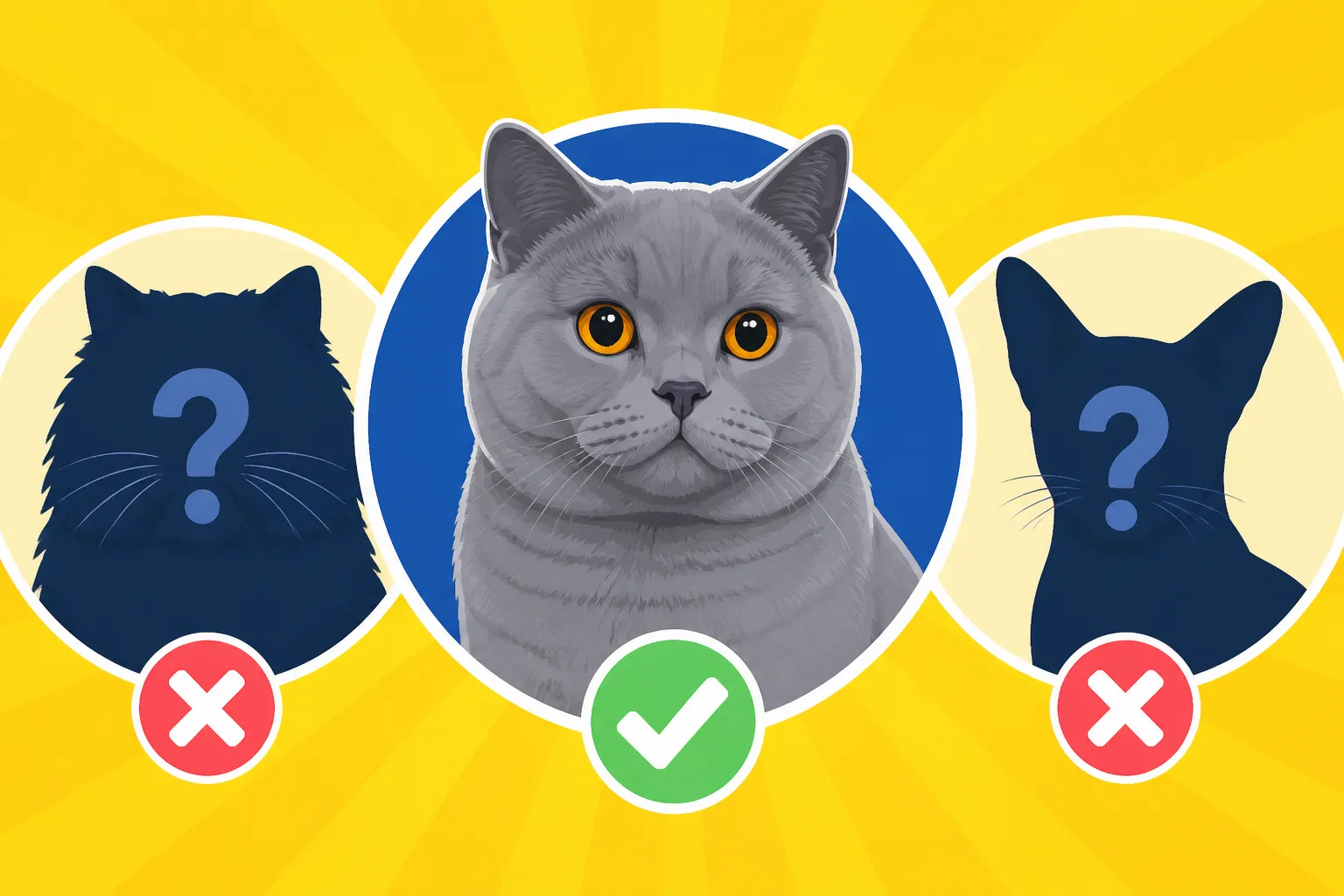
Which Advertising Cat Was a British Shorthair
The advertising cat most often identified as a British Shorthair is the Whiskas cat, usually shown as a silver tabby with a plush coat and round face. The familiar look is a strong breed clue, but an advert may feature different cats over time, and a cat’s appearance alone cannot confirm its pedigree.
The British Shorthair commonly associated with advertising
The Whiskas cat is the best-known example
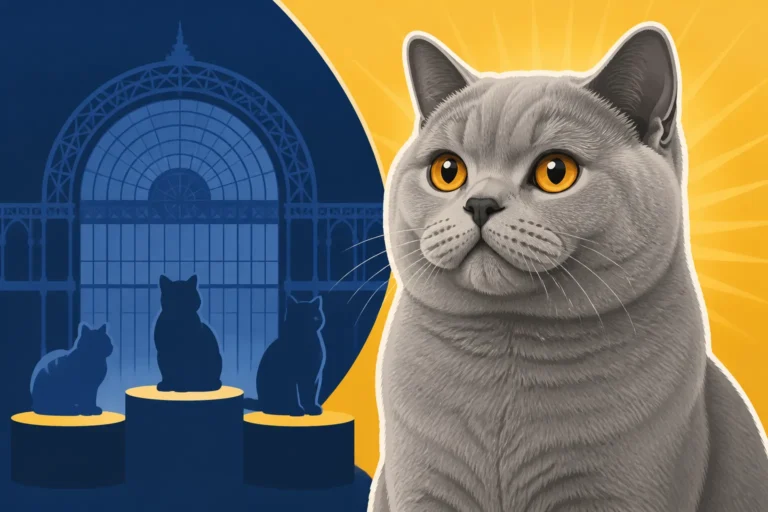
When people ask which advertising cat was a British Shorthair, they are usually thinking of the cat associated with Whiskas adverts. The familiar version is a silver tabby: a short-haired cat with dark markings over a pale silver coat, a sturdy build, a broad face and rounded eyes. Those features are closely associated with the British Shorthair, making the breed a natural fit for a memorable food advert.
There is a small but important distinction, though. “The Whiskas cat” is often used as a shorthand for a recognizable advertising look, not necessarily the name of one specific cat who appeared in every campaign. Commercials change over time, and a brand may cast different cats for different adverts. So it is safer to say that the Whiskas advertising cat is commonly associated with the British Shorthair look than to assume every cat seen in every Whiskas advert was the same individual or a documented pedigree cat.
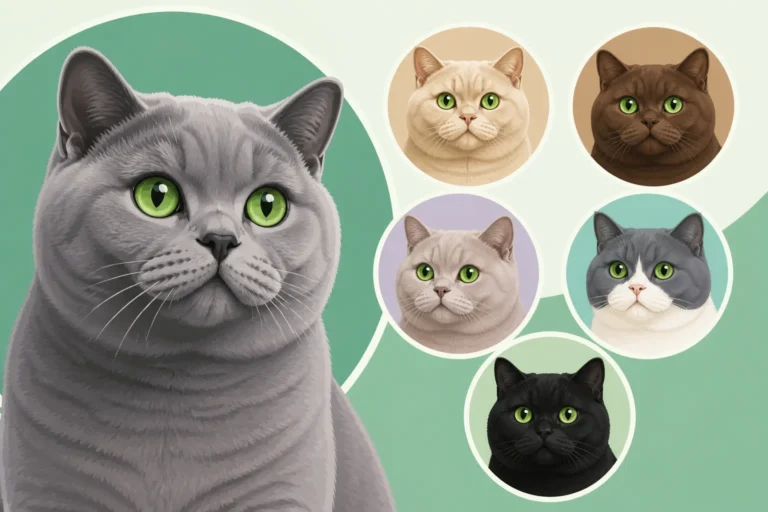
The silver tabby is only one version of the breed. British Shorthairs come in many colours and patterns, even though the solid blue cat is the one many people picture first. If you want to see how varied the breed can be, Which Colors a British Shorthair Comes In is a useful next read. And for the familiar blue look, What a Blue British Shorthair Looks Like explains the features people often recognize in photos and adverts.
Why an advert might choose this breed
A British Shorthair has a distinct, camera-friendly appearance. Its broad head, full cheeks, dense coat and sturdy body make it recognizable even in a short commercial. The breed’s calm, composed expression can also suit an advert that wants a cat to look relaxed beside a bowl of food or settled on a sofa.
That visual appeal does not mean the breed is the only one that can look similar. A mixed-breed cat may have a dense coat, round eyes or a stocky build without being a British Shorthair. Lighting, grooming, camera angle and age can also change how a cat appears on screen. Advertisers typically want a cat that fits the mood and visual concept; the breed may be a consideration, but viewers should not treat a commercial as proof of pedigree.
The British Shorthair’s blue coat is especially familiar in popular culture, which is one reason the breed’s image can feel so instantly recognizable. Why the Blue Is the Best Known British Shorthair looks at how that association became so strong. It also helps explain why viewers may identify a British Shorthair from a single glimpse, even when the advert does not name the cat’s breed.
How to tell an advertising cat from a British Shorthair
Look at several features, not just the coat
A silver tabby pattern by itself does not identify a British Shorthair. Many cats, including domestic shorthairs and cats from other breeds, can have tabby markings. A more useful visual check is to look at the overall combination: a broad, rounded head; full cheeks; small-to-medium ears set apart; a dense, plush-looking short coat; and a solid, substantial body.
Even that combination is only a visual impression. British Shorthairs develop gradually, and kittens may not yet have the broad, mature proportions viewers associate with the adult breed. A cat may also appear heavier or rounder on screen because of its pose, coat volume or camera framing. The breed’s body shape can be easy to misread, so Why a British Shorthair Looks Heavier Than It Is offers helpful context for understanding that sturdy outline.
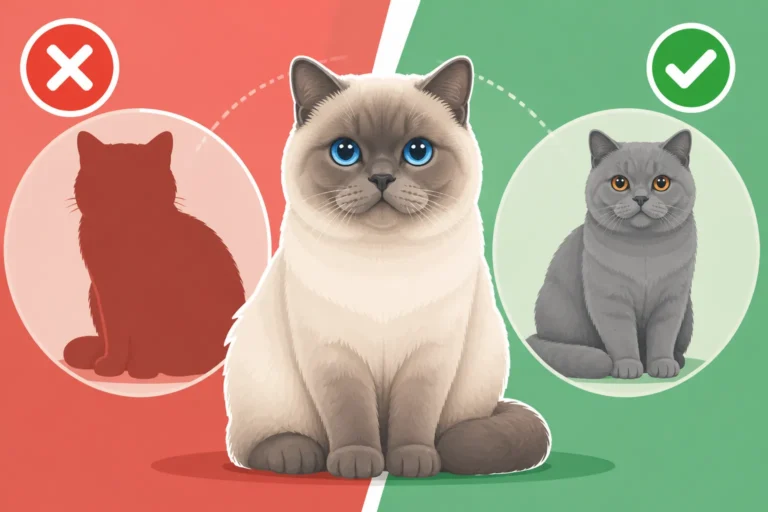
Compare the cat with other breeds before settling on an identification. A Chartreux, for instance, may also have a blue-gray coat and a substantial build, while a domestic cat can share some of the same features. How a British Shorthair Differs From a Chartreux describes some of the distinctions, and How to Tell a British Shorthair From a Moggy is useful when a cat looks like the breed but has no clear pedigree information.
| What you notice in an advert | Why it may suggest a British Shorthair | Why it is not conclusive |
|---|---|---|
| Silver tabby coat | A familiar pattern associated with some British Shorthairs | Tabby markings occur in many cats |
| Round face and full cheeks | Common features of the breed’s recognizable head shape | Other cats can have rounded faces too |
| Dense, short-looking coat | British Shorthairs are known for a plush coat | Coat appearance can vary with lighting, grooming and age |
| Stocky body | The breed has a sturdy, substantial build | A pose or camera angle can make a cat look larger |
| Calm expression | Fits the breed’s popular image | Temperament cannot be established from one advert |
Why a photo or commercial cannot confirm pedigree
A screen appearance can give you clues, but it cannot tell you whether a cat is registered or has documented British Shorthair ancestry. That information comes from reliable records about the cat’s background, not from a round face or a particular coat pattern. Even a close visual match should be treated as “looks like a British Shorthair,” rather than definitive identification.
That distinction matters when you are comparing an advert cat with a pet you have seen in a shelter, online listing or at a breeder’s home. A cat can be lovely and strongly resemble the breed without being a pedigree British Shorthair. If you are trying to understand what breed features are typical, What People Get Wrong About the British Shorthair can help separate familiar stereotypes from useful identification clues.
It is also worth remembering that an advert may not be trying to communicate breed at all. A company may choose a cat for its coat colour, expression, behaviour on set or suitability for a particular scene. The cat’s role is to make the campaign work; viewers may supply a breed label based on appearance afterward.
Other famous advertising cats and lookalikes
Not every memorable cat represents a real breed
People often group famous cats from adverts, packaging and cartoons together, but they may have very different origins. Some are real cats selected for a campaign. Others are illustrated characters or mascots whose appearance is stylized rather than based on one specific animal. A cartoon cat can borrow a round face or plush coat without being intended to represent a pedigree breed.
That is why it helps to ask what “the advertising cat” refers to. If you mean the familiar silver tabby associated with Whiskas, the British Shorthair is the breed most commonly connected with that look. If you mean another food advert, a retailer’s campaign or a mascot, the answer may differ. A brand name alone does not establish a cat’s breed, and a character’s design may not have an official breed identity.
The Whiskas cat is also sometimes confused with other popular British Shorthair images, including the blue cat often linked with the breed in general. These are related associations, but not the same claim: the recognizable Whiskas look is commonly described as a silver tabby, while the blue British Shorthair is the breed’s most widely pictured colour. Whether the Whiskas Cat Was a British Shorthair explores that association more specifically.
How to check a modern advert without guessing
Start by identifying the campaign and the exact cat you saw. If the brand, campaign name or caption names the breed, that is more useful than relying on appearance alone. If no breed is named, look for an official campaign description or interview that discusses the animal. Be cautious with reposted clips and social posts: a confident caption may be a viewer’s guess rather than information from the advertiser.
For example, a cat in a Chewy commercial might look like a British Shorthair because it has a rounded face and a plush coat. Unless the campaign identifies the cat or provides reliable background information, it is better to call it a British Shorthair-looking cat than to state the breed as fact. The same approach applies to adverts from pet-food companies, retailers and other brands, including Chewy: the visual resemblance is a clue, not documentation.
If you are trying to identify an older advert, search using the product or brand name along with details such as “silver tabby cat” or “British Shorthair.” Then check whether the source refers to a particular cat or simply describes the overall look. That can prevent a common mix-up: assuming every similar-looking cat in a brand’s advertising is one famous individual. A Chewy advert, for instance, may feature a cat without offering any public breed information, so the most accurate answer may be that its breed is not specified.
What to remember about the Whiskas cat
A recognizable breed look is not a pedigree record
The short answer is that the Whiskas cat is the advertising cat most often associated with the British Shorthair, especially the silver tabby variety. Its round face, substantial shape and plush coat make the connection understandable. Still, not every cat in every campaign can be assumed to share the same identity, and the appearance of an advertising cat cannot verify its ancestry.
If you are simply curious about the advert, “commonly identified as a British Shorthair” is a fair description of the familiar Whiskas cat. If you are evaluating a real cat, use appearance as a starting point rather than a conclusion. Ask for background and pedigree information where it matters, and remember that a mixed-breed cat can have many of the same charming features.
That distinction also keeps breed identification enjoyable rather than overly rigid. You can recognize the British Shorthair influence in an advert without claiming certainty about an individual cat. The familiar silver tabby image is a memorable piece of the breed’s public identity, but British Shorthairs are much more than one colour, one commercial or one famous-looking face.
Disclaimer
This article is for general informational purposes only and does not constitute professional advice. Laws, prices and regulations vary by location and change over time. Consult a qualified professional for guidance on your specific situation.