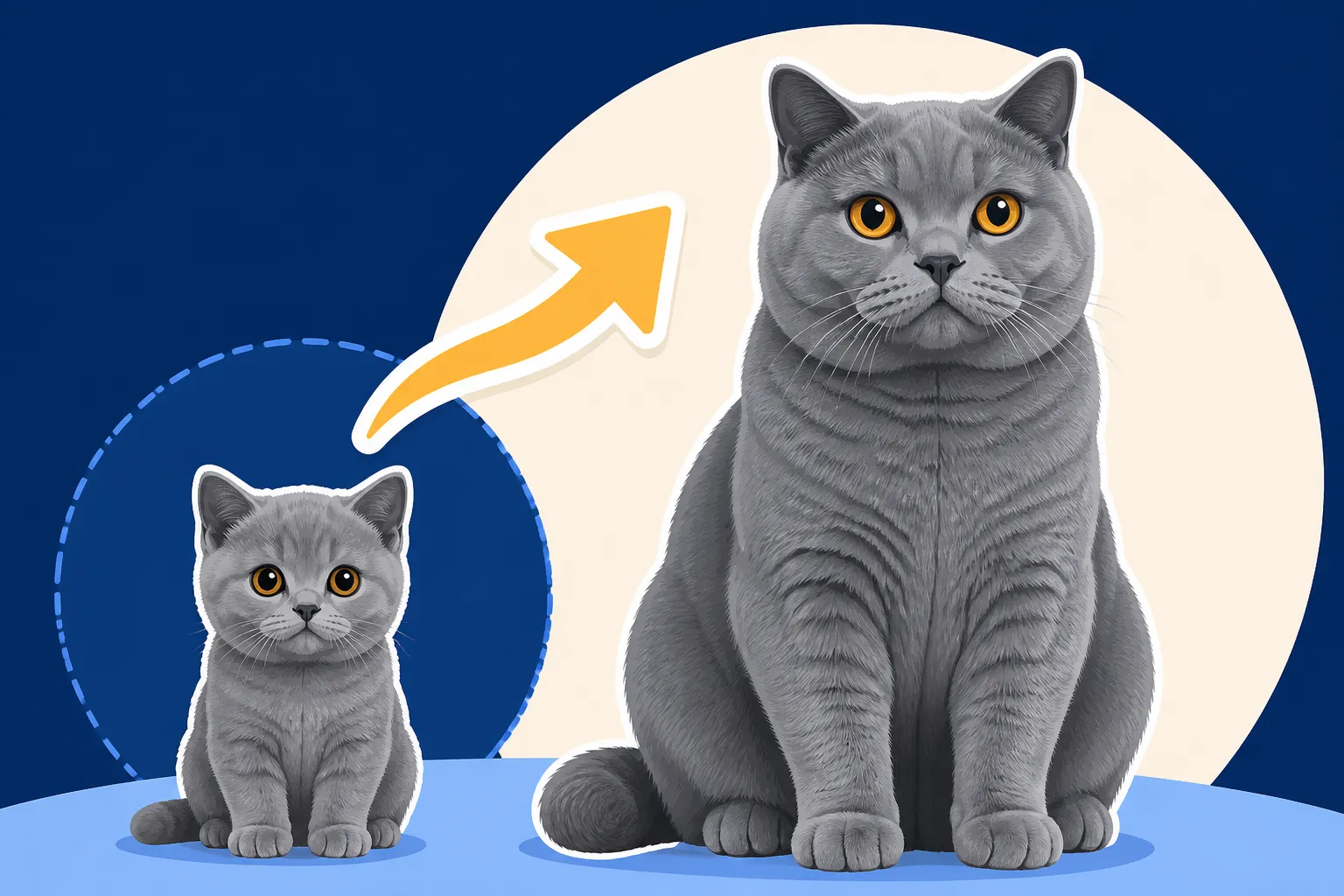
How Big a British Shorthair Gets
It's easy to look at a British Shorthair kitten, a fluffy little ball of pure joy, and imagine they'll simply inflate to their full, magnificent size overnight. But the reality is often a delightful, albeit sometimes surprising, slow burn. Many new owners wonder just how big their beloved British Shorthair will truly get, and what that journey from kittenhood to stately adult looks like. This guide will walk you through the fascinating growth pattern of these wonderful cats, from their initial rapid development to their final, impressive stature.
Understanding the British Shorthair's Growth Trajectory
When you first bring home a British Shorthair kitten, they're often surprisingly compact. Their large eyes and round faces give them that adorable "teddy bear" look, but don't let that fool you into thinking they'll reach their adult bulk quickly. Unlike some other breeds that hit their peak size within a year or so, British Shorthairs are in it for the long haul. Their growth is a marathon, not a sprint, and understanding this can help manage expectations and ensure they develop healthily.
The Myth of Instant Full Size
One of the biggest misconceptions about British Shorthairs is that they stop growing around one year of age, just like many domestic cats. You might hear people talk about their cat being "fully grown" at twelve months, but for a British Shorthair, that's really just the beginning of their adolescent phase. Their skeletal growth might slow down around this time, but their muscle development and "filling out" process continues for quite a while longer. This slow maturation means you get to enjoy their playful, slightly awkward adolescent stage for longer, but it also means patience is key. If you're expecting a massive cat by their first birthday, you might be a little surprised by their relatively moderate size at that point.
The dense, plush coat that makes them so iconic also adds to their perceived size, making even a younger cat look more substantial than they actually are underneath all that fluff. It’s easy to think a cat is larger or heavier than they are when their fur adds such volume. Owners often find themselves gently prodding their cat, trying to discern where the solid muscle ends and the luxurious coat begins, which can be a fun, if sometimes misleading, game. This extended growth period is a hallmark of the breed, a subtle characteristic that sets them apart from many of their feline cousins.
Key Milestones in Development
A British Shorthair's growth isn't linear, and there are several distinct phases you'll observe. From birth to about six months, they experience rapid growth, putting on weight and lengthening quickly. This is when they transition from tiny, helpless kittens to energetic, curious youngsters. By six months, they've usually reached a significant portion of their adult length and height, though they'll still be quite slender compared to their future adult self. You can often see the basic "frame" of their mature body taking shape, but the roundness and heft aren't quite there yet. You might be surprised to see how much they gain in these early months. To track this, some owners regularly check What a British Shorthair Should Weigh at Six Months.
Between six months and one year, the growth rate starts to taper off, but they continue to gain size and muscle. Their kitten-like energy might start to mellow a bit, and they begin to fill out more, though still not reaching their full breadth. After their first birthday, and often continuing well into their third, fourth, or even fifth year, they enter what breeders often call the "filling out" phase. This is where they gain the characteristic density, muscle tone, and width that makes the British Shorthair so distinctive. Their jowls, especially in males, will start to develop, giving them that wonderfully broad, "grumpy cat" expression. Knowing When a British Shorthair Reaches Full Size helps to understand this extended timeline.
Average Size and Weight for British Shorthairs
When people imagine a British Shorthair, they often picture a substantial, sturdy cat, and for good reason! These felines are indeed a medium to large breed, known for their powerful build and impressive heft. However, what constitutes "average" can vary, and it's important to remember that every cat is an individual, even within the breed standard. Their rounded, cobby bodies and dense coats contribute significantly to their overall appearance of size.
Male versus Female British Shorthairs
As with many mammal species, there's a noticeable size difference between male and female British Shorthairs. Males generally tend to be larger and heavier than females, possessing a more robust build and developing more prominent jowls. A fully mature male British Shorthair can typically weigh anywhere from 12 to 18 pounds, sometimes even a bit more if they are particularly large and well-built, while still maintaining a healthy body condition. Their broader heads and thicker necks also add to their imposing presence. If you're considering a male, it's helpful to understand How Much a Male British Shorthair Should Weigh to gauge healthy development.
Female British Shorthairs, while still solid and substantial, are usually a bit daintier than their male counterparts. They typically weigh between 9 to 14 pounds when fully grown. While they also have a rounded, sturdy appearance, their bone structure is generally finer, and they rarely develop the pronounced jowls seen in males. However, a large female can sometimes rival a smaller male in weight, so these are guidelines rather than strict rules. Knowing How Much a Female British Shorthair Should Weigh can provide valuable insights for monitoring your girl's health. Both sexes share the breed's characteristic dense coat, which can make them appear heavier than their actual scale weight suggests.
The "Cobby" Body Type Explained
The term "cobby" is frequently used in the cat fancy to describe the British Shorthair's distinctive body type, and it's a crucial aspect of understanding their size. A cobby cat has a short, thick, and muscular body. Imagine a brick or a sturdy barrel, but with legs – that's the general impression. Their chests are broad, their shoulders and hips are powerful, and their legs are short and strong, perfectly proportioned to support their substantial frame. This build contributes to their low-slung, powerful appearance, making them look very grounded and substantial. It's not just about length or height; it's about sheer density and breadth.
Their incredibly dense, plush coat further accentuates this cobby body type. The fur stands away from their body, adding an optical illusion of even more bulk. This isn't a lanky cat with long legs and a slim torso; it's a compact powerhouse built for strength rather than agility. When you pick up a British Shorthair, you immediately feel their surprising weight and solidity, a testament to their cobby structure. This dense build is why sometimes it's hard to tell Why a British Shorthair Looks Heavier Than It Is, and it contributes to the perception of What Cobby Means in a British Shorthair. It's a key part of their charm and why they truly embody the "teddy bear" cat image.
Factors Influencing a British Shorthair's Final Size
While the British Shorthair breed standard sets out clear expectations for their sturdy build and impressive size, individual cats can still vary within these parameters. It's not just about being a British Shorthair; a combination of nature and nurture plays a significant role in determining how big your specific feline companion will ultimately become. Understanding these influences can help you appreciate the unique development of your cat.
Genetics and Lineage
Just like in humans, genetics are a primary determinant of a British Shorthair's final size. The size of your kitten's parents and their lineage will offer the best clue as to how large your cat might grow. If both parents are exceptionally large and robust, there's a higher probability that their offspring will inherit those genes and grow to be on the larger side of the breed standard. Conversely, if the parents are smaller, their kittens may also be more modestly sized. This genetic blueprint lays the foundation for their potential.
Furthermore, the breed's history itself plays a role. The British Shorthair was revitalized after two World Wars through outcrossing with other breeds, including Persians, to re-establish its numbers and type. This infusion of Persian genes contributed to the breed's cobby body, dense coat, and rounded head, all of which lend to its substantial appearance. While those outcrosses are now many generations back, the foundational genetics for their impressive size and robust build are deeply ingrained in the breed's heritage. A responsible breeder will often share information about the size of a kitten's parents, which can be a valuable indicator.
Nutrition and Environment
Even with the best genetics, proper nutrition is absolutely critical for a British Shorthair to reach its full size potential in a healthy way. Kittens require a diet rich in protein and appropriate fats to support their rapid development of bones, muscles, and organs. Feeding a high-quality, balanced diet specifically formulated for kittens or all life stages is essential during their intense growth phase. Undernutrition during these crucial early months can potentially stunt growth or lead to compromised health later in life. On the other hand, overfeeding can lead to obesity, which is a serious concern for this breed and can mask true healthy growth. Many owners choose specific brands, available at retailers like Chewy, known for their high-quality ingredients to support optimal development.
Beyond diet, the cat's environment and general health contribute to their development. A stimulating environment that encourages moderate activity can help build strong muscles and maintain a healthy weight. While British Shorthairs aren't known for being exceptionally active, regular play sessions are still important. A cat suffering from chronic illness or parasites may struggle to gain weight and reach their full size. Regular veterinary check-ups are vital to ensure they are free from health issues that could impede healthy growth. Conversely, conditions like Obesity Is the British Shorthair's Real Disease can dramatically alter their body composition in an unhealthy way, making them seem larger due to excess fat rather than muscle and bone.
When a British Shorthair Reaches Full Maturity
Understanding the concept of "full maturity" for a British Shorthair is key, as it's not a single point in time but rather a gradual process that unfolds over several years. Many new owners are surprised by just how long it takes for these magnificent cats to truly "finish" growing and developing into their iconic, stately selves. It requires patience and a keen eye to observe their subtle transformations over time.
Physical Maturity versus Mental Maturity
For British Shorthairs, physical maturity and mental maturity often occur at different rates. Physically, while their rapid growth in height and length typically slows around 12 to 18 months of age, they are far from "done." Their skeletal frame might be largely set, but the process of filling out and achieving their characteristic heft continues for several more years. This means that at two years old, while they might have reached their full height, they will likely still be developing muscle mass and that desirable broadness. Owners often wonder How Long a British Shorthair Takes to Fill Out, and the answer is usually much longer than expected.
Mentally, British Shorthairs tend to remain playful and kitten-like longer than some other breeds, often retaining their youthful curiosity well into their second year. They usually settle into their calm, composed adult temperament around two to three years of age, sometimes even later. This means you might have a physically large cat that still acts like a rambunctious youngster for a surprisingly long time! It's a joy to watch their personalities develop alongside their physical stature, offering a longer period of playful exuberance before they fully embrace their dignified adult demeanor.
The "Filling Out" Phase
The true magic of British Shorthair development often happens after their second birthday, during what is affectionately known as the "filling out" phase. This is when they transition from a somewhat lanky or lean adolescent to the dense, powerful, and truly imposing adult cat we all recognize. During these years, they develop significant muscle tone and bone density, particularly across their chest, shoulders, and hips. Their heads become noticeably broader, and their cheeks fill out, especially in males who will develop those charming, prominent jowls that define the breed's masculine look. Many people adore What a Male British Shorthair's Jowls Are as a sign of a truly mature male.
This filling out can continue all the way up to five years of age, with some cats showing subtle changes even beyond that. This is why it’s so important to track their body condition, not just their weight, to ensure they are gaining healthy muscle and not just fat. Their famously dense coat also reaches its peak plushness during this period, further enhancing their rounded, substantial appearance. By the time they are five, you will truly see the majestic, well-proportioned British Shorthair that is so admired. It's a testament to their slow and steady development.
How to Monitor Your British Shorthair's Growth and Health
Monitoring your British Shorthair's growth isn't just about watching them get bigger; it's about ensuring they grow into a healthy, well-proportioned adult. Given their propensity for robust builds and their rather sedentary nature, it's easy for them to tip the scales from chunky to truly overweight. Regular monitoring and proactive care are essential to support their long-term well-being.
Regular Weigh-Ins and Body Condition Scoring
Regular weigh-ins are a simple yet effective way to track your British Shorthair's growth, especially during their kitten and adolescent stages. While it's good to know What a British Shorthair Should Weigh at Two Years, remember these are averages. A digital pet scale can be a worthwhile investment for home use, allowing you to track their weight weekly or monthly without the stress of a vet visit every time. Consistency is key; try to weigh them at the same time of day. Keep a log so you can see trends, and don't hesitate to share this data with your vet during routine check-ups.
Beyond the number on the scale, mastering body condition scoring (BCS) is crucial for a British Shorthair. Their incredibly dense, plush coat can easily hide both a slender frame and excess fat. A healthy British Shorthair should have a discernible waist when viewed from above, and you should be able to feel their ribs with gentle pressure along their sides without seeing them. Their abdomen should tuck up slightly, not sag. Learning How to Feel a British Shorthair's Ribs Through the Plush is a vital skill. If you notice a sudden drop or spike in weight, or if you can no longer easily feel their ribs, it's time for a vet visit. Many high-quality cat foods, available through trusted retailers like Chewy, also provide guidance on ideal feeding amounts based on weight and activity levels.
The Importance of Diet and Exercise for Healthy Growth
Proper diet and appropriate exercise are the cornerstones of healthy growth and maintaining an ideal weight throughout your British Shorthair's life. During their growth phases, a high-quality kitten or all-life-stages food provides the necessary nutrients without excessive calories. As they mature, transitioning to a suitable adult formula is important, always ensuring portion control. British Shorthairs are notoriously fond of food and not particularly active, making them highly susceptible to weight gain. Free-feeding is often a recipe for obesity in this breed. Consider using timed feeders or puzzle feeders to make mealtime more engaging and extend eating duration.
Even though they're not natural athletes, British Shorthairs still need daily exercise. Short, consistent play sessions can help burn calories, build muscle, and keep their minds stimulated. Wands, laser pointers (used responsibly), and even simple crinkle balls can often entice them into activity. Remember that their sturdy build means they aren't designed for high-impact jumping, so provide sturdy, accessible cat trees and perches. Preventing obesity in later life (Obesity Is the British Shorthair's Real Disease) starts from kittenhood. By actively managing their diet and encouraging movement, you can help your British Shorthair grow into their full, magnificent, and healthy potential. You can find a wide range of toys on platforms like Chewy to encourage your British Shorthair to move, even if just for a few minutes a day.
| Characteristic | Male British Shorthair | Female British Shorthair |
|---|---|---|
| Typical Weight | 12-18+ lbs (5.4-8.2+ kg) | 9-14 lbs (4.1-6.4 kg) |
| Height | 12-14 inches (30-36 cm) | 10-12 inches (25-30 cm) |
| Build | More robust, broader, heavier bone structure | Slightly finer bone structure, less broad |
| Head Shape | Larger, more pronounced jowls, very round | Round, but less pronounced jowls |
| Full Maturity Age | 3-5 years for full "filling out" | 2-4 years for full "filling out" |
| Activity Level | Generally calm, can be playful in spurts | Generally calm, can be playful in spurts |
| Coat Density | Very dense, plush, stands away from body | Very dense, plush, stands away from body |
Disclaimer
This article is for general informational purposes only and does not constitute professional advice. Laws, prices and regulations vary by location and change over time. Consult a qualified professional for guidance on your specific situation.