Whether Outcrossing Is Still Allowed in the British Shorthair
A breeder may describe a British Shorthair pairing as an “outcross,” but that word does not tell you whether the kittens can be registered. The answer depends on the cat registry, its rules, and what the breeder means by outcrossing. This guide explains the difference, how to check a proposed mating, and what documentation to ask for before relying on a kitten’s pedigree.
Is outcrossing still allowed in the British Shorthair
There is no single worldwide rule that answers this question for every British Shorthair. Registries set their own requirements, and rules can differ between countries and even between registration categories within a registry. A mating that one organization accepts may need special approval—or may not qualify for the same registration status—under another.
For a prospective owner, the important distinction is between a mating that is biologically possible and one that the relevant registry will recognize. A breeder should be able to explain both.
What breeders mean by outcrossing
In cat breeding, an outcross usually means mating a cat with another cat from outside its immediate family or established line. In everyday conversation, though, people sometimes use “outcross” to mean mating a British Shorthair to a cat of another breed. Those are not necessarily the same thing.
Breeding two unrelated British Shorthairs from different lines is not generally the same as introducing another breed. It can widen the family background within the breed while preserving British Shorthair ancestry. By contrast, mating a British Shorthair to a cat of another breed is an interbreed cross, and whether the offspring can be registered as British Shorthairs depends on the registry’s specific rules.
There is another source of confusion: British Shorthairs and British Longhairs may be treated differently by different organizations. A longhaired cat carrying British ancestry is not automatically considered an unrelated outcross, but its registration status and whether it can be used in a British Shorthair breeding program are questions for the registry. For more background, see Whether a British Longhair Registers as a British Shorthair and Whether the Longhair Gene Is Still in the British Shorthair.
Why the answer is not simply yes or no
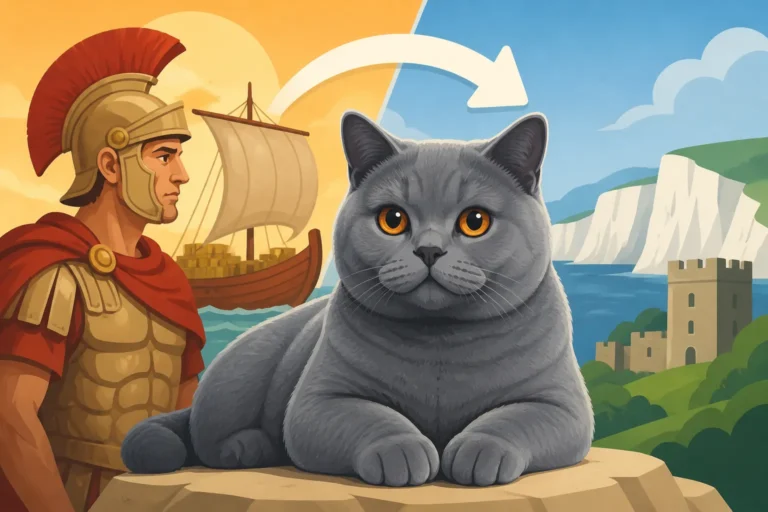
The British Shorthair’s history includes periods when breeders used other cats to help rebuild or develop the breed. The details of that history matter, but they do not mean that any breeder can now cross a British Shorthair with any other breed and register the kittens as pedigreed British Shorthairs. Historical breeding decisions and today’s registration rules are separate issues.
Some registries may permit particular pairings, recognize certain related varieties, or have procedures for exceptional circumstances. Others may restrict or exclude outcrosses for ordinary registration. A registry can also distinguish between full registration, a provisional category, a supplementary register, or no pedigree registration. The terminology and rules are not interchangeable.
So, when someone asks whether outcrossing is “allowed,” the useful follow-up is: allowed by which registry, for which mating, and for what registration outcome? The history behind Which Breeds Rebuilt the British Shorthair and How Long the British Shorthair Took to Recover helps explain why outcrossing comes up, but it does not replace checking the current rulebook for the registry involved.
How registry rules affect an outcross
A pedigree is not simply a description of what a cat looks like. It records ancestry under an organization’s rules. That is why a kitten with a round head, dense coat, and British Shorthair-like appearance does not automatically qualify for British Shorthair registration.
Registries set their own limits
Different organizations maintain their own breed definitions, pedigree records, and registration policies. They may use different names for registration categories and may revise rules over time. Even if two registries recognize the British Shorthair, that does not guarantee that they treat every proposed mating in the same way.
This is also why advice from a breeder in another country may not apply to your situation. A breeder might be speaking about a different registry, a different national branch, or a litter registered under a special category. If you are comparing advice, first identify the exact registry and the specific registration status being discussed. Which Registry Standard a British Shorthair Is Judged Against and Whether GCCF and CFA British Shorthair Standards Differ offer useful context on why registry differences matter.
A breeder should be prepared to name the registry, explain the proposed pairing in plain language, and show how the kittens’ registration would be handled. If the answer is vague—“it’s allowed everywhere,” for example—ask for the applicable rule or written confirmation from the registry before making a decision.
Appearance and DNA results do not settle registration
A cat’s appearance may be consistent with the breed, but visual resemblance is not the same as documented pedigree. Likewise, a consumer DNA report cannot, by itself, make kittens eligible for a particular registry’s records. The registry’s rules and accepted pedigree documentation determine that.
This distinction can be frustrating for buyers: a kitten may look unmistakably like a British Shorthair and still have a different registration status from a kitten whose ancestry is recorded in an accepted pedigree. If you are considering a consumer DNA kit found through Chewy, treat it as a separate kind of information, not as proof of pedigree eligibility. A report purchased through Chewy—or from another retailer—does not replace the registry’s written decision. Even if a Chewy-listed test suggests ancestry associated with a breed, it cannot promise how a registry will classify a litter.
DNA testing can have a role in health screening or in clarifying particular genetic questions, depending on the test and the condition. But it should not be confused with a registry’s approval of an outcross. For the broader health-screening side of responsible breeding, see What a British Shorthair Breeder Should Have Tested.
What to check before accepting a breeder’s claim
If you are buying a kitten, you do not need to become an expert in every registry’s regulations. You do need enough specific information to understand what the breeder is promising and what the paperwork will actually say.
Questions to ask about the pairing
Ask the breeder for the registered names or identification details of both parents, the registry where each is recorded, and the exact relationship between the cats. Find out whether the proposed pairing is between two British Shorthairs, involves a British Longhair, or includes a cat of another breed. “Outcross” can mean different things, so it is reasonable to ask the breeder to define it.
Then ask what registration status the kittens will receive. Will they be registered as British Shorthairs, placed in another category, or sold without a pedigree registration? If the breeder says the litter is eligible, ask which registry has confirmed that and whether the confirmation can be provided in writing. A verbal assurance is difficult to check later, especially if you are purchasing across borders.
A breeder should also be willing to explain why the pairing was chosen. There may be a considered breeding goal, such as reducing close relatedness or preserving a particular trait, but that explanation should be specific rather than a vague claim that outcrossing automatically makes kittens healthier. A mating decision does not guarantee improved health, temperament, or conformation.
Documents and warning signs to review
Before placing a deposit, ask to see the parents’ registration details and understand what documentation will accompany the kitten. The names on the records should match the breeder’s account of the pairing. If the kitten’s registration will be delayed, ask why, what step is outstanding, and what happens if registration is refused or differs from what was promised.
Use this table as a practical checklist:
| What to check | What a clear answer looks like | What needs follow-up |
|---|---|---|
| Registry | The breeder names the organization recording the parents and litter | “It’s a recognized registry” without a name |
| Meaning of outcross | The breeder explains exactly which cats and breeds are involved | The term is used without describing the pairing |
| Kitten registration | The expected registration category is stated plainly | “The paperwork will sort itself out” |
| Approval | The breeder can show the relevant rule or registry confirmation | The claim relies only on a verbal assurance |
| Pedigree documents | The breeder explains which records you will receive and when | Documents are unavailable with no clear reason |
| Health screening | The breeder discusses relevant tests and results for the parents | Outcrossing is presented as a substitute for screening |
Be cautious if a seller suggests that a DNA kit purchased through Chewy can guarantee a kitten’s registry status, or if they use a breed-like appearance as the only evidence of pedigree. Neither is a substitute for accepted records. A responsible breeder should not pressure you to pay quickly while leaving basic questions about registration unanswered.
How to make a confident decision
The simplest way to resolve a disputed claim is to ask the registry directly. Provide the names or registration numbers of the parent cats, describe the proposed mating, and ask what registration status the kittens would be eligible for. If the breeder has already contacted the registry, request the written response rather than relying on a summary of it.
Separate pedigree status from the kitten’s care
Registration is important if you are specifically seeking a pedigreed British Shorthair or plan to participate in activities that require recognized paperwork. It is not, on its own, a complete measure of a kitten’s health or suitability as a companion. A registered kitten still needs good veterinary care, thoughtful socialization, and responsible breeding behind it.
The reverse is also true: a kitten without the registration status you expected may still be a loving pet. The issue is whether the seller has represented the kitten honestly and whether you are comfortable with the documentation you will receive. If pedigree status was a major reason for your purchase, settle that question before committing rather than hoping it will be corrected afterward.
A broader understanding of the breed’s genetic background can help put the discussion in perspective. The question of whether a breed has room for genetic diversity is related to, but not identical with, whether a particular registry permits a cross. See Whether the British Shorthair Is Genetically Diverse Now for that wider context.
A practical decision process
- Name the registry. Confirm which organization the breeder means, rather than relying on a general claim about what “British Shorthair breeders” can do.
- Clarify the mating. Ask whether the pairing is within the breed, involves a British Longhair, or introduces another breed.
- Ask about the kittens’ status. Get the precise registration category in writing.
- Confirm the rule independently. Contact the registry if the answer is unclear or the claim affects your purchase.
- Review the rest of the breeding information. Ask about parent health screening, pedigree records, and the breeder’s reason for the pairing.
Outcrossing has a meaningful place in discussions of breed history and genetic management, but it is not a blanket permission that applies identically everywhere. For a buyer, the safest approach is straightforward: judge the claim by the specific pairing, the specific registry, and the written registration outcome—not by the kitten’s appearance or a general promise that outcrossing is allowed.
Disclaimer
This article is for general informational purposes only and does not constitute professional advice. Laws, prices and regulations vary by location and change over time. Consult a qualified professional for guidance on your specific situation.