What Obesity Does to a British Shorthair’s Joints
It’s a heartbreaking sight for any British Shorthair owner: your beloved, fluffy companion, known for their calm demeanor and robust build, starts to struggle with simple movements. They hesitate before jumping onto the sofa, wince when they stretch, or simply stop trying to reach their favorite high perch. This isn't just about them getting older; often, it's a direct consequence of carrying too much weight, a problem many of our British Shorthairs face. This guide will meticulously walk you through precisely what obesity does to a British Shorthair's joints, explaining the mechanics of the damage, how to spot the subtle signs, and practical steps you can take to alleviate their discomfort and improve their quality of life.
The British Shorthair's Predisposition to Weight Gain
Let's be honest, it's incredibly easy for a British Shorthair to pack on the pounds. Their very nature, combined with their adorable roundness, sets them up for weight challenges that can have serious implications for their long-term health, especially their joints. It’s a silent battle many owners face, often without realizing the full extent of the issue until it’s become a significant problem.
Their Naturally Robust Build
When you look at a British Shorthair, you see a cat designed for substance. They are a cobby breed, meaning they have a compact, muscular body, broad chest, and short, sturdy legs. This build gives them that iconic teddy bear appearance that melts hearts worldwide. However, this very characteristic can be a deceptive enemy when it comes to weight management. Their dense, plush coat and naturally stocky frame can easily hide a creeping weight gain. What looks like a healthy, well-fed cat might, in fact, be an overweight one, already putting undue stress on their skeletal system. Many owners mistake their cat's inherent heft for healthy weight, unaware of what a healthy British Shorthair weighs on the scale. They are meant to be powerful, not puffy. The difference between a cat that is simply broad and muscular and one that is carrying excess fat can be incredibly subtle until the problem is quite advanced, making it frustratingly difficult for owners to spot the early warning signs.
The Sedentary Lifestyle Factor
Unlike some of their more hyperactive feline counterparts, British Shorthairs are generally known for their calm, laid-back, and often rather lazy disposition. They aren't typically the cats that will entertain themselves with zoomies through the house or scale every piece of furniture like a tiny mountain climber. Instead, they prefer lounging in sunbeams, observing the world from a comfortable spot on the sofa, or engaging in short, bursts of play before retreating for another nap. This naturally low-energy temperament means they burn fewer calories than a more active breed. Consequently, without a concerted effort from their human companions to encourage movement, they simply don't get the exercise needed to maintain a healthy weight. This sedentary lifestyle, while charming, contributes significantly to why a British Shorthair gains weight so easily, directly impacting the load their joints must bear daily. They truly will not exercise themselves, leaving it up to us to get them moving.
Dietary Habits and Portion Control Challenges
If there's one thing most British Shorthair owners can agree on, it's that these cats love their food. Their appetite is often hearty, and they rarely turn down a meal or a treat. This seemingly endearing quality becomes a major hurdle when trying to manage their weight. Many households are accustomed to free-feeding, leaving a bowl of kibble out for their cat to graze on throughout the day. For a British Shorthair, this practice is a recipe for disaster. They lack the self-regulation that some cats possess and will often overeat simply because the food is available. This constant calorie intake, combined with their low activity level, quickly leads to a caloric surplus and subsequent weight gain. Portion control is absolutely critical for this breed, but it’s a constant battle for owners who see their cat's pleading eyes or hear their insistent chirps for more. The sheer joy they express around food makes it incredibly difficult for us to deny them, creating a cycle of overfeeding that their joints ultimately pay the price for.
The Mechanics of Joint Strain from Excess Weight
It might seem obvious that more weight means more strain, but let's delve deeper into the complex physiological processes that occur when a British Shorthair's joints are subjected to the relentless pressure of obesity. It's not just a matter of "more pounds, more pain"; the damage is multifaceted and insidious.
Increased Load on Cartilage and Bones
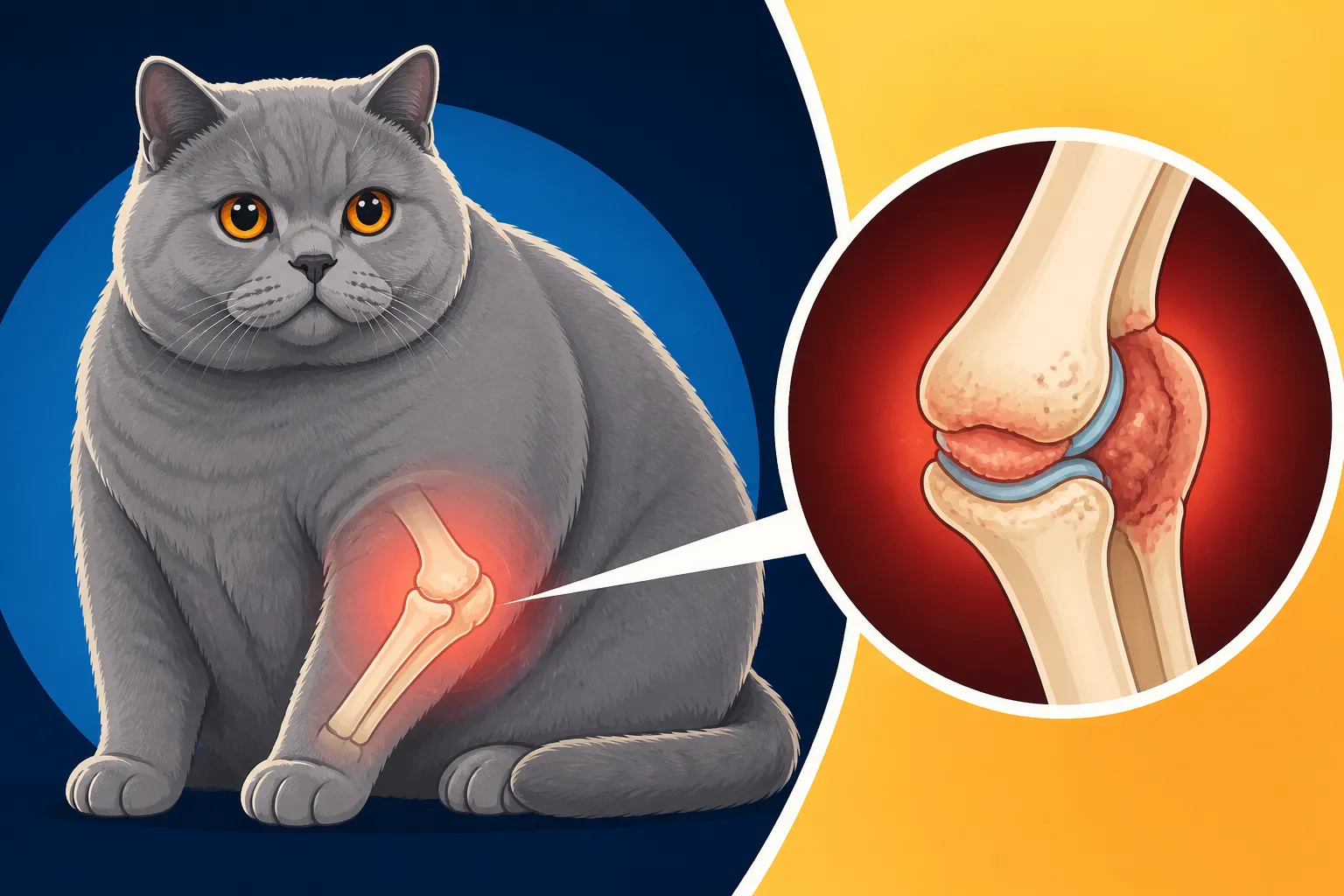
Imagine carrying a backpack filled with heavy books all day, every day. That's essentially what an overweight British Shorthair's joints endure. Every extra pound your cat carries translates into increased compressive forces on their joints, particularly those in the hips, knees, and spine, which are designed to support a specific, healthy weight range. The cartilage, a smooth, rubbery tissue that cushions the ends of bones and allows for effortless movement, is the first line of defense. Under constant, excessive pressure, this cartilage begins to wear down at an accelerated rate. It thins, frays, and eventually breaks apart, exposing the underlying bone. When bone grinds against bone, it causes immense pain and further damage. This persistent mechanical stress also impacts the bones themselves, leading to changes in their structure and density around the joint, often resulting in painful bone spurs (osteophytes) as the body tries to stabilize the compromised joint. This constant, grinding load is a primary driver of joint degeneration.
Inflammation and the Role of Adipose Tissue
Beyond the mechanical stress, there's a biochemical nightmare brewing inside an overweight cat. We used to think of fat, or adipose tissue, as merely inert storage for energy. We now know it's a highly active endocrine organ, meaning it produces and secretes hormones and inflammatory mediators. When a British Shorthair carries excessive fat, this adipose tissue releases pro-inflammatory substances such as cytokines (like TNF-alpha and IL-6). These chemicals don't just stay localized; they circulate throughout the body, creating a state of chronic, low-grade systemic inflammation. In the joints, these inflammatory compounds directly attack the cartilage and synovial fluid (the lubricating fluid within the joint), breaking them down even faster than mechanical wear alone. This makes the joint environment hostile and accelerates the progression of conditions like osteoarthritis. It’s a vicious cycle: the fat causes inflammation, which damages the joints, making movement more painful, which further reduces activity, leading to more weight gain and more inflammation. This process is a significant contributor to what obesity does to a British Shorthair's liver as well, showing how widespread the impact can be.
Compounding Existing Joint Issues
Many cats, especially as they age, develop some degree of underlying joint issues, even if they're subclinical and not causing noticeable pain. For an older British Shorthair, a touch of arthritis is almost inevitable. Now, introduce obesity into this scenario, and these pre-existing conditions are drastically exacerbated. A cat with a mild, asymptomatic case of hip dysplasia, for example, might live a relatively pain-free life at a healthy weight. However, add several extra pounds, and suddenly that mild dysplasia becomes a severely painful, debilitating condition. The increased mechanical load and systemic inflammation act like fuel on a fire, rapidly accelerating the deterioration of already compromised joints. Even subtle developmental abnormalities that might never have caused a problem at a healthy weight can become crippling issues in an obese cat. This means that if your British Shorthair has any genetic predispositions or age-related wear, carrying extra weight will undoubtedly make things much, much worse, far faster.
Specific Joint Conditions Exacerbated by Obesity
Obesity doesn't just put general strain on joints; it directly contributes to, and severely worsens, several specific and painful joint diseases that can dramatically impact your British Shorthair's quality of life. Understanding these conditions can help you recognize the severity of the problem and motivate you to act.
Osteoarthritis Degenerative Joint Disease
Osteoarthritis, often abbreviated as OA or referred to as degenerative joint disease (DJD), is by far the most common joint condition seen in cats, and it's practically a guarantee for an overweight British Shorthair. This is a progressive and irreversible condition where the protective cartilage at the ends of bones within a joint gradually wears away. As we discussed, the increased load and chronic inflammation associated with obesity accelerate this process tenfold. Imagine the smooth, gliding surface of healthy cartilage being replaced by a rough, pitted surface where bones are rubbing directly against each other. This causes chronic pain, stiffness, and reduced range of motion. For a British Shorthair, this might manifest as reluctance to jump, difficulty climbing stairs, or even just general stiffness, particularly after periods of rest. They might avoid their cat tree or struggle to use the litter box comfortably, which can lead to inappropriate urination. The sad reality is that while OA can't be cured, its progression is significantly slowed, and pain dramatically reduced, if the cat maintains a healthy weight. The pain associated with arthritis in an older British Shorthair is profound, and obesity amplifies every aspect of it.
Hip Dysplasia and Patellar Luxation
While more commonly associated with certain dog breeds, conditions like hip dysplasia and patellar luxation can certainly affect cats, and obesity significantly complicates them. Hip dysplasia is a condition where the hip joint doesn't form correctly, leading to a loose, unstable joint that grinds rather than glides. Over time, this leads to severe arthritis. In an overweight British Shorthair, the sheer gravitational pull on these improperly formed joints means greater instability and faster, more severe cartilage damage. The pain becomes much more pronounced.
Patellar luxation, or "slipping kneecap," occurs when the kneecap (patella) moves out of its normal groove. This can happen periodically, causing a momentary limp, or become a chronic issue. Again, for a cat carrying extra weight, the forces on the knee joint are amplified, making the patella far more likely to slip and causing greater wear on the cartilage within the joint. This can lead to significant discomfort and hinder a British Shorthair's ability to walk and jump properly. In both these conditions, obesity doesn't necessarily cause them, as they often have a genetic component, but it acts as a powerful accelerant, turning a mild or manageable issue into a severely painful and debilitating one much earlier in the cat's life.
Spinal Issues and Disc Problems
The spine is a complex structure of vertebrae, cushioned by intervertebral discs, which allow for flexibility and absorb shock. When a British Shorthair is overweight, their spine bears an excessive burden. This constant compression can put immense pressure on these discs, leading to degeneration, bulging, or even herniation (rupture) of the discs. A bulging disc can press on spinal nerves, causing excruciating pain, weakness, or even paralysis in the hindquarters. You might notice your cat becoming reluctant to arch their back, having difficulty with their regular grooming routine, or showing signs of pain when you try to pet their back.
Furthermore, the extra weight can alter a cat's posture and gait, placing abnormal stress on different parts of the spine over time. This can lead to spondylosis deformans, a condition where bony spurs grow along the vertebrae, trying to stabilize the spine but ultimately causing stiffness and reduced flexibility. While British Shorthairs are typically robust, their compact, heavy build, when combined with obesity, makes them susceptible to these kinds of spinal issues. These problems can be incredibly painful and challenging to manage, often requiring extensive veterinary care. The notion that a British Shorthair's body is built to look heavy, when it's actually just meant to be sturdy, often leads owners astray, resulting in conditions like these.
Recognizing the Signs of Joint Pain in an Overweight British Shorthair
Cats are notoriously stoic creatures, experts at hiding pain. This evolutionary trait, designed to protect them from predators in the wild, means that by the time you notice overt limping or crying out, your British Shorthair is likely in significant discomfort. It's crucial for owners of this typically calm and often overweight breed to be attuned to subtle changes in behavior and mobility.
Subtle Behavioral Changes
Forget dramatic yelps or obvious lameness; a British Shorthair in joint pain will communicate their discomfort through much more understated cues. One of the earliest and most common signs is a reluctance to jump. They might hesitate at the base of the sofa, or perhaps only jump onto lower surfaces instead of their usual high perch. You might also notice they start using ramps or steps if they're available, or simply find an easier, lower route to get where they want to go. A decrease in grooming, particularly on their hindquarters or along their spine, is another significant red flag, often signaling that stretching and twisting into those positions has become painful. They might also change their sleeping positions, perhaps sprawling out less or curling up more tightly to protect sensitive areas. Any sudden shyness or increased irritability, especially when touched, could also indicate pain. These subtle shifts in daily habits are often the first signs a British Shorthair is unwell and should prompt a closer look.
Changes in Mobility and Gait
As joint pain progresses, more noticeable changes in how your British Shorthair moves will emerge, though still often subtle. You might observe a stiff or slightly uneven gait, especially when they first get up after a nap. They may walk with shorter, choppier steps, or appear to be "creeping" rather than walking fluidly. Getting up and down from a lying position might take more effort or appear labored. Stairs, once navigated with ease, become a significant obstacle, leading to slower ascents or descents, or even complete avoidance. A British Shorthair struggling with joint pain may also show a decreased willingness to play, preferring to watch rather than participate in chasing toys. While a pronounced limp is rare in cats until the pain is severe, you might notice a slight favoring of one leg or a general awkwardness in their movements. Pay close attention during their routine movements – is there a slight pause before they jump? A hesitation when they land? These little moments speak volumes about their discomfort and often indicate that why a heavy British Shorthair should not jump down is becoming painfully clear.
Grooming Difficulties and Coat Changes
One of the most telling, yet often overlooked, signs of joint pain in an overweight British Shorthair is the inability to adequately groom themselves. Their dense, plush coat requires regular, thorough grooming to remain healthy and mat-free. However, the physical demands of twisting, turning, and reaching certain areas, especially the middle and lower back, become incredibly difficult and painful when joints are stiff and sore. This leads to a neglected coat, particularly along the spine and hindquarters. You might notice mats forming, a greasy or flaky appearance to their fur, or simply a dullness that wasn't there before. The fur on their back might appear matted or unkempt, a clear indication that they can no longer reach those spots. This isn't just an aesthetic issue; neglected grooming can lead to skin infections and discomfort, adding another layer to their suffering. It’s a classic example of what an overweight British Shorthair stops grooming its back, highlighting the interconnectedness of obesity and overall well-being.
Managing Weight and Supporting Joint Health
The good news is that for many British Shorthairs, significant improvements in joint health and overall comfort can be achieved through dedicated weight management. This isn't a quick fix, but a long-term commitment that often requires a multi-pronged approach involving diet, exercise, and veterinary support.
The Importance of a Controlled Diet
The cornerstone of managing joint health in an overweight British Shorthair is rigorous dietary control. This means absolutely no more free-feeding. You'll need to measure out your cat's food precisely, often dividing their daily allotment into two or three smaller meals. Consulting with your veterinarian is crucial to determine the exact number of calories your individual cat needs to lose weight safely and effectively. They can help you calculate how many calories a British Shorthair needs based on their current weight, target weight, and activity level.
Often, a prescription weight-loss diet, such as those offered by brands like Hill's Prescription Diet Metabolic or Royal Canin Satiety Support, is recommended. These foods are formulated to be lower in calories but high in fiber and protein, helping your cat feel full and satisfied while still losing weight. Wet food can be particularly beneficial for British Shorthairs on a diet. Its higher moisture content helps with satiety and provides hydration, which is also good for overall kidney health. Overweight British Shorthairs can be quite vocal about their hunger, making portion control the whole job with a British Shorthair, but sticking to the plan is paramount for their long-term health. Remember, rapid weight loss can be dangerous for cats, leading to hepatic lipidosis, so aim for a slow, steady reduction of 1-2% of their body weight per week.
Encouraging Gentle Exercise and Play
Getting a naturally sedate British Shorthair to move more can feel like an uphill battle, but it's a vital component of both weight loss and joint health. The key is gentle, consistent engagement rather than intense, strenuous activity. Think low-impact exercises that don't put excessive stress on already compromised joints. Interactive wand toys are fantastic; they allow you to control the movement, encouraging your cat to chase and pounce without having to jump excessively. Puzzle feeders can also be a game-changer; they make your cat "work" for their food, turning mealtime into a mental and physical activity.
Aim for multiple short play sessions throughout the day – perhaps 5-10 minutes a few times daily – rather than one long, exhausting session. Encourage vertical movement with sturdy, carpeted cat trees that have wide, easily accessible platforms, or consider pet stairs or ramps for your cat to reach elevated spots without jumping. Even simple activities like making them walk across the room for their food bowl can add up. The goal is to gradually increase their activity level, building strength and flexibility without causing pain. This thoughtful approach is key to how to get a British Shorthair to move, making exercise enjoyable rather than a chore.
Veterinary Intervention and Joint Supplements
Beyond diet and exercise, your veterinarian is your strongest ally in managing your British Shorthair's joint pain. They can confirm the diagnosis of osteoarthritis or other joint issues through physical examination and X-rays. Depending on the severity of the pain, your vet might prescribe anti-inflammatory medications (NSAIDs) or other pain relievers to make your cat more comfortable and mobile. These medications can significantly improve their quality of life, allowing them to engage more in play and regain some mobility.
Additionally, many veterinarians recommend joint supplements containing ingredients like glucosamine, chondroitin, and omega-3 fatty acids. These supplements are believed to help support cartilage health, reduce inflammation, and improve joint lubrication. While not a cure, they can be a valuable part of a comprehensive management plan. Furthermore, regular weigh-ins at the vet are crucial to track progress and adjust the diet as needed. Don't forget that managing chronic conditions like joint disease can incur significant costs, and pet insurance can be a real lifesaver here. Reputable providers like Healthy Paws can help offset the expenses of veterinary consultations, diagnostics, medications, and supplements, ensuring you can provide the best possible care without financial strain. Insuring a British Shorthair early, before conditions like arthritis manifest, can provide invaluable peace of mind.
| Feature | Healthy British Shorthair | Obese British Shorthair |
|---|---|---|
| Weight | 9-17 lbs (4-8 kg) | 18+ lbs (8+ kg) |
| Body Shape | Cobby, muscular, defined waist | Round, no visible waist, bulging belly |
| Activity Level | Calm, occasional play | Extremely sedentary, avoids play |
| Jumping | Jumps easily | Hesitates, struggles, avoids |
| Stairs | Navigates easily | Slow, labored, avoids |
| Grooming | Thorough, even coat | Unkempt hindquarters, matted fur |
| Joint Pain Signs | None | Stiffness, lameness, reluctance to move |
| Cartilage Health | Intact, smooth | Worn, damaged, inflamed |
| Risk of Arthritis | Moderate, age-related | High, accelerated onset |
| Quality of Life | High, comfortable | Reduced, chronic pain |
Disclaimer
The information provided in this article is for general informational purposes only and is not intended as a substitute for professional veterinary advice, diagnosis, or treatment. Always seek the advice of your veterinarian or other qualified pet healthcare provider with any questions you may have regarding a medical condition or the health and welfare of your British Shorthair. Never disregard professional veterinary advice or delay in seeking it because of something you have read in this article.