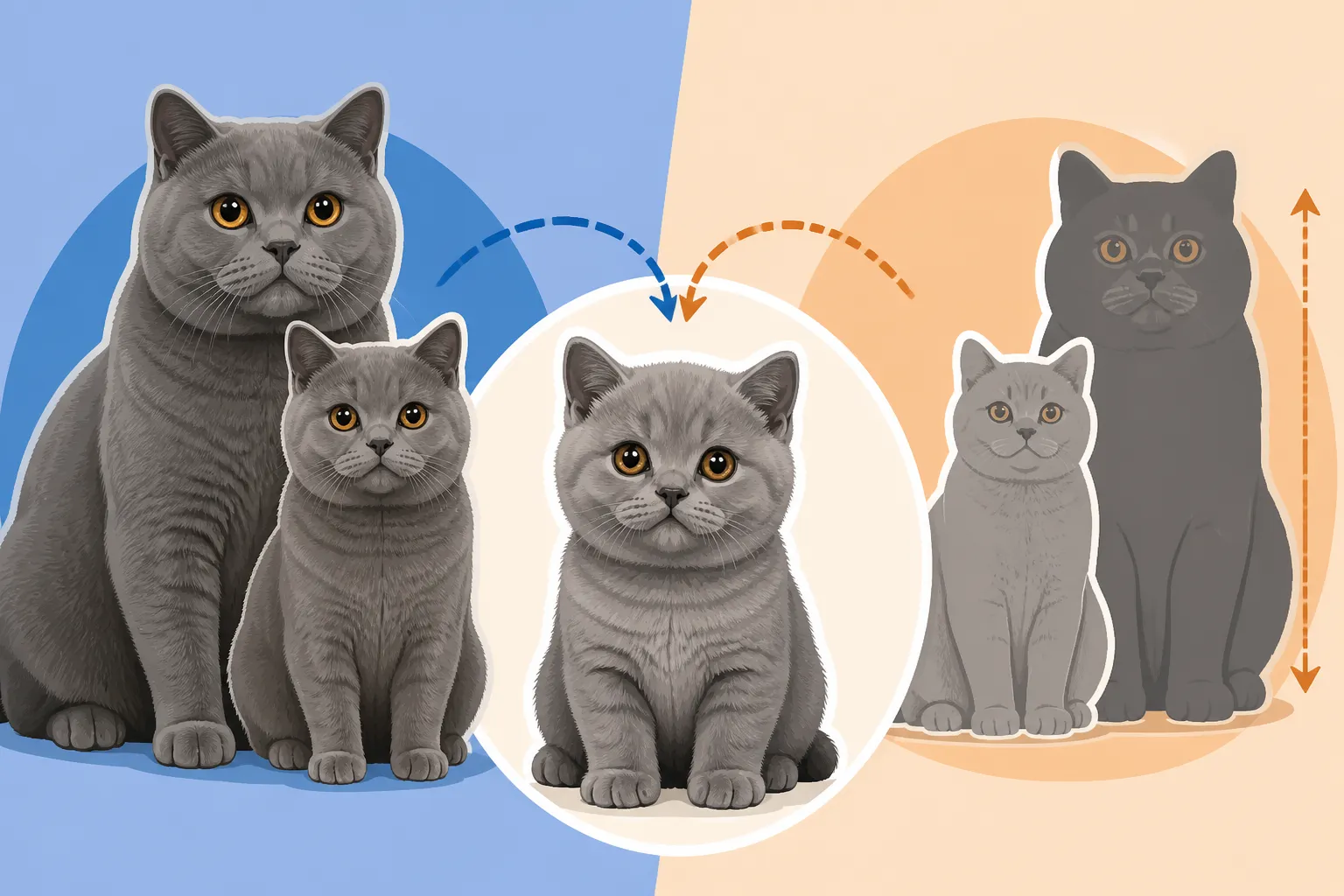
Whether Parents Predict a British Shorthair’s Size
It's completely understandable to look at those magnificent, round British Shorthair parents and imagine your little fluffy kitten growing up to be just as substantial and impressive. Many prospective owners fall in love with the breed's distinctive hefty build and assume that a large mom and dad automatically guarantee a similarly large adult cat. The reality, however, is a bit more nuanced than a simple hereditary hand-me-down, and this guide is here to unravel all the factors that truly influence your British Shorthair's eventual size and weight.
The Genetic Blueprint from British Shorthair Parents
Yes, genetics absolutely play a foundational role in determining a British Shorthair's potential size. Just like in humans, a cat inherits a blueprint from its parents that dictates everything from bone structure to muscle mass and overall frame. However, it's never as straightforward as simply averaging the parents' weight and expecting your kitten to land exactly in the middle.
Inherited Traits and Potential for Size
When you look at a British Shorthair, you're seeing a cat that is genetically predisposed to a sturdy, powerful build. This means they naturally have a heavier bone structure and denser musculature compared to many other breeds. The "cobby" body type, characterized by a compact, well-rounded appearance, is a hallmark of the breed, and this trait is definitely passed down through generations. Your kitten gets its potential for this dense, muscular frame from both its sire and dam. If both parents are excellent examples of the breed, well-developed and within the desired size range for British Shorthairs, your kitten has a strong genetic head start towards achieving that impressive stature.
However, a "genetic predisposition" is just that – a tendency, not an unshakeable promise. Think of it like a human family where both parents are tall. Their children have a higher chance of being tall, but it's not a 100% guarantee. Other genes in their lineage, environmental factors, and individual variations can still lead to a child being shorter or taller than predicted. The same applies to your British Shorthair. While the genes are there, they need the right conditions to fully express themselves. You can delve deeper into what makes this breed so distinctly robust by reading What Cobby Means in a British Shorthair.
Understanding Breed Standards for Size
Breed standards, set by feline associations like the CFA and TICA, describe the ideal physical characteristics for a British Shorthair, including a general size range. Reputable breeders strive to produce cats that adhere closely to these standards, meaning the parents you see are likely good examples of what a mature British Shorthair should look like. A breeder aims for consistency in their lines, selecting pairings that are likely to produce kittens that also fit the mold.
But within these standards, there's still a natural, healthy variation. A female British Shorthair will typically be smaller and lighter than a male, for instance, even if they come from the same parents. A breeder can tell you the size and weight of the parents, and perhaps show you previous offspring, to give you an idea of what to expect, but they cannot promise an exact weight or height for your specific kitten. The goal is a healthy, well-developed cat within the breed's parameters, not necessarily the absolute biggest one. It's helpful to understand the general expectations for the breed's dimensions; you can find more information on this in What a British Shorthair Weighs and How Big It Gets.
Beyond Genetics: Environmental and Developmental Influences
While genetics lay the groundwork, they are far from the only factor at play. Environmental elements, particularly during a kitten's crucial growth phases, have a profound impact on whether your British Shorthair reaches its full genetic potential. Neglecting these aspects can easily lead to a smaller, or unhealthier, adult cat regardless of how impressive its parents were.
The Crucial Role of Nutrition
Nutrition is arguably the single most important non-genetic factor influencing your British Shorthair's growth and eventual size. A kitten needs a balanced, high-quality diet specifically formulated for growth to develop strong bones, dense muscles, and a healthy immune system. Skimping on quality or quantity during kittenhood can absolutely stunt growth. If a kitten is underfed, or fed a diet lacking essential nutrients, its body won't have the building blocks it needs to grow to its full potential, even if it has the genes for a large physique.
On the flip side, overfeeding isn't the answer either. While you might think more food equals a bigger cat, it more often leads to an overweight cat, which comes with a host of health problems. An overweight cat might look big, but it’s not a healthy size. The key is appropriate, portion-controlled feeding of a nutritious diet. Many quality brands available through retailers like Chewy offer excellent options designed for growing kittens and adult cats. For detailed guidance on how much to feed your cat, check out How Many Calories a British Shorthair Needs.
Hormones and Growth Plates
The presence or absence of certain hormones, particularly sex hormones, also plays a significant role in a cat's growth trajectory. Neutering or spaying typically occurs before a British Shorthair reaches full maturity. While this is crucial for population control and preventing certain health issues, it can also subtly influence skeletal development. Cats neutered early might sometimes grow slightly longer in the limbs because the growth plates in their bones close a little later without the surge of sex hormones. However, this effect is usually minor and doesn't drastically alter the overall "cobby" appearance of a British Shorthair.
The growth plates in a cat's long bones are responsible for lengthening the bones as the cat grows. These plates eventually fuse, signaling the end of skeletal growth. For British Shorthairs, skeletal growth largely completes by around 12-18 months, but they continue to develop muscle mass and density for much longer. This extended "filling out" period is what gives them their characteristic bulk. If you're wondering about the timing of neutering and its potential impact, the article Whether Neutering Early Stunts a British Shorthair offers more insights.
Health and Activity Levels
A healthy cat is a growing cat. Any significant illness or chronic condition during a kitten's formative months can divert energy from growth towards fighting off disease or healing. A kitten that is frequently sick or suffering from parasites, for example, might not grow as robustly as its healthy littermates. Regular veterinary care, including vaccinations and preventative treatments, is essential to ensure uninterrupted growth and development.
British Shorthairs are known for their calm, somewhat sedentary nature. While their genetics predispose them to a sturdy build, their low activity levels mean they can easily become overweight if their diet isn't managed carefully. A truly large British Shorthair is one with a well-developed frame and healthy muscle mass, not just excess fat. Maintaining good health throughout their lives is paramount, and pet insurance, such as plans offered by Healthy Paws, can be an excellent way to ensure your British Shorthair receives the best veterinary care without financial stress, supporting healthy development. Understanding the breed's general health profile can be found in Whether the British Shorthair Is a Healthy Breed.
The British Shorthair's Unique Growth Trajectory
One of the most common reasons owners might feel their British Shorthair isn't living up to the perceived size of its parents is simply impatience. This breed takes its sweet time to mature and achieve that iconic substantial look. It's a journey, not a sprint, and understanding this timeline is key to setting realistic expectations.
A Slow Burn: Filling Out Over Years
Unlike some cat breeds that reach their adult size and weight fairly quickly, British Shorthairs are late bloomers. Many owners are surprised to learn that while their kitten might reach much of its skeletal height by a year old, it won't truly achieve its full adult "mass" and density until it's three, four, or even five years old. This means that a one-year-old British Shorthair, even one with large parents, might still look relatively lanky or just "average" in size compared to the mature, broad-chested cats you often see in pictures.
This extended development phase means they slowly put on muscle and develop the characteristic broad head and full jowls that contribute to their teddy bear look. If you're expecting a massive cat right out of kittenhood, you're likely to be disappointed. Patience is a virtue with this breed! The filling out process is gradual, and their eventual weight is often accumulated over these later years. To get a better grasp of this prolonged development, you might find How Long a British Shorthair Takes to Fill Out very informative.
Distinguishing Size from Weight
It's absolutely critical to differentiate between a genuinely large British Shorthair and an overweight one. A large British Shorthair has a robust skeletal frame, dense muscle, and is proportioned according to breed standards. An overweight cat, on the other hand, carries excessive body fat. While both might seem "big," only one is healthy.
Many British Shorthairs, due to their calm nature and hearty appetites, are prone to obesity. An overweight cat will appear round, but you won't be able to easily feel their ribs, and they'll likely have a noticeable fat pad on their belly. This isn't the desired "chunky" look that comes from muscle and bone, but rather an unhealthy accumulation of fat. The scale might read high, but it's not the healthy, robust size you admire in well-bred adults. It's a common mistake, and understanding how to assess your cat's true body condition is vital. Learn more about telling the difference in How to Tell a Chunky British Shorthair From a Fat One.
Setting Realistic Expectations
It's easy to get caught up in the dream of having the biggest, most impressive British Shorthair, especially when you see grand, imposing parents. However, a responsible approach involves understanding the limitations of prediction and focusing on what truly matters: a healthy, happy cat.
Why Direct Size Promises Are Tricky
Even the most experienced and reputable British Shorthair breeders cannot provide an exact guarantee of your kitten's adult size or weight. They can tell you about their lines, show you the parents, and perhaps previous offspring, giving you a reasonable expectation of the range your kitten will likely fall into. You might see a litter where one kitten is noticeably larger than its siblings from the start, but that doesn't mean it will necessarily be the largest adult. Individual growth spurts, metabolism, and even stress levels can play a part.
Furthermore, within any litter, there will be variations. Some kittens will naturally be at the higher end of the breed's size standard, while others will be at the lower end. This is normal genetic diversity. A breeder's promise should be about health, temperament, and adherence to breed type, rather than an exact number on the scale for an adult cat. For example, What a British Shorthair Should Weigh at One Year and What a British Shorthair Should Weigh at Three give you good benchmarks, but remember these are averages and ranges.
Focusing on Health and Type Over Pure Size
Ultimately, the most important qualities in a British Shorthair are excellent health, a wonderful temperament, and adherence to the breed standard, which includes a robust, well-proportioned body, not just sheer bulk. A cat that is slightly smaller than anticipated but is vibrant, playful, affectionate, and free from genetic health issues is far more valuable than a huge cat plagued by health problems due to poor breeding or improper care.
When selecting a kitten, focus on asking breeders about their health screening protocols for conditions like HCM or PKD, the temperament of their breeding cats, and their commitment to the breed's overall well-being. A truly ethical breeder will prioritize health and type over promising an "extra-large" kitten. They should be transparent about their screening results. For more on essential screening, consult What a British Shorthair Breeder Should Have Tested. Remember, the distinctive dense coat of a British Shorthair can also make them appear heavier than they actually are, adding to the illusion of size, as explored in Why a British Shorthair Looks Heavier Than It Is.
| Factor | Influence on British Shorthair Size | How Parents Inform Potential Size |
|---|---|---|
| Genetics | Determines skeletal frame, bone density, muscle predisposition. | Direct inheritance of breed-specific 'cobby' traits and overall stature. |
| Nutrition | Critical for optimal growth, muscle development, and overall health. | Healthy parents set a good example; quality food is key for kittens. |
| Sex | Males are generally larger and heavier than females. | Parents pass on sex chromosomes; male kittens inherently have greater size potential. |
| Neutering Status | Can subtly affect bone plate closure, influencing limb length. | Not directly from parents, but an owner's decision impacting growth timing. |
| Overall Health | Illness or poor health can stunt growth or reduce vitality. | Healthy parents generally produce healthy kittens; pet insurance (like Healthy Paws) supports lifelong health. |
| Age/Maturity | British Shorthairs fill out slowly over 3-5 years, gaining density. | Parents show what the kitten's eventual mature size and type could be, given time. |
Disclaimer
This article is for general informational purposes only and does not constitute professional advice. Laws, prices and regulations vary by location and change over time. Consult a qualified professional for guidance on your specific situation.