Why a British Shorthair’s Coat Hides Its Waist
One of the trickiest things about owning a British Shorthair is figuring out if they're a healthy weight. Their gloriously dense, plush coats are simply fantastic to touch, but they also act like a furry camouflage, making it incredibly hard to see where their waist actually is! This guide will delve into why their unique coat makes weight assessment such a challenge and, more importantly, how you can accurately monitor your beloved cat's body condition.
The Unique Anatomy of the British Shorthair Coat
The British Shorthair's magnificent coat is undeniably one of its most defining features, but it's also the main culprit behind the mystery of its disappearing waistline. Unlike many other breeds, their fur isn't just a simple layer; it's a carefully constructed fortress of fluff that gives them their iconic teddy bear appearance. This plush density is a marvel to behold, but it makes visual assessment of their true body shape incredibly difficult.
The Double Coat Density
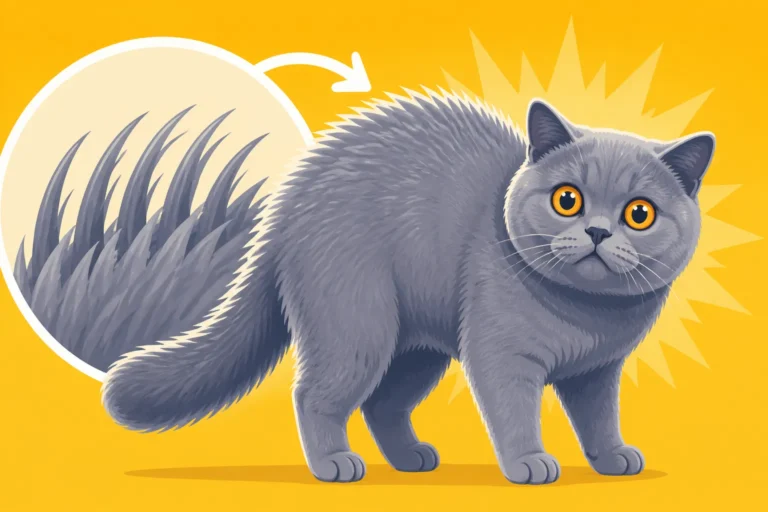
At the heart of the British Shorthair's visual deception lies its incredibly dense double coat. This isn't just a single layer of fur; it's a sophisticated insulation system designed to keep them warm and protected. You have an outer layer of slightly stiffer guard hairs, which give the coat its "crisp" feel, and underneath that, a very thick, soft, woolly undercoat. It's this undercoat that really packs on the volume.
Imagine trying to see the contours of something wrapped in a very thick, plush blanket. That's essentially what you're dealing with when you look at a British Shorthair. The sheer volume of fur means that even if there's a slight dip where a waist should be, the surrounding fluff simply fills it in, creating a uniform, rounded appearance from neck to tail. This density is one of the key reasons What a British Shorthair's Coat Is Like is so unique.
When you run your hands through their fur, you can feel the depth, almost like pushing your fingers into a deep pile carpet. This isn't just aesthetic; it serves a purpose. Historically, their ancestors were working cats, and this dense coat provided excellent protection against the elements, a feature that has been carefully preserved in the breed.
The "Crisp" Texture and Stand-Off Coat
Beyond just density, the British Shorthair's coat has a specific texture that further contributes to its waist-hiding abilities. It's often described as "crisp" or "firm to the touch," meaning it doesn't lie flat against the body like the sleek coat of a Siamese or a domestic shorthair. Instead, the fur actually stands away from the body, almost like tiny bristles on a brush, but much softer and thicker.
This "stand-off" quality creates a natural illusion of robustness and volume. The fur literally projects outwards from the cat's skin, adding inches to its perceived circumference. It's like wearing a very puffy winter coat; you look bigger than you actually are underneath. The phenomenon of Why a British Shorthair's Coat Feels Crisp is a testament to the unique structure of their hair follicles and density.
This unique characteristic means that even if your British Shorthair is at a perfectly healthy weight, their coat will still make them look quite substantial and round. It's a natural optical illusion that can easily fool owners into thinking their cat is heavier than it truly is, or, more dangerously, hide actual weight gain.
Visual Deception: How the Coat Creates a Uniformly Round Silhouette
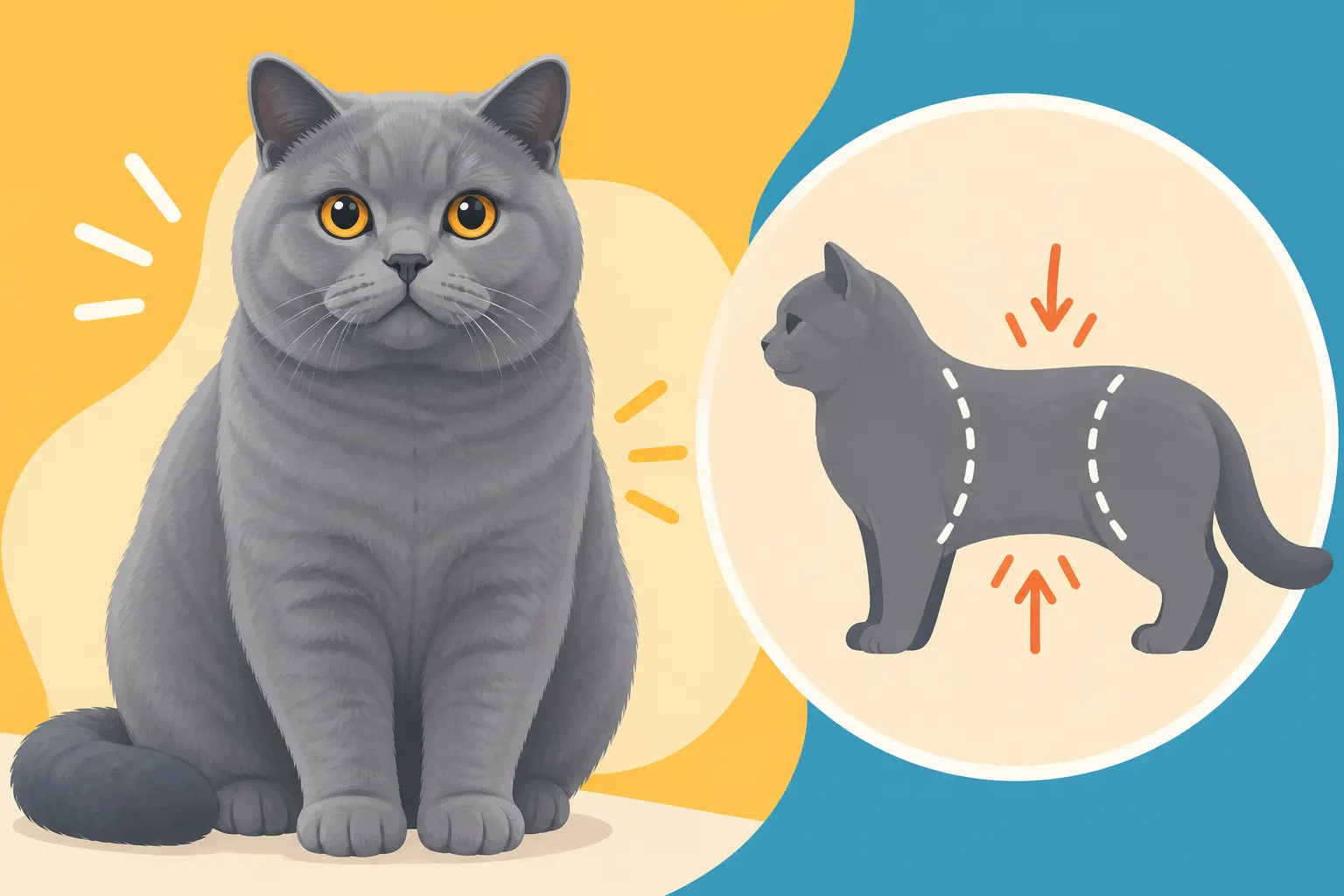
Ultimately, the combination of the dense double coat and its stand-off texture conspires to create a uniformly round silhouette, effectively obscuring any natural waistline. Where a svelte cat might have a clear tuck-in behind the ribs, a British Shorthair's fur simply smooths over any such indentation. This is why when you look at a healthy British Shorthair from above, they often appear to be a solid, well-proportioned oval or circle.
This visual deception is often compounded by the breed's naturally cobby body type. British Shorthairs are built to be sturdy and compact, with broad chests and strong, short legs. They are not naturally lean or lithe. Their physical build, combined with the voluminous coat, means that the typical visual cues for assessing weight – like seeing a clear waist or feeling prominent hip bones – are simply not there. This is a big reason Why a British Shorthair Is Built to Look Heavy.
For owners, this means relying purely on sight is a recipe for misunderstanding their cat's true condition. You can't just glance at your British Shorthair and confidently say they're a perfect weight. You need to get hands-on and understand what a healthy British Shorthair feels like underneath all that glorious fluff.
Why a Hidden Waist Poses a Health Risk
While their plush coat is adorable, the fact that it conceals their waist can lead to significant health issues if owners aren't vigilant. Obesity is a widespread problem in domestic cats, and British Shorthairs are particularly susceptible precisely because their build and coat make it so easy for weight gain to go unnoticed. What starts as a little extra cushioning can quickly spiral into serious health concerns.
The Silent Creep of Obesity
One of the biggest dangers of a hidden waist is the "silent creep" of obesity. You might not notice your British Shorthair gaining weight because their coat smooths over the subtle changes. A few extra pounds on a British Shorthair can be much harder to spot than on a cat with a short, close-lying coat. What looks like a healthy, well-fed cat might actually be slowly tipping into an overweight or even obese category.
This incremental weight gain often goes unaddressed until it's more significant, or until secondary health problems begin to manifest. It’s a classic case of the frog in boiling water – the change is so gradual that it becomes the new normal. By the time you can visually tell your British Shorthair is overweight despite their coat, they might already be substantially so, making the journey back to a healthy weight much more challenging. Owners need to understand Why a British Shorthair Gains Weight So Easily.
Think about how many times you've probably thought, "Oh, they just look big because they're a British Shorthair." While there's truth to their naturally stocky build, this thought can unintentionally become a barrier to recognizing actual excess fat. It’s crucial to distinguish between a naturally sturdy build and actual fat accumulation.
Consequences of Undetected Weight Gain
Undetected weight gain in British Shorthairs carries the same serious health consequences as it does for any other cat, but it can often progress further before intervention because of the optical illusion of their coat. Obesity is not just about aesthetics; it's a medical condition that significantly impacts a cat's quality of life and lifespan.
One of the most common issues is increased strain on their joints, especially as they get older. What Obesity Does to a British Shorthair's Joints means that their already robust frame struggles under the extra load, leading to conditions like arthritis earlier in life. They might become less mobile, reluctant to jump, or simply spend more time resting, which in turn leads to even more weight gain – a vicious cycle.
Beyond mobility, obesity significantly increases the risk of other severe diseases. Diabetes, heart disease (which British Shorthairs can already be prone to, such as What HCM Does to a British Shorthair's Heart), and certain types of cancer are all linked to excess weight. Even seemingly minor issues like poor grooming, leading to skin problems and matting, can arise because an overweight British Shorthair simply can't reach all areas of its body. This is why regular and accurate weight assessment is so vital.
The British Shorthair's Predisposition to Weight Gain
It's not just the coat that makes British Shorthairs prone to weight issues; their very nature and typical lifestyle contribute significantly. They are known for their calm, placid demeanor, which often translates to a relatively low activity level. Unlike some other breeds that are constantly zooming around, British Shorthairs are quite content to nap in a sunny spot or observe the world from a comfortable perch.
This lower energy output means they don't burn as many calories as a more active cat. Combine this with their enthusiastic appetite – many British Shorthairs love their food and will happily eat whatever is offered – and you have a perfect storm for weight gain. Free-feeding, where food is left out all day, is a particular pitfall for this breed because they lack the natural self-regulation some other cats might have. You can read more about Why Free Feeding Ruins a British Shorthair.
Their predisposition to gaining weight makes the visual obfuscation of their coat even more dangerous. Owners need to be extra diligent in monitoring their intake and activity levels, and not be swayed by the round, plush appearance that their coat naturally creates.
Practical Strategies for Assessing Your British Shorthair's Body Condition
Since you can't rely solely on your eyes, getting hands-on and using other methods is crucial for accurately assessing your British Shorthair's body condition. This proactive approach will help you catch any changes early and ensure your cat maintains a healthy weight throughout its life. It's about learning to "feel" your cat's health rather than just seeing it.
The Hands-On Approach: Palpating the Ribs and Spine
The most effective way to gauge your British Shorthair's body condition, despite their deceptive coat, is through palpation – essentially, feeling with your hands. You need to bypass the fur and feel what's underneath.
Start by gently running your hands along your cat's sides, just behind their front legs. You should be able to feel their ribs with slight pressure, almost like feeling the knuckles on your hand. If you can feel them easily without any fat padding, that's a good sign. If you have to press firmly to detect them, or if you can't feel them at all, your cat might be carrying too much weight. Conversely, if the ribs feel very prominent, like they're sticking out, your cat might be too thin. Getting a feel for How to Feel a British Shorthair's Ribs Through the Plush takes practice but is invaluable.
Next, gently run your hands along their spine and hip bones. You should be able to feel these bony prominences without them being sharply angular or obscured by a thick layer of fat. A healthy cat will have a gentle covering of muscle and skin over these areas. This hands-on assessment is far more reliable than just looking at their round, furry shape.
The Body Condition Score (BCS) Chart
Veterinarians use a system called the Body Condition Score (BCS) to objectively assess a cat's weight, and you can use a simplified version at home. This chart typically ranges from 1 (severely underweight) to 9 (severely obese), with 5 being the ideal. It provides descriptions and visual aids (though you'll need to adapt for the British Shorthair's coat visually) to help you understand what a cat should feel like at different scores.
Here's a simplified guide based on palpation:
| BCS Score | Ribs | Waist (Visual) | Abdominal Tuck (Visual) | Overall Feeling |
|---|---|---|---|---|
| 1-2 | Easily visible, very prominent | Marked hourglass | Obvious tuck | Very little body fat, bones easily seen/felt |
| 3-4 | Easily palpable with minimal fat covering | Clearly discernible | Good tuck | Slight fat covering, definite waist |
| 5 (Ideal) | Easily palpable with slight fat covering | Discernible (subtly on BSH) | Slight tuck (not always obvious on BSH) | Well-proportioned, good muscle mass, no excess fat |
| 6-7 | Palpable with moderate fat covering | Not well discernible | Little to no tuck | Moderate fat deposits, less defined waist |
| 8-9 | Difficult to feel under thick fat covering | Absent | Bulging or no tuck | Extensive fat deposits, heavy abdomen |
Remember, for a British Shorthair, the "visual" aspects of the waist and abdominal tuck will be much harder to discern, so focus heavily on the "ribs" and "overall feeling" columns. Your vet can provide you with a more detailed BCS chart during your regular check-ups.
Regular Weigh-Ins at Home
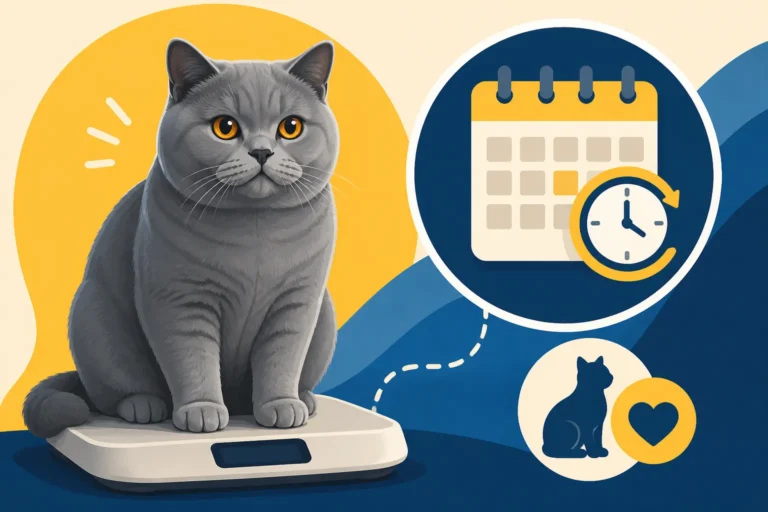
Another non-negotiable strategy is regular weigh-ins. This provides objective, quantifiable data that visual assessment simply cannot. Even small weight fluctuations can be significant over time. Aim to weigh your British Shorthair at least once a month, or more frequently if you're actively trying to manage their weight.
Invest in a reliable digital pet scale, or even a baby scale, for accurate readings. Trying to weigh a cat on a human bathroom scale can be notoriously difficult and inaccurate. Record their weight in a journal or a note on your phone. Over time, this record will clearly show trends, indicating if they're gaining, losing, or maintaining their weight. Knowing What a British Shorthair Should Weigh at One Year can give you a good benchmark.
This data is crucial because it cuts through the visual noise of their fluffy coat. A change on the scale is a real change, regardless of how round and cuddly they still appear. Consistent tracking allows you to make adjustments to their diet or activity before a small issue becomes a big one. You can find many suitable scales on retailers like Chewy or Amazon.
The Role of Your Veterinarian
Your veterinarian is your most valuable partner in managing your British Shorthair's weight. During routine check-ups, they will perform a professional body condition assessment, often using the BCS system, and measure your cat's weight. They can accurately feel through the dense fur and provide an unbiased opinion.
If your cat is consistently gaining weight, or if you suspect they are overweight, your vet can help you formulate a safe and effective weight loss plan. This might involve recommending specific prescription diet foods, calculating precise caloric intake, and suggesting ways to increase activity levels gently. They can also rule out any underlying medical conditions that might contribute to weight gain, though Obesity Is the British Shorthair's Real Disease for many.
Don't hesitate to bring up any concerns you have about your British Shorthair's weight with your vet. They have the expertise to guide you and ensure your cat stays healthy and happy for years to come.
Maintaining a Healthy Weight for Your British Shorthair
Once you understand how to accurately assess your British Shorthair's body condition, the next step is implementing strategies to maintain that ideal weight. It's a commitment, but one that directly impacts their longevity and quality of life. Given their propensity for weight gain and their calm nature, a proactive approach to diet and exercise is absolutely essential.
Portion Control and Dietary Choices
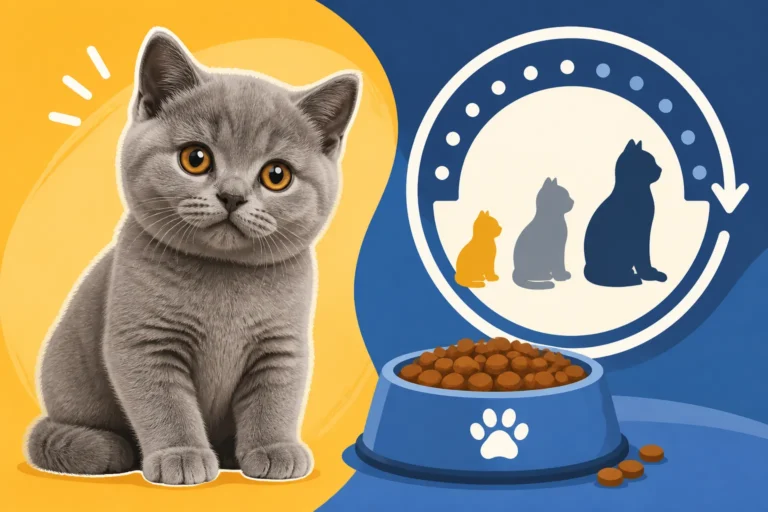
This is arguably the most critical aspect of weight management for a British Shorthair. Because they are often quite food-motivated and don't self-regulate well, free-feeding is rarely a good idea. Instead, measure out their food precisely and feed them in controlled portions, usually two meals a day. Understanding How Many Calories a British Shorthair Needs is vital, and your vet can help you calculate this based on their ideal weight and activity level.
Choosing the right food is also important. Many owners find that a diet rich in protein and moderate in fat, with controlled carbohydrates, works well. Wet food can be beneficial because its higher moisture content helps with satiety and hydration, and it often has fewer calories per serving than dry kibble. Some owners even explore fresh food options, though it's always crucial to discuss any major dietary changes with your vet first to ensure it's nutritionally complete and appropriate for your cat.
You can find excellent measuring cups and a wide variety of suitable cat foods on platforms like Chewy or Amazon. Just remember, a "weight management" or "light" formula isn't a magic bullet; portion control remains paramount even with these specialized foods.
Encouraging Movement
As we've discussed, British Shorthairs aren't typically Olympic athletes. They prefer lounging to leaping, which means you, as their owner, need to take an active role in encouraging movement. This doesn't mean forcing them into intense exercise, but rather integrating gentle, consistent play into their daily routine. For tips on Getting a Low Energy British Shorthair to Move, look for interactive toys that mimic prey.
Wand toys with feathers or soft, light attachments can be very effective in engaging their hunting instincts without requiring huge bursts of energy. Short, frequent play sessions of 5-10 minutes a few times a day are often more effective than one long, exhausting session. Puzzle feeders are also fantastic for mental stimulation and making them "work" for their food, burning a few extra calories in the process.
Even encouraging them to walk from one room to another to eat, or placing their food bowl a short distance from their favorite napping spot, can help. The goal isn't to turn them into an acrobat, but to prevent them from becoming completely sedentary. Every little bit of movement adds up.
Monitoring for Changes
Maintaining a healthy weight is an ongoing process, not a one-time fix. Regular monitoring is key to catching any slight deviations before they become major problems. Continue your monthly weigh-ins and hands-on body condition assessments. Pay attention to how easily you can feel their ribs and spine, and note any changes in their overall shape or activity level.
Also, be observant of any changes in appetite or behavior. A sudden increase or decrease in hunger, or a noticeable drop in their already calm activity level, could be a sign of a health issue or that their weight is shifting. If you notice your British Shorthair is becoming less active, struggling with jumps, or seems stiff, these could be indicators of weight-related joint pain or other issues. For an aging British Shorthair, particularly, Arthritis in an Older British Shorthair becomes a real concern if they're carrying extra weight.
If you observe any concerning changes, or if your cat's weight starts to creep up despite your best efforts, schedule a visit with your veterinarian. Early intervention is always the best approach to ensure your British Shorthair lives a long, healthy, and comfortable life.
Disclaimer
This article is for general informational purposes only and does not constitute professional advice. Laws, prices and regulations vary by location and change over time. Consult a qualified professional for guidance on your specific situation.