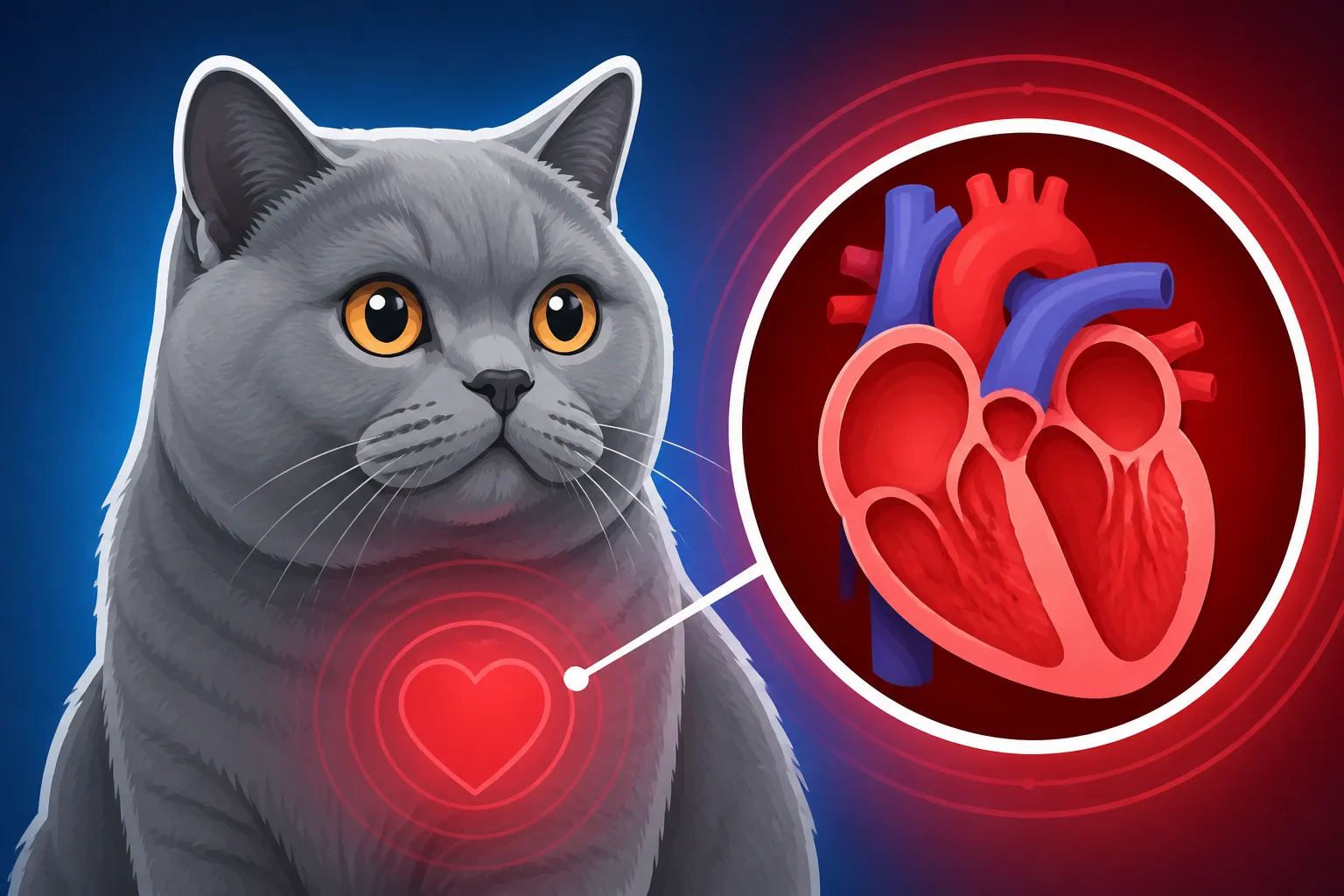
What HCM Does to a British Shorthair’s Heart
It's truly heartbreaking to hear those words: "Your beloved British Shorthair has a heart murmur." For many British Shorthair parents, the biggest fear associated with their fluffy companions is Hypertrophic Cardiomyopathy (HCM), a stealthy condition that thickens the heart muscle. This guide will walk you through exactly what HCM does to your British Shorthair's heart, helping you understand the silent changes and potential impacts.
Understanding Hypertrophic Cardiomyopathy in British Shorthairs
Hypertrophic Cardiomyopathy (HCM) is the most common heart disease in cats, and unfortunately, British Shorthairs are notoriously predisposed to it. It’s not just a fancy medical term; it’s a serious condition that progressively reshapes the very engine of your cat's life. When we talk about HCM, we’re talking about a heart that’s literally working itself to exhaustion.
What Exactly is HCM? The Core Problem
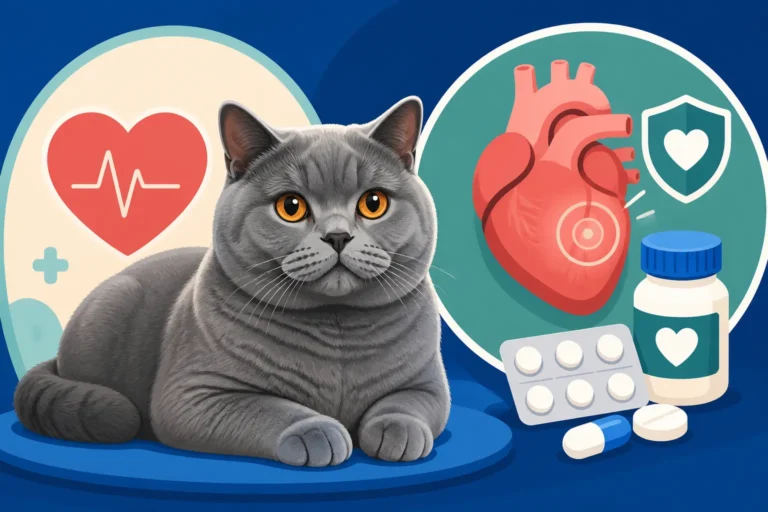
At its most fundamental level, HCM involves the thickening of the muscular walls of the heart, particularly the left ventricle – the powerful chamber responsible for pumping oxygenated blood to the rest of the body. Imagine a pump designed to move fluid, but its internal walls start to grow inward, making the space smaller and stiffer. This is what happens with HCM. The muscle cells themselves become enlarged and disorganized, leading to a loss of the heart's natural elasticity and efficiency. This thickening isn't about the heart getting stronger; it's about it becoming inefficient and eventually failing.
This isn't a condition that develops due to diet or lifestyle in most cases. Instead, it's typically an inherited genetic disorder. While a specific gene test for British Shorthair HCM remains elusive, it's clear that certain lines and families carry a higher risk. This is why when you're considering a kitten, knowing What a British Shorthair Breeder Should Have Tested is so incredibly important for preventing future heartbreak.
Why British Shorthairs Face a Higher Risk
The British Shorthair breed, with its distinctive cobby build and placid temperament, unfortunately carries a significant genetic predisposition to HCM. Studies have shown a higher prevalence within this breed compared to the general cat population. While the exact genetic mutation prevalent in British Shorthairs is still being researched, it’s understood to be an autosomal dominant trait, meaning only one copy of the affected gene is needed for a cat to develop the disease. This genetic component makes diligent screening absolutely critical for breeders.
This inherent risk means that even a perfectly healthy-looking British Shorthair kitten from seemingly healthy parents can develop HCM later in life. It's a cruel twist of genetics, making proactive monitoring paramount. For more on how prevalent this disease is, you can read about How Common HCM Is in British Shorthairs. It underscores why British Shorthair owners need to be particularly vigilant about heart health.
The Physical Changes HCM Induces in the Heart
HCM is a progressive disease, meaning the changes to the heart don't happen overnight but worsen over time. Understanding these physical alterations helps us grasp why the disease is so debilitating and potentially life-threatening. The heart, which should be a supple and efficient pump, becomes rigid and struggling.
The Thickening of the Ventricular Walls
The hallmark of HCM is the abnormal thickening of the left ventricular wall and, often, the interventricular septum (the wall separating the left and right ventricles). This isn't just a minor increase in muscle; it can be quite dramatic. Normally, the left ventricle relaxes to fill with blood from the left atrium, then contracts powerfully to push that blood out to the body. With HCM, the thickened muscle reduces the internal volume of the left ventricle. Think of trying to fill a water balloon that has a thick, rigid skin—it can't expand and fill as easily.
This structural change means the heart has to work much harder to fill with blood, increasing the pressure inside the chamber. The thickened muscle also makes it difficult for the heart to relax properly between beats, a critical phase called diastole. This reduced ability to fill efficiently sets off a cascade of other problems within the cardiovascular system.
Impaired Diastolic Function and Relaxation
One of the most significant impacts of HCM is on the heart's diastolic function. Diastole is the period when the heart muscle relaxes and the chambers fill with blood. In a cat with HCM, the thickened, stiff left ventricle can't relax and expand as it should. This leads to a higher pressure required to push blood into the ventricle from the atrium. Imagine trying to inflate a very stiff balloon – it takes a lot more effort.
Because the left ventricle can't fill properly, less blood is available to be pumped out with each beat. The heart tries to compensate by beating faster or harder, but this only exacerbates the problem over time. This impaired relaxation is a key factor in the development of clinical signs, as it directly impacts the amount of blood circulating through the body and ultimately, the efficiency of oxygen delivery.
Left Atrial Enlargement and Its Consequences
As the stiff, thickened left ventricle struggles to accept blood during diastole, blood starts to "back up" in the left atrium. This causes the left atrium, the chamber receiving oxygenated blood from the lungs before passing it to the left ventricle, to enlarge. This enlargement is a critical sign of progressive HCM and is often associated with a worse prognosis. A severely enlarged left atrium is particularly problematic because it increases the risk of two severe complications: congestive heart failure and arterial thromboembolism.
When the left atrium is chronically stretched, the blood flow within it can become turbulent and stagnant, creating an environment ripe for blood clot formation. This is a very serious consequence of HCM and highlights why regular monitoring, such as The Yearly Echo That Replaces a British Shorthair Gene Test, is so vital for tracking these changes.
The Progression and Severity of HCM
HCM isn't a static condition; it evolves over time, often silently in its early phases, making detection challenging for owners. Recognizing the stages helps frame the potential impact on your British Shorthair's life.
Early Stages: The Silent Threat
In the early stages, often referred to as the "compensated" phase (Stage B1 or B2), British Shorthairs with HCM may show absolutely no outward signs of illness. Their hearts might have mild to moderate thickening, and perhaps even some left atrial enlargement, but their bodies are still compensating effectively. This is why the disease is often called a "silent killer." Owners might notice nothing amiss, and the cat continues to eat, play (if it's a playful BSH), and sleep as usual.
During this stage, the only way to detect HCM is through an echocardiogram performed by a veterinary cardiologist. This specialized ultrasound of the heart can visualize the thickening and assess blood flow. Without this screening, a cat can progress significantly without anyone knowing. It underscores why When a British Shorthair Should Have Its First Echo is a crucial piece of information for responsible owners.
Moderate to Advanced Stages: When Symptoms Emerge
As HCM progresses to moderate and advanced stages (Stage C), the heart's compensatory mechanisms start to fail. The thickening becomes more pronounced, the left atrium more enlarged, and the heart's ability to pump blood effectively is severely compromised. This is when clinical signs typically begin to appear, signaling that the cat is in congestive heart failure. These signs can include lethargy, decreased appetite, a persistent cough, or difficulty breathing.
At this point, the changes within the heart are usually quite severe, and the cat’s quality of life is noticeably affected. The goal shifts from merely monitoring to actively managing symptoms and trying to slow the progression of the disease. This is a critical period where intervention can make a difference in comfort and survival.
Dynamic Outflow Obstruction and Mitral Valve Changes
In some British Shorthairs with HCM, the thickened heart muscle can create a dynamic outflow obstruction (known as SAM, or Systolic Anterior Motion of the Mitral Valve). This occurs when part of the mitral valve, a valve between the left atrium and left ventricle, gets sucked into the outflow tract during systole (when the heart contracts). This partially blocks the path for blood leaving the heart, making it even harder for blood to be ejected efficiently.
This obstruction can lead to a heart murmur, a sound heard with a stethoscope due to turbulent blood flow. While a murmur doesn't always mean HCM, it's a significant indicator that warrants further investigation. If you've ever wondered What a British Shorthair's Murmur Means, it could very well be related to these internal heart dynamics. This also causes the mitral valve itself to become dysfunctional, leading to leakage (regurgitation) which further strains the heart as blood flows backward.
How HCM Manifests: Signs and Symptoms
One of the most frustrating aspects of HCM in British Shorthairs is how subtly it can begin and how dramatically it can escalate. Cats are masters of hiding illness, a survival instinct that serves them poorly in a domestic setting, often making it incredibly difficult for owners to spot trouble until it's severe.
Subtle Early Indicators
Because British Shorthairs are naturally placid and often prefer quiet observation to high-energy antics, subtle signs of HCM can be easily missed. Your cat might just seem a little more sleepy, less inclined to chase a toy, or perhaps just a bit quieter than usual. These changes can be attributed to age, mood, or just "being a British Shorthair." They might have a slightly reduced appetite or groom themselves less meticulously, but these are often so gradual that they escape immediate notice.
A mild cough might occur, particularly after activity, but again, cats rarely cough, so it might be dismissed as a hairball or a transient irritation. It's these tiny shifts in routine and demeanor that, in retrospect, often point to the slow, insidious progression of a condition like HCM. If you suspect any changes, even minor ones, discussing them with your vet is paramount.
Acute and Severe Clinical Signs
The acute signs of advanced HCM are much more alarming and usually indicate that the heart's compensatory mechanisms have failed and the cat is in congestive heart failure. These include:
- Labored or Open-Mouth Breathing: This is a veterinary emergency. Cats rarely breathe with an open mouth unless they are in severe respiratory distress, struggling to get enough oxygen due to fluid in their lungs (pulmonary edema) or chest cavity (pleural effusion).
- Rapid Breathing (Tachypnea): You might notice your cat breathing much faster than usual, even at rest.
- Lethargy and Weakness: Extreme tiredness, reluctance to move, and collapsing can occur.
- Sudden Hind Limb Paralysis: This is a devastating complication known as arterial thromboembolism or "saddle thrombus." A blood clot forms in the heart, travels down the aorta, and lodges at the split of the femoral arteries, cutting off blood supply to the hind legs. This is incredibly painful and often has a very poor prognosis. For more, see What Saddle Thrombus Does to a British Shorthair.
- Loss of Appetite: Cats in heart failure often feel unwell and stop eating.
Any of these severe signs warrant immediate veterinary attention. They are clear indicators that your British Shorthair’s heart is struggling immensely.
The Challenge of Detection
The inherent stoicism of cats is a major hurdle in detecting HCM early. Cats are evolutionarily programmed to hide weakness, as showing vulnerability in the wild could make them targets. This means that a British Shorthair with significant heart disease might appear outwardly normal until they are in a crisis. This silent nature is Why a British Shorthair Hides Heart Failure is a topic many owners grapple with.
This makes regular veterinary check-ups and especially prophylactic echocardiograms incredibly valuable. If you wait until your British Shorthair shows obvious symptoms, the disease is often advanced, and the prognosis is less favorable. Early detection through screening can allow for management strategies that may extend a good quality of life. Even if you're not a breeder, knowing Whether a Pet British Shorthair Needs Blood Typing is another vital part of responsible ownership, alongside cardiac screening.
Life-Threatening Complications of Advanced HCM
When HCM progresses unchecked, the structural changes within the heart lead to several severe and often life-threatening complications. These are the aspects of HCM that owners fear most, and rightly so, as they represent the most acute and dangerous manifestations of the disease.
Congestive Heart Failure
The most common severe complication of HCM is congestive heart failure (CHF). This occurs when the heart can no longer effectively pump blood forward, leading to a backup of fluid in other parts of the body. In cats, this fluid accumulation most commonly affects the lungs (pulmonary edema) or the space around the lungs (pleural effusion).
- Pulmonary Edema: Fluid in the lungs makes it incredibly difficult for the cat to breathe. The small airways become filled with liquid, impeding oxygen exchange. This results in the labored, open-mouth breathing and rapid respiration mentioned earlier. It's terrifying to witness and requires emergency veterinary care.
- Pleural Effusion: Fluid accumulating in the chest cavity, outside the lungs but within the pleural space, also compresses the lungs, making breathing difficult. A chest X-ray can confirm the presence of fluid, and a vet may need to drain it to relieve respiratory distress.
Managing CHF involves medications to reduce fluid buildup, improve heart function, and alleviate symptoms. This is often a turning point in the disease progression, signifying a significantly guarded prognosis.
Arterial Thromboembolism (Saddle Thrombus)
One of the most devastating and acutely painful complications of HCM is arterial thromboembolism, often referred to as a "saddle thrombus." Because the left atrium can become significantly enlarged and blood flow within it can be sluggish, clots can form. If a piece of this clot breaks off, it travels through the aorta and typically lodges at the point where the aorta branches into the femoral arteries, supplying blood to the hind legs.
The consequence is sudden, excruciating pain and paralysis of the hind limbs. The legs become cold to the touch, and the paw pads may appear bluish. This is a medical emergency with a very poor prognosis, and treatment often involves pain management, blood thinners, and supportive care. Survival rates are low, and many cats do not recover full function. It is a heartbreaking outcome of HCM.
Sudden Cardiac Death
Unfortunately, sudden cardiac death is a real and tragic possibility for British Shorthairs with HCM. The disorganized and thickened heart muscle can be prone to severe arrhythmias (irregular heartbeats). These electrical disturbances can be so profound that they prevent the heart from pumping blood effectively, leading to immediate collapse and death.
This is particularly devastating because it can occur without any prior warning signs, even in cats that seemed to be managing their condition well. While medications can sometimes help manage arrhythmias, the underlying structural issues caused by HCM make the heart inherently unstable. The threat of sudden cardiac death underscores why comprehensive monitoring and understanding How Long a British Shorthair Lives After an HCM Diagnosis are so critical for owners.
Diagnosing and Monitoring HCM's Impact
Early and accurate diagnosis is key to managing HCM in British Shorthairs and understanding its progression. While no cure exists, proper monitoring allows veterinarians to track the disease's impact and intervene with supportive care.
The Crucial Role of Echocardiograms
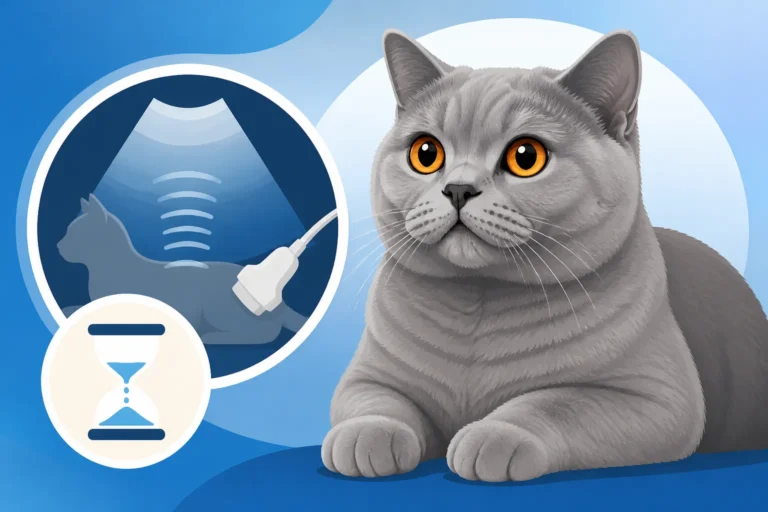
The gold standard for diagnosing HCM and monitoring its progression is an echocardiogram. This non-invasive ultrasound of the heart allows a veterinary cardiologist to visualize the heart's structure and function in real-time. They can measure the thickness of the ventricular walls, assess the size of the atria, observe blood flow patterns, and detect any valve abnormalities or dynamic outflow obstructions.
An echocardiogram can identify HCM even in asymptomatic cats, making it an invaluable screening tool, especially for a predisposed breed like the British Shorthair. Because British Shorthairs do not have a reliable DNA test for HCM, unlike some other breeds like Maine Coons, regular echoes are the only way to truly understand the state of their heart. For details on the procedure, you might be interested in How a British Shorthair's Echo Is Performed. Facing expensive diagnostics like repeated echocardiograms and potentially lifelong medications, many families find peace of mind with pet insurance plans, such as those offered by Healthy Paws, which can substantially reduce out-of-pocket veterinary expenses.
Other Diagnostic Tools
While the echocardiogram is paramount, other diagnostic tools provide supporting information about the impact of HCM:
- Chest X-rays: These are often used when a cat presents with breathing difficulties. They can reveal fluid accumulation in or around the lungs (pulmonary edema or pleural effusion), indicating congestive heart failure.
- Electrocardiogram (ECG): An ECG records the electrical activity of the heart and can detect arrhythmias that might be caused by HCM. However, a normal ECG doesn't rule out HCM, as some cats with significant thickening may have normal heart rhythms.
- Blood Tests: While not diagnostic for HCM itself, blood tests can assess overall health and organ function. Biomarkers like NT-proBNP can be elevated in cats with heart disease, though they are not specific to HCM. They can be useful in screening and monitoring to some extent.
- Blood Pressure Measurement: High blood pressure can contribute to heart disease, and monitoring it is part of a comprehensive cardiac workup, though it's less directly linked to HCM's primary cause.
Each of these tests provides a piece of the puzzle, helping the veterinary team understand the full scope of HCM's impact on your cat.
Regular Monitoring: Understanding Disease Progression
Once HCM is diagnosed, regular monitoring is crucial. The frequency of re-checks, typically involving follow-up echocardiograms, will depend on the severity of the disease and the presence of any clinical signs. These follow-up visits help the cardiologist track how quickly the heart is thickening, if atrial enlargement is worsening, and how effectively any prescribed medications are working.
The goal of monitoring is to anticipate complications and adjust treatment plans to maintain your British Shorthair's quality of life for as long as possible. Understanding the progression allows for informed decisions about medication, activity levels, and overall care. This is a lifelong commitment for many owners, and having pet insurance from companies like Healthy Paws can be a real lifeline when managing chronic conditions that require frequent specialist visits and medications. Knowing How Often a British Shorthair Needs an Echo is a practical concern for any owner managing this condition.
Disclaimer
This article is intended for informational purposes only and does not constitute medical advice. Always consult with a qualified veterinarian or veterinary cardiologist for any health concerns or before making any decisions about your British Shorthair's care.