How to Get a British Shorthair to Move
It’s a common sight for British Shorthair owners: you look across the room and find your beloved furry companion resembling a particularly plush, well-placed rug. They're undeniably adorable, but their calm, often sedentary nature can leave you wondering if they ever actually move. Many of us worry about our British Shorthairs becoming too inactive, and rightfully so. This guide is here to help you understand why your British Shorthair might be a homebody and, more importantly, how to gently encourage them to embrace a more active lifestyle for their long-term health and happiness.
Understanding the British Shorthair's Quiet Demeanor
Before we dive into solutions, it’s important to acknowledge that the British Shorthair's propensity for stillness isn't a flaw; it's a fundamental part of their charm and heritage. These are not typically high-energy, wall-climbing adventurers. They are, by design, more grounded.
The "Couch Potato" Persona is Breed-Specific
When you think of a British Shorthair, images of a dignified, chunky cat with a serene expression probably come to mind. This isn't just a look; it's a reflection of their temperament. Unlike many other breeds, British Shorthairs weren't bred for agility or boundless energy. Their ancestors were sturdy working cats, prized for their quiet efficiency in rodent control, rather than for performing acrobatic feats. They learned to conserve energy, striking only when necessary. This genetic predisposition means they're naturally inclined to be less active than, say, a Bengal or an Abyssinian. They enjoy long naps, quiet observation, and being near their human companions, rather than constantly seeking out adventures. Their dense, plush coats, which are so delightful to stroke, can also make strenuous activity less appealing, as they can get warm quickly.
Comfort Seekers and Creatures of Habit
British Shorthairs are champions of comfort and routine. They thrive on predictability and often have a favorite sunbeam, a prime spot on the sofa, or a cozy bed where they spend the majority of their day. Moving from this chosen spot requires a compelling reason, and simply "exercise" isn't always compelling enough for them. They are intelligent cats, and they quickly learn that staying put often results in cuddles, a good nap, or even food appearing without much effort on their part. If their needs are met without expending much energy, why bother? This comfort-seeking can easily evolve into a deeply ingrained habit, making it challenging to introduce new levels of activity without patience and persistence.
The Hidden Health Risks of Inactivity
While their placid nature is endearing, it’s crucial for British Shorthair owners to be vigilant about the potential health consequences of a truly sedentary lifestyle. What starts as a cute "couch potato" can quickly become a serious health concern if not managed proactively.
Battling the Bulge and Beyond
The most obvious risk associated with a lack of movement in British Shorthairs is obesity. These cats are particularly prone to gaining weight, a topic we delve into more deeply in our article, Why a British Shorthair Gains Weight So Easily. Their natural build is already cobby and robust, making it easy for extra pounds to hide beneath their dense fur. However, those extra pounds are far from harmless. They place immense stress on their joints, leading to conditions like arthritis even at a younger age. We explore this further in What Obesity Does to a British Shorthair's Joints.
Beyond joint issues, obesity dramatically increases the risk of other serious health problems. It's a major contributing factor to feline diabetes, which can be a lifelong and costly condition, as discussed in Diabetes in a British Shorthair. Overweight cats are also more susceptible to liver disease, urinary tract issues, and even certain types of cancer. It’s a cascading effect: less movement leads to weight gain, which then triggers a host of other ailments that can drastically shorten their lifespan and diminish their quality of life. Thinking ahead about your cat's health is always smart, and many owners find that a good pet insurance policy, like one from Healthy Paws, can provide significant peace of mind when unexpected health issues related to weight or inactivity arise.
Impact on Mental and Physical Well-being
It’s not just about weight; an inactive British Shorthair can suffer in other ways, too. A lack of physical activity can lead to mental stagnation. Cats are natural predators, and even if they're indoor-only, they have an innate need to "hunt," stalk, and pounce. Without outlets for these instincts, they can become bored, lethargic, or even develop behavioral issues like destructive scratching or excessive vocalization out of frustration.
Physically, a sedentary life can lead to poor muscle tone and decreased flexibility. Their strong, cobby bodies need to be used to maintain health. Without regular movement, their muscles can atrophy, making even simple actions like jumping onto a low sofa more difficult as they age. This creates a vicious cycle where less movement leads to physical discomfort, which then discourages even more movement. A cat that isn't regularly engaging its body and mind isn't a truly healthy or happy cat, regardless of how calm they appear.
Strategies to Spark Their Inner Hunter
Getting a British Shorthair to move isn't about forcing them into rigorous exercise. It's about understanding their nature and finding creative, gentle ways to tap into their playful instincts without overwhelming them.
Interactive Play Sessions are Key
The best way to encourage movement in a British Shorthair is through consistent, interactive play. Forget about leaving a pile of toys on the floor and expecting them to entertain themselves; these cats usually need you to initiate and participate.
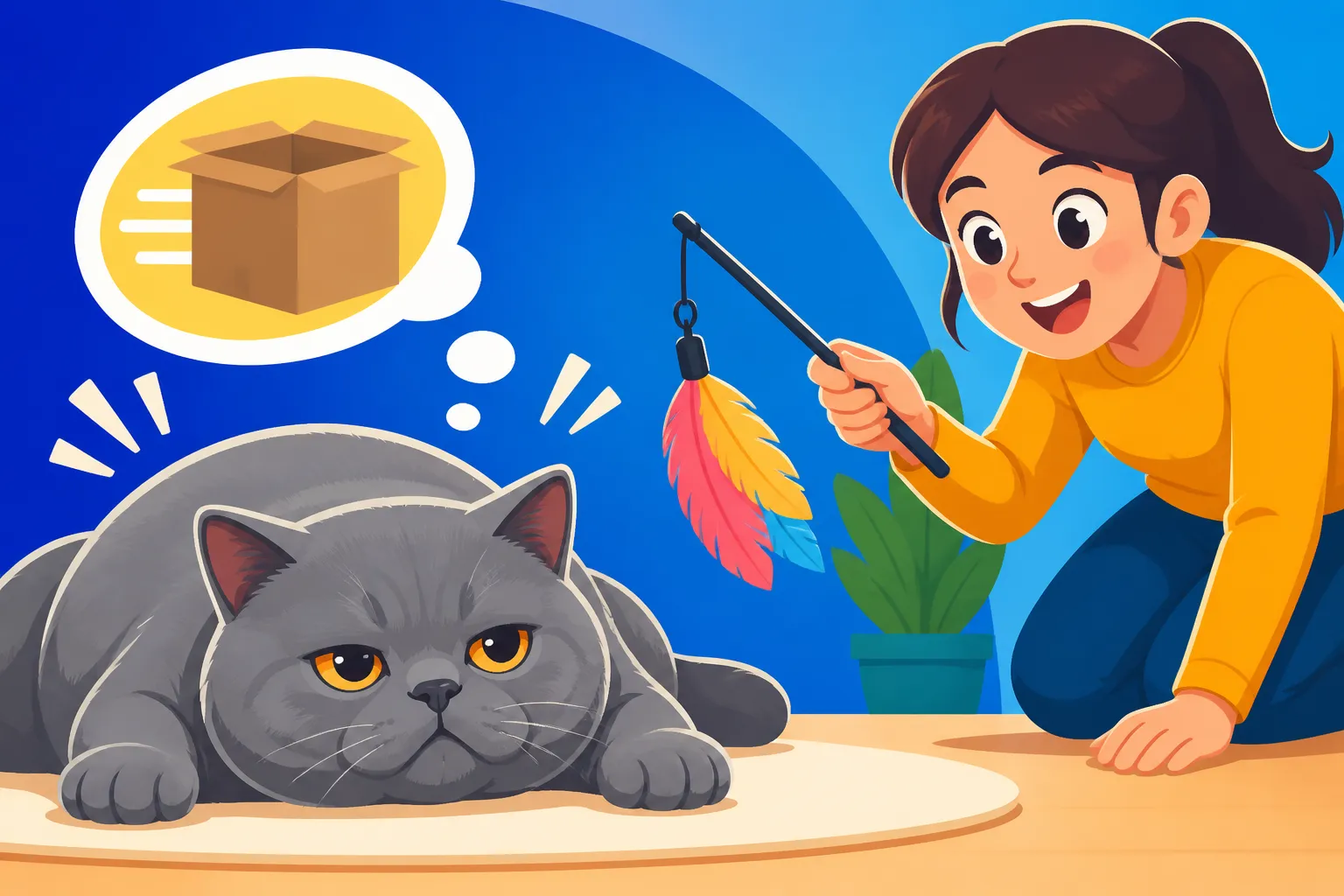
- Wand Toys and Feather Teasers: These are often the most effective. A long wand with a feather, ribbon, or small stuffed toy on the end mimics the movement of prey. Drag it slowly along the floor, hide it around corners, and make it dart and pause. This engages their natural hunting sequence: stalk, pounce, capture. Don't just wave it wildly; that can be overwhelming. Instead, make the "prey" behave realistically. We cover some great options in Which Toys a British Shorthair Will Actually Chase.
- Laser Pointers (with a catch!): While laser pointers can be fantastic for getting even the laziest British Shorthair moving, it's vital to end every session by directing the laser onto a physical toy or treat that they can "catch." This provides the satisfaction of a successful hunt, preventing frustration that can arise from never being able to physically capture their "prey." Without a tangible reward, some cats can become agitated or develop obsessive behaviors.
- Short, Frequent Bursts: British Shorthairs aren't marathon runners. Aim for several short play sessions throughout the day—5 to 10 minutes each—rather than one long, exhausting one. They'll be more receptive and less likely to get tired or bored. Try playing just before meal times to simulate hunting for their food.
Environmental Enrichment and Vertical Space
While British Shorthairs aren't known for their acrobatic skills, subtle changes to their environment can still encourage more movement and engagement.
- Low-Profile Cat Trees and Climbers: You might not see your British Shorthair scaling the tallest cat tree in the house, but they often appreciate sturdy, accessible cat trees or shelves that offer a slightly elevated perch. Even a few steps up can provide a new vantage point, encouraging them to jump up and down a couple of times a day. Look for robust, stable structures that can support their heavier build. This can be a gentle way to get them off the sofa, a strategy we discuss in How to Get a British Shorthair Off the Sofa.
- Window Perches: A comfortable, secure window perch that offers a view of birds, squirrels, or neighborhood activity can provide mental stimulation and sometimes encourage small, excited movements like tail twitching or chirping.
- Rotating Toys: Cats, especially British Shorthairs, can get bored with the same old toys. Keep a selection of toys and rotate them every few days. What was old becomes new and exciting again. This novelty can spark renewed interest and a willingness to play.
Here's a quick comparison of toy types and their general effectiveness for British Shorthairs:
| Toy Type | Description | BSH Engagement Level | Notes |
|---|---|---|---|
| Wand/Teaser Toys | Feathers, ribbons, small plushies on a stick | High | Mimics prey, requires owner interaction, highly stimulating. |
| Laser Pointers | Red dot movers | High | Excellent for quick bursts of movement, must end with a physical catch. |
| Puzzle Feeders | Toys dispensing treats or kibble when manipulated | Medium-High | Engages problem-solving, makes mealtime an activity, slows eating. |
| Small Plush Toys | Kickers, catnip mice, crinkle balls | Medium | Good for solo play, scent-driven, can be "hunted" and carried. |
| Automated Toys | Self-moving lasers, robotic mice, spinning feather toys | Medium-Low | Can capture interest briefly, but often lose appeal without interaction. |
| Ball Tracks | Balls moving within a track | Low-Medium | Some BSH enjoy batting, others quickly lose interest. |
Dietary Adjustments for Activity
Nutrition plays an enormous role when trying to encourage activity in a British Shorthair, particularly because they are prone to weight gain. What and how you feed them can significantly influence their energy levels and willingness to move.
- Portion Control is Paramount: As we highlight in Portion Control Is the Whole Job With a British Shorthair, accurately measuring your cat's food is non-negotiable. Overfeeding, even by a small amount, can quickly lead to weight gain given their lower activity levels. Consult your veterinarian for precise caloric needs based on your cat's ideal weight and current activity. This might mean adjusting How Much an Adult British Shorthair Eats down significantly from what's recommended on the bag.
- Embrace Wet Food: Wet food has a higher moisture content, which can help your cat feel fuller on fewer calories and also supports urinary tract health. It can also be more appealing, making it easier to manage portion sizes if they're particularly enthusiastic eaters.
- Consider a Weight Control Formula: If your British Shorthair is already overweight, your vet might recommend a specific weight control diet. These formulas are designed to be lower in calories but still provide essential nutrients, helping your cat feel satisfied while shedding pounds. We delve into this more in When a British Shorthair Needs a Weight Control Food. Remember, any dietary changes should always be discussed with your vet to ensure they're safe and appropriate for your cat's individual needs. It's also worth noting that unforeseen complications from weight issues might necessitate specialized veterinary care, and having a robust pet insurance plan like those offered by Healthy Paws can be an invaluable asset in these situations.
Integrating Movement Into Daily Life
The trick to a more active British Shorthair isn't a one-off burst of energy; it's about making movement a consistent and enjoyable part of their daily routine. It takes patience, consistency, and a little creativity.
Consistent Play Schedules and Routines
Cats are creatures of habit, and British Shorthairs are no exception. Establishing a routine for playtime can make all the difference. Try to schedule short, interactive play sessions at predictable times each day. For example, a 10-minute session in the morning before breakfast, another in the afternoon, and a final one in the evening before their last meal.
Consistency helps them anticipate and even look forward to these sessions. They'll start to associate these times with positive engagement and a fun "hunt." Even if they seem reluctant at first, continue gently initiating play. Don't push too hard if they're not in the mood, but do offer the opportunity. Remember, these are sprinters, not marathon runners, so short, intense bursts of play are far more effective than trying to force them into a long, drawn-out session. Our guide, How to Get a British Shorthair to Play Daily, offers even more tips for making playtime a regular habit.
Making Meals a Mission, Not Just a Meal
Feeding time doesn't have to be just a bowl on the floor. You can transform it into an opportunity for mental and physical activity.
- Puzzle Feeders: These are fantastic tools for British Shorthairs. They require your cat to manipulate the feeder to get their kibble or treats, slowing down their eating and engaging their brains. There's a wide range of puzzle feeders available, from simple ones where they bat at a toy to release food, to more complex ones requiring pawing or nudging. Start with something easy to prevent frustration and gradually introduce more challenging puzzles.
- Food Scatters: Instead of putting all their kibble in a bowl, scatter small portions around the room. Hide a few pieces under a rug, behind a door, or even up a low step. This encourages them to walk around, sniff, and "hunt" for their food, mimicking a more natural foraging behavior. Just ensure the spots are accessible and safe.
- Interactive Feeding Toys: Some toys are designed to hold a few pieces of kibble and release them as the cat plays with it. This combines play and feeding, making them work for their meal and burning a few extra calories in the process.
Monitoring Progress and Adjusting as Needed
Encouraging a British Shorthair to move is an ongoing process, and it’s important to monitor their progress and be willing to adjust your approach.
- Regular Weight Checks: Keep an eye on your British Shorthair's weight. Regular weigh-ins at home (or at your vet) can help you track if your efforts are making a difference. Compare it to What a Healthy British Shorthair Weighs on the Scale to set realistic goals.
- Observe Their Energy Levels: Pay attention to subtle cues. Are they showing more interest in toys? Are they initiating play more often? Are they moving with a little more pep in their step? Even small changes are victories.
- Veterinary Consultations: Your veterinarian is your best partner in this journey. They can help assess your cat's ideal weight, suggest appropriate dietary modifications, and rule out any underlying health issues that might be contributing to lethargy. Regular check-ups are crucial, especially as they age, and having pet insurance from a provider like Healthy Paws can help manage the costs of these proactive health measures, giving you peace of mind that you can afford the best care for your beloved British Shorthair. Don't hesitate to ask your vet for tailored advice on how to get your British Shorthair to move effectively and safely.
Disclaimer
This article is intended for informational purposes only and does not constitute professional veterinary advice. Always consult with a qualified veterinarian for any health concerns or before making any changes to your pet's diet, exercise routine, or medical care.