Which Toys a British Shorthair Will Actually Chase
If you're a British Shorthair owner, you know the struggle: you bring home a new, exciting toy, only for your lovely, round-faced companion to give it a disinterested sniff before returning to their favorite sunbeam. It can be incredibly frustrating to try and encourage your wonderfully calm cat to engage in play, especially when you see other breeds tearing around with endless energy. This guide is here to help you navigate the world of cat toys and discover which ones are most likely to spark joy – and a little bit of movement – in your cherished British Shorthair, ensuring they get the mental and physical enrichment they need without turning into a tiny, fluffy statue.
Understanding the British Shorthair's Unique Play Style
Let's be honest, British Shorthairs aren't typically known for their Olympic-level athleticism or boundless energy. They are the dignified, calm, and often quite sedentary members of the feline world. This isn't a flaw; it's part of their charm! However, it does mean that their approach to playtime is vastly different from, say, a Bengal or a Siamese. Understanding this fundamental difference is key to choosing toys they'll actually enjoy and engage with. You can't expect them to behave like a different breed, and trying to force it will only lead to disappointment for both of you.
The Calm and Dignified Hunter
Despite their sometimes ponderous appearance, British Shorthairs are still cats, and cats are natural hunters. The difference is their hunting style is often more about short bursts of intense focus followed by periods of quiet observation, rather than prolonged, high-speed chases. They're like strategic generals rather than frantic foot soldiers. You might notice them fixating on a dust motes or a fly, stalking it with slow, deliberate movements before a swift pounce. This tells you a lot about the kind of toys that will appeal to them: those that simulate real prey, encourage stalking, and offer a satisfying "kill."
They appreciate a toy that requires a bit of thought, a moment of anticipation, rather than something that simply jiggles erratically. Think about how a wild cat hunts: it's not always about constant movement. Sometimes it's about waiting, watching, and then striking. Your British Shorthair embodies this patient predator, so toys that allow for this slow build-up of excitement, rather than demanding immediate, sustained chaos, are often far more successful. This natural inclination means you need to adjust your expectations of playtime to match their innate rhythm.
For many British Shorthair owners, it's a constant quest to get their cat to move more. You might find yourself wondering How to Get a British Shorthair to Play Daily, or even Getting a Low Energy British Shorthair to Move. It often boils down to understanding their intrinsic motivation, which is less about burning off excess energy and more about satisfying their hunting drive in a calm, controlled way. They're not going to zoom around for twenty minutes, but they might engage in a focused, five-minute stalking session that leaves them feeling accomplished.
Why Intense Play Is Often Short-Lived
If you've ever tried to get your British Shorthair to chase a laser pointer for more than a few minutes, you've probably noticed them just… stop. They might sit down, watch it for a bit, then give you a look that says, "Alright, I've seen enough of this red dot for today." This isn't laziness in the human sense; it's often their natural energy conservation and a desire for a definitive conclusion to the hunt. They prefer quality over quantity when it comes to playtime. A British Shorthair would much rather have a few short, highly engaging play sessions than one long, exhausting one.
Their compact, cobby build, coupled with their dense coat, isn't really designed for sustained, high-impact acrobatics. They can certainly be agile, but marathon play sessions are generally not their cup of tea. It's important to respect this, as pushing them too hard can lead to disinterest, or worse, make them associate playtime with feeling overwhelmed. Instead of aiming for a long session, focus on several shorter, intense bursts of play throughout the day, perhaps five to ten minutes at a time. This approach aligns better with their natural rhythm and keeps them coming back for more.
You might also observe that their enthusiasm wanes quickly. One moment they're all about the toy, the next they're grooming a paw as if the toy never existed. This is perfectly normal. Don't take it personally. It simply means their "hunt" is over for now, or they've decided it's no longer challenging enough. This tendency means that the element of novelty and surprise in play becomes even more important. Varying toys and play styles helps keep them intrigued, preventing the boredom that can quickly set in.
The Importance of Mental Stimulation Over Physical Exertion
Because British Shorthairs aren't always keen on rigorous exercise, mental stimulation becomes incredibly important for their overall well-being. A bored British Shorthair is often a destructive British Shorthair, or one that simply sleeps all day, which isn't healthy either. Toys that make them think, plan, and "solve a problem" can be far more engaging than those that just require brute force or endless running. This mental workout is just as vital as any physical activity for their happiness and health.
Consider toys that require a bit of batting, nudging, or problem-solving to release a treat or make an interesting sound. These types of toys tap into their natural curiosity and intelligence, providing a fulfilling experience that doesn't necessarily involve zooming across the room. They'll use their paws, their nose, and their clever brains to figure things out, which can be incredibly satisfying for them and entertaining for you to watch. This type of engagement can prevent behavioral issues that arise from boredom and under-stimulation.
Remember, a British Shorthair might seem calm and placid, but there's a sharp mind behind those round, golden eyes. Providing outlets for that intelligence is crucial. This is why puzzle toys and interactive feeders are often such a hit. They offer a challenge that a simple static toy cannot, providing a sense of achievement rather than just a fleeting moment of physical exertion. For a cat that enjoys its quiet moments, a mental workout can be the perfect way to spend their active time.
The Allure of the Wand Toy: A British Shorthair's Best Friend
When it comes to getting a British Shorthair to actually move, interactive wand toys are often your secret weapon. These aren't just toys; they are extensions of your hand, allowing you to mimic the erratic, unpredictable movements of natural prey. The beauty of a wand toy is that it puts you in control, letting you tailor the speed, height, and hiding spots to perfectly suit your cat's individual hunting preferences and energy levels. It’s a dynamic dance between you and your feline, making playtime a shared experience rather than a solo endeavor.
Mimicking Prey with Feather Wands
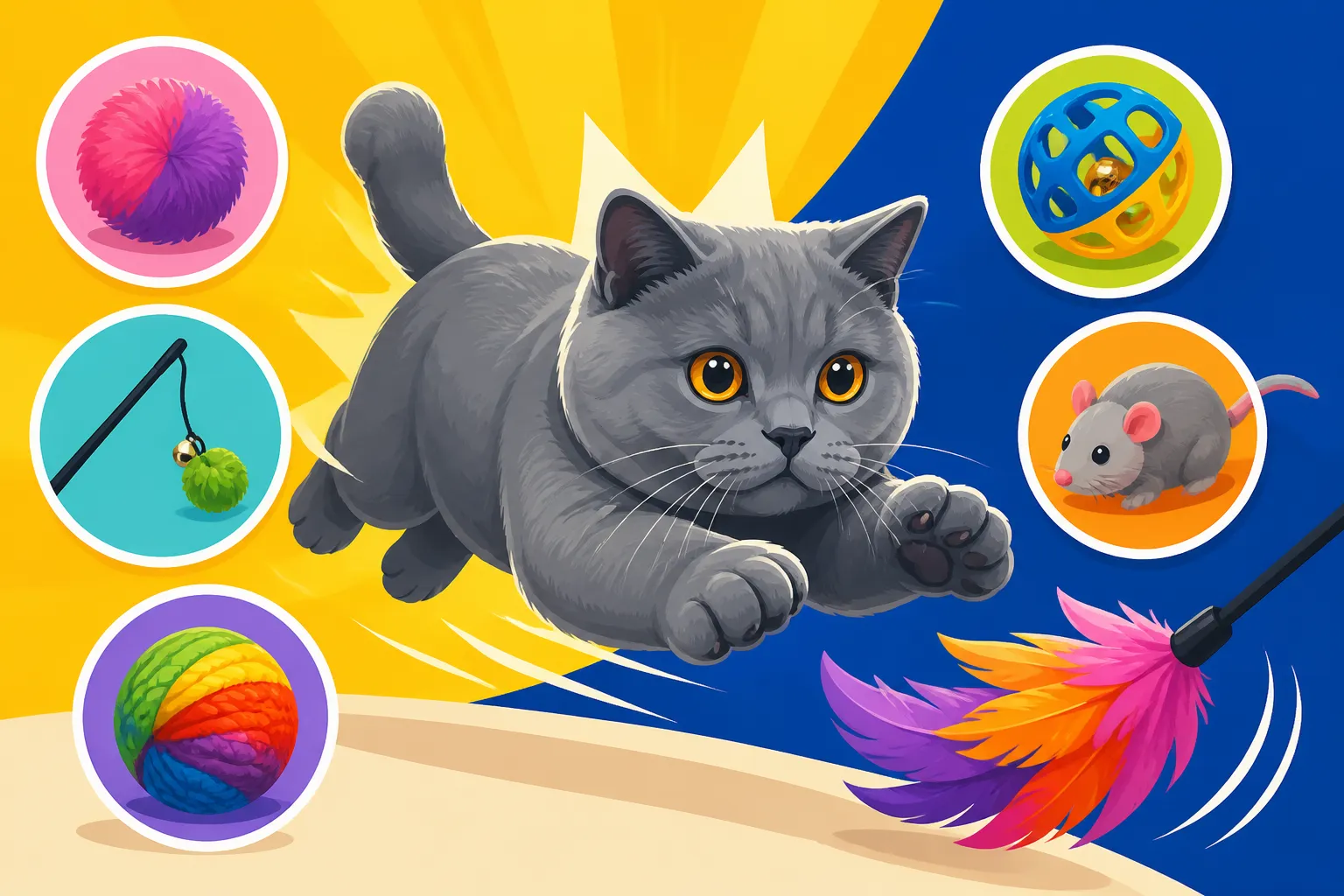
Feather wands are almost universally loved by cats, and British Shorthairs are no exception. The soft, fluttering feathers, especially those from natural birds, perfectly replicate the erratic flight patterns of birds or the scuttling of small prey. You can dangle it, make it dart and hide behind furniture, or let it "fly" just out of reach. The key is to make it unpredictable, never allowing your cat to quite catch it until the very end of the session, building up that delicious anticipation. This mimics the real-life thrill of the chase, where success isn't guaranteed every time.
Many British Shorthair owners report that their usually sedate cat transforms into a focused hunter with a good feather wand. Brands like Da Bird or Go Cat Da Bird (often found on platforms like Amazon) are incredibly popular because their attachments are designed to spin and move in a highly enticing way. The movement is so realistic that even the most laid-back British Shorthair often can't resist a few determined pounces. The lightness of the feathers also means you can create quick, jerky movements that grab their attention without requiring a massive amount of effort from your cat.
Remember to let them "catch" the prey at the end of a session. This satisfies their natural hunting instinct and provides a sense of accomplishment, preventing frustration. A successful hunt, even with a toy, releases endorphins and reinforces the positive association with playtime. Without this satisfying conclusion, your British Shorthair might eventually lose interest, feeling like the game is rigged and there's no payoff for their efforts.
The Thrill of the Chase with Critter-Like Attachments
Beyond feathers, wand toys with attachments that resemble small critters – think furry mice, small insects, or even crinkly plastic shapes – can also be highly effective. The key here is the texture and the movement. A furry mouse scuttling across the floor, then disappearing under a rug, can trigger your British Shorthair's inner predator just as effectively as feathers. The variety in attachments ensures that you can keep things fresh and interesting, preventing boredom with the same old toy.
Some cats have a strong preference for certain textures or shapes. Observe your British Shorthair: do they seem more interested in something that feels like fur, or something that makes a crinkly sound? Experiment with different attachments to see what sparks their interest most. You can often buy wand toy handles separately and then swap out various attachments, offering a rotating buffet of "prey" to keep your cat guessing. This customization is one of the biggest advantages of a good wand toy system.
When using these critter-like attachments, focus on ground-level play. British Shorthairs aren't generally renowned for their leaping abilities, especially as they get older or become a bit rounder. Keep the "prey" low, making it dart and hide, encouraging stalking and pouncing rather than high jumps that might strain their joints. This makes the game more accessible and enjoyable for them, ensuring they can participate fully and feel like a successful hunter.
Durability and Safety Considerations
When choosing wand toys, especially those with multiple attachments, durability is a big factor. British Shorthairs have powerful jaws and strong claws, even if they're not always using them with full force. You want a wand that can withstand some enthusiastic pouncing and biting. Look for wands with sturdy poles and securely attached lines. Cheap wands can break easily, potentially creating small parts that could be a choking hazard.
Safety is paramount. Always supervise play with wand toys. The string or wire can pose a strangulation risk if left unattended, and small attachments could be swallowed if they come loose. After playtime, always put the wand toy away in a secure location where your cat cannot access it. This also helps maintain the novelty of the toy, making it a special item that only comes out for dedicated play sessions. A toy that's always available quickly becomes boring.
Consider the materials of the attachments. Are they non-toxic? Are there any small bells or plastic eyes that could come off? Products from reputable pet supply companies (often easily found on Amazon with customer reviews detailing durability) usually adhere to safety standards, but it's always wise to double-check. A little bit of vigilance goes a long way in ensuring your British Shorthair enjoys their playtime safely.
Solo Play That Captures Their Attention
While interactive play with wand toys is fantastic for bonding and exercise, we can't always be there to entertain our British Shorthairs. That's where good solo play toys come into their own. These are the toys that can keep your cat engaged when you're busy, working, or simply enjoying a quiet moment. The trick is to find solo toys that appeal to their calm yet curious nature, offering enough stimulation to prevent boredom without requiring constant effort from them.
Puzzle Feeders: Engaging Their Minds and Bellies
Puzzle feeders are an absolute game-changer for many British Shorthair owners. These aren't just toys; they're enrichment tools that tap into your cat's natural foraging instincts. Instead of simply eating their food from a bowl, they have to work for it, batting at a ball, nudging a slider, or figuring out how to retrieve kibble from various compartments. This slows down their eating, which can be beneficial for digestion and weight management (a common concern for the breed), and provides a satisfying mental challenge. Whether a Puzzle Feeder Motivates a British Shorthair is often a resounding yes!
There's a wide range of puzzle feeders available, from simple treat balls that dispense kibble as they roll, to more complex boards with hidden compartments. Start with something easy to build their confidence, then gradually introduce more challenging puzzles. Your British Shorthair will enjoy the process of figuring out how to get their reward, and the mental effort involved can be just as tiring (in a good way) as a physical play session. It’s a fantastic way to combine mealtime with enrichment.
You can often find various styles and difficulty levels of puzzle feeders on Amazon. Look for ones that are easy to clean, sturdy, and have non-slip bottoms to prevent them from being pushed all over the floor. This type of toy not only provides mental stimulation but also encourages a healthier eating pace, making it a win-win for both you and your British Shorthair. It truly transforms mealtime into an engaging activity rather than just a quick chow-down.
Simple Rolled Toys: Balls and Springs
Sometimes, the simplest toys are the most effective. Small, lightweight balls that roll easily, like crinkle balls, ping-pong balls, or even just crumpled paper balls, can provide surprising entertainment. British Shorthairs often enjoy batting these around, chasing them for short distances, and pouncing on them. The key is their light weight and unpredictable bounce, which mimics small prey that might dart away.
Plastic springs are another surprisingly popular choice. Their erratic bounce and ability to slide across hard floors make them irresistible to many British Shorthairs. They're lightweight, quiet, and can be batted around for solo entertainment for quite some time. The way they can spring back unpredictably often triggers their hunting instincts, prompting little pounces and focused observation. They're inexpensive and you can get a whole bag of them on Amazon, ensuring you always have a fresh supply.
It's helpful to have a variety of these small, rolled toys scattered around the house. Your British Shorthair might find one under the sofa, bat it out, and engage in a quick solo play session before settling back down. This spontaneous play is valuable for keeping them mentally active throughout the day, even if they aren't engaging in a full-blown interactive game. Just be mindful of toys small enough to be swallowed or lost in hard-to-reach places.
Crinkle Toys and Kickers: Appealing to Their Instincts
British Shorthairs often have a soft spot for crinkly textures and "kicker" toys. The crinkle sound, whether from paper inside a fabric toy or a dedicated crinkle ball, mimics the rustling of leaves or the movement of hidden prey, instantly grabbing their attention. These sounds are subtle enough not to be overwhelming but engaging enough to pique their curiosity and initiate a bit of batting and pouncing.
Kicker toys are elongated, soft toys designed for your cat to grip with their front paws and "kick" with their back legs, simulating the final, exciting moments of a hunt. They allow your British Shorthair to unleash their powerful back legs in a safe and satisfying way. Many come filled with catnip or silvervine, adding an extra layer of allure. A well-placed kicker can be a fantastic outlet for their pent-up energy, allowing them to engage in vigorous solo play when the mood strikes.
Ensure kicker toys are durable and made from pet-safe materials, especially if your cat is an enthusiastic "killer." They should be large enough for your British Shorthair to wrap their front paws around comfortably. Placing a kicker toy near their favorite sleeping spot or in a quiet corner can encourage them to engage with it during those moments when they're feeling a bit more active but still prefer solitary play. It’s a wonderful way for them to practice their hunting skills without needing you to participate directly.
Beyond the Ordinary: Unique Toys and Enrichment
Sometimes, you need to think a little outside the box to keep your British Shorthair engaged. Their calm demeanor doesn't mean they don't appreciate novelty or a clever twist on traditional play. Exploring unique toys and enrichment strategies can help prevent boredom and ensure your British Shorthair stays mentally sharp and physically stimulated. It’s about discovering what truly lights up their quiet, discerning personalities.
Laser Pointers: A Debate Among Owners
The laser pointer is a classic cat toy, creating an irresistible moving dot that most cats love to chase. For a British Shorthair, it can be a great way to encourage quick bursts of activity, prompting them to chase and pounce without you having to move much. However, there's a significant debate among cat owners and behaviorists about their long-term effects. The main issue is that a laser pointer never allows the cat to actually "catch" its prey, which can lead to frustration and a feeling of incompleteness.
If you do use a laser pointer, it's crucial to always end the session by directing the laser onto a physical toy (like a kicker or a treat) that your British Shorthair can actually "catch" and "kill." This provides a satisfying conclusion to the hunt and prevents the frustration that comes from perpetual failure. Without this resolution, your cat can become agitated or even develop obsessive behaviors. While it gets them moving, consider the psychological aspect carefully. For more on this, you might find How a British Shorthair Reacts to a Laser insightful.
Another consideration is the potential for repetitive strain injury if your British Shorthair is constantly jumping or twisting awkwardly while chasing the dot. Keep the movements on the ground and allow for plenty of low-to-the-ground pouncing. Used sparingly and correctly, a laser pointer can be a useful tool for getting a brief burst of exercise, but it should never be the only form of play or left unsupervised.
Interactive Electronic Toys
The market is full of electronic toys designed to entertain cats automatically. These can range from automatic laser pointers that rotate patterns on the floor (again, use with caution and a physical "kill" at the end!), to toys with hidden feathers that pop out randomly, or motorized mice that scurry unpredictably. For a British Shorthair, these can be hit or miss. Some will find them fascinating for a short period, while others will quickly lose interest once the novelty wears off.
The benefit of these toys is that they provide stimulation when you can't actively play. However, they lack the interactive element and the personal connection that comes from playing with your cat yourself. A British Shorthair might enjoy watching an electronic toy for a while, but it's unlikely to fully satisfy their hunting drive in the same way a personalized wand play session would. Think of them as supplemental enrichment rather than a primary source of play.
When selecting electronic toys, consider their noise level and durability. Some can be quite loud or have parts that break easily. Look for options that offer variable speeds or patterns to keep things interesting. Always read reviews (perhaps on Amazon) to gauge how other cat owners, especially those with calmer breeds, have found them. It's often a case of trial and error to see what truly captures your British Shorthair's attention.
Homemade and Household Items
Don't underestimate the power of simple, everyday items. A crumpled paper ball, a toilet paper roll, or even a cardboard box can provide endless entertainment for a British Shorthair. Cats are often drawn to the novelty of new textures and smells, and a fresh cardboard box offers both hiding spots and a satisfying surface for scratching and gnawing. These items cost next to nothing and can often be more engaging than expensive, fancy toys.
A simple paper bag (with the handles cut off for safety) can become a fantastic crinkly hideout and pounce zone. You can also make simple "fishing pole" toys using a stick, some string, and a feather or a piece of fabric. Just ensure all homemade toys are safe, without small parts that can be swallowed, or sharp edges. The appeal often lies in their simplicity and the fact that they're new and different from their usual store-bought fare.
This type of enrichment encourages creativity in your British Shorthair. They get to interact with something new, explore its properties, and decide how they want to play with it. It's a reminder that sometimes the best toys aren't bought, but found or created. Regularly rotating these simple household items can provide continuous novelty without breaking the bank, keeping your discerning British Shorthair intrigued by their environment.
What to Avoid: Toys That Gather Dust
Just as important as knowing what toys your British Shorthair will chase is understanding what toys are likely to become expensive dust collectors. Many well-intentioned owners find themselves with a pile of untouched cat toys, wondering why their beloved pet shows no interest. It often comes down to mismatched expectations or toys that simply don't align with the British Shorthair's natural play instincts.
The Problem with Tiny, Easily Lost Toys
While small balls and springs can be great, excessively tiny toys often fall flat. If a toy is too small, it might not offer enough substance for a satisfying pounce or "kill." Plus, they are incredibly easy for your British Shorthair to bat under furniture, where they are quickly forgotten. A toy that's out of sight is definitely out of mind for a British Shorthair. They aren't generally ones to go digging for lost treasures.
Consider the size of your British Shorthair's paws and mouth. A toy that's too small might be a choking hazard, or simply too fiddly for them to enjoy manipulating. They need something they can confidently bat, carry (if they're into that), and pounce on without it vanishing into the abyss after one swipe. Even for solo play, a slightly larger, more substantial toy is often preferred, one that offers a better tactile experience.
The frustration for owners comes from constantly having to retrieve these minuscule items, only for them to disappear again within minutes. Opt for toys that are a bit more substantial, easier to see, and less prone to vanishing. This will save you time and ensure your cat actually gets to enjoy the toy for more than a fleeting moment.
Overly Complicated Gadgets
Sometimes, toy manufacturers try too hard. Elaborate electronic gadgets with flashing lights, loud noises, and complex mechanisms might seem exciting to us, but they can often overwhelm or simply confuse a calm British Shorthair. Their play style is generally more grounded and less about sensory overload. A toy that's too "busy" can actually deter them from interacting, as it doesn't mimic anything natural or allow for their preferred stalking and pouncing.
These highly sophisticated toys often promise endless entertainment, but the reality for a British Shorthair can be quite different. They might watch it for a moment, then decide it's too much effort or too unpredictable in a way that isn't engaging. They prefer a challenge they can understand and conquer, not a light show that feels more like a disco. Keep it simple; often, less is more when it comes to captivating a British Shorthair.
Before investing in a pricey, complex electronic toy, consider if it truly aligns with your British Shorthair's known preferences. Do they like loud noises? Do they engage with rapid, unpredictable movements that aren't tied to a natural hunting pattern? Often, the answer is no, and these gadgets end up gathering dust while your cat bats at a simple crumpled receipt.
Toys Lacking Novelty
One of the biggest culprits for untouched toys is a lack of novelty. If a toy is always available, it quickly loses its appeal. This is true for many cats, but especially for British Shorthairs who can be quite discerning. A toy that was exciting last week might be completely ignored this week if it's been left out continuously. This isn't a sign of boredom with the type of toy, but rather a lack of freshness.
Think about How Much Play a British Shorthair Needs and how you can maximize engagement. The solution is often a simple toy rotation strategy. Keep a selection of toys put away, only bringing out two or three at a time for a few days, then swapping them for a different set. This keeps every toy feeling "new" and exciting when it reappears. When a toy makes a comeback after being hidden away, it often sparks renewed interest, making it feel like a new discovery.
Without this rotation, even the best toys will eventually become part of the furniture, simply blending into the background. Your British Shorthair is a creature of comfort and routine, but a little surprise in their toy selection can be a powerful motivator. It ensures that when a toy is presented, it has the potential to grab their attention and spark that delightful, albeit brief, burst of hunting energy.
Making Playtime a Habit for Your British Shorthair
Encouraging your British Shorthair to play doesn't have to be an arduous task. With a bit of understanding and consistent effort, you can integrate playtime seamlessly into their daily routine, providing the enrichment they need to thrive. It's about establishing habits that benefit both of you, strengthening your bond and keeping them happy and healthy. Remember, a playful cat is a happy cat, even if their version of "playful" looks a little different from other breeds.
Consistency Is Key
British Shorthairs thrive on routine. Establishing consistent play times, even if they're short, can make a huge difference. Try to schedule a few 5-10 minute interactive play sessions each day – perhaps in the morning before work and again in the evening. This helps your cat anticipate playtime and makes them more likely to engage when the toys come out. They learn to expect the interaction and are often more receptive to it.
Even if your British Shorthair seems reluctant at first, gently persist. Don't force them, but offer the opportunity consistently. Some British Shorthairs are slow to warm up to new routines, but once they understand what's happening, they'll often participate willingly. The consistency tells them that this is a regular, enjoyable part of their day, leading to greater engagement over time. You might find that What a British Shorthair Does All Day suddenly includes more active moments.
Think of it as training for both of you. You're training your British Shorthair to look forward to playtime, and you're training yourself to make it a priority. Over time, these consistent sessions will not only provide physical and mental stimulation but also deepen the bond you share with your wonderful companion. It’s a dedicated moment of interaction that they often come to cherish, even if they don't show it with wild acrobatics.
Rotating Toys to Maintain Interest
As mentioned, novelty is vital for a British Shorthair. A strict toy rotation schedule is one of the easiest and most effective ways to keep them interested in their playthings. Don't leave all the toys out all the time. Instead, have a "toy chest" where you store the majority of their toys. Each week, or even every few days, swap out the toys that are currently available for a fresh selection from the chest.
This simple act makes every reappearing toy feel like a new discovery, rekindling your British Shorthair's curiosity. It prevents them from becoming complacent or bored with their existing options. When a beloved feather wand or crinkle ball makes its comeback, it's often met with renewed enthusiasm, providing that little spark of excitement that encourages them to engage. This strategy is also budget-friendly, as you don't need to constantly buy new toys; you're just refreshing their perception of the ones they already have.
Consider categorizing your toys (e.g., "interactive wands," "solo balls," "puzzle feeders") and ensuring you rotate through a variety of types. This provides different forms of stimulation and ensures that your British Shorthair is never short on options. The more effort you put into maintaining that sense of novelty, the more engaged your British Shorthair will be with their play environment. This is a core strategy for encouraging a naturally calm cat.
Observing Their Preferences
Ultimately, every British Shorthair is an individual. What one cat loves, another might ignore. The most powerful tool you have is observation. Watch your cat closely during playtime. What types of movements do they respond to most? Do they prefer chasing things on the ground, or do they occasionally show interest in something dangling higher up? Do they prefer quiet toys or crinkly ones? Pay attention to the toys they engage with, even if only briefly, and lean into those preferences.
Don't be afraid to experiment with different toy types, textures, and play styles. Sometimes, it's not the toy itself, but how you present it that makes the difference. A wand toy might be ignored if you wave it too frantically, but become irresistible if you make it dart and hide slowly. Their subtle cues will tell you a lot about what they enjoy. They might not be the most demonstrative cats, but their focus, their tail movements, or even a slow blink can indicate interest.
Keep a mental note, or even a physical list, of your British Shorthair's favorite toys and play patterns. This will help you refine your toy collection and make playtime more enjoyable and effective for everyone involved. For example, if your British Shorthair completely ignores a particular type of toy, don't keep pushing it. Instead, invest in variations of the toys they do enjoy. Understanding their unique personality is the key to unlocking their playful side, ensuring that How Much Exercise a British Shorthair Needs is met in a way they genuinely enjoy.
| Toy Type | British Shorthair Appeal | Best for | Key Considerations |
|---|---|---|---|
| Feather Wand Toys | High. Mimics natural prey, encourages stalking & pouncing. | Interactive play, satisfying hunting instinct. | Must be put away after play. Let them "catch" at end. Look for durable, well-made options (e.g., Go Cat Da Bird). |
| Critter-Like Wand Toys | High. Simulates small animals, varied textures. | Interactive play, diverse hunting scenarios. | Ground-level play recommended. Supervise, ensure attachments are secure. |
| Puzzle Feeders | High. Engages mind, slows eating, satisfies foraging. | Solo play, mental stimulation, weight management. | Start easy, gradually increase difficulty. Ensure easy to clean. |
| Crinkle Balls/Springs | Medium to High. Lightweight, erratic movement, sound. | Solo batting, spontaneous play. | Easy to lose under furniture. Get a bulk pack. |
| Kicker Toys (with catnip) | Medium to High. Allows for "killing" and back-leg action. | Solo vigorous play, stress relief, catnip fun. | Ensure durable fabric and pet-safe stuffing. Size appropriate for gripping. |
| Laser Pointers | High for initial chase, but risky for satisfaction. | Brief, high-energy bursts of movement. | ALWAYS end with a physical toy "kill" to prevent frustration. Use sparingly. |
| Electronic Toys | Varies (Medium to Low). Can provide novelty. | Supplementary solo entertainment when you're busy. | Observe engagement; some BSH may quickly lose interest. Consider noise & durability. |
| Crumpled Paper/Cardboard Boxes | Medium to High. Novelty, texture, hide-and-seek. | Inexpensive solo play, environmental enrichment. | Ensure safety (no staples, tape, cut off bag handles). |
| Small, Plush Mice | Medium. Simple, can be batted around. | Solo batting, carrying. | Can be lost easily or ignored if no novelty. |
| Overly Complex Toys | Low. Can be overwhelming or boring. | Generally not recommended for BSH. | Often leads to disinterest; keep it simple. |
Disclaimer
This article is for general informational purposes only and does not constitute professional advice. Laws, prices and regulations vary by location and change over time. Consult a qualified professional for guidance on your specific situation.