Which Blood Types a British Shorthair Can Have
It’s easy to assume that all cats, like most people, have pretty much the same blood characteristics, or that blood type only really matters if there’s a serious accident and a transfusion is needed. But for British Shorthair owners, especially those who might consider breeding, understanding Which Blood Types a British Shorthair Can Have is incredibly important. This guide will walk you through the specifics of feline blood types, their prevalence in British Shorthairs, and why knowing your cat's blood type can quite literally be a matter of life or death, particularly for newborn kittens.
Understanding Feline Blood Groups
You might think of blood types in terms of A, B, O, and Rh factors, just like humans. But when it comes to our feline friends, the system is a bit different, and misunderstanding it can lead to devastating consequences. It's a crucial piece of knowledge that many pet owners only learn about in a crisis, which is a stressful time to be absorbing complex information.
The ABO System in Cats
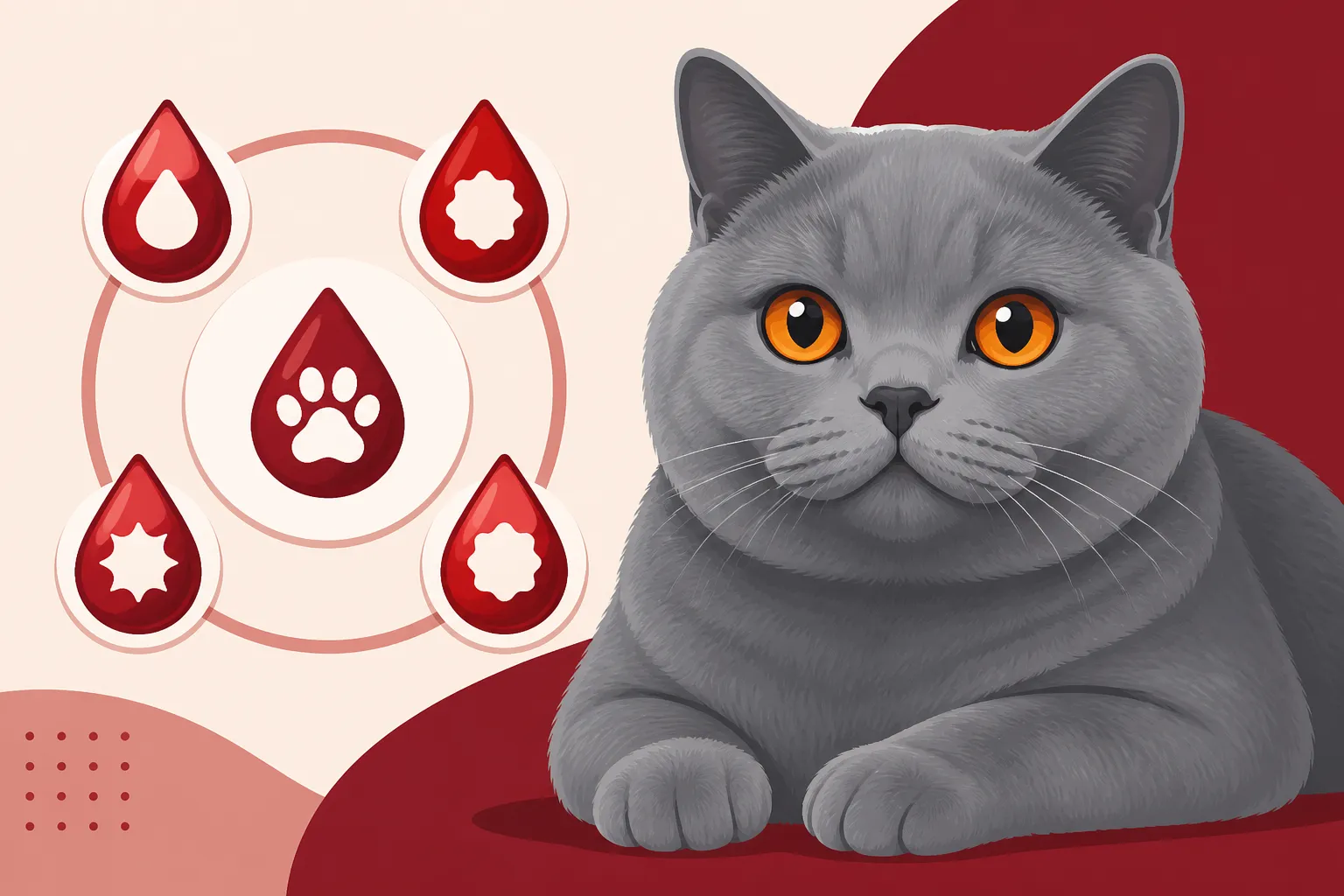
Cats, including British Shorthairs, primarily operate on an ABO blood group system, but it's not quite the same as the human one. In felines, there are three main blood types: Type A, Type B, and the very rare Type AB. The genetics work a little differently too, with Type A being dominant over Type B. This means that a cat only needs one copy of the "A" gene to express Type A blood, while a cat must inherit two copies of the "B" gene (one from each parent) to be Type B. Type AB is a whole different beast, inherited through a specific combination that isn't as straightforward as just getting one A and one B, and it's far less common than in humans.
Imagine you're trying to mix two different paints. If you mix blue and yellow, you get green. But in cats, it's more like if you have a strong blue paint and a weaker yellow paint, the blue usually dominates. Only when you have two weak yellow paints do you get pure yellow. This oversimplification helps grasp the dominance. The real frustration often comes from thinking it’s a simple 1:1 match like human blood, when in reality, the antibodies cats naturally carry make things far more complex and dangerous.
Why Blood Type Matters Beyond Transfusions
Beyond the obvious need for blood transfusions during emergencies or surgeries, a cat's blood type carries profound implications, especially for breeding British Shorthairs. The primary concern is a condition called neonatal isoerythrolysis (NI). This horrible disease affects newborn kittens and is directly linked to an incompatibility between the queen's (mother cat's) blood type and her kittens'.
If you've ever had a kitten litter where some seemingly healthy newborns start fading and dying within their first few days, despite no obvious illness, it's a gut-wrenching experience. Many times, these tragic losses can be attributed to NI, a silent killer that stems from this blood type mismatch. This isn't just a concern for professional breeders; even accidental litters need this awareness, because the heartbreak of losing an entire litter due to something preventable is immense. Understanding these underlying genetic factors is key to preventing such tragedies and ensuring the health and survival of those adorable little fluff balls.
The Specific Blood Types Found in British Shorthairs
While the feline ABO system applies to all domestic cats, the prevalence of each blood type varies significantly between breeds. This is where British Shorthairs stand out, and it's why specific knowledge of their breed's typical blood profile is so critical for responsible ownership and breeding. It’s not a one-size-fits-all situation, and what might be rare in one breed could be surprisingly common in another.
Predominance of Type A
For many cat breeds around the world, Type A blood is the most common, often accounting for 90% or more of the population. This includes many domestic shorthairs and breeds like Siamese or Maine Coons. For the majority of these cats, owners don't typically need to worry too much about blood typing unless a transfusion is specifically required. The assumption is often that if a cat needs blood, a compatible donor (also Type A) will be relatively easy to find. This prevalence of Type A is a relief for many breeders of other breeds, as it significantly reduces the risk of neonatal isoerythrolysis, provided they are not introducing genes from Type B prevalent breeds.
However, relying on this general prevalence can be a dangerous oversight for British Shorthair owners. While many British Shorthairs are Type A, the breed also has a notable presence of another blood type, which brings its own set of critical considerations. It's not safe to assume your British Shorthair is Type A just because most cats are.
The Significant Presence of Type B
Here’s where British Shorthairs really differ from many other breeds. While Type B blood is rare in some breeds, it is quite common in British Shorthairs, as well as breeds like Devon Rex and Cornish Rex, among others. In fact, research indicates that a substantial percentage of British Shorthairs carry or express the Type B blood group. This is due to the presence of a recessive gene that, when inherited from both parents, results in a Type B cat. This makes Why Type B Is So Common in British Shorthairs a fascinating genetic trait that has significant practical implications.
The danger with Type B blood in queens is that they naturally possess strong anti-A antibodies. These antibodies are designed to attack and destroy Type A red blood cells. If a Type B queen is bred to a Type A tom, and she produces Type A kittens, these antibodies can pass through her colostrum (the first milk) to the nursing kittens. This leads to What Neonatal Isoerythrolysis Does to a British Shorthair Kitten, a severe and often fatal condition. The heartbreaking reality is that seemingly healthy kittens start to decline rapidly after nursing, due to their mother's antibodies attacking their red blood cells. This is why knowing Which Blood Types a British Shorthair Can Have is so vital, especially if you plan to breed.
The Rarity of Type AB
Just like in humans, there is also a Type AB blood group in cats. Type AB cats are often considered "universal recipients" because they possess neither anti-A nor anti-B antibodies, making them compatible with both Type A and Type B blood for transfusions. This sounds convenient, but the truth is Whether a Type AB British Shorthair Exists is a question that's almost always met with "yes, but it's extremely rare."
While Type AB blood can occur in British Shorthairs, it's an exceptionally uncommon occurrence. Most British Shorthairs will fall into either Type A or Type B. The genetic mechanism for Type AB is also more complex than a simple co-dominance. For practical purposes, when considering breeding or transfusions, the primary focus for British Shorthair owners and breeders will almost always be on distinguishing between Type A and Type B. Don't stress too much about AB unless your vet specifically tells you your cat has it, because it's truly like finding a needle in a haystack.
Practical Implications of British Shorthair Blood Types
Understanding the theoretical aspects of feline blood types is one thing, but knowing how this impacts your daily life with a British Shorthair, or any future breeding plans, is paramount. The consequences of ignorance here can be severe, so let's get into the nitty-gritty of why this knowledge is so powerful.
Breeding Considerations and Neonatal Isoerythrolysis
This is arguably the most critical area where British Shorthair blood typing saves lives. The specific pairing of a Type B queen with a Type A tom is a recipe for disaster for any Type A kittens in the litter. The queen's colostrum, packed with those potent anti-A antibodies, acts like a poison to her Type A offspring. When these kittens nurse, they absorb the antibodies, which then attack and destroy their red blood cells. This is the tragic process of neonatal isoerythrolysis.
Symptoms can appear very quickly, often within hours or days of birth. Kittens might appear weak, lethargic, fail to thrive, develop anemia, have dark urine, or even suddenly die. It's a truly heartbreaking situation for breeders who have put so much care and effort into their litters. Preventing this means ensuring that a Type B queen is never bred to a Type A tom. Instead, a Type B queen must only be bred to a Type B tom. This is why Whether a Type B British Shorthair Queen Can Be Bred Safely hinges entirely on careful blood type matching.
If an incompatible breeding accidentally occurs, or if you acquire a pregnant queen whose blood type is unknown and she delivers Type A kittens, there are emergency measures. One crucial step is to prevent the kittens from nursing the colostrum for at least the first 24-48 hours, feeding them a kitten milk replacer instead. After this period, the kitten's gut becomes less permeable to the large antibody molecules, and they can often safely return to the mother for nursing. This is a stressful, intensive process, but it's often the only way How to Save a British Shorthair Kitten From Isoerythrolysis. The best practice, however, is prevention through pre-breeding blood typing. Responsible breeders will know Which Tom a Type B British Shorthair Should Be Bred To to avoid these risks entirely.
Transfusions and Emergency Situations
Even if you have no plans to breed your British Shorthair, knowing their blood type is a valuable piece of information for emergency veterinary care. Imagine your beloved cat is in a severe accident or develops a condition that requires a blood transfusion. Giving the wrong blood type can be just as dangerous, if not more so, than not giving blood at all.
Transfusing Type A blood into a Type B cat, for example, can trigger a severe, life-threatening transfusion reaction because the Type B cat already has potent anti-A antibodies. This can lead to shock, kidney failure, and death. Conversely, a Type A cat has weaker anti-B antibodies, so a mismatched transfusion with Type B blood might cause a reaction, but often less severe than the Type B to Type A scenario. The extremely rare Type AB cat, as mentioned, can generally receive either A or B blood safely. This illustrates Why Blood Type Matters for a British Shorthair Transfusion.
Having your British Shorthair's blood type on file with your vet, or even carrying a blood type card, can save precious time in an emergency situation. Veterinary clinics sometimes have blood banks, but donor matching is essential. In these high-stress moments, time is of the essence, and skipping the initial blood typing saves valuable minutes that could mean the difference between life and death. Insurance providers like Healthy Paws are increasingly recognizing the importance of comprehensive veterinary care, and while they don't cover preventative blood typing, knowing your cat's type beforehand can streamline urgent care claims should a transfusion ever be needed.
Testing Your British Shorthair's Blood Type
So, how do you find out your British Shorthair's blood type? It's a relatively simple and straightforward process that any veterinarian can perform. There are a couple of common methods, and it's well worth the peace of mind, especially if your cat is an intact breeding animal.
The most common method involves a small blood sample taken by your vet. This sample can then be used in one of two ways:
- Card Test: This is a quick in-house test where a few drops of blood are placed on a special card that reacts with specific antibodies to reveal the blood type. Results are usually available within minutes.
- DNA Test: For breeders, a DNA test is often preferred as it can determine not only the cat's actual blood type (phenotype) but also whether they carry the recessive Type B gene (genotype). This means a Type A cat might still carry the Type B gene and could pass it on, which is vital information for breeding. This is particularly useful for British Shorthairs, given their predisposition to Type B. Labs like UC Davis or Langford Vets offer these genetic blood typing services.
The question of Whether a Pet British Shorthair Needs Blood Typing often comes up. If your British Shorthair is a spayed or neutered pet with no plans for breeding, the urgency might feel less immediate. However, it's still good practice to know for potential emergency transfusions. Whether a Neutered British Shorthair Needs Typing is generally less critical, but still a sensible precaution for full health awareness. The procedure itself is minimally invasive for your cat, usually just a quick poke for the blood draw, no more stressful than a routine vaccination. Costs for blood typing can vary, but typically range from $50-$150, which is a small price to pay for such vital information. Many owners find that the benefits outweigh the minimal cost, and it's another way to demonstrate responsible pet ownership.
British Shorthair Blood Type Overview
To help put everything into perspective, here's a quick reference table summarizing the key aspects of feline blood types, especially relevant for our cherished British Shorthairs.
| Blood Type | Prevalence in British Shorthairs | Key Antibodies Present | Transfusion Compatibility | Breeding Implications (Queen) |
|---|---|---|---|---|
| Type A | Common | Weak anti-B antibodies | Can receive Type A; sometimes Type AB (rare) | Generally safe to breed with Type A tom; if bred with Type B tom, kittens could be Type B (not an NI risk from queen to kitten) |
| Type B | Significant | Strong anti-A antibodies | Can only receive Type B | Must only be bred with Type B tom to avoid neonatal isoerythrolysis (NI) in Type A kittens. |
| Type AB | Extremely Rare | No anti-A or anti-B antibodies | Can receive Type A or Type B (universal recipient) | If a queen, theoretical risk of NI is minimal, but extremely rare so specifics are less studied. |
This table clearly highlights the unique situation of Type B British Shorthairs and the crucial need for blood typing in breeding programs. It's not just about percentages; it's about the very real, very tragic outcomes that can arise from not respecting these genetic differences.
Knowing your British Shorthair's blood type is a fundamental aspect of responsible pet ownership, particularly if you are involved in breeding or simply want to be fully prepared for any health emergencies. The potential for devastating neonatal isoerythrolysis in Type B queens is a powerful reminder that not all cat blood is the same. Taking the time to get your cat tested, even if they are a pet, provides a layer of security and vital information for their lifetime care. While insurance like Healthy Paws helps manage the costs of unforeseen medical needs, proactive steps like blood typing are an investment in peace of mind.
Disclaimer
This article is for general informational purposes only and does not constitute professional advice. Laws, prices and regulations vary by location and change over time. Consult a qualified professional for guidance on your specific situation.