Which Tom a Type B British Shorthair Should Be Bred To
Navigating the world of British Shorthair breeding can feel like deciphering a complex genetic puzzle, especially when it comes to blood types. Many breeders face the heartbreaking reality of losing an entire litter to neonatal isoerythrolysis (NI) simply because they weren't aware of the critical incompatibility between a Type B queen and certain studs. This comprehensive guide is here to shed light on exactly which tom a Type B British Shorthair queen should be bred to, ensuring the health and survival of her precious kittens.
Understanding British Shorthair Blood Types and Isoerythrolysis Risk
Before we even consider a pairing, it's absolutely crucial to grasp the nuances of feline blood types, especially within the British Shorthair breed. This isn't just a technical detail; it's the difference between life and death for newborn kittens. The frustrations of unexpected kitten loss are real, and often, the cause lies hidden in genetics.
The Basics of Feline Blood Types in British Shorthairs
Cats, much like humans, have different blood types, though the system is simpler. The most common feline blood types are Type A, Type B, and the rare Type AB. In many breeds, Type A is overwhelmingly prevalent. However, the British Shorthair is one of those breeds where Type B blood is found in a significant proportion of the population, making careful breeding practices even more critical.
A cat's blood type is determined by specific genes. Type A is dominant over Type B. This means a cat can be genetically homozygous A/A (carrying two genes for Type A), or heterozygous A/B (carrying one gene for Type A and one for Type B). Both A/A and A/B cats will present as blood Type A. A Type B cat, on the other hand, must be homozygous B/B (carrying two genes for Type B). The rare Type AB blood type is genetically distinct. Understanding these underlying genetics is paramount for any responsible British Shorthair breeder looking to ensure the health of their litters. For a deeper dive, explore Which Blood Types a British Shorthair Can Have.
What Happens with Neonatal Isoerythrolysis NI
Neonatal Isoerythrolysis, often abbreviated as NI, is a devastating condition that specifically affects newborn kittens. It occurs when a Type B queen is bred to a Type A or Type AB tom, resulting in kittens that inherit Type A or Type AB blood from their father. Here's where the problem arises: the Type B queen naturally produces strong antibodies against Type A red blood cells. These antibodies are concentrated in her colostrum, the nutrient-rich "first milk" produced shortly after birth.
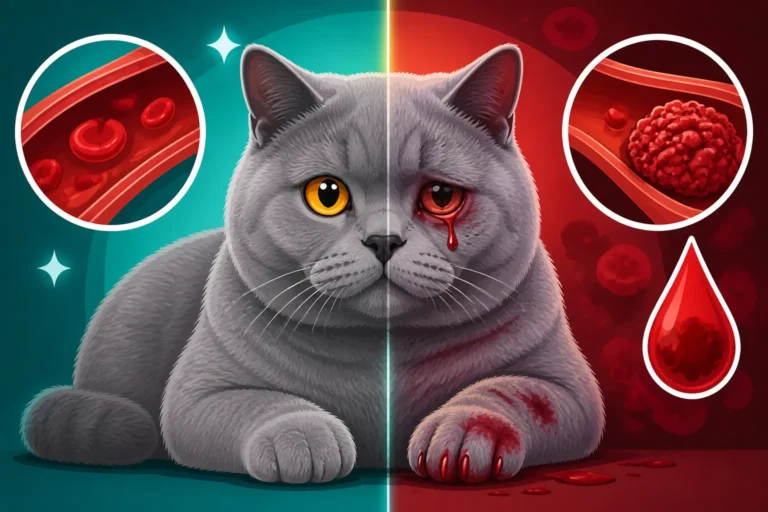
When Type A or Type AB kittens nurse from their Type B mother, they ingest these maternal antibodies through the colostrum. These antibodies then attack and destroy the kittens' red blood cells, leading to severe anemia, jaundice, kidney failure, and ultimately, death. The signs can appear rapidly, often within hours or days of birth, leaving breeders feeling helpless. Understanding What Neonatal Isoerythrolysis Does to a British Shorthair Kitten is a crucial step towards preventing this tragedy.
The Critical Importance of Blood Type Testing for Breeding British Shorthairs
Given the prevalence of Type B blood in British Shorthairs and the devastating consequences of NI, blood type testing for all breeding cats is not just recommended; it's absolutely non-negotiable for responsible breeders. Relying on assumptions or past successful breedings with different cats is a recipe for disaster.
Every queen and tomcat in a British Shorthair breeding program should be definitively blood typed before any mating takes place. This simple, relatively inexpensive test provides invaluable information that prevents heartache and ensures the welfare of kittens. Without it, you're essentially breeding blindfolded, and the risk is just too high to justify. Ignorance of blood types is a common pitfall that can lead to significant financial and emotional costs, even for seasoned breeders. What a British Shorthair Breeder Should Have Tested emphasizes the full scope of necessary screening.
The Ideal Pairing: Breeding a Type B Queen Safely
So, you have a lovely British Shorthair queen, blood typed as Type B. Now comes the all-important question: which tom should she be bred to? The answer, unequivocally, prioritizes the health of her future litter above all else.
Why a Type B Tom is the Only Safe Choice for a Type B Queen
For a Type B British Shorthair queen, the only truly safe and responsible breeding partner is a tomcat who is also blood Type B. This pairing completely eliminates the risk of Neonatal Isoerythrolysis. Let's break down the genetics:
- Type B Queen (B/B genotype): She will always pass on a 'B' gene to her kittens.
- Type B Tom (B/B genotype): He will also always pass on a 'B' gene to his kittens.
Therefore, every single kitten produced from a Type B x Type B pairing will inherit a 'B' gene from both parents, making them all Type B (B/B genotype). Since all the kittens will be Type B, they will not have the Type A red blood cells that the queen's colostrum antibodies would target. There will be no incompatibility, and the kittens can safely nurse from their mother without any risk of NI. This is the gold standard for breeding a Type B queen and is the only ethical choice to make.
Identifying and Confirming a Type B Tom
Just as your queen needs to be blood typed, any potential tomcat for a Type B queen must also be blood typed. There are several reliable methods available to determine a cat's blood type.
- Card Tests: These are rapid in-clinic tests that involve mixing a small blood sample with reagents. They provide quick results, often within minutes, and are generally accurate for determining A, B, or AB blood types. However, they are phenotyping tests, meaning they tell you the observable blood type, but not necessarily the underlying genotype (e.g., an A cat could be A/A or A/B).
- DNA Tests: Several veterinary diagnostic laboratories offer DNA testing for feline blood types. These tests typically involve a cheek swab or a small blood sample and are highly accurate. A key advantage of DNA tests is that they can often identify if a Type A cat is a carrier for the Type B gene (i.e., A/B genotype). While this isn't strictly necessary when seeking a Type B tom for a Type B queen, it's invaluable information for other breeding scenarios.
- Laboratory Serological Tests: These are definitive tests performed by specialized veterinary labs, considered the gold standard for accuracy. They confirm the blood type and are often used to verify results from rapid tests or for international travel requirements.
Always choose a reputable veterinarian or laboratory for blood typing. Keep official documentation of all blood typing results for both your queen and any potential tom. When evaluating a tomcat, insist on seeing official results of his blood typing, rather than just taking a breeder's word for it. This diligent verification is part of The Screening a British Shorthair Breeder Cannot Skip to maintain breed health.
The Genetic Outcome of a Type B x Type B Pairing
When you responsibly breed a Type B British Shorthair queen to a Type B British Shorthair tom, the genetic outcome is straightforward and reassuring. As discussed, every single kitten in that litter will be genetically and phenotypically Type B. This means:
- No Risk of Neonatal Isoerythrolysis: This is the primary and most significant benefit. You can allow the queen to nurse her kittens freely without fear of antibodies destroying their red blood cells. This saves you from the immense stress and potential heartache of hand-rearing or losing kittens.
- Consistent Blood Type in Offspring: All the kittens will be Type B. This simplifies future breeding decisions for these kittens if they are kept for breeding purposes, as their blood type is known from birth.
- Contribution to Breed Health: By meticulously pairing Type B queens with Type B toms, you are contributing to a healthier lineage within the British Shorthair breed by preventing a known genetic incompatibility issue.
This responsible approach, as outlined in Whether a Type B British Shorthair Queen Can Be Bred Safely, ensures both immediate kitten survival and long-term breed integrity.
The Dangers of Incompatible Pairings and Breeder Responsibility
While the ideal pairing is clear, it's equally important to understand the significant risks associated with incompatible blood type pairings. Responsible breeding isn't just about what to do, but also about what not to do and why.
The Consequences of Breeding a Type B Queen to a Type A or AB Tom
Breeding a Type B British Shorthair queen to a Type A or Type AB tom is a recipe for disaster due to the high likelihood of Neonatal Isoerythrolysis. This is because Type A is the dominant allele. If a Type B queen (genotype B/B) is bred to a Type A tom, at least some, if not all, of the kittens will inherit the Type A gene, making them blood Type A or Type AB (if the tom is AB).
The moment these Type A or AB kittens ingest their Type B mother's colostrum, the antibodies she produced against Type A red blood cells begin their destructive work. The consequences are severe and often fatal:
- Fading Kitten Syndrome: Kittens may appear healthy at birth but rapidly decline. They become lethargic, weak, stop nursing, and may develop pale mucous membranes or jaundice.
- Anemia and Organ Damage: The destruction of red blood cells leads to severe anemia, depriving their organs of oxygen. This can cause organ failure, particularly of the kidneys, and generalized weakness.
- Death: Tragically, many affected kittens will die within the first few days of life, usually within 24-72 hours after consuming colostrum. Surviving kittens may suffer from lasting health issues. This is precisely Why a Type B British Shorthair Queen Kills Type A Kittens.
Managing an Accidental Incompatible Breeding
Even with the best intentions, accidents can happen, or perhaps a breeder acquires a Type B queen without full knowledge of her blood type or that of a past mate. If an incompatible breeding has occurred, and a Type B queen has given birth to Type A or AB kittens, immediate and drastic intervention is required to save the kittens' lives.
The critical window is the first 24-48 hours after birth, during which kittens absorb antibodies from colostrum. To prevent NI, the Type A or AB kittens must not nurse from their Type B mother during this period.
Here's how breeders typically manage such a dire situation:
- Immediate Separation: As soon as kittens are born, they must be removed from the Type B queen before they can nurse any colostrum.
- Colostrum Replacement/Hand Rearing:
- Commercial Kitten Formula: Kittens must be hand-reared with a high-quality commercial kitten milk replacer. This is a labor-intensive process, requiring frequent feedings around the clock.
- Alternative Colostrum: In some cases, if a donor queen with compatible blood type (e.g., another Type A queen who recently gave birth) is available, her colostrum can be harvested and fed to the Type A kittens. However, this is rarely feasible.
- Plasma Transfusion: In emergencies, a veterinarian might administer plasma from a Type A donor cat to provide some passive immunity, though this does not replace colostrum entirely.
- Returning to the Queen (After 24-48 hours): After approximately 24-48 hours, the kittens' intestinal lining "closes," meaning they can no longer absorb large antibody molecules from the mother's milk. At this point, they can generally be safely returned to the Type B queen to nurse, as her mature milk (after colostrum) will not contain the dangerous concentration of antibodies. Close monitoring is still essential.
This extreme measure underscores the importance of prevention through blood typing. For more detailed instructions, refer to How to Save a British Shorthair Kitten From Isoerythrolysis.
Ethical Considerations and Breeder Accountability
The ethical implications of breeding British Shorthairs without proper blood typing are profound. A responsible breeder has a moral obligation to ensure the health and well-being of their animals. Breeding a Type B queen to a Type A or AB tom, especially when aware of the risks, is considered highly irresponsible and unethical.
Breeders should:
- Prioritize Health: Always put the health of the queen and her kittens first, even if it means foregoing a particular pairing or waiting for a compatible tom.
- Educate Themselves: Stay informed about breed-specific health issues, including blood type incompatibilities.
- Be Transparent: Share blood typing results with prospective buyers and stud service clients. This openness fosters trust and contributes to the overall health transparency within the British Shorthair community. Many reputable breeders proudly display these results, understanding they are a testament to their commitment.
- Contribute to Genetic Diversity Responsibly: While a Type B x Type B pairing for a Type B queen is the safest, breeders also need to consider broader genetic diversity. However, this should never come at the cost of kitten welfare. Genetic diversity must be managed within the bounds of known health parameters.
The consequences of negligence extend beyond a single litter, potentially impacting the breed's reputation and leading to unnecessary suffering. Comprehensive health testing, including blood typing, is part of the minimum standard of care.
Practical Steps for British Shorthair Breeders
Implementing a robust blood typing program is a fundamental step for any British Shorthair breeder. It's about diligence, record-keeping, and leveraging available resources to ensure the best outcomes for your cats.
Establishing a Robust Blood Typing Program
A "robust" blood typing program means more than just testing once. It means making blood typing an integral part of your breeding protocol.
- Test All Breeding Cats: Every British Shorthair queen and tom intended for breeding purposes should have a documented blood type. This is non-negotiable. Don't assume; know.
- Test Early: Ideally, cats should be blood typed before they even enter the breeding program, or certainly before their first breeding. This allows for informed decisions from the outset.
- Choose Reputable Labs/Vets: Ensure your blood typing is performed by a veterinary clinic or diagnostic laboratory experienced in feline blood typing. Discuss the methods they use (card test, DNA test, serological test) and what information each provides. For example, a DNA test can tell you if a Type A cat carries the B allele, which is vital for some pairings.
- Understand Test Costs: While the cost of blood typing is an investment, it pales in comparison to the emotional and financial cost of losing a litter to NI or the intensive care required for hand-rearing. Expect to pay anywhere from $50 to $150 per test, depending on the method and clinic/lab. This information is key to understanding What a British Shorthair Blood Type Test Costs.
- Re-verify if Necessary: If there's any doubt about a cat's blood type, or if a significant amount of time has passed and you're unsure of previous records, re-testing is always a wise precaution.
Maintaining Accurate Breeding Records
Meticulous record-keeping is the backbone of responsible breeding. It allows you to track health information, make informed decisions, and demonstrate your commitment to breed health.
For blood typing, your records should include:
- Cat's Full Name and Registration Number: Essential for identification.
- Date of Birth: Helps track age-related health considerations.
- Blood Type Result: Clearly state whether the cat is Type A, B, or AB. If a DNA test was performed, include information on whether an A cat is a B carrier (A/B).
- Date of Test: When the blood type test was performed.
- Testing Facility/Veterinarian: Who performed the test.
- Copy of Official Certificate: Always keep a physical or digital copy of the laboratory or vet certificate confirming the blood type. This is what you'd show to stud owners or prospective kitten buyers.
These comprehensive records become invaluable over time, not just for preventing NI, but for understanding genetic lines and making future breeding choices. Many breeders find it incredibly useful to create a detailed pedigree chart that includes blood types for multiple generations. This proactive approach supports the overall transparency that helps buyers discern Whether a British Shorthair Breeder Shows a British Shorthair's Blood Type.
Resources for Responsible British Shorthair Breeding
Breeders aren't alone in this journey. There are many resources available to support responsible breeding practices:
- Breed Clubs and Associations: Organizations like The Cat Fanciers' Association (CFA) or The International Cat Association (TICA) often provide educational materials, recommended health screening protocols, and lists of reputable breeders. They can be an excellent source of information and mentorship.
- Veterinary Specialists: Consult with veterinarians who have a special interest in feline reproduction or genetics. They can offer tailored advice, perform necessary tests, and interpret results.
- Online Forums and Groups: Reputable online communities dedicated to British Shorthair breeding can be a valuable peer resource, though always verify information with veterinary professionals.
- Comprehensive Pet Insurance: While it doesn't prevent NI, having robust pet insurance for your breeding cats can help cover unexpected veterinary costs associated with testing, health emergencies, or specialized care for your cats. Companies like Healthy Paws offer various plans that can provide peace of mind for both routine and unforeseen health challenges. Knowing that you have support for comprehensive health checks and potential interventions allows breeders to focus on prevention rather than worry about crippling costs.
By utilizing these resources, you can ensure you're making the most informed decisions for your breeding program and the well-being of your British Shorthairs.
Blood Type Pairing Summary for British Shorthair Breeding
To summarize the critical blood type pairings for British Shorthair breeding, especially when a Type B queen is involved, this table provides a clear overview of the risks and outcomes.
| Queen's Blood Type | Tom's Blood Type | Kitten Blood Types (Potential) | Risk of Neonatal Isoerythrolysis (NI) | Recommendation for Type B Queen |
|---|---|---|---|---|
| Type B | Type B | All Type B | NO RISK | HIGHLY RECOMMENDED (Safest) |
| Type B | Type A | Some Type A, some Type B | HIGH RISK | AVOID at all costs |
| Type B | Type AB | Some Type A, some Type B, some Type AB | HIGH RISK | AVOID at all costs |
| Type A | Type A | All Type A | No Risk | Acceptable |
| Type A | Type B | Some Type A, some Type B | No Risk (Queen's antibodies don't target Type B) | Acceptable |
| Type A | Type AB | Some Type A, some Type AB | No Risk | Acceptable |
| Type AB | Any Type | Varies | No Risk | Acceptable |
This table clearly illustrates that when you have a Type B British Shorthair queen, the only responsible and safe choice for a stud is a Type B tom. All other pairings carry an unacceptably high risk of losing kittens to Neonatal Isoerythrolysis.
Disclaimer
The information provided in this guide is for educational and informational purposes only and does not constitute veterinary advice. Always consult with a qualified veterinarian for any health concerns or before making any breeding decisions for your British Shorthair cats. Breeding animals carries inherent risks, and professional veterinary guidance is essential.