Whether British Shorthair Owners Keep More Than One
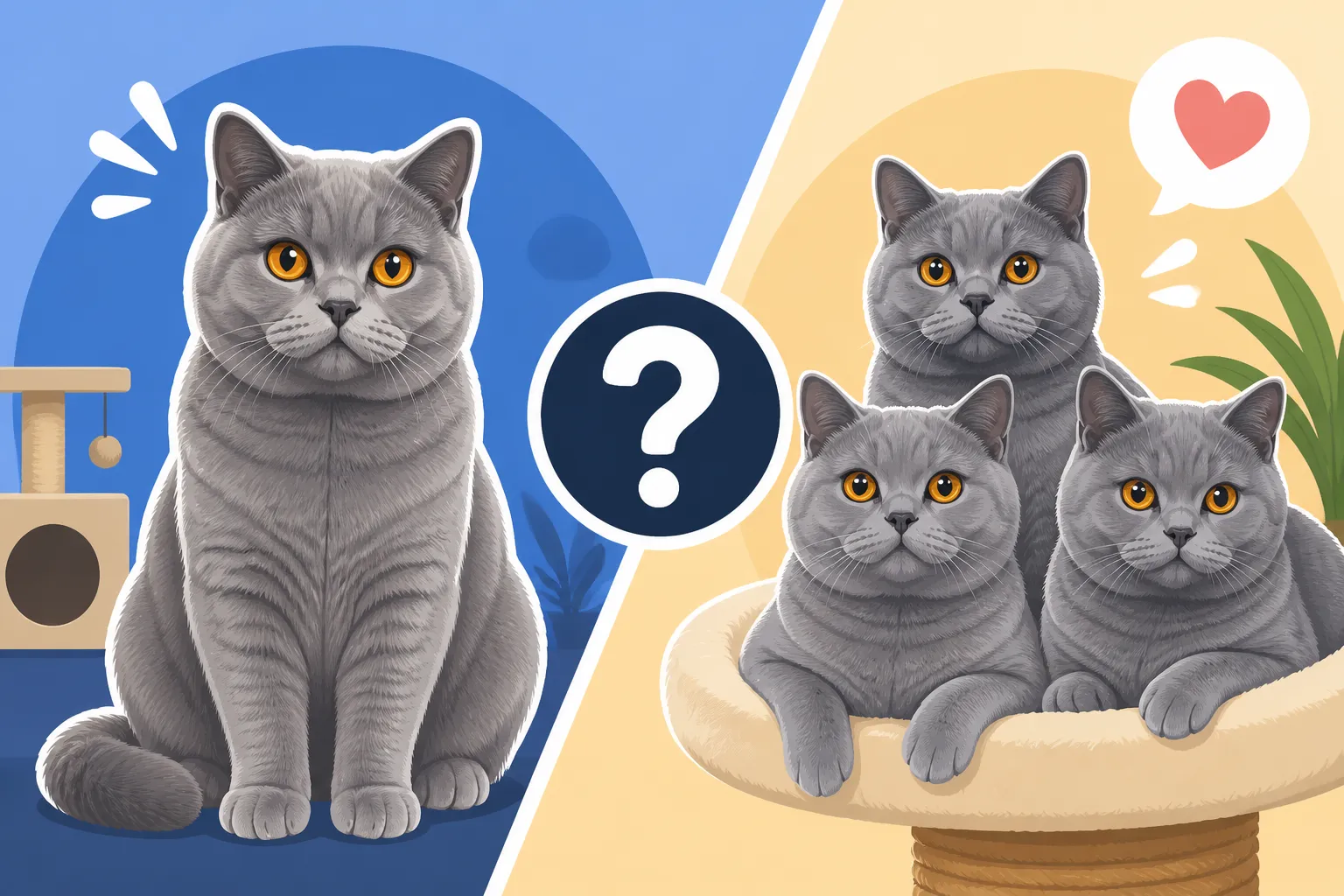
A British Shorthair can enjoy sharing a home with another cat, but that does not mean every one wants a feline roommate. If you are wondering whether owners commonly keep two or more, or whether your own cat would be happier with company, the honest answer depends on temperament, introductions, space, and the attention each cat receives.
Do British Shorthair owners keep more than one cat
Some British Shorthair owners have two or more cats; others deliberately keep just one. There is no dependable breed-wide count that tells us what most owners do, and the number of cats in a home does not, by itself, show whether those cats are content. The better question is whether your particular cat and household are suited to sharing.
British Shorthairs are often described as calm and self-contained. That can make them seem like an easy match for a second cat, but a relaxed personality is not the same as a desire for a companion. One cat may happily share sunny windowsills and sleeping spots with another; another may prefer predictable routines and a quiet home.
Why one household chooses two and another chooses one
People often consider a second cat because they work long hours, already have a sociable cat, or would like to adopt a companion for a kitten. Those can be reasonable starting points, but they do not guarantee a good match. A cat who spends much of the day sleeping may be perfectly content as a solo pet if the household provides play, affection on the cat’s terms, and a comfortable environment.
Other owners choose one cat because of limited space, cost, travel, or a resident cat’s history of anxiety around other animals. That is not a failure to provide companionship. A single cat can have a full, enriching life with daily interaction and a stable routine. For more on how independent the breed can be, see A British Shorthair Is Genuinely Fine on Its Own.
What matters more than the number of cats
Look at the cats’ individual personalities, not only their breed. A confident, socially interested cat may be open to a companion, while a cat who hides from visitors or reacts strongly to change may need a slower plan—or may do best as the only cat. Age, previous experience with other cats, health, and the layout of the home also matter.
Watch what your cat does around other animals and new situations. Does your cat recover quickly after a visitor leaves? Show relaxed curiosity toward cats seen through a window? Or guard food, hide for long stretches, and struggle with small changes? These clues are useful, though they are not a guarantee of how a real introduction will go. What a British Shorthair's Temperament Is Really Like offers more context for interpreting the breed’s often understated manner.
How to tell whether your British Shorthair might enjoy a companion
A second cat is most promising when the resident cat has shown some comfort around other cats and the home can support separate spaces. Compatibility is not about making cats share a bed or groom one another. A peaceful arrangement—where each cat can eat, rest, play, and use the litter box without being cornered—is a perfectly good outcome.
It is also worth asking what you hope another cat will change. A companion may provide social contact, but it may not solve boredom, separation distress, or a lack of play. If your cat’s behavior has changed suddenly, such as hiding more or losing interest in food, discuss it with a veterinarian before assuming loneliness is the cause.
Signs that a second cat could be worth considering
Your cat may be a better candidate if they have previously lived comfortably with another cat, show relaxed curiosity rather than persistent fear or aggression, and can share space without guarding every resource. A young, playful cat may also benefit from a compatible playmate, although age alone does not predict success. A quiet older cat may prefer calm company—or no company at all.
Consider the whole day, not just the moment when you leave for work. A British Shorthair may spend much of the day resting and still enjoy a predictable play session when you return. If you are unsure whether time alone is the real concern, How Many Hours a British Shorthair Can Be Left and Whether a British Shorthair Gets Separation Anxiety can help you think through the difference between ordinary independence and signs of distress.
Signs your cat may prefer being the only cat
Persistent hiding, growling, swatting, or blocking access to food and litter areas can signal that a cat is uncomfortable. These behaviors do not automatically mean a second cat could never work, but they are reasons to slow down and consider whether the household can manage a careful, gradual introduction. A cat who is already unwell or unsettled by a recent move may need stability before any major change.
Also consider whether you can give each cat a safe retreat. If the only available room is a busy hallway or shared living area, a new arrival may have nowhere to decompress. Some cats tolerate one another while avoiding close contact; others never settle into peaceful sharing. When a British Shorthair Needs a Second Cat explores the question of companionship without treating a second cat as a universal need.
Choosing a second cat and introducing them carefully
If you decide to add a cat, compatibility matters more than choosing another British Shorthair. A calm, socially comfortable cat may suit your resident cat better than a highly energetic one, regardless of breed. A rescue organization or responsible breeder may be able to share what they know about a cat’s history and behavior with other cats, but any description is a guide rather than a promise.
An introduction should be gradual. Bringing a new cat home and placing the cats together immediately can overwhelm both animals, even if they seem gentle at first. Give the newcomer a separate room with their own essentials, then let the cats become familiar with each other’s scent before allowing brief, supervised visual contact. How to Introduce a British Shorthair to a Resident Cat covers this process in more detail.
Match energy and social style
A playful kitten can be an appealing companion, but the resident cat may not appreciate being pounced on all day. Likewise, two calm adult cats may share a home peacefully without becoming close friends. Think about how each cat likes to interact: Does one seek play and contact, while the other prefers to observe from a distance? A mismatch can be managed, but it takes space, patience, and attention from the owner.
If you are deciding between different candidates, consider the individual cat’s behavior around other cats rather than relying on breed labels alone. Which Second Cat Suits a British Shorthair can help you assess the match, while Whether Two British Shorthairs Get Along addresses the common assumption that two cats of the same breed will automatically get along.
Make the first weeks low-pressure
Start with scent swapping, such as exchanging bedding between the separate spaces, and feed the cats on opposite sides of a closed door if both remain relaxed. Keep the bowls far enough from the door that neither cat feels trapped. Later, try short visual sessions through a secure barrier. If either cat becomes tense, end the session calmly and return to an earlier step rather than forcing contact.
Avoid making them compete for important resources. Provide separate food and water stations, resting spots, scratching areas, and litter facilities in places where a cat can use them without being blocked. If you order household supplies through Chewy, plan the layout before buying: the goal is to create genuinely separate options around your home, not simply to add duplicate bowls side by side. For more on shared play, see Whether a British Shorthair Plays With Another Cat.
Space, daily care, and the real commitment of a multi-cat home
Two cats need more than twice the food bowl space. They need enough room to move around one another, separate places to rest, and a way to get away from social pressure. In a small apartment, this may mean using vertical space carefully, choosing quiet retreat areas, and keeping key resources apart. If your home is compact, How a British Shorthair Copes in an Apartment can help you think about the layout.
It also helps to plan for ordinary practicalities before adopting. Each cat needs veterinary care, grooming and nail attention as appropriate, and a secure way to travel to appointments. Chewy may be one place owners use when arranging routine supplies, but convenience cannot replace checking that every cat has their own accessible resources and individual care.
| Consideration | One British Shorthair | Two or more British Shorthairs |
|---|---|---|
| Social needs | Needs daily interaction and enrichment from people and the environment | Cats may interact with each other, but still need individual attention |
| Space | One set of core resources and resting areas | More separate resting, feeding, and litter options are important |
| Introductions | No new-cat introduction to manage | A gradual introduction may take time and patience |
| Household costs | Care is planned for one cat | Food, supplies, and veterinary needs increase with each cat |
| Best fit | A cat who is comfortable alone and a household that prefers one pet | Cats with compatible temperaments and an owner prepared to manage shared care |
Budget and time for each cat
A second cat brings ongoing expenses as well as the initial adoption or purchase costs. Food, litter, routine veterinary appointments, and unexpected care all add up. Owners who use Chewy for recurring household supplies can still benefit from tracking each cat’s actual food intake and needs separately, rather than assuming both cats should receive identical portions or products.
Daily time matters, too. Cats may play together, but that does not remove the need to notice changes in each cat’s appetite, movement, coat, or litter-box habits. If one cat begins withdrawing or losing access to resources, it can be easy to miss in a busy home. Set aside individual moments to check in with each cat and offer play or quiet company in the way they prefer.
When keeping one cat is the kinder choice
If your cat seems relaxed, has a stable routine, and receives regular attention and enrichment, there may be no reason to add another. A second cat should be a considered addition to the household, not a fix for every concern about leaving a pet alone. And if you do adopt, success may look like comfortable coexistence rather than an affectionate friendship.
If you are still unsure, talk with your veterinarian or a reputable rescue about your cat’s behavior and history. You can also explore Whether a British Shorthair Is Right for You when weighing how the breed fits your household as a whole. The best number of cats is the number your home can care for well—and that the cats can live with comfortably.
Disclaimer
This article is for general informational purposes only and does not constitute professional advice. Laws, prices and regulations vary by location and change over time. Consult a qualified professional for guidance on your specific situation.