How Much a British Shorthair Climbs
It's a common misconception that all cats are graceful, gravity-defying acrobats, leaping effortlessly to the highest shelves and scaling drapes with Olympic precision. While some breeds certainly fit that stereotype, if you're a British Shorthair owner, you've likely noticed your furry companion has a rather different approach to vertical exploration. This guide will delve into just how much your British Shorthair is inclined to climb, what influences their preference for more grounded activities, and how you can provide safe and satisfying vertical enrichment that respects their unique physique and calm demeanor.
The British Shorthair Build and Its Impact on Climbing
The British Shorthair is a magnificent cat, known for its robust, cobby body and those adorable, chubby cheeks. But these very characteristics, which make them so endearing, also dictate their climbing habits. They're built for power and presence, not for the lithe agility of a Siamese or a Bengal. Understanding their physical attributes is key to appreciating why they often prefer to keep their paws on or close to the ground.
Cobby Body and Sturdy Legs
Imagine a weightlifter trying to be a gymnast. That's a bit like picturing a British Shorthair attempting to scale your bookcase with the speed and finesse of a domestic shorthair kitten. Their frame is described as "cobby," which means they are solid, compact, and muscular. Their legs are relatively short and sturdy, built for powerful leaps up rather than sustained, vertical scrambling. They have a dense bone structure and a thick, plush coat that adds to their overall bulk, making them feel much heavier and more substantial than they might appear. This build means that while they can jump to a reasonable height, perhaps onto a sofa, a sturdy armchair, or even a low windowsill, they don't possess the inherent springiness or delicate balance needed for extensive, high-altitude climbing. They're more like grounded little tanks than nimble gazelles.
Their broad chests and short, powerful legs are designed for stability and strength on a horizontal plane. When they do jump, it's typically a controlled, intentional movement to a stable surface. You'll rarely see them making impulsive, gravity-defying leaps to precarious spots. Their preference leans towards observing their domain from a comfortable, secure vantage point, rather than attempting daredevil feats of climbing. It’s all part of their charming, laid-back personality; they simply don't feel the need to conquer the Everest of your wardrobe.
Weight and Joint Considerations
Another significant factor influencing a British Shorthair's climbing prowess is their weight. These are not small cats by any stretch; an adult male can easily reach How Much a British Shorthair Weighs of 12-18 pounds, with some larger individuals exceeding that. Females are typically a bit smaller but still substantial. Combine this natural heft with their tendency to gain weight if their diet isn't carefully managed – a common issue since they love to eat and are not terribly active – and you have a cat that's literally weighed down. Excess weight puts additional strain on their joints, making jumping and climbing not just difficult, but potentially painful.
Think about it from their perspective: every jump is a greater impact on their knees, hips, and spine. If they're already carrying extra pounds, that impact is magnified. This is why you might notice an overweight British Shorthair becoming even less inclined to jump or climb. They might struggle to reach their favorite spots, hesitate before leaping, or avoid certain vertical spaces altogether. The potential discomfort simply isn't worth the effort. Maintaining a healthy weight is crucial for their overall mobility and quality of life, allowing them to engage in the moderate vertical exploration they are built for, without causing undue stress on their precious joints. What Obesity Does to a British Shorthair's Joints explores this in more detail.
Their Natural Preference for Lower Elevations
While some cats practically live in the rafters, British Shorthairs generally gravitate towards the comfort and security of lower ground. This isn't to say they don't enjoy a good vantage point, but their idea of a "high place" is often quite different from that of other breeds. Their personality also plays a huge role in this preference, as they are known for their calm, unflappable nature.
Ground Dwellers at Heart
British Shorthairs are, by and large, ground dwellers. They enjoy being near their people, but often in a way that respects personal space. They're not typically "lap cats" in the traditional sense, though some individuals certainly enjoy a good cuddle on their own terms. Instead, you'll often find them curled up on a plush cat bed on the floor, stretched out on a comfy rug, or perhaps lounging on the sofa right next to you, but not necessarily on you. A British Shorthair Sits Near You, Not On You goes into this endearing trait. Their calm disposition means they often find peace and security close to the ground, where they can observe the household goings-on without feeling the need to be elevated above it all.
They seem to have an innate understanding that their sturdy build isn't designed for precarious perches. Instead of scaling curtains or balancing on narrow shelves, they prefer wide, stable surfaces. Their sense of adventure is more about surveying their immediate territory and finding the sunniest, coziest spot, rather than exploring the highest reaches of your home. This preference for grounded comfort makes them wonderfully low-maintenance companions, content with what many might consider simple pleasures.
Observing from a Modest Perch
Despite their preference for lower levels, British Shorthairs still appreciate a good view. They are curious creatures, and like all cats, they enjoy watching the world go by, whether it's the birds outside the window or the gentle rhythm of household life. However, their chosen observation posts are usually more modest than those of other breeds. Instead of climbing to the very top of a towering cat tree, they might settle for the middle perch or even the bottom platform. A sturdy windowsill, a low, wide shelf, or the back of a robust armchair often serves as their preferred "high ground."
They value stability and comfort above all else. If a surface wiggles, feels unstable, or is too narrow for their generous frame, they'll likely ignore it in favor of something more secure. A British Shorthair isn't going to risk a clumsy fall for the sake of a few extra inches of height. When you're thinking about enriching their environment with vertical spaces, always prioritize platforms that are wide, solid, and easily accessible. They want to relax and observe, not perform a tightrope act.
Encouraging Safe and Appropriate Climbing
Just because British Shorthairs aren't natural high-flyers doesn't mean you can't provide them with enriching vertical spaces. In fact, offering safe, accessible climbing options is vital for their physical and mental well-being, even if those options aren't reaching for the ceiling. The trick is to cater to their specific needs and build.
Choosing the Right Cat Tree
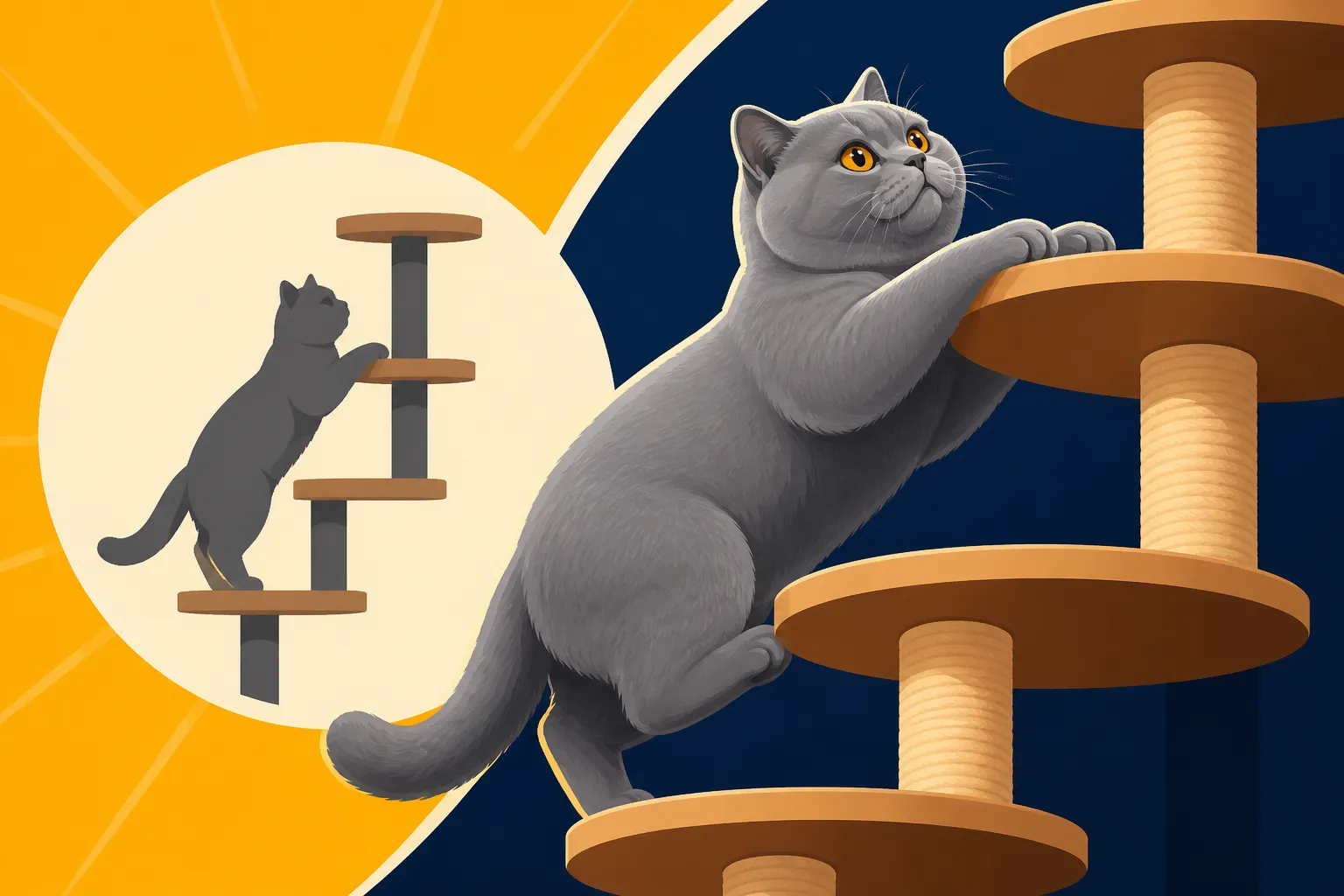
Selecting the perfect cat tree for a British Shorthair is paramount. Forget those flimsy, multi-tiered structures designed for agile, lightweight cats. Your British Shorthair needs something built like a fortress. Look for cat trees with a wide, heavy base to prevent tipping, especially when your substantial feline decides to make a sudden move. Platforms should be generously sized – wide enough for them to stretch out comfortably and turn around without feeling cramped. Ramps or gradual steps, rather than sheer jumps, can also be a huge advantage, particularly for kittens, seniors, or those carrying a bit of extra weight.
Consider materials, too. Plush, soft coverings are great for comfort, but ensure the posts are covered in durable scratching material like sisal rope to encourage healthy scratching habits and provide a good grip for climbing. When browsing online, like on Amazon, specifically search for "sturdy cat tree for large cats" or "heavy duty cat tree." Reviews often highlight whether a tree can withstand the weight of a larger breed like a British Shorthair. Investing in a quality, robust tree means it will be safe, durable, and genuinely enjoyed by your beloved companion for years to come. For more ideas, check out Which Cat Tree a British Shorthair Uses.
Strategic Placement for Motivation
Even the most perfect cat tree won't be used if it's stuck in a lonely corner. Placement is key to enticing your British Shorthair to utilize vertical spaces. Cats are inherently curious, and they love to be part of the action, even if they're just observing. Position their cat tree in a social area of your home, such as the living room, a sun-drenched spot near a window, or even in a quiet corner of your home office. A window perch, in particular, can be a huge draw, offering endless entertainment as they watch birds, squirrels, and passersby.
Ensure the path to the cat tree is clear and inviting. If they have to navigate obstacles to get to it, they're less likely to bother. Sometimes, placing a smaller, easily accessible perch or stool next to the cat tree can act as a stepping stone, making the climb feel less daunting. Think about what your British Shorthair loves to do and where they like to hang out, then integrate vertical enrichment into those areas. This way, the cat tree becomes a natural extension of their preferred lounging spots, making it much more appealing.
Gentle Encouragement and Rewards
British Shorthairs aren't usually the type to dive headfirst into new experiences, especially if it involves exerting themselves. Encouraging them to use vertical spaces requires patience, positive reinforcement, and a bit of cunning. Start by placing their favorite treats or toys directly on the lower platforms of the cat tree. Let them discover it at their own pace. You can use a wand toy to gently entice them up a level or two, playing with them on each platform. Praise them calmly when they investigate or climb.
Avoid forcing them onto the tree, as this can create a negative association. Instead, make it a fun, rewarding experience. If they successfully jump to a platform, offer a small, high-value treat immediately. Consistency is key. A few minutes of gentle encouragement each day can slowly build their confidence and association of the cat tree with positive experiences. Remember, their motivation might be different from other cats; for a British Shorthair, it might simply be the lure of a cozy, sunny spot with a good view and a treat awaiting them. Getting a Low Energy British Shorthair to Move delves into similar strategies for encouraging activity.
When Climbing Becomes a Concern
While a British Shorthair's general disinterest in scaling the highest peaks is normal, there are times when changes in their climbing habits can signal an underlying issue. As a responsible owner, it's important to be aware of these subtle shifts, as they can be early indicators that something isn't quite right with your beloved companion.
Age-Related Changes
As our cherished British Shorthairs mature and enter their golden years, their physical capabilities naturally begin to change. Just like humans, older cats can experience a decline in mobility, flexibility, and muscle strength. What was once an easy jump onto the sofa might become a daunting task. You might notice your senior British Shorthair hesitating before jumping, choosing lower perches, or even avoiding elevated spots altogether that they once enjoyed. This is often due to age-related conditions such as arthritis or general joint stiffness. Arthritis in an Older British Shorthair is a common ailment in older cats and can make any jumping or climbing painful.
Observing these changes is crucial. If your aging British Shorthair seems to struggle, is less willing to jump, or shows signs of discomfort after landing, it's time for a vet visit. Your veterinarian can assess their joint health and recommend pain management strategies, supplements, or environmental modifications. Providing ramps or pet steps to their favorite elevated spots can significantly improve their quality of life, allowing them to access comfort without undue strain. Think about investing in sturdy ramps that can be placed next to beds or sofas to ease their journey. When an Aging British Shorthair Needs a Ramp offers practical advice on this topic.
Obesity and Reduced Mobility
We've touched on this already, but it bears repeating: obesity is a significant impediment to a British Shorthair's mobility and can exacerbate any climbing reluctance. Their already substantial build means that even a few extra pounds can make a huge difference to their agility and comfort. An overweight British Shorthair may find jumping painful or simply too much effort. You might see them attempting to jump and failing, or preferring to find alternate, ground-level routes rather than making even a small leap. This isn't laziness; it's often a physical limitation or a way to avoid pain.
The weight can put immense strain on their joints, and it can also make their breathing more labored, especially after physical exertion. An overweight cat might avoid jumping not just because of joint pain, but also because of the increased cardiovascular effort involved. Monitoring your British Shorthair's weight diligently is incredibly important, including regular weigh-ins. How Often an Aging British Shorthair Should Be Weighed applies to all ages. If you suspect your cat is overweight, consult your vet about a tailored weight loss plan. Helping them reach a healthy weight can dramatically improve their mobility, comfort, and overall willingness to engage with their environment, including safe vertical spaces. Remember, Why a Heavy British Shorthair Should Not Jump Down emphasizes the risks.
Sudden Aversion to Climbing
While a gradual decrease in climbing activity in an aging or overweight British Shorthair is understandable, a sudden and unexplained aversion to jumping or climbing in an otherwise active or younger cat is a red flag. If your British Shorthair, who usually enjoys jumping onto the windowsill or a low cat tree, suddenly stops doing so, or cries out when attempting a jump, it could indicate acute pain or an underlying health issue. This could range from an injury, such as a sprain or muscle strain, to more serious conditions like cardiac issues (making exertion difficult) or even neurological problems affecting their coordination.
Cats are masters at hiding pain, so any sudden change in behavior, especially relating to movement, should be taken seriously. Look for other accompanying signs such as lethargy, changes in appetite, difficulty using the litter box, or any limping. Don't assume they're just being fussy or lazy. A prompt visit to your veterinarian is essential to diagnose the cause and initiate appropriate treatment. Early detection can make a significant difference in managing these conditions. For a broader understanding of general warning signs, consult Signs a British Shorthair Is Unwell.
Vertical Space Enrichment Beyond Climbing
Since extensive climbing isn't usually a British Shorthair's forte, it's wise to think about vertical enrichment in a way that aligns with their unique needs and preferences. This means focusing on comfort, stability, and easily accessible vantage points rather than challenging acrobatics. You can still provide them with enriching elevated experiences without asking them to defy gravity.
Cozy Beds and Hideaways
British Shorthairs adore comfort and security. Providing elevated beds or enclosed hideaways can offer them the best of both worlds: a slightly raised, private spot where they feel safe and cozy. Think about cat beds that are raised a few inches off the floor, or soft, den-like structures with a low, easy entry. These don't involve significant climbing but still offer a sense of elevation and retreat. A small, sturdy cat cube, perhaps purchased from Amazon, or a plush igloo bed on top of a low, stable cabinet, can become a cherished sanctuary.
The key is accessibility. Ensure that whatever you provide, your British Shorthair can comfortably step or make a small jump into it. These spots satisfy their instinct for a safe, elevated resting place without demanding strenuous physical effort. They'll appreciate a warm, soft bed that's just a little bit off the ground, where they can nap undisturbed and observe their surroundings from a comfortable, slightly superior position. It's about meeting their need for security and comfort, not challenging their agility.
Window Perches and Shelves
For a British Shorthair, a window perch is often the pinnacle of vertical entertainment. They love to observe the world outside, and a well-placed, sturdy window perch provides just that without requiring them to scale great heights. Look for window perches that offer a wide, stable platform, ideally with a soft, washable cover. Some attach directly to the windowsill, while others use suction cups or tension rods. Whichever you choose, ensure it can safely support your British Shorthair's considerable weight.
Similarly, low, wide shelves can serve as excellent vantage points. Install them at a height that requires only a modest jump – perhaps two to three feet off the ground – and ensure they are securely fastened to the wall. These can be particularly effective if placed near a window or in a room where you spend a lot of time. The goal is to provide a stable, inviting spot where they can relax, people-watch, or bird-watch to their heart's content, feeling safely elevated without having to perform any demanding physical feats.
Ramps and Steps
For British Shorthairs who are older, have arthritis, or are simply less inclined to jump, ramps and pet steps are invaluable. These allow them to access their favorite high spots – like a sofa, a bed, or even a low cat tree platform – without straining their joints or risking a fall. Look for sturdy, wide ramps with a gentle slope and a non-slip surface. Steps should also be wide and deep enough to accommodate their substantial bodies comfortably.
Introducing ramps and steps early can also be beneficial, even for younger cats, as it encourages them to use these aids as they age. Place them strategically where your cat frequently attempts to jump. You might need to entice them with treats or praise to use the ramp initially, but once they realize how much easier it makes their life, they'll likely adopt it readily. Providing these accessibility aids demonstrates your understanding of their physical needs and ensures they can continue to enjoy all the comfortable spots in your home, regardless of their climbing ability.
Disclaimer
This article is for general informational purposes only and does not constitute professional advice. Laws, prices and regulations vary by location and change over time. Consult a qualified professional for guidance on your specific situation.