Why a Heavy British Shorthair Should Not Jump Down
It’s a common sight for many British Shorthair owners: your beloved furball, looking all round and plush, decides to launch itself from the sofa, or perhaps even a higher perch like a windowsill. You see that heavy thud as they land, and a little part of you cringes, wondering if that impact is really good for their chunky frame. This guide is here to explain exactly why that natural jumping habit, combined with their unique physique, can lead to serious long-term problems and what you can do to protect your British Shorthair's precious joints.
Understanding the British Shorthair's Unique Build and Weight Predisposition
British Shorthairs are magnificent, substantial cats. They are known for their robust, cobby bodies, broad chests, and relatively short, thick legs. While this build contributes to their adorable teddy bear appearance, it also means they carry more weight than many other breeds of similar height. This inherent heaviness, combined with a natural inclination towards a calm, often sedentary lifestyle, makes them particularly vulnerable to weight gain and the associated stresses on their skeletal system. It’s a double-edged sword: their charming stoutness can unfortunately lead to hidden health challenges.
The Cobby Body and Dense Bone Structure
Let's talk about that "cobby" body. It's a breed standard, meaning they're supposed to be sturdy and compact, not sleek and lithe like a Siamese. They have a dense bone structure, which adds to their overall weight. Think of them as the gentle giants of the cat world, but without the extreme height that might distribute their mass differently. This density means that every pound they carry feels even heavier on their joints during impact activities like jumping. When a cat with a lighter build lands, the shock is absorbed differently than when a British Shorthair, with its thick frame, makes the same jump. It’s like the difference between a feather falling and a pebble dropping – the impact is just inherently greater with more mass. This is why it’s so critical to understand Why a British Shorthair Is Built to Look Heavy.
Why British Shorthairs are Prone to Weight Gain
Beyond their natural build, British Shorthairs have a notoriously low activity level. They are not typically the kind of cat that will zoom around the house chasing invisible prey for hours. Instead, they prefer lounging, observing, and napping. This calm demeanor, while endearing, often leads to a sedentary lifestyle that makes weight management a constant battle. Couple this with their hearty appetites – they often love their food a little too much – and you have a recipe for easy weight gain. Many owners, myself included, have fallen into the trap of overfeeding or free-feeding, thinking a little extra won't hurt. However, even a few extra pounds on a British Shorthair can quickly tip them into the overweight category, exacerbating the risks associated with jumping. It can be hard to tell How to Tell a Chunky British Shorthair From a Fat One just by looking at their plush coat, but it's crucial to know the difference.
The Impact of Jumping Down on a Heavy British Shorthair's Joints
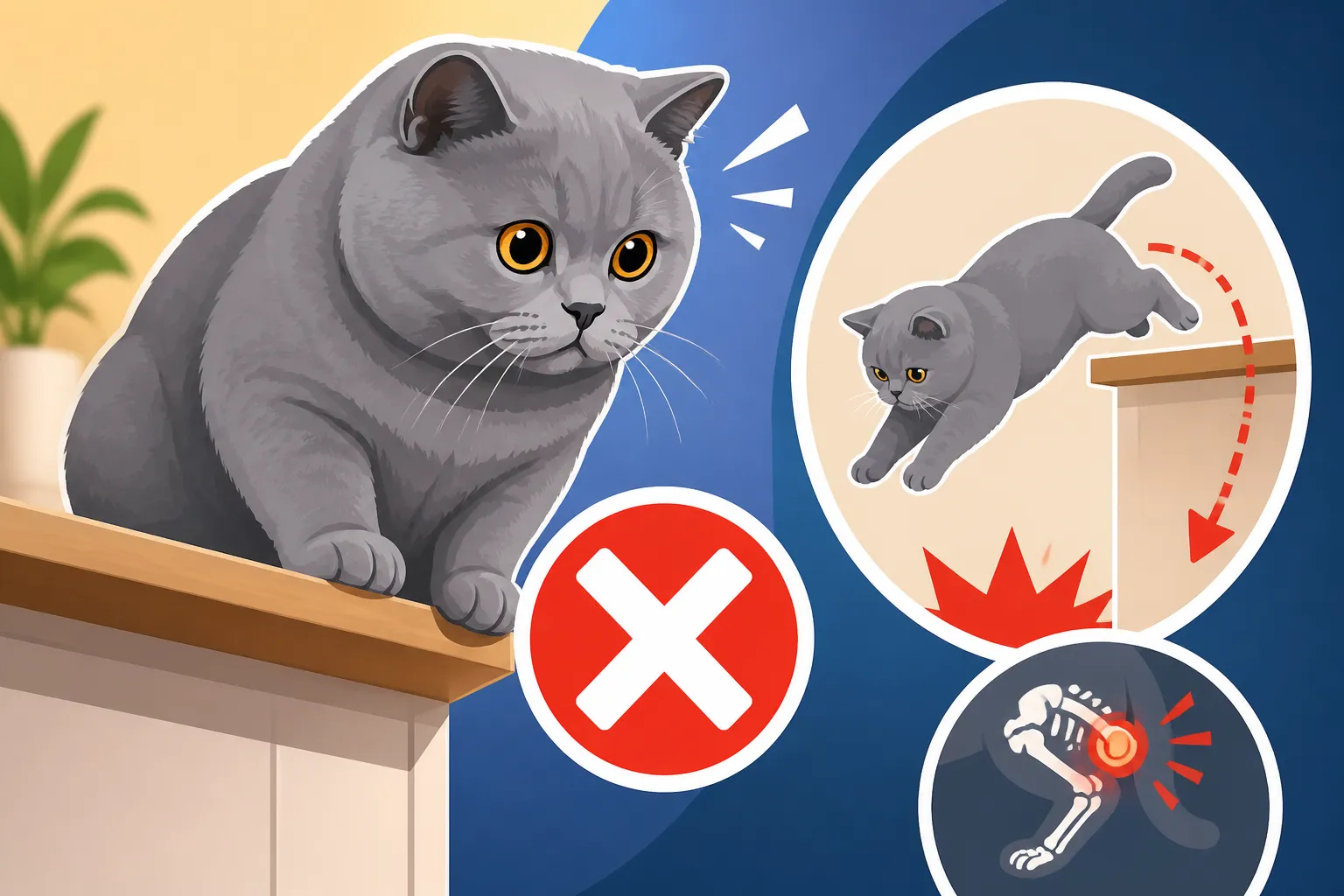
When a British Shorthair, especially one carrying extra weight, jumps down from a height, a significant amount of force is absorbed by their joints. This isn't just about a single "ouch" moment; it's about the cumulative wear and tear over time. Every jump creates micro-traumas in the cartilage and surrounding tissues, which can lead to chronic inflammation and degenerative conditions. Their relatively short legs, while strong, aren't designed for repeated high-impact landings with excessive weight.
Stress on Hips, Knees, and Spine
The primary areas that bear the brunt of these impacts are the hips, knees, and spine. Imagine the force of a substantial bowling ball dropping onto a relatively small cushion – that's somewhat analogous to what your British Shorthair's joints experience. The force travels up through their legs into their hips and spine. Over time, this constant jarring can lead to conditions like osteoarthritis, where the protective cartilage that cushions the ends of bones wears away. This leaves bones rubbing against each other, causing pain, inflammation, and reduced mobility. It's not just a problem for older cats; even younger, overweight British Shorthairs can start developing these issues prematurely. The silent damage can begin long before you see any outward limping or stiffness.
Exacerbation of Existing Conditions Like Arthritis
If your British Shorthair already has a predisposition to, or even early signs of, arthritis, those seemingly innocuous jumps become significantly more damaging. For many cats, especially as they age, some degree of joint stiffness is almost inevitable, but excessive weight and high-impact activities can accelerate its progression dramatically. A British Shorthair with existing joint issues might hide their pain remarkably well, a common feline trait, making it even harder for us as owners to recognize the problem until it's quite advanced. A heavy cat jumping repeatedly can turn mild discomfort into severe, debilitating pain. It's a critical point to consider, especially when thinking about Arthritis in an Older British Shorthair. In fact, What Obesity Does to a British Shorthair's Joints is a major concern for this breed.
The Long-Term Consequences of Repeated Impact
The cumulative effect of repeated high-impact jumps on a heavy British Shorthair is a gradual deterioration of joint health. What starts as a subtle stiffness can progress to chronic pain, reduced mobility, and a significant decrease in their quality of life. This means they might struggle to climb stairs, jump onto their favorite sunbeam perch, or even use a litter box comfortably. In severe cases, it can lead to permanent lameness or the need for expensive, ongoing veterinary care, including pain medication, physical therapy, or even surgery. Preventing these impacts is far easier and more humane than trying to treat the advanced stages of joint degeneration. This is why Obesity Is the British Shorthair's Real Disease for many British Shorthairs, as it directly contributes to these painful outcomes.
Preventing Injuries: Safe Environments and Alternatives to Jumping
Protecting your British Shorthair's joints requires a proactive approach, especially if they are already on the heavier side. The goal isn't to stop them from moving, but to encourage safer movement and provide alternatives that reduce impact. This means thoughtful modifications to their living space and consistent encouragement of gentle activity.
Providing Ramps and Steps for Access
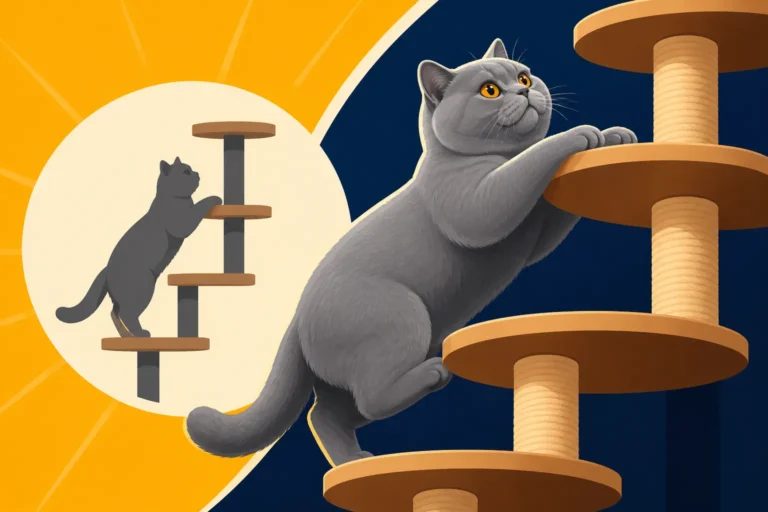
The simplest and most effective way to reduce jumping impact is to provide ramps and steps. Think about all the places your British Shorthair loves to perch: the sofa, your bed, a favorite armchair, or even a low windowsill. For each of these spots, consider adding a ramp or a set of pet stairs. These can be easily found online, including on platforms like Amazon, and come in various styles and materials to suit your home décor.
- Ramps: Ramps offer a gentle incline, making it easy for cats to walk up and down without any jarring impact. Look for non-slip surfaces for safety.
- Pet Steps: If space is an issue, or for slightly lower surfaces, pet steps can be a good alternative. Ensure the steps are wide and stable enough for your British Shorthair's build.
Introducing these aids might take a little patience. Start by placing treats on the steps or ramp, or gently guiding them with a favorite toy. Positive reinforcement, such as praise and small rewards, goes a long way. This is particularly important for When an Aging British Shorthair Needs a Ramp, but it's beneficial for all heavy British Shorthairs.
Creating Low-Impact Play and Exercise Routines
British Shorthairs aren't known for their Olympic-level athleticism, but they still need exercise to maintain a healthy weight and muscle tone. The key is low-impact play. Instead of encouraging high jumps or frantic chasing, focus on activities that promote stretching, walking, and gentle pouncing.
- Wand Toys: These are fantastic for engaging your cat without requiring them to launch themselves into the air. Drag the toy along the floor, under furniture, or up and down ramps to encourage pursuit and pouncing.
- Puzzle Feeders: These can turn mealtime into an activity, making your cat "work" for their food by batting it around. This provides mental stimulation and a little physical movement without high impact. You can find many types on Amazon.
- Laser Pointers: Use laser pointers to encourage walking and gentle chasing, but always end a session by letting them "catch" a physical toy to avoid frustration.
Consistency is key. Even 10-15 minutes of gentle play a few times a day can make a big difference in their overall health and weight management. It helps to understand How to Get a British Shorthair to Move when their natural inclination is to relax.
Weight Management Through Diet and Portion Control
This cannot be stressed enough: weight management is foundational to joint health in British Shorthairs. An overweight cat puts immense strain on every part of its body, especially the joints. It's often difficult for owners to admit their beloved pet is overweight, but it's a kindness to address it.
- Consult Your Vet: The first step is always a veterinary consultation to determine an ideal weight and a safe weight loss plan. They can help you calculate the correct caloric intake.
- Portion Control: Free-feeding is generally a no-go for British Shorthairs. Measure out specific portions of food for each meal. This might mean investing in a good quality food scale or precise measuring cups.
- High-Quality Diet: Choose a high-protein, moderate-fat, and low-carbohydrate diet, often found in good quality wet food. Wet food can also help with hydration, which is beneficial for overall health.
- Limit Treats: Treats should be minimal and low in calories. Consider breaking larger treats into smaller pieces or using a portion of their daily kibble as treats.
Remember, losing weight safely takes time and patience. Crash diets can be dangerous for cats. Gradual, steady weight loss is the healthiest approach, directly contributing to alleviating joint pressure. This directly relates to the broader issue of Obesity Is the British Shorthair's Real Disease.
Recognizing the Signs of Joint Pain and When to Seek Veterinary Help
Even with the best preventative measures, sometimes joint issues can develop, or existing conditions might worsen. British Shorthairs, like most cats, are masters at hiding pain and discomfort, a survival instinct from their wild ancestors. This means you need to be extra vigilant and pay close attention to subtle changes in their behavior or movement.
Subtle Behavioral Changes to Watch For
Since cats are so good at masking pain, you might not see obvious limping right away. Instead, look for more subtle behavioral shifts that could indicate discomfort:
- Reluctance to Jump or Climb: This is a big one. If your cat used to effortlessly leap onto the counter or bed but now hesitates, tries a lower jump, or gives up altogether, it’s a red flag. They might seem to "think" before making a move they once did instinctively.
- Changes in Grooming Habits: A cat in pain might struggle to reach certain areas of their body, leading to an unkempt coat, especially around the lower back or tail base. Conversely, some cats might over-groom a painful area.
- Increased Sleeping or Less Interaction: If your once-sociable British Shorthair suddenly spends more time sleeping, isolates themselves, or seems less interested in playtime or cuddles, pain could be a factor.
- Litter Box Issues: Difficulty getting in and out of a high-sided litter box can lead to accidents outside the box. Look for signs of discomfort when they try to squat.
- Irritability or Hiding: A cat in chronic pain might become more irritable when handled or touched, or they might seek out quiet, secluded spots to hide away.
Understanding How a British Shorthair Hides Pain is crucial for early detection.
Observing Changes in Movement and Posture
Beyond behavior, physical changes in how your cat moves or holds itself can signal joint pain:
- Stiffness, Especially After Rest: Notice if your cat seems stiff when getting up from a nap, particularly if it takes them a moment to "warm up" and move freely. This is a classic sign of arthritis.
- Altered Gait: They might walk with a subtle limp, shift their weight, or take shorter, choppier steps. Their overall movement might appear less fluid and more labored.
- Difficulty with Stairs: If you have stairs, observe if they struggle, take them one step at a time, or avoid them altogether.
- Reluctance to Stretch: Cats love a good stretch. If your British Shorthair stops stretching as much, or seems uncomfortable doing so, it could be a sign of discomfort.
- Swelling or Tenderness: While less common to spot on your own, gently (and carefully) palpating their joints might reveal warmth, swelling, or they might react negatively to touch.
When to Consult Your Veterinarian
If you notice any of these signs, even if they seem minor, it’s absolutely time to schedule a visit with your veterinarian. Don't wait until the pain is obvious or debilitating. Early intervention can make a significant difference in managing joint conditions and improving your cat's quality of life.
Your vet will likely perform a physical examination, assessing their mobility, looking for signs of pain or swelling, and gently manipulating their joints. They might also recommend diagnostic tests, such as X-rays, to get a clearer picture of their joint health. Based on the diagnosis, they can discuss a treatment plan, which might include:
- Pain Management: Non-steroidal anti-inflammatory drugs (NSAIDs) or other pain relievers.
- Joint Supplements: Glucosamine, chondroitin, and omega-3 fatty acids can support joint health. Many reputable brands are available on platforms like Amazon.
- Weight Loss Program: If obesity is a factor, your vet will guide you through a safe weight loss plan.
- Environmental Modifications: Reinforcing the need for ramps and steps.
- Physical Therapy: In some cases, specific exercises or therapies can be beneficial.
Remember, your vet is your best partner in ensuring your British Shorthair lives a long, comfortable, and pain-free life. It’s important to pay attention to Signs a British Shorthair Is Unwell and act quickly.
| Joint Condition | Description | Common Symptoms | Prevention/Management |
|---|---|---|---|
| Osteoarthritis (Degenerative Joint Disease) | Chronic inflammation and degeneration of joint cartilage, leading to bone-on-bone friction. | Stiffness (especially after rest), reduced activity, reluctance to jump/climb, pain on touch, lameness. | Weight management, joint supplements, ramps/steps, low-impact exercise, pain medication. |
| Patellar Luxation | The kneecap slips out of its normal groove, causing discomfort and temporary lameness. | Intermittent lameness, "skipping" gait, pain in the knee area. | Maintain healthy weight, avoid high-impact jumping, surgical correction in severe cases. |
| Hip Dysplasia | Abnormal formation of the hip socket, leading to instability and degenerative joint changes. | Lameness in hind legs, reluctance to jump, reduced activity, pain in hip area. | Responsible breeding, maintain healthy weight, joint supplements, pain management. |
| Soft Tissue Injuries (Sprains/Strains) | Damage to ligaments, tendons, or muscles around joints from sudden impact or awkward landings. | Acute lameness, swelling, pain to touch, reluctance to bear weight. | Provide safe jumping alternatives, ensure stable surfaces, gentle exercise. |
Disclaimer
This article is for general informational purposes only and does not constitute professional advice. Laws, prices and regulations vary by location and change over time. Consult a qualified professional for guidance on your specific situation.