When an Aging British Shorthair Needs a Ramp
Watching your beloved British Shorthair, who once leaped onto countertops with ease, now struggle to get onto the sofa can be a truly heartbreaking experience. As our cherished companions enter their golden years, their bodies inevitably change, and the simple acts of jumping and climbing can become painful or even impossible. This guide is here to help you recognize the signs that your aging British Shorthair needs a little extra help with vertical access and how ramps can be a game-changer for their comfort and continued independence.
Understanding the Physical Changes in an Aging British Shorthair
It’s easy to think of our cats as eternally agile, but time catches up with even the most robust British Shorthair. Their characteristic sturdy, cobby build, while adorable in youth, can become a burden as they age. Understanding these natural physical shifts is the first step in providing them with the support they need, like considering When an Aging British Shorthair Needs a Ramp.
The Impact of Arthritis and Joint Pain
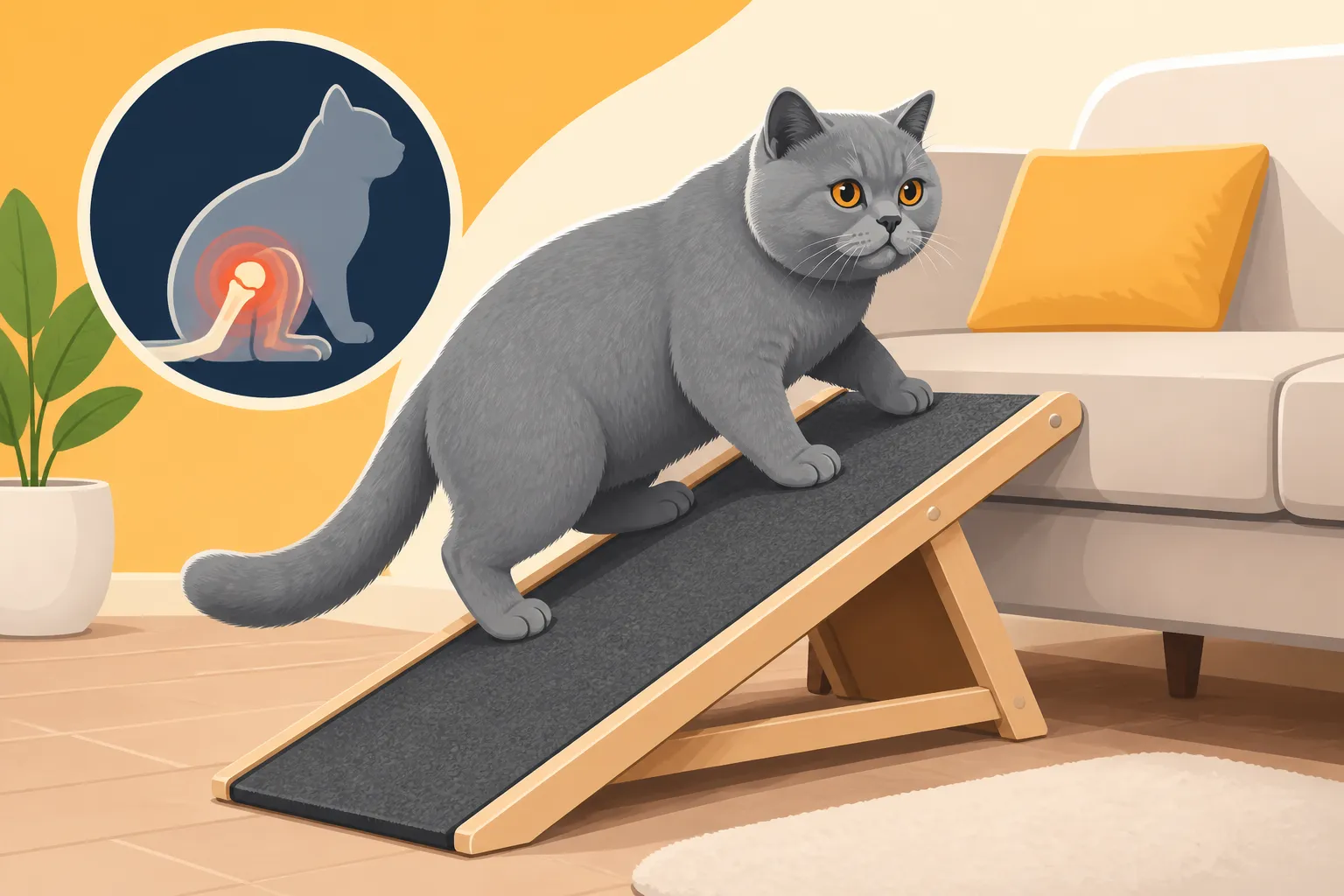
Arthritis, or degenerative joint disease, is an incredibly common and often under-diagnosed condition in older cats, including our British Shorthairs. Imagine how your own joints might feel after years of wear and tear; it's much the same for them. The cartilage cushioning their joints begins to thin, leading to bone-on-bone friction, inflammation, and pain. This makes high-impact activities like jumping down from heights particularly uncomfortable, sometimes even excruciating.
For a British Shorthair, whose dense bone structure and substantial weight put a lot of pressure on their joints throughout their life, this can be even more pronounced. You might notice them moving a little slower, perhaps stiffening up after a nap, or even hesitating before taking a jump they once made without a second thought. This stiffness can be particularly evident in their hips, knees, and even their spine. It’s crucial to recognize that this isn't just "slowing down" but often a sign of genuine pain. Providing alternatives like ramps can significantly reduce the strain on these vulnerable joints, preventing further damage and discomfort. Many British Shorthairs are also prone to gaining weight, which can exacerbate joint problems, so it's a double whammy if they are battling both age and extra pounds; understanding What Obesity Does to a British Shorthair's Joints is key.
Muscle Weakness and Reduced Mobility
Alongside joint changes, older British Shorthairs often experience a natural decline in muscle mass, a process known as sarcopenia. Those powerful hind legs that once propelled them upwards lose some of their strength and spring. Their core muscles, essential for balance and stability during jumps, also weaken. This isn't just about strength; it's about coordination and endurance too. What was once an effortless leap might now require immense effort, leading to shaky landings or even missed jumps altogether.
This reduction in muscle mass can contribute to a general decrease in overall mobility. You might observe a less graceful gait, perhaps a slight sway when walking, or even a struggle to maintain balance on uneven surfaces. This can be compounded by other age-related issues. If your senior British Shorthair is also losing weight due to other health concerns, this muscle wastage can be even more pronounced. It's a clear warning sign if you notice Why Weight Loss in an Old British Shorthair Is a Warning, as muscle loss often accompanies underlying conditions or simply the natural aging process. Ramps can offer a gentle, low-impact way for them to access their favourite spots without relying on failing muscle strength, preserving their remaining energy for other activities.
Vision and Balance Decline
It's not just their joints and muscles that feel the effects of time; their senses can diminish too. Older British Shorthairs can experience changes in their vision, ranging from cloudiness in their eyes to a more significant loss of sight. Navigating heights requires acute depth perception and peripheral vision, both of which can be compromised in an aging cat. A jump that looks perfectly safe to them in their youth might appear blurry or disorienting as their vision wanes, making them hesitant or prone to misjudging distances.
Furthermore, their sense of balance can also decline. The vestibular system, located in the inner ear, plays a crucial role in maintaining equilibrium. As this system ages, cats might experience dizziness, disorientation, or simply a less steady footing. Combine impaired vision with a shaky sense of balance, and a once simple jump becomes a high-stakes gamble. They might wobble on landings or even fall. Ramps eliminate the need for such risky manoeuvres, offering a stable, predictable pathway. Imagine trying to jump onto a high surface in the dark if you were feeling a bit dizzy – that’s essentially what some senior cats might be facing daily.
Identifying the Signs Your British Shorthair Needs a Ramp
Sometimes, the signs that your British Shorthair needs a ramp are subtle, easily mistaken for just "getting old." But for us, as observant cat parents, learning to differentiate between normal aging and signs of discomfort or inability is key. They're masters at hiding pain, so you really have to pay attention to the nuances in their behavior. Just generally, keeping up with Caring for an Old British Shorthair means watching for these changes closely.
Hesitation Before Jumping or Climbing
This is often one of the earliest and most telling indicators. Your British Shorthair, who once bounded onto the bed or sofa without a second thought, might now stand at the edge, looking up, contemplating the jump for a long moment. You might even see them stretch their legs out, shift their weight, and then… decide against it. Or, they might attempt the jump, but it looks more like a struggle, perhaps a bit clumsy or less confident than before. This hesitation isn't stubbornness; it's a clear signal that the action either causes pain, or they lack the confidence and strength to execute it safely.
They might try to find alternative, lower routes, even if it means extra effort. For example, if they used to jump straight onto a windowsill, they might now climb onto a chair first, then the windowsill. Observe their landing, too. If they land hard, or if their legs seem to buckle slightly on impact, it's a sign that the shock absorption in their joints isn't what it used to be. Every hard landing on stiff, arthritic joints is like jarring a tender injury, and ramps can dramatically soften that impact.
Difficulty Reaching Favorite Spots
Cats are creatures of habit, and British Shorthairs are no exception. They have their preferred sleeping spots, sunbathing perches, and observation points. If your cat suddenly stops frequenting their favourite high-up snooze spot on the cat tree, or can no longer easily join you on the couch for cuddles, it's a big deal. This isn't necessarily a change in preference; it's a physical limitation. They want to be there, but they can't get there.
Perhaps they've started sleeping exclusively on the floor, even though they always loved the warmth of your bed. Or maybe their favourite window perch, where they'd spend hours watching the world go by, now goes unused. This can lead to frustration and a reduced quality of life, as they're cut off from their cherished routines and territories. When a cat who used to enjoy How Much a British Shorthair Likes High Places suddenly avoids them, it’s a strong signal for intervention. Ramps can restore their access to these important parts of their world, allowing them to continue enjoying their usual comfort zones without pain or struggle.
Changes in Grooming Habits and Litter Box Use
Surprisingly, physical limitations can manifest in seemingly unrelated ways, like changes in grooming or litter box habits. An older British Shorthair with joint pain, particularly in their hips or back, might find it incredibly difficult to twist and contort their body to groom themselves thoroughly. You might notice their coat becoming duller, matted, or unkempt, especially along their back or around their tail base, as they simply can't reach those areas anymore. It's a common issue, and if you have an overweight senior, it's compounded by their size, making Why an Overweight British Shorthair Cannot Groom Its Back a stark reality.
Similarly, stepping into a high-sided litter box can become a painful ordeal for a cat with stiff joints. They might hesitate at the entrance, struggle to climb in, or even begin to eliminate outside the box entirely because the act of getting in and out is too uncomfortable. This isn't a behavioral problem; it's a pain problem. If you notice your cat having trouble with their usual litter box, considering a low-sided option or even a ramp leading up to a regular box can make a huge difference. Think about Why a Heavy British Shorthair Needs a Low Sided Box even before they're seniors, as their size already presents challenges.
Behavioral Changes Indicating Pain or Discomfort
Cats are notoriously stoic, masters of hiding their pain. In the wild, showing weakness makes them vulnerable, and this instinct persists even in our pampered housecats. However, subtle behavioral shifts can often betray their discomfort. You might notice them becoming more withdrawn, less interactive, or even a bit irritable when touched, especially if you inadvertently touch a sore joint. They might spend more time hiding or simply resting in one spot.
A previously calm and affectionate cat might become grumpy, or even hiss or swat if you try to pick them up in a way that causes pain. They might vocalize differently, perhaps with a low moan or a soft cry when moving. Some cats might over-groom a painful area excessively, while others might neglect grooming altogether. Reduced appetite or changes in sleep patterns can also be subtle cues. It's truly a test of our observation skills to pick up on these signals, especially since How a British Shorthair Hides Pain so effectively. Any unexplained change in temperament or routine, particularly if coupled with hesitant movement, should prompt a closer look at their physical capabilities.
Types of Ramps and How to Choose the Right One
Once you've determined that your British Shorthair could benefit from a ramp, the next step is selecting the right one. It's not a one-size-fits-all solution, and a little careful consideration will ensure your furry friend gets the best support possible. You want something safe, comfortable, and easy for them to use.
Considerations for British Shorthair Size and Weight
British Shorthairs are substantial cats, known for their robust build and considerable weight. This means a flimsy ramp designed for a tiny kitten simply won't do. You need a ramp that is incredibly sturdy and stable. Look for ramps with a high weight capacity—often designed for small dogs or even heavier breeds—to ensure it won't wobble or collapse under your British Shorthair's impressive bulk. A wobbly ramp will deter them from using it, or worse, cause an injury if it gives way.
The width of the ramp is also crucial. A narrow ramp can feel precarious and uncomfortable for a wide-bodied British Shorthair. Aim for a ramp that offers ample space for them to walk comfortably without feeling cramped or at risk of falling off the sides. Think about their overall "cobby" build; they need a wide, reassuring path. Some brands offer pet ramps that are specifically designed for larger animals, which might be a good starting point. Checking reviews for comments from owners of larger cat breeds (or even small to medium dogs) can give you a good indication of a ramp's suitability for your British Shorthair.
Materials, Incline, and Surface Texture
The construction of the ramp is just as important as its size. You'll find ramps made from various materials, including wood, plastic, or carpeted composite.
- Wooden ramps can be very sturdy and aesthetically pleasing, but ensure the walking surface isn't slippery.
- Plastic ramps are often lightweight and easy to move, but again, check for stability and a non-slip surface.
- Carpeted ramps are an excellent choice, as the carpet provides natural traction, preventing slips and offering a softer feel underfoot. Brands available on Amazon or Chewy often have a good selection of carpeted options.
The incline of the ramp is critical. A very steep ramp, while taking up less space, will still be difficult for an arthritic or weak cat to navigate. Look for ramps with a gentle slope. Many pet ramps are adjustable, allowing you to customize the incline to suit your cat's abilities and the height of the furniture it's accessing. A longer ramp will naturally have a shallower incline for the same height, making it easier to climb.
Finally, the surface texture is paramount for safety. Smooth, slick surfaces like bare wood or plastic can be terrifying for a cat with compromised balance or vision. Look for ramps with:
- Carpet: Provides excellent grip and is gentle on paws.
- Ribbed rubber: Offers good traction, but some cats might dislike the feel.
- Non-slip treads: Small bumps or strips that add grip.
Some ramps even have small side rails, which can provide an added sense of security for a cat who might be a bit unsteady. When looking at options, prioritize safety features like non-slip surfaces.
Here's a quick comparison of common ramp features:
| Feature | Ideal for British Shorthairs | Less Ideal |
|---|---|---|
| Weight Capacity | High (e.g., 50+ lbs / 23+ kg) | Low (e.g., <20 lbs / 9 kg) |
| Width | Generous (e.g., 12-16 inches / 30-40 cm) | Narrow (e.g., <10 inches / 25 cm) |
| Incline | Gentle, shallow slope | Steep, abrupt angle |
| Surface | Carpeted, ribbed rubber, or non-slip treads | Smooth wood, bare plastic, slick fabric |
| Stability | Solid, heavy base, no wobbling | Flimsy, lightweight, prone to shifting |
| Height | Adjustable, matches target surface (bed, sofa, windowsill) | Fixed, too low or too high for desired access |
Placement and Introduction to Ramps
Once you've chosen the perfect ramp, strategic placement is key. Place the ramp directly next to the piece of furniture or window perch your cat is struggling to access. Don't just set it up and expect them to use it immediately. Cats are cautious creatures, and an unfamiliar object can be intimidating.
Introduce the ramp slowly and positively.
- Start with treats: Lure your cat onto the first few steps of the ramp with their favorite treats. Place a few treats on the ramp itself, encouraging them to investigate.
- Use familiar scents: Place a blanket or towel that smells like your cat on the ramp to make it feel more inviting.
- Positive reinforcement: Praise and reward them lavishly with treats and gentle strokes every time they interact with or use the ramp, even if it's just one step.
- Patience is key: Never force your cat onto the ramp. This will only create a negative association. It might take a few days, or even a couple of weeks, for them to fully accept and regularly use the ramp.
- Placement of valued items: Consider putting a favorite toy or a small amount of their food (if they're on a portion-controlled diet) at the top of the ramp to incentivize them.
Many British Shorthairs appreciate routine, so integrating the ramp into their daily access to a cherished spot will help them understand its purpose. For example, if they always sleep on your bed, placing the ramp right there will quickly become part of their nighttime ritual. It's a small investment in time that pays huge dividends in their comfort and your peace of mind.
Benefits of Incorporating Ramps into Your Senior British Shorthair's Life
Making the decision to introduce ramps might feel like admitting your cat is "old," but it’s actually an act of love and proactive care. The benefits extend far beyond just reaching high places; they significantly impact your British Shorthair's overall health and happiness. It’s all part of the process of understanding What Changes in a British Shorthair After Ten.
Preserving Joint Health and Preventing Injury
The most immediate and obvious benefit of a ramp is the reduction of stress on your senior British Shorthair's joints. Each jump, especially descending, sends a jolt through their ankles, knees, hips, and spine. For a cat with developing arthritis or existing joint pain, these repeated impacts exacerbate inflammation and accelerate the degenerative process. By providing a gradual incline, ramps eliminate this impact entirely. They allow your cat to ascend and descend smoothly, distributing their weight evenly and minimizing strain.
This isn't just about comfort; it's about prevention. Reducing wear and tear helps to slow the progression of arthritis and can prevent acute injuries like sprains, strains, or even fractures that can occur from a misjudged jump or a clumsy landing. It essentially extends the healthy function of their joints for as long as possible. Think of it as investing in their long-term physical well-being. Keeping up with regular vet check-ups, where your vet can assess Whether an Aging British Shorthair Gets Stiff, is also vital for early intervention and management of joint issues, making ramps a perfect complementary solution.
Maintaining Independence and Quality of Life
Cats, even the most cuddly British Shorthairs, value their autonomy. Being unable to reach their favorite spots can lead to immense frustration and a feeling of being cut off from their environment. Imagine suddenly being unable to get to your favorite armchair or your own bed. It would be incredibly disheartening. For a senior cat, being able to independently access the sunny windowsill, the comfortable spot on the sofa next to you, or their cherished perch on the cat tree is vital for their mental and emotional health.
Ramps empower them to continue these cherished routines, maintaining a sense of normalcy and control over their world. This autonomy contributes significantly to their overall quality of life. They can still participate fully in household life, enjoy social interactions, and pursue their natural desires for sunbathing or observation. This simple addition can prevent them from becoming withdrawn or depressed due to physical limitations, allowing them to truly enjoy their golden years. Remember, their happiness is often tied to their ability to navigate their familiar surroundings comfortably.
Enhancing Emotional Well-being
Beyond physical comfort, ramps play a huge role in your British Shorthair's emotional health. The anxiety of attempting a painful jump, or the frustration of wanting to be somewhere but being unable to reach it, can be a significant source of stress for a senior cat. This stress can manifest as irritability, withdrawal, or even inappropriate urination if they're too uncomfortable to reach their litter box. When How a British Shorthair Hides Pain so well, these subtle changes in behavior might be the only clues we get.
By providing easy, pain-free access, ramps reduce this daily stress. Your cat will feel more secure and confident in their environment, knowing they can safely get where they want to go. This peace of mind translates into a happier, more relaxed cat. They’ll be more likely to engage with you, seek out their favorite resting spots, and generally exhibit the contented, calm demeanor British Shorthair owners adore. Ultimately, a ramp isn't just a piece of equipment; it's an investment in your senior British Shorthair's continued comfort, dignity, and joyful participation in your family life.
Disclaimer
This article is for general informational purposes only and does not constitute professional advice. Laws, prices and regulations vary by location and change over time. Consult a qualified professional for guidance on your specific situation.