What a Cat Tree for a Heavy British Shorthair Costs
It's a common dilemma for British Shorthair owners: you want to provide your beloved furball with a stimulating environment, perhaps a multi-level cat tree to survey their kingdom, but so many options out there just seem designed for dainty, agile cats. You end up staring at flimsy, wobbly structures wondering if your sturdy, substantial British Shorthair will tip the whole thing over the first time they decide to launch themselves at the top perch. This guide is here to help you navigate the world of cat trees, focusing specifically on what makes a good, safe, and worthwhile investment for your wonderfully heavy British Shorthair, and what costs you can realistically expect.
Why a Regular Cat Tree Just Won't Do for a British Shorthair
Let's be honest, British Shorthairs are magnificent, but they aren't exactly known for their aerial acrobatics. They're built like brick houses, sturdy and round, which means they need furniture designed to match their impressive physique. Trying to squeeze a British Shorthair onto a standard, thinly constructed cat tree is like asking a sumo wrestler to balance on a twig – it's just not going to end well, and could even lead to injury.
Understanding the British Shorthair's Unique Build
Our British Shorthairs are famously "cobby" in body type. This isn't just a fancy show term; it means they have a broad chest, short, thick legs, and a dense, muscular frame that gives them their distinctive teddy bear appearance. They're often described as chunky, and for good reason! An adult male British Shorthair can easily weigh upwards of 12-18 pounds, with females typically between 8-14 pounds. You can read more about What a British Shorthair Weighs and How Big It Gets. This isn't just about weight, though; it's also about their sheer girth and the way they carry that weight. They need ample space to stretch out, turn around, and snooze comfortably without feeling cramped or unstable.
Beyond their physical build, British Shorthairs are generally known for their calm, somewhat reserved demeanor. They're not usually the type to scale curtains or perform daring leaps from high shelves. Instead, they prefer to keep all four paws firmly planted or, at most, execute a dignified jump to a nearby surface. This low-energy lifestyle means that while they might appreciate a high vantage point, they aren't going to be scrambling up and down a rickety structure all day. They need something that feels secure and inviting, something they can trust to hold their weight for a long, luxurious nap. Why a British Shorthair Is Built to Look Heavy further explains this unique body type.
The Problem with Flimsy, Off-the-Shelf Cat Trees
Picture this: you've bought a sleek, modern cat tree from a general pet store, excited for your British Shorthair to enjoy it. You assemble it, which often involves thin particle board platforms and skinny cardboard posts wrapped in sisal. Your British Shorthair, bless their heart, takes one look at it, maybe bats at a dangling toy, and then gingerly attempts to step onto the first platform. What happens? The whole thing wobbles. The platform dips. The post creaks ominously. Your cat, startled, jumps back down, perhaps giving you a look that clearly says, "Is this a joke?"
This scenario is all too common. Many mass-produced cat trees are designed with smaller, lighter, and more agile cats in mind. Their stability often comes from being lightweight, not robust. For a British Shorthair, this translates to:
- Wobbling and Tipping: The number one issue. A heavy cat jumping onto an unstable tree can cause it to sway, potentially scaring them off or even causing it to tip over entirely.
- Inadequate Weight Limits: While not always explicitly stated, many trees have an unspoken weight limit. A British Shorthair can easily exceed this, leading to broken platforms, bent posts, or snapped attachments.
- Small Platforms and Beds: Our British Shorthairs are wide! A tiny 12×12 inch platform might suffice for a slender Siamese, but a British Shorthair needs space to sprawl. They won't use a bed or platform if they can't fit comfortably or feel like they're about to tumble off.
- Poor Quality Materials: Think thin carpeting that quickly wears through, sisal rope that unravels after a few scratches, and particle board that crumbles under pressure. These materials simply don't stand up to the weight and occasional rough-and-tumble of a British Shorthair.
Safety Concerns for a Heavier Cat
Beyond the frustration of a wasted purchase, a flimsy cat tree poses real safety risks for your British Shorthair. A fall from even a moderate height can be serious, especially for a heavier cat whose joints might already be under strain, or for an older British Shorthair whose bones are more brittle.
- Falls and Injuries: A sudden collapse or tip-over can result in sprains, fractures, or internal injuries. Imagine your beloved cat falling headfirst or getting a limb caught. The vet bills alone for such an incident can be terrifyingly high. This is why having pet insurance, like plans offered by Healthy Paws, might be a good idea for any unexpected accidents, especially if you're concerned about your cat's safety with new furniture.
- Joint Strain: British Shorthairs can be prone to Obesity Is the British Shorthair's Real Disease, and with that comes increased risk of What Obesity Does to a British Shorthair's Joints. Repetitive jumping from unstable or too-high platforms can exacerbate these issues, leading to arthritis or other orthopedic problems down the line. Even if they're not overweight, their natural bulk means more impact on landing.
- Anxiety and Avoidance: A traumatic experience with a wobbly tree can make your British Shorthair fearful of all elevated surfaces, or even of the tree itself. You want them to feel safe and secure, not anxious. A cat that avoids its cat tree because of past negative experiences is a heartbreaking sight and a waste of your money.
What to Look For in a British Shorthair-Friendly Cat Tree
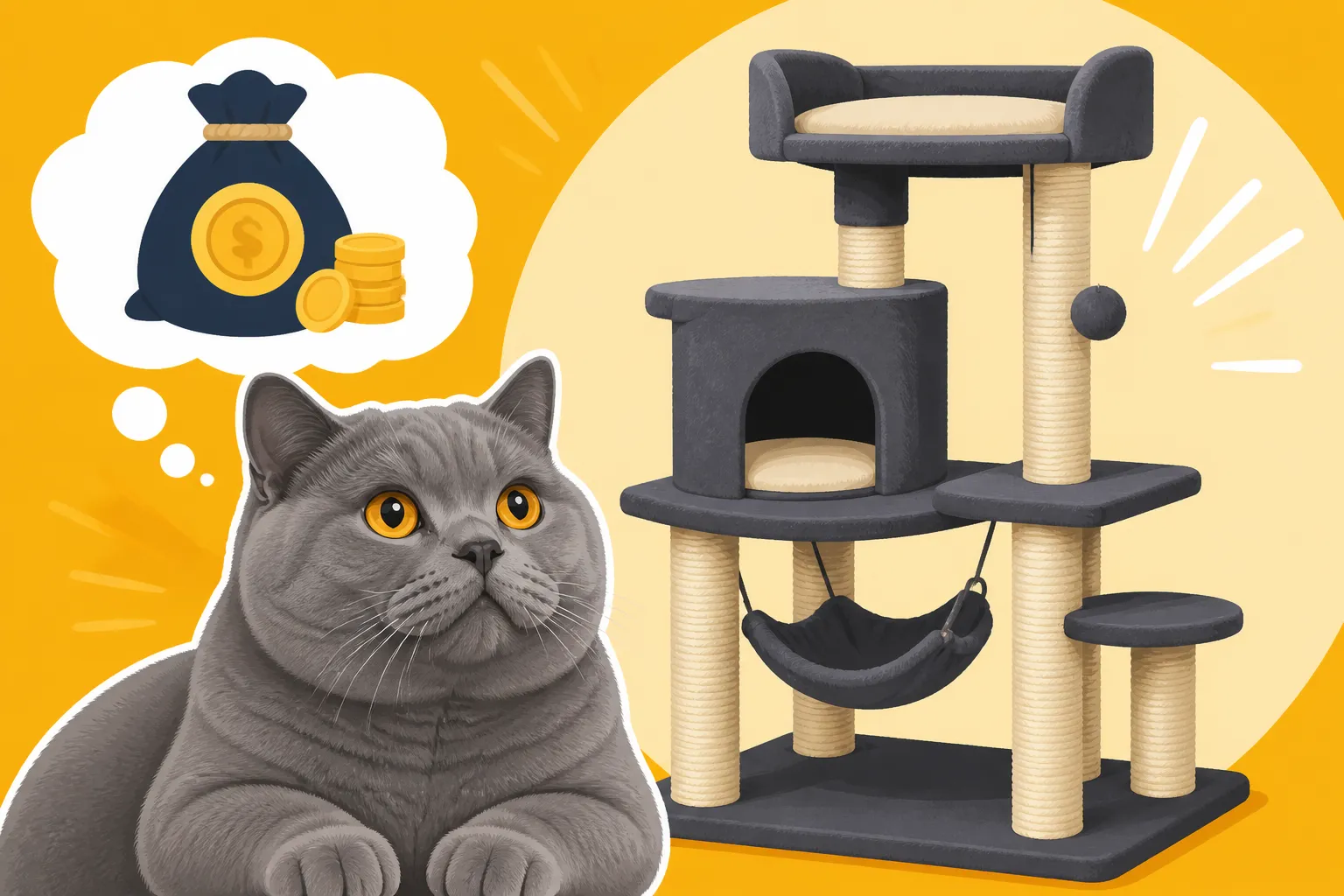
So, what does a British Shorthair-worthy cat tree actually look like? It's all about robust design, thoughtful features, and quality materials built to last. Think of it less as a cat tree and more as a piece of sturdy feline furniture.
Sturdy Construction and Materials
This is paramount. A British Shorthair needs a tree that feels as solid as a tree in your yard, not a twig from a bush.
- Solid Wood or Plywood Base and Posts: Avoid particle board whenever possible, especially for the core structure. Look for solid wood or thick, multi-layered plywood construction. These materials provide superior strength and stability. Even better if the posts themselves are actual wood, not just cardboard tubes.
- Thick Sisal Posts: The scratching posts should be substantial, wrapped in durable, tightly wound sisal rope. This provides an excellent scratching surface that won't unravel quickly and contributes to the overall stability of the structure. Many cheaper trees use thin sisal or even just carpet for scratching, which just doesn't cut it for a dedicated British Shorthair scratcher.
- Wide, Heavy Base: The foundation of the tree is crucial. A wide, heavy base plate prevents tipping. Some premium trees even incorporate weighted bases or come with wall-mounting straps for added security, which is a fantastic feature for heavy breeds.
- Secure Fastenings: Pay attention to how the different levels are connected. Are they screwed together with strong metal hardware, or are they flimsy plastic clips? Strong, recessed bolts and large washers are indicators of a well-made, secure product.
Spacious Platforms and Hiding Spots
Your British Shorthair needs room to stretch out and truly relax.
- Generous Platform Sizes: Look for platforms that are at least 18×18 inches, if not larger. This allows your cat to lie down fully without parts of their body dangling precariously. If the tree includes beds or cubbies, ensure they are roomy enough for your British Shorthair to curl up in without being squashed. A happy cat is one that can comfortably snooze without feeling constricted.
- Reinforced Edges and Borders: Platforms should have a slight lip or reinforced edge, particularly on higher levels. This offers an extra sense of security for your cat, preventing them from accidentally rolling off in their sleep. It also makes them feel more contained and safe in their elevated spot.
- Cozy, Enclosed Hiding Spots: British Shorthairs appreciate a quiet, dark spot where they can retreat. If the tree includes cubbies or houses, ensure the openings are large enough for your cat to enter and exit easily without snagging their fur or feeling trapped. These spaces should also be generously sized inside to allow for comfortable sleeping and turning around.
Accessible Levels
Given their less-than-acrobatic nature, easy access to different levels is vital for a British Shorthair. You don't want them struggling or having to make huge leaps.
- Staggered, Closely Spaced Platforms: The jumps between levels should be manageable. Look for trees where platforms are offset and relatively close together, creating a natural "staircase" effect. This minimizes the vertical leap required and reduces strain on their joints. Consider how your cat, especially a less agile or Arthritis in an Older British Shorthair, will navigate it.
- Ramps or Stairs: Some cat trees incorporate ramps or carpeted stairs, which are an absolute godsend for British Shorthairs, particularly if they are older, have joint issues, or are simply not big jumpers. Ramps provide a gentle incline, making ascent and descent effortless. This feature can make a huge difference in whether your cat actually uses the tree's higher levels.
- Textured Surfaces: All platforms and ramps should be covered in a soft, grippy material like plush carpet or fleece. This provides traction, preventing slips and falls, especially when your cat is descending. Smooth, slick surfaces are a definite no-go.
Breaking Down the Costs: What You Can Expect to Pay
Let's talk money. Because British Shorthairs need something more substantial, you're generally looking at a higher price point than the average cat tree. However, consider it an investment in their comfort, safety, and enrichment, which can potentially save you vet bills down the line.
Budget-Friendly Options
While "budget-friendly" for a British Shorthair tree still means a significant investment compared to a basic model, there are ways to keep costs down without compromising safety entirely.
- Smaller, Simpler Designs: Instead of a towering, multi-cat mansion, you might opt for a two or three-level tree with fewer features. The focus here is on quality over quantity. A sturdy, lower tree with large platforms can be more beneficial than a tall, wobbly one.
- DIY Potential: If you're handy, building your own cat tree can save a lot of money on labor and materials. You can source solid wood, thick carpet remnants, and sisal rope to create a custom, super-sturdy structure tailored to your British Shorthair's exact needs. This allows you to control the quality of every component.
- Sales and Discounts: Keep an eye out for sales, especially around major holidays. Retailers like Chewy often have promotions on larger pet furniture items. Signing up for newsletters can alert you to upcoming discounts.
- Cost Range: For a genuinely sturdy, albeit simpler, British Shorthair appropriate cat tree, you're likely looking at the lower end of a hundred dollars, perhaps even closer to two hundred, for a new, decent-quality option. Anything significantly less might raise questions about durability.
Mid-Range Selections
This is where you'll find a sweet spot of quality, features, and reasonable cost for many British Shorthair owners.
- Enhanced Durability: Trees in this range often feature better quality wood (like thicker MDF or even some plywood components), denser carpeting, and more robust hardware. They're designed to withstand more use and heavier cats.
- More Features: You might see more spacious cubbies, additional scratching posts, and perhaps a wider variety of platforms. The aesthetics also tend to improve, with more thought put into how the tree looks in your home.
- Good Value for Money: For many, a mid-range tree offers the best balance of initial cost and long-term durability. It's an investment that should last for years with proper care. Many popular online pet retailers will carry a good selection in this range, often with detailed customer reviews mentioning suitability for larger cats.
- Cost Range: Expect to pay anywhere from two hundred to four hundred dollars for a good mid-range option. These trees often come from reputable pet furniture manufacturers known for their quality.
Premium and Custom Cat Trees
For those who want the absolute best or have specific aesthetic requirements, the premium market offers top-tier options.
- Luxury Materials and Design: These trees often use solid hardwood, designer fabrics, and architecturally thoughtful designs that blend seamlessly with high-end home decor. They can be statement pieces as much as functional cat furniture.
- Customization: Many premium manufacturers offer customization options, allowing you to choose platform sizes, fabric types, and configurations to perfectly suit your British Shorthair and your home. This is ideal if you have multiple large cats or very specific needs.
- Built to Last a Lifetime: Trees in this category are typically handcrafted with exceptional attention to detail and materials chosen for extreme durability, often backed by strong warranties.
- Cost Range: The sky's the limit here. You could easily spend upwards of four hundred to a thousand dollars, and even more for bespoke, multi-level structures. While a significant outlay, consider it a long-term investment. What a British Shorthair Costs Over Its Lifetime will give you a sense of how larger upfront purchases fit into the overall financial picture of owning this breed.
Additional Costs to Consider
The purchase price isn't always the end of the story.
- Assembly: Some larger trees can be quite complex to assemble. While many come with clear instructions, if you're not handy, you might need to factor in the cost of professional assembly.
- Replacement Parts: Over time, sisal rope can wear out, or a particular platform might get damaged. Check if the manufacturer sells replacement parts like new sisal posts or fabric covers. This can extend the life of your tree significantly.
- Cleaning Supplies: A large cat tree can accumulate fur and dander. Investing in a good pet vacuum attachment and enzyme cleaner for accidents is wise. You'll want to keep it fresh and inviting for your cat.
- Freight Shipping: Especially for very large or heavy trees, shipping costs can be substantial, particularly if you're ordering from a specialized manufacturer. Always check the shipping fees before committing to a purchase.
| Feature | Budget-Friendly (Sub-$200) | Mid-Range ($200-$400) | Premium/Custom ($400+) |
|---|---|---|---|
| Construction | Particle board, thin plywood | Thicker MDF, some plywood, decent hardware | Solid wood, multi-layered plywood, metal fasteners |
| Stability | Moderate, may need wall anchor | Good, generally stable | Excellent, often weighted base or custom install |
| Platform Size | Adequate, but might be smaller | Generous, comfortable | Very spacious, bespoke sizing |
| Scratching Posts | Basic sisal, carpet-wrapped | Durable sisal, often thicker posts | High-quality sisal, thick and robust |
| Features | 2-3 levels, basic cubby | 3-5 levels, multiple cubbies/beds, toys | Multi-level, custom features, luxury finishes |
| Materials | Basic carpet, thin fleece | Plush carpet, soft fleece, durable fabrics | High-end carpet, upholstery fabrics, real wood |
| Lifespan | 2-5 years (with care) | 5-10+ years | 10+ years, often lifetime |
| Assembly | Simple to moderate | Moderate to complex | Often professional installation recommended |
Making the Investment Worthwhile: Ensuring Your British Shorthair Uses It
You've done your research, you've invested in a fantastic, sturdy cat tree. Now, how do you make sure your British Shorthair actually uses it and doesn't just treat it as another piece of ignored furniture? It's all about making it appealing and integrating it into their daily life. Remember, British Shorthairs are creatures of comfort and routine.
Placement and Introduction Strategies
Location, location, location! Where you put the tree can make all the difference.
- Prime Real Estate: Place the cat tree in a central, high-traffic area of your home, but one that also offers a sense of security. Near a window is often ideal, as British Shorthairs love to watch the world go by from a safe perch. A spot in the living room where they can feel part of the family without being directly in the middle of chaos is also good. They want to be near you, not necessarily on you, as you'll often find with A British Shorthair Sits Near You, Not On You.
- Consider Their Viewpoint: Cats inherently seek elevated positions to feel safe and survey their territory. Make sure the highest platform offers a good view of the room or outdoors. This satisfies their natural instinct to observe from above, even if they're not natural climbers.
- Slow and Steady Introduction: Don't just plonk it down and expect immediate adoration. Let your British Shorthair explore it on their own terms. Place treats on the lower levels, or sprinkle some catnip if your cat responds to it. Let them sniff, rub, and investigate without pressure.
- Familiar Scents: Rub their favorite blanket or a worn t-shirt with your scent on it against the cat tree. This can make it feel more familiar and inviting, associating it with comfort and safety.
Encouraging Play and Exploration
Even low-energy British Shorthairs can be encouraged to use their new vertical space with a bit of gentle coaxing.
- Interactive Play: Use wand toys or feather teasers to lure your British Shorthair onto the platforms. Drag the toy up the posts, allowing them to follow and bat at it. This turns the tree into part of their play routine. You might find that Getting a Low Energy British Shorthair to Move requires a bit of dedication.
- Treat Trails: Create a treat trail leading up the tree. Place a small, irresistible treat on each level, encouraging them to ascend and explore. This positively reinforces their interaction with the tree. Retailers like Chewy offer a wide array of tempting cat treats that can be perfect for this.
- Puzzle Feeders on Platforms: For a bit of mental stimulation, place a small, easy puzzle feeder with a few kibbles on one of the platforms. This encourages them to engage with the tree to get their reward.
- Scratching Post Appeal: Ensure the sisal posts are easily accessible and appealing. British Shorthairs love a good scratch, and a sturdy post on their tree can fulfill this need, keeping them off your furniture.
Maintenance and Longevity
To ensure your investment lasts and remains inviting, a little ongoing care goes a long way.
- Regular Cleaning: Vacuum the carpeted surfaces regularly to remove shedding fur and dander. British Shorthairs have dense coats, and they do shed, especially during seasonal changes. You'll find a lot of their fur on the tree! For any accidents, spot clean with a pet-safe enzyme cleaner.
- Check for Wear and Tear: Periodically inspect the tree for loose screws, wobbly platforms, or frayed sisal rope. Tighten any fasteners, and replace sisal if it's becoming worn. Addressing small issues promptly prevents them from becoming bigger, more dangerous problems.
- Keep it Fresh: If your cat stops using it, try refreshing it with new catnip, a different toy, or a thorough cleaning. Sometimes a change in scent or novelty is all it takes to rekindle their interest.
By choosing wisely and putting in a little effort to make the cat tree an appealing part of your British Shorthair's world, you'll provide them with a safe, comfortable, and enriching vertical space they'll genuinely love for years to come.
Disclaimer
This article is for general informational purposes only and does not constitute professional advice. Laws, prices and regulations vary by location and change over time. Consult a qualified professional for guidance on your specific situation.