Why Free Feeding Ruins a British Shorthair
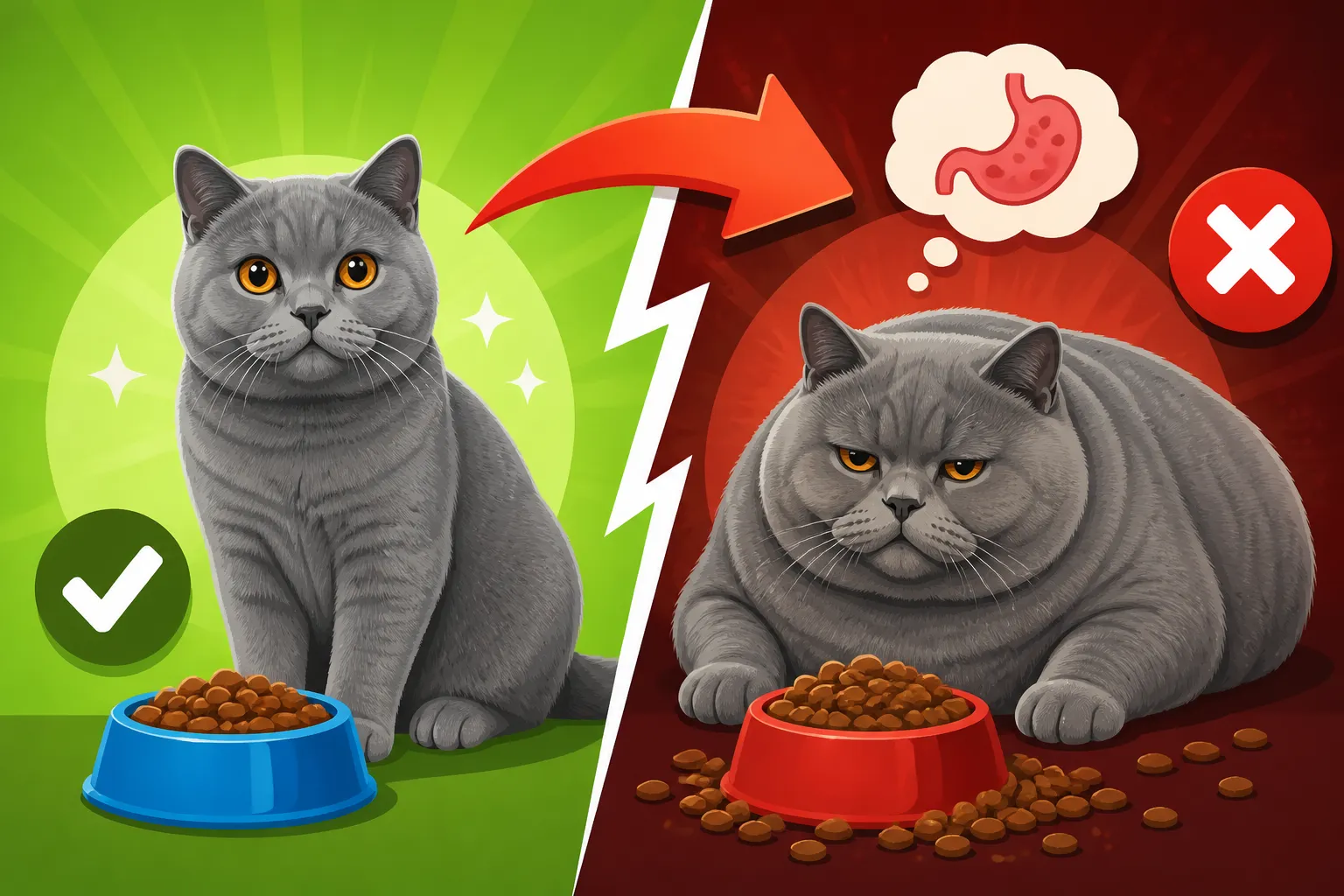
It’s a common scene many British Shorthair owners find themselves in: a perpetually full bowl of kibble, a chunky, contented-looking cat, and the comforting thought that your furry friend always has access to food. We often fall into the trap of free feeding because it seems so convenient and kind. We think we're providing endless sustenance and comfort, ensuring they never go hungry. However, for a British Shorthair, a breed with a charmingly robust build that is unfortunately prone to putting on weight, this seemingly harmless habit can quietly, but significantly, undermine their health, leading to a host of serious issues that impact their quality of life.
The Deceptive Appeal of Free Feeding
Let's be honest, free feeding—leaving a bowl of dry food out all day for your cat to graze on—is incredibly appealing for busy owners. It saves time, reduces guilt about not being home to feed them at specific hours, and seems like a natural way to ensure your cat is always satisfied. Many of us have grown up with this method, perhaps with other cat breeds that managed their weight just fine, or simply assumed that cats, being naturally self-regulating, would eat only what they need.
Why Owners Opt for This Method
The convenience factor is huge, there’s no denying it. In households where schedules are unpredictable or multiple family members might forget whose turn it is to feed, an always-full bowl seems like a foolproof solution. You don't have to worry about rushing home for meal times, and your cat won't pester you for food, at least not in the same way. It feels like a benevolent act, giving your beloved British Shorthair complete autonomy over their appetite. We envision them taking a few polite nibbles throughout the day, never overdoing it.
Another reason owners lean into free feeding is the misconception that cats will simply stop when they're full. While some cats, particularly those with a very strong internal satiety signal, might do this, many breeds, and British Shorthairs in particular, are not among them. Their ancestors had to hunt for every meal, so when an abundant, reliable food source presents itself, their natural instinct can be to gorge, a survival mechanism that sadly works against them in a domesticated setting. This instinct, combined with the low moisture content and often highly palatable nature of dry kibble, makes it all too easy for them to overeat.
The Problematic Instincts of British Shorthairs
The British Shorthair's historical role as a sturdy working cat meant they were bred for resilience and a robust physique. This, combined with their naturally calm and somewhat sedentary nature, creates a perfect storm for weight gain when food is constantly available. Unlike more active breeds that might burn off extra calories through zoomies and climbing, a British Shorthair is far more likely to prefer a cozy nap on the sofa. Their dense, plush coat can also make it harder for owners to spot weight gain until it's significant, masking those extra pounds that accumulate slowly but surely.
Consider a typical British Shorthair, a cat known for its rounded face, sturdy body, and short, powerful legs. These features, while charming, are also indicators of a predisposition to carrying extra weight. They aren't built for athletic feats; they're built for comfort and a rather dignified laziness. If you provide unlimited access to calories, their natural inclination to conserve energy means those calories are quickly stored as fat. This is a fundamental reason why free feeding actively works against their genetic makeup and lifestyle.
The Cascade of Health Problems
The consequences of free feeding for a British Shorthair aren't just about aesthetics. Those extra pounds quickly translate into a host of serious, and often costly, health issues. It's not just a matter of your cat being "a bit chubby"; it's about setting them up for a significantly shorter and less comfortable life. These conditions can range from metabolic disorders to painful joint issues, all stemming from a diet that lacks proper portion control.
Obesity: The Gateway Disease
Obesity is, without a doubt, the most direct and pervasive consequence of free feeding a British Shorthair. When food is always available, a British Shorthair will almost inevitably consume more calories than they expend. Their naturally broad, cobby build can trick owners into thinking they're just "big boned," but this often masks genuine excess fat. A healthy British Shorthair should have a discernible waist and you should be able to feel their ribs without pressing too hard, even through their dense coat. When they're free-fed, this is rarely the case. We have an article dedicated to understanding if your cat is overweight, called Signs a British Shorthair Is Overweight.
The dangers of obesity are far-reaching. It significantly reduces their lifespan and dramatically increases their risk for a myriad of other diseases. This isn't just a slight inconvenience; it's a major factor in how long a British Shorthair lives on average. Over time, the constant stress on their organs and metabolic system can lead to irreversible damage. If you're wondering How Much Obesity Shortens a British Shorthair's Life, the answer is often years.
Diabetes and Other Metabolic Disorders
One of the most frightening potential outcomes of obesity from free feeding is feline diabetes mellitus. This condition, much like in humans, occurs when the cat's body either doesn't produce enough insulin or can't effectively use the insulin it produces, leading to high blood sugar levels. British Shorthairs, especially overweight ones, are particularly susceptible. The pancreas becomes overworked trying to regulate the constant influx of carbohydrates from unrestricted kibble. We delve deeper into this specific concern in Diabetes in a British Shorthair.
Managing diabetes in a cat is a lifelong commitment, involving daily insulin injections, strict dietary control, and regular veterinary visits, which can be incredibly stressful for both cat and owner. The financial implications alone can be daunting, even with pet insurance from providers like Healthy Paws. Beyond diabetes, obesity also increases the risk of hepatic lipidosis (fatty liver disease), a potentially fatal condition where excessive fat accumulates in the liver, often triggered by a period of anorexia in an obese cat. This highlights just how fragile an overweight cat's system can be. We explore What Obesity Does to a British Shorthair's Liver in another post.
Joint Problems and Reduced Mobility
A British Shorthair’s sturdy frame is meant to support a healthy weight, not excessive pounds. Every extra pound puts undue stress on their joints, particularly their hips, knees, and spine. This constant strain accelerates the development of arthritis, even at a younger age than might be typical. Imagine carrying a backpack filled with bricks all day, every day; that's what an overweight cat experiences. This is why What Obesity Does to a British Shorthair's Joints is such a critical topic for British Shorthair owners.
The pain from arthritis makes movement difficult and uncomfortable, further reducing their already moderate activity levels. They become less inclined to jump, play, or even groom themselves properly. This creates a vicious cycle where decreased activity leads to more weight gain, exacerbating joint pain. This lack of mobility can also impact their ability to use a litter box comfortably or even reach certain areas for grooming, leading to further issues like skin infections.
Urinary Tract Issues
Interestingly, free feeding, especially with dry kibble, can also contribute to urinary problems in British Shorthairs. Dry food has very little moisture, and many cats, British Shorthairs included, don't compensate by drinking enough water. This chronic mild dehydration can lead to more concentrated urine, increasing the risk of urinary crystals, stones, and inflammation in the bladder. Male British Shorthairs are particularly susceptible to blockages, which are life-threatening emergencies. We explain this in more detail in Urinary Problems in a British Shorthair.
The British Shorthair's calm demeanor might make them less likely to vocalize discomfort, meaning urinary issues can become quite advanced before an owner notices. By the time you spot straining in the litter box or inappropriate urination, the problem could be severe. A proper diet, often including wet food to boost hydration, is crucial for preventing these painful and dangerous conditions.
Behavioral and Psychological Repercussions
It’s not just about the physical health; free feeding can subtly, but significantly, alter a British Shorthair’s behavior and mental well-being. Cats thrive on routine and predictability, and when their primary resource – food – is always available, it removes a natural rhythm from their day and can lead to less desirable habits.
Food Obsession and Resource Guarding
When a British Shorthair is free-fed, the "prey drive" aspect of obtaining food is removed. Instead of associating meals with an event or interaction, food becomes a constant, almost mundane background element. Ironically, this can sometimes lead to a heightened, rather than diminished, obsession with food. If the bowl ever does become empty, the cat might panic, leading to begging, incessant meowing, or even aggressive behavior around food bowls, especially in multi-cat households. They might gobble down food quickly, out of an ingrained fear of scarcity, even if that scarcity is only perceived.
This can manifest as resource guarding, where a British Shorthair becomes possessive of their food bowl or eating area. They might growl, hiss, or even swat at other pets or even family members who approach while they are eating. This behavior is stressful for everyone involved and can create tension in the household. It also prevents any form of controlled feeding, making it even harder to transition to a healthier diet.
Boredom and Lack of Mental Stimulation
British Shorthairs are known for their calm nature, but "calm" shouldn't translate to "bored." Free feeding provides no mental stimulation whatsoever. Unlike hunting for food, which involves problem-solving and physical exertion, walking up to an always-full bowl requires no effort. This lack of engagement can contribute to boredom, which in turn can lead to other behavioral problems.
A bored British Shorthair might seek other outlets for stimulation, some of which are less than ideal. This could include over-grooming to the point of skin irritation, destructive scratching, or even attention-seeking behaviors that can seem cute at first but become annoying, such as knocking things off counters. Incorporating meal times and food puzzles can transform eating from a passive act into an enriching activity, providing much-needed mental and physical exercise for a British Shorthair that won't necessarily Why a British Shorthair Will Not Exercise Itself otherwise.
Reclaiming Control: Healthier Feeding Strategies
The good news is that reversing the negative effects of free feeding is absolutely possible. It requires a commitment to change and a bit of patience, but the long-term benefits to your British Shorthair's health and happiness are immeasurable. The goal is to move from passive grazing to active, intentional feeding.
Embracing Portion Control and Timed Meals
The single most impactful change you can make is to switch to portion-controlled, timed meals. This means serving a measured amount of food at specific times each day, typically two to three times. For example, a British Shorthair might receive half their daily allotment in the morning and the other half in the evening. This mirrors their natural feeding rhythm more closely, as wild cats hunt and eat smaller meals throughout the day, not one continuous feast. If you’re unsure How Many Meals a Day a British Shorthair Needs, two to three is generally ideal.
Determining the right portion size requires a bit of math. Start by checking the feeding guidelines on your cat food packaging, but remember these are often generic and designed for average activity levels. A veterinarian can give you a precise calorie target based on your British Shorthair's current weight, ideal weight, age, and activity level. Remember, Portion Control Is the Whole Job With a British Shorthair, and it's a critical step in managing their weight effectively. Adjust the amount gradually, monitoring their weight and body condition score over several weeks.
The Power of Wet Food
While dry kibble is convenient, incorporating wet food into your British Shorthair's diet can be a game-changer, especially when transitioning away from free feeding. Wet food is naturally high in moisture, which significantly boosts your cat's hydration, helping to prevent those urinary issues we talked about earlier. It’s also often less calorie-dense by volume, meaning your cat can eat a larger, more satisfying meal without consuming excess calories.
Consider using wet food for one or two of their timed meals. It can make them feel fuller for longer, reducing the urge to beg or overeat. Many British Shorthairs absolutely adore wet food, and the strong aroma can make meal times a much more exciting event. We have a detailed article that explores Whether a British Shorthair Needs Wet Food and its benefits.
Engaging with Puzzle Feeders
Puzzle feeders are fantastic tools for British Shorthairs, especially those prone to boredom or eating too quickly. These devices require your cat to "work" for their food by batting it around, pushing levers, or solving simple puzzles to release kibble. This mimics the hunting process, providing much-needed mental stimulation and physical activity. It also slows down their eating, promoting better digestion and satiety.
Start with a simple puzzle feeder and gradually increase the difficulty as your British Shorthair gets the hang of it. You can even create DIY puzzle feeders using toilet paper rolls or empty plastic bottles. This adds enrichment to their day, helps them burn a few extra calories, and turns mealtime into an engaging activity rather than a mindless munch-fest. For British Shorthairs, who may not be naturally active, getting them to engage with their food can also help to How to Get a British Shorthair to Move.
Comparing Feeding Methods for British Shorthairs
To really highlight the differences, let's look at a comparison of the three primary feeding strategies and how they impact a British Shorthair. This should help you visualize the choices you're making and their long-term effects.
| Feature / Method | Free Feeding (Unlimited Dry Kibble) | Portion-Controlled Meals (Dry or Wet) | Puzzle Feeding (Portion-Controlled) |
|---|---|---|---|
| Convenience for Owner | Very High | Moderate (requires scheduling and measuring) | Moderate (requires filling, can be messy) |
| Obesity Risk | Very High (easy to overeat, especially for BSH) | Low to Moderate (if portions are correct) | Low (slows eating, adds activity) |
| Health Impact | High risk of diabetes, joint issues, urinary problems, fatty liver | Optimal for weight management, reduced health risks | Optimal for weight and mental health, reduced health risks |
| Mental Stimulation | None | Low (unless paired with interaction) | High (mimics hunting, problem-solving) |
| Hydration | Poor (if only dry food) | Improved with wet food; monitor water intake with dry | Improved with wet food; encourages water breaks with dry |
| Behavioral Issues | Food obsession, resource guarding, boredom, begging | Less begging (if routine is consistent), improved satiety | Reduced food obsession, less boredom, improved mood |
| Cost Implications | Higher vet bills for obesity-related illnesses; potentially higher food consumption | Managed food consumption, healthier cat, potentially lower vet bills (though insurance like Healthy Paws helps with unexpected costs) | Managed food consumption, healthier cat, initial cost for feeder |
| Good for BSH? | No (strongly discouraged) | Yes (recommended baseline) | Yes (highly recommended for enrichment and health) |
As you can see, while free feeding might seem like the easiest option, it comes with a heavy price tag in terms of your British Shorthair's health and happiness. Transitioning to portion-controlled meals, ideally with the incorporation of wet food and puzzle feeders, offers a significantly better quality of life for your furry companion.
Moving Forward: Making the Change
Making the switch from free feeding to a more structured approach might seem daunting, especially if your British Shorthair is accustomed to an always-full bowl. They might protest, loudly and persistently, but consistency is key. Think of it as an investment in their long-term health, and remember that any short-term discomfort from the change is far outweighed by the benefits.
Start by gradually reducing the amount of food available at all times, slowly introducing scheduled meals. If your cat is used to eating throughout the day, you might offer three or four smaller meals initially, then slowly transition to two larger ones. Using a microchip feeder can also be a game-changer in multi-cat households, ensuring each cat only eats their designated portion. And if health issues unfortunately arise due to poor diet, having robust pet insurance, like a policy from Healthy Paws, can certainly ease the financial burden of veterinary care.
It's a process, not an overnight fix. Be patient, consult with your veterinarian to establish a proper diet plan, and celebrate small victories. Your British Shorthair might not understand why the food bowl isn't always brimming at first, but they will certainly feel the benefits of a healthier weight, more engaging mealtimes, and a longer, happier life by your side. You are, after all, aiming to extend The Twelve to Seventeen Years a British Shorthair Gets as much as possible, and proper nutrition is a huge part of that.
Disclaimer
This article is for general informational purposes only and does not constitute professional advice. Laws, prices and regulations vary by location and change over time. Consult a qualified professional for guidance on your specific situation.