Whether a British Shorthair’s Belly Pouch Is Fat
It’s a common moment for many British Shorthair owners: you see that cute, round belly swaying as your beloved feline trots across the floor, and a little voice in your head wonders, "Is that just how they're built, or have I accidentally overfed my fluffy companion?" It's a valid concern, especially with their naturally robust build, and this guide is here to help you understand the difference between a normal primordial pouch and genuine excess weight.
What is a Primordial Pouch?
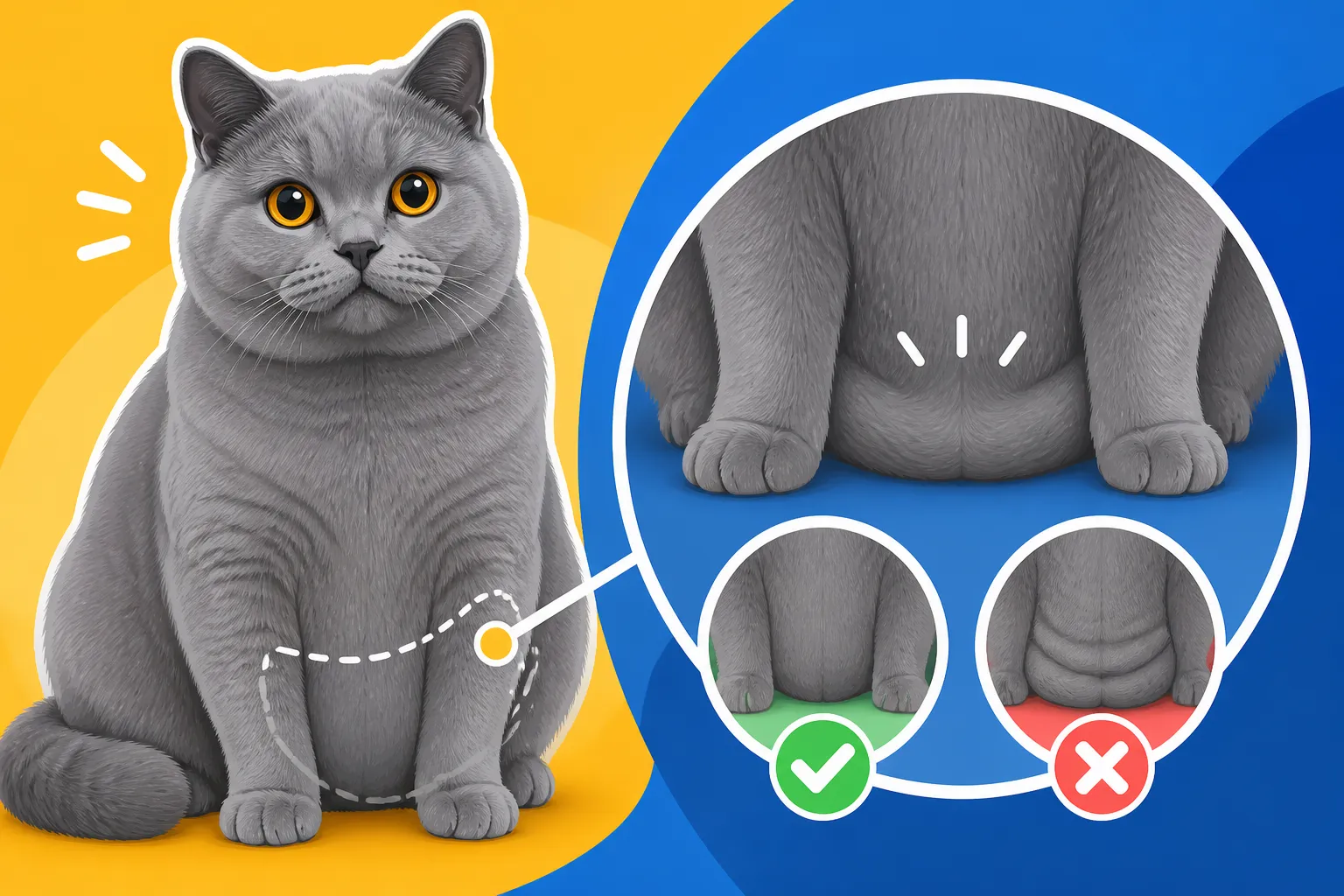
Let's clear the air right away: many cats, including our adorable British Shorthairs, have what's known as a primordial pouch. This isn't necessarily a sign of being overweight; it's a natural, evolutionary feature that some breeds, and even many domestic moggies, possess. You might notice it as a loose flap of skin and a bit of fat that hangs just in front of their hind legs, along the abdomen. It tends to swing gently when they walk or run, a distinct characteristic that often makes owners worry unnecessarily.
The Evolutionary Purpose of the Pouch
Why would nature give cats a floppy belly? It seems counter-intuitive for a predator, but the primordial pouch actually serves several practical purposes. Firstly, it offers an extra layer of protection for their vital organs during a fight. Imagine a scuffle with another cat or a tussle with prey; that loose skin provides a buffer against kicks and scratches. Secondly, and perhaps more importantly for their wild ancestors, it allows for greater flexibility and stretch. When a cat needs to sprint, jump, or make acrobatic maneuvers, that extra skin provides room for their body to extend and contract without restriction, enabling them to move with incredible agility. Think of a big stretch or a full-out run – the pouch allows for maximum extension. Lastly, some theories suggest it provided extra storage for food during times of scarcity, allowing them to eat a large meal and have a little extra room for expansion.
How to Differentiate a Pouch from Actual Fat
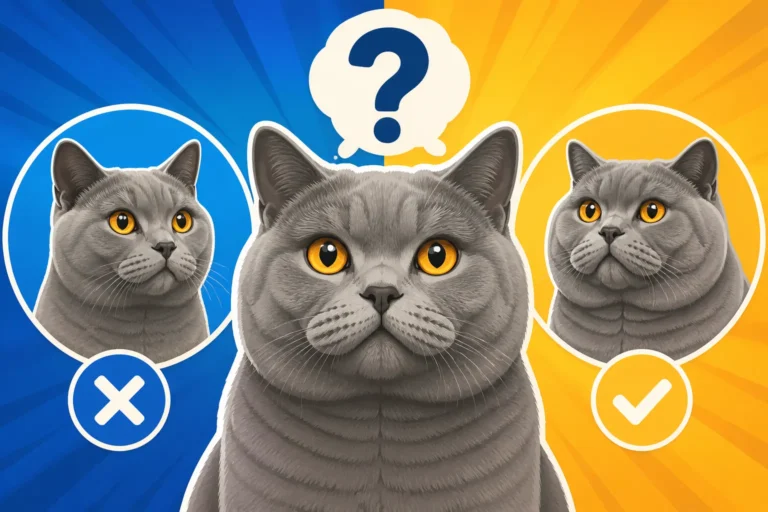
This is the million-dollar question for many British Shorthair guardians. Telling the difference between a healthy primordial pouch and an unhealthy accumulation of fat can be tricky, especially with their dense, plush coats that can mask a lot. The key lies in its texture and how it feels. A primordial pouch, even if it has a little bit of fat within it, will primarily feel like loose skin. You can often gently gather it up in your hand, and it will feel relatively soft and pliable, almost like an empty sac. It typically starts further back on the abdomen, just in front of the hind legs.
True obesity, on the other hand, usually presents as a more uniform layer of fat across the entire torso, not just in one specific area. When you feel an overweight cat, their sides and belly will feel more firm and rounded, with less distinction between their ribs and their abdomen. The fat will feel solid and continuous, making it difficult to feel their ribs or spine underneath. If the "pouch" feels like a firm, unyielding roll of fat that extends further up the sides of their body, it's more likely to be an indicator of excess weight rather than just a natural pouch.
British Shorthair Breed Characteristics and the Pouch
The British Shorthair breed has some unique physical attributes that can make the primordial pouch seem more prominent or lead owners to mistake it for fat. Their very structure plays a role in how they carry weight and how their bodies look. Understanding these characteristics can help alleviate some of the common worries about their belly.
The British Shorthair's Body Type and Coat
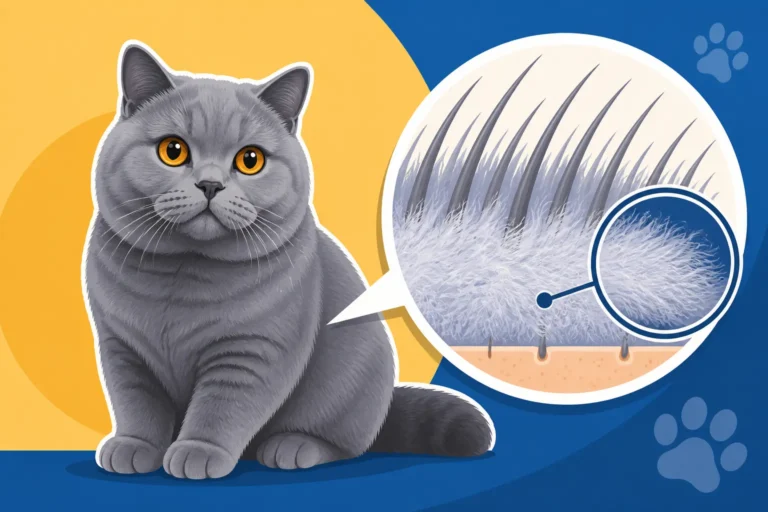
British Shorthairs are renowned for their "cobby" build – a term used in the cat fancy to describe a compact, well-rounded, and powerful body. They have broad chests, short, strong legs, and a generally stocky appearance. This naturally sturdy frame means they are designed to look substantial, and this can include a rather impressive presence around their midsection. What Cobby Means in a British Shorthair dives into this in more detail. Their dense, plush double coat only adds to this illusion, creating a soft, teddy-bear like outline that can obscure their true body shape. A British Shorthair can be at a perfectly healthy weight, yet their coat and cobby body can make them appear heavier than they actually are. It’s easy for the eye to be fooled, especially when looking at them from above or the side. This is why visual assessment alone is often insufficient for British Shorthairs, and a hands-on approach is always recommended.
The Impact of Neutering on Weight and Pouch Appearance
Neutering is an important part of responsible pet ownership, bringing numerous health and behavioral benefits. However, it also has a significant impact on a cat's metabolism. After being spayed or neutered, a British Shorthair's hormone levels change, often leading to a decrease in their metabolic rate. This means they burn fewer calories at rest. Simultaneously, many cats experience an increase in appetite post-neutering, creating a challenging combination where they need fewer calories but often feel hungrier. This can definitely contribute to weight gain if not managed carefully. Why a Neutered British Shorthair Gains Faster explains this phenomenon more thoroughly.
When a British Shorthair gains weight, that extra fat tends to deposit in various places, and yes, it can certainly accumulate within and around the primordial pouch. This can make the pouch appear larger, firmer, and more pronounced than it would be on a leaner cat. So, while the pouch itself is a natural anatomical feature, it can become filled with genuine excess fat if your cat is not eating a carefully controlled diet after neutering. It's a distinction that often requires careful monitoring and sometimes, veterinary guidance.
Assessing Your British Shorthair's Body Condition
Since visual cues can be misleading due to the British Shorthair's unique build and plush coat, a hands-on assessment is crucial. You really need to get in there and feel your cat's body to determine whether that lovely sway of their belly is a healthy primordial pouch or an indication that they're carrying too much weight. This tactile examination, combined with understanding their typical body condition, will give you the most accurate picture.
The Body Condition Score BCS
Veterinarians often use a Body Condition Score (BCS) system to assess an animal's weight. This is usually a scale of 1 to 9, where 1 is emaciated, 9 is severely obese, and 5 is ideal. For a British Shorthair, an ideal score (a "5") means they have a well-proportioned body, but importantly, you should be able to feel their ribs without seeing them, and there should be a discernible waist when viewed from above. Their abdominal tuck (the area behind the ribs) should also be present, though perhaps less dramatic than in a very lean breed.
Here’s a simplified look at what to feel for:
| Characteristic | Underweight (BCS 1-3) | Ideal (BCS 4-5) | Overweight/Obese (BCS 6-9) |
|---|---|---|---|
| Ribs | Easily visible and felt with no fat covering | Easily felt without excess fat covering | Difficult to feel or covered by heavy fat |
| Spine | Easily visible and felt protruding | Easily felt with slight fat covering | Cannot be felt or feels like a deep groove |
| Waist | Very prominent behind ribs | Clearly discernible when viewed from above | Non-existent or broadens considerably |
| Abdominal Tuck | Severe tuck, almost concave | Slight upward tuck behind the ribs | No tuck, rounded or bulging abdomen |
| Primordial Pouch | May be present but mostly just loose skin | Present as loose skin, minimal fat | Appears larger, firm, filled with fat |
Remember, the goal is to feel, not necessarily to see everything. That dense coat is a master of disguise!
Practical Tips for Feeling Your Cat's Ribs and Spine
To accurately assess your British Shorthair, you need to use your hands. Don't just look at them – get tactile!
- Feel the Ribs: Gently place both hands on your cat's sides, just behind their front legs. Your fingers should be spread apart, and you should be applying light pressure, similar to how you’d gently feel your own knuckles. You should be able to feel each individual rib bone underneath their coat and a thin layer of muscle, with minimal fat. If you have to press hard to feel the ribs, or if they feel like they’re buried under a thick cushion, your cat is likely carrying too much weight. On the other hand, if the ribs are sharp and prominent without any cushioning, they might be underweight. How to Feel a British Shorthair's Ribs Through the Plush offers more detail on this technique.
- Palpate the Spine: Run your fingers gently along your cat's backbone, from their shoulders down to their tail. In an ideal weight British Shorthair, you should be able to feel the individual bumps of the vertebrae without much effort. You might feel a slight, soft cushion over them, which is normal muscle and a thin layer of fat. If the spine feels prominent and bony with no cushioning, they may be too thin. If you can barely feel the spine, and it feels like a smooth, wide ridge, then there's too much fat covering it.
- Check for a Waist: Stand directly above your British Shorthair when they are standing on all fours. Look down at their body. An ideally weighted cat will have a slight indentation or "waist" between their rib cage and their hips. If their body looks like a continuous, straight line from their shoulders to their tail, or if it bulges outwards, they are likely overweight.
These hands-on techniques are far more reliable than simply looking at your British Shorthair, especially since their fluffy appearance can be so deceptive.
When to Be Concerned: Signs of True Obesity
It's one thing to have a lovely primordial pouch, and quite another to be carrying excess weight. While British Shorthairs are inherently "chunky" in appearance, true obesity is a serious health concern that can significantly impact their quality of life and lifespan. If, after your hands-on assessment, you suspect your British Shorthair is genuinely overweight, it's time to take action.
Health Risks Associated with Obesity
The list of health problems linked to obesity in cats is sobering. It's not just about looking a bit round; it's about the internal strain on their bodies. Overweight British Shorthairs are at a much higher risk for a whole host of conditions, including:
- Diabetes Mellitus: Just like in humans, obesity is a major risk factor for developing feline diabetes, requiring daily insulin injections and careful dietary management. Diabetes in a British Shorthair provides a deeper look into this condition.
- Arthritis and Joint Pain: The extra weight puts immense pressure on their joints, especially their hips and knees. This can accelerate the onset and severity of arthritis, making movement painful and reducing their willingness to play or even jump. What Obesity Does to a British Shorthair's Joints explains this impact further.
- Heart Disease: While British Shorthairs already have a predisposition to conditions like Hypertrophic Cardiomyopathy (HCM), obesity can exacerbate heart strain and increase the risk of other cardiovascular problems.
- Urinary Tract Issues: Overweight cats may be more prone to developing urinary crystals or bladder stones, partly due to reduced water intake or less frequent urination.
- Liver Disease (Hepatic Lipidosis): If an obese cat stops eating, even for a short period, they can quickly develop a life-threatening condition called hepatic lipidosis, where the liver becomes overwhelmed with fat.
- Reduced Mobility and Poor Grooming: An obese British Shorthair will struggle to reach certain parts of their body, particularly their back and hindquarters, leading to matted fur, skin infections, and discomfort.
- Decreased Lifespan: Simply put, obesity shortens a cat's life and reduces their overall quality of life. They are less active, less playful, and generally less comfortable.
Steps to Take if Your British Shorthair is Overweight
If you've assessed your British Shorthair and determined they are indeed carrying too much weight, the first and most crucial step is to consult your veterinarian. They can confirm the diagnosis, rule out any underlying medical conditions causing weight gain, and help you develop a safe and effective weight loss plan tailored to your cat. Crash dieting is dangerous for cats, so professional guidance is essential.
Here are some general steps often recommended:
- Dietary Adjustments: Your vet will likely recommend a specific prescription weight-loss diet or advise on portion control with your current food. The goal is to reduce calorie intake while ensuring they still receive all necessary nutrients. Many excellent quality cat foods focused on weight management are available through retailers like Chewy or Amazon. You might also explore fresh food options, which can offer precise portioning and quality ingredients. Portion Control Is the Whole Job With a British Shorthair is an essential read for managing their food intake.
- Accurate Portioning: Stop free-feeding your British Shorthair if you haven't already. Measure out their food precisely using a kitchen scale. Divide their daily allowance into two or three smaller meals to keep them feeling fuller and stimulate their metabolism.
- Increase Activity: This can be challenging with the typically calm British Shorthair. Start with short, gentle play sessions using interactive toys. Wand toys that mimic prey can be very effective. Try to engage them for 10-15 minutes, a couple of times a day. Puzzle feeders can also encourage mental stimulation and make them "work" for their food, burning a few extra calories. You can find a wide variety of engaging toys on Amazon that might just spark your British Shorthair's inner hunter. How to Get a British Shorthair to Move offers more tips.
- Regular Weigh-Ins: Monitor their progress by weighing your cat regularly, perhaps once a week, at home. Your vet will set a realistic target weight and a safe rate of weight loss.
- Patience and Consistency: Weight loss is a marathon, not a sprint. It takes time, consistency, and dedication. Celebrate small victories and don't get discouraged by slow progress.
By taking these steps, you can help your British Shorthair shed excess weight, reduce their health risks, and ensure they live a long, happy, and active life, primordial pouch and all!
Disclaimer
This article is for general informational purposes only and does not constitute professional advice. Laws, prices and regulations vary by location and change over time. Consult a qualified professional for guidance on your specific situation.